
Harvey Arden
Author of Prison Writings: My Life Is My Sun Dance
About the Author
Works by Harvey Arden
Associated Works
Wisdom's Daughters: Conversations With Women Elders of Native America (1993) — Editor, some editions — 147 copies
Tagged
Common Knowledge
- Birthdate
- 1935
- Gender
- male
- Occupations
- writer
publisher - Organizations
- National Geographic
HYT Publishing
Members
Reviews
Inevitably, even reviewing Peltier's words turns into a platform for debate about his innocence. I feel like that is secondary here. What we have is a voice who grieves for the suffering of his people and for Native people across the world. His voice is mournful, and it is painfully human. However, it is also a voice filled with strength and resolve. A courageous voice, yet a humble one, reaching out from beyond cold steel and cement to whoever may listen with a plea that is not so much on show more behalf of himself as it is on behalf of his people. It is a plea to bring justice and fairness and true reparations to American Indians. A moving work of memoir.
As for Peltier's alleged crime, his trial was unfair regardless, with too other men who were there with him in the exact same situation having been acquitted and the evidence used to acquit them having been unjustly withheld from Peltier's trial. The government needed, and procured, their scapegoat. Even assuming Peltier is guilty of killing those officers, I can't say I wouldn't have done the same thing if I was being pursued without reason and people all around me, people I knew and cherished, were being indiscriminately shot dead on the pretense of one man stealing some cowboy boots. I have a sneaking suspicion that many who condemn Peltier hypocritically vindicate the likes of George Zimmerman ... show less
As for Peltier's alleged crime, his trial was unfair regardless, with too other men who were there with him in the exact same situation having been acquitted and the evidence used to acquit them having been unjustly withheld from Peltier's trial. The government needed, and procured, their scapegoat. Even assuming Peltier is guilty of killing those officers, I can't say I wouldn't have done the same thing if I was being pursued without reason and people all around me, people I knew and cherished, were being indiscriminately shot dead on the pretense of one man stealing some cowboy boots. I have a sneaking suspicion that many who condemn Peltier hypocritically vindicate the likes of George Zimmerman ... show less
There is something very moving in this book, which is a testimony of a life. And it isn't the mere chain of events that brought a man in prison in spite of his innocence. It is the strength that oozes from every page, Peltier's simple and yet shockingly strong act of resistance: refusing to become a victim. Be true to himself, to his beliefs, to his people. The act of choosing who he is and will be, no matter who others try to turn him into.
I'm happy I read it.
I'm happy I read it.
A sun dance is a ritual that includes (among other things I'm sure) self-mutilation. Spiritual awakening occurs at a sun dance when prayer and pain negate the self in service to a higher power, the Great Mystery. The metaphor is poignant. Leonard Peltier is a spiritual warrior for his people, and the massive repression that he and the American Indian Movement have suffered have caused him enormous suffering. But suffering is something he has been prepared to shoulder through these sacred sun show more dances.
Even though Leonard Peltier is not a superlative writer, I appreciate reading his words as he no doubt very carefully wrote them. You can read the anger at the treatment of Leonard Peltier's people in every word of this book. You can sense his sense of injustice, but on top of all of that you can sense his determination to keep alive, as he insists his people have done, in the face of massive amounts of oppression.
The historical memoir of Leonard Peltier's time in the American Indian Movement was my favorite part of the book. Peltier was a hunted fugitive since he was teenager, with arbitrary legal troubles hounding him since he was old enough to go to jail, just like all Native youth. Leonard Peltier had no choice but to rebel, or die forgotten and let his people die forgotten as well. And rebel he did, as a part of the Bureau of Indian Affairs occupation, as part of fishing rights protests, and as part of the spiritual protection he was attempting at Oglala when a FBI agents and paramilitary rightwing GOON (funded by the US government) shot wildly into the area, starting the infamous "Incident at Oglala."
One of the images that will stay with me, though, is a much more personal one: the sweat lodge set up by Peltier and other native prisoners in the corner of the recreation area of the prison, the source of their religion and of the spiritual strength that keeps them alive and strong for their people. It's a breathtaking description.
Because of this book, I would like to read a more in depth book about the incidents described. I plan on picking up [book:In the Spirit of Crazy Horse|57585] by [author:Peter Matthiessen|6975]
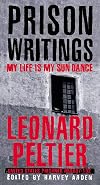
The book design is strange. The book is much taller than it is wide, making for a narrow page area. And the type is very large, with perhaps 100% leading between the lines. It makes the book a quick read, and very legible, but its awkward shape bothered me throughout.
I would pair the reading of this book for newcomers to the Leonard Peltier case with the article "I Am Obama's Prisoner Now"
http://www.republicoflakotah.com/2009/i-am-obamas-prisoner-now-leonard-peltier-s... show less
Even though Leonard Peltier is not a superlative writer, I appreciate reading his words as he no doubt very carefully wrote them. You can read the anger at the treatment of Leonard Peltier's people in every word of this book. You can sense his sense of injustice, but on top of all of that you can sense his determination to keep alive, as he insists his people have done, in the face of massive amounts of oppression.
The historical memoir of Leonard Peltier's time in the American Indian Movement was my favorite part of the book. Peltier was a hunted fugitive since he was teenager, with arbitrary legal troubles hounding him since he was old enough to go to jail, just like all Native youth. Leonard Peltier had no choice but to rebel, or die forgotten and let his people die forgotten as well. And rebel he did, as a part of the Bureau of Indian Affairs occupation, as part of fishing rights protests, and as part of the spiritual protection he was attempting at Oglala when a FBI agents and paramilitary rightwing GOON (funded by the US government) shot wildly into the area, starting the infamous "Incident at Oglala."
One of the images that will stay with me, though, is a much more personal one: the sweat lodge set up by Peltier and other native prisoners in the corner of the recreation area of the prison, the source of their religion and of the spiritual strength that keeps them alive and strong for their people. It's a breathtaking description.
Because of this book, I would like to read a more in depth book about the incidents described. I plan on picking up [book:In the Spirit of Crazy Horse|57585] by [author:Peter Matthiessen|6975]
The book design is strange. The book is much taller than it is wide, making for a narrow page area. And the type is very large, with perhaps 100% leading between the lines. It makes the book a quick read, and very legible, but its awkward shape bothered me throughout.
I would pair the reading of this book for newcomers to the Leonard Peltier case with the article "I Am Obama's Prisoner Now"
http://www.republicoflakotah.com/2009/i-am-obamas-prisoner-now-leonard-peltier-s... show less
In this collection of writings, Leonard Peltier recalls his early childhood, his introduction into political activism, and (somewhat) the events leading up to, and during, that fateful day when two FBI agents ended up dead. Sprinkled throughout is also some of his poetry and musings.
According to Peltier, he was set up by the United States government. He denies any involvement in the agents' deaths; he does admit firing a gun that day, but only into the air, and not at anyone. If this is show more true, there is a grave miscarriage of justice.
But...
I don't know what I believe about this case (not that my opinion matters). Peltier steadfastly denies being guilty, but so do a lot of people who really did do bad things. And while I do agree that there were irregularities (not being able to plead self-defense as others had, Myrtle Poor Bear, etc), there are other questions that I have. If everyone on the Jumping Bulls' property was firing into the air, as Peltier asserts here, how exactly did those agents end up dead? How did their car become riddled with bullets? Why are there people who say that they heard him not only take credit for the killing, but brag about it (all part of the conspiracy, I suppose)? Why does Peltier's story change? Sometimes he doesn't know what happened to the agents, and at other times (not in this book) he claims that Mr. X, whom he knows, killed them, but he won't reveal Mr. X's identity. His account of the morning varies too.
I know it's likely considered gauche (and likely racist) to question Peltier's account (because, it seems, many people believe he is innocent, period), but I can't help it. Can I believe that the government set someone up? Yes, especially during this tumultuous period. Do I believe that Native Americans have been scapegoated, abused, mistreated, and shuffled off onto reservations with no economic opportunities? Yes. But do I believe Leonard Peltier's story? I don't, at least not 100%. Something just doesn't ring true here in his words. show less
According to Peltier, he was set up by the United States government. He denies any involvement in the agents' deaths; he does admit firing a gun that day, but only into the air, and not at anyone. If this is show more true, there is a grave miscarriage of justice.
But...
I don't know what I believe about this case (not that my opinion matters). Peltier steadfastly denies being guilty, but so do a lot of people who really did do bad things. And while I do agree that there were irregularities (not being able to plead self-defense as others had, Myrtle Poor Bear, etc), there are other questions that I have. If everyone on the Jumping Bulls' property was firing into the air, as Peltier asserts here, how exactly did those agents end up dead? How did their car become riddled with bullets? Why are there people who say that they heard him not only take credit for the killing, but brag about it (all part of the conspiracy, I suppose)? Why does Peltier's story change? Sometimes he doesn't know what happened to the agents, and at other times (not in this book) he claims that Mr. X, whom he knows, killed them, but he won't reveal Mr. X's identity. His account of the morning varies too.
I know it's likely considered gauche (and likely racist) to question Peltier's account (because, it seems, many people believe he is innocent, period), but I can't help it. Can I believe that the government set someone up? Yes, especially during this tumultuous period. Do I believe that Native Americans have been scapegoated, abused, mistreated, and shuffled off onto reservations with no economic opportunities? Yes. But do I believe Leonard Peltier's story? I don't, at least not 100%. Something just doesn't ring true here in his words. show less
Lists
You May Also Like


Associated Authors
Statistics
- Works
- 17
- Also by
- 7
- Members
- 991
- Popularity
- #25,990
- Rating
- 3.8
- Reviews
- 12
- ISBNs
- 23
- Languages
- 5