
Frank Waters (1) (1902–1995)
Author of Book of the Hopi
For other authors named Frank Waters, see the disambiguation page.
About the Author
Frank Waters was born in July 1902 in Colorado Springs, Colorado. He is an author of novels and historical works about the American Southwest. His first novel after college was entitled Fever Pitch (1930). He then wrote a series of autobiographical novels beginning with The Wild Earth's Nobility show more (1935). In 1936, Waters left L.A. and moved back and forth between Colorado and New Mexico, continuing to write and completing a biography of W. S. Stratton, Midas of the Rockies. When World War II broke out, Waters moved to Washington, D.C. to work for the Office of the Coordinator of Inter-American Affairs. There, he performed the duties of a propaganda analyst and chief content officer. Waters' masterpiece, The Man Who Killed the Deer, was published in 1942. In 1953, Waters was awarded the Taos Artists Award for Notable Achievement in the Art of Writing. Waters also held positions as information consultant for Los Alamos Scientific Laboratory, New Mexico. He established the Frank Waters Foundation in 1993 which is a nonprofit organization with the goal of promoting the arts, specifically those in the spirit of the creativity of Frank Waters. The members of the FWF operate under the motto "Sheltering the creative spirit", by providing a retreat for artists to live and work among the Sangre de Cristo Mountains. Frank Waters died at his home in Arroyo Seco on June 3, 1995. (Bowker Author Biography) show less
Works by Frank Waters
Associated Works
The Best of the West: An Anthology of Classic Writing from the American West (1991) — Contributor — 289 copies, 1 review
The Voice of the Great Spirit: Prophecies of the Hopi Indians (1989) — Translator, some editions — 23 copies
La puerta, Taos : the art of fetching sky : a biography of place : vol. 2 (2009) — Contributor — 3 copies
Tagged
Common Knowledge
- Canonical name
- Waters, Frank
- Birthdate
- 1902-07-25
- Date of death
- 1995-06-03
- Gender
- male
- Education
- Colorado College
- Occupations
- engineer
novelist
screenwriter - Organizations
- New Mexico Arts Commission
Colorado State University
C. O. Whitney Motion Picture Co.
City of Las Vegas
Los Alamos National Laboratory
Office of the Coordinator of Inter-American Affairs (show all 7)
Southern California Telephone Company - Awards and honors
- Western Literature Association's Distinguished Achievement Award (1968)
Taos Artists Award for Notable Achievement in the Art of Writing (1953) - Relationships
- Waters, Barbara (wife)
- Nationality
- USA
- Birthplace
- Colorado Springs, Colorado, USA
- Places of residence
- Colorado Springs, Colorado, USA
Arroyo Seco, New Mexico, USA
Taos, New Mexico, USA
Washington, D.C., USA
Sedona, Arizona, USA - Place of death
- Arroyo Seco, Taos County, New Mexico, USA
- Associated Place (for map)
- USA
Members
Reviews
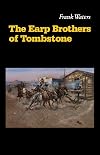
Wyatt Earp is supposed to appear in more movies than any other American. His reputation has seesawed up and down over the years, with the first books and movies portraying him as a larger-than-life Western hero, followed by debunkers for whom Earp was a bully and con artist, followed by various nuanced presentations. This book is on the downside of the seesaw; author Frank Waters interviewed Virgil Earp’s widow, Alviria, in Los Angles in 1930 but didn’t get around to publishing until show more 1960. (Supposedly because Allie Earp threatened to sue Waters over distortions and inaccuracies, so Waters waited until after her death). Allie – or Waters – or both – portray Wyatt Earp as a pretty nasty character, mistreating his common-law wife Mattie, abandoning her for sultry Sarah Marcus, and having some sort of psychic hold over his brothers and Doc Holliday to get them to go along with his plans. There are extensive quotes of interactions between the Earps, the Earp women, and various other Tombstone characters – suggesting Allie, in her 80s when Waters interviewed her, had a remarkable memory for events 50 years earlier.
It's getting so each Earp book I read has a completely different perspective. Well, “when the legend becomes fact, print the legend” (and, ironically, I note that this line from gets frequently misquoted as “When the truth becomes legend, print the legend”, more or less the opposite of the original line). So take your choice with Wyatt Earp. See The Last Gunfight and Murder in Tombstone. show less
It's getting so each Earp book I read has a completely different perspective. Well, “when the legend becomes fact, print the legend” (and, ironically, I note that this line from gets frequently misquoted as “When the truth becomes legend, print the legend”, more or less the opposite of the original line). So take your choice with Wyatt Earp. See The Last Gunfight and Murder in Tombstone. show less

A woman, Helen Chalmers, marries a wealthy college classmate in the early 1900s, and settles in Los Angeles, California. They have a daughter, but her husband spent most of his time at the office of the family investment business, or out drinking. Helen is confined to living in the mansion of her domineering in-laws, until she is able to stand it no longer and walks away, leaving her daughter and leaving it to her husband to file for divorce.
She eventually ends up living in New Mexico in a show more small adobe house beside Otowi Creek on the edge of the San Ildefonso Reservation in New Mexico. This is where the similarity between the real Edith Warner and Frank Water's Helen Chalmers begins. Like Edith, Helen runs a small store, a guest house and a tearoom. Waters borrows some events from Edith's life (for nonfictional accounts of Edith Warner, see: The House at Otowi Bridge and In the Shadow of Los Alamos), while adding many more from his own imagination. The story does not begin very well, due to Water's hyperactive vocabulary and tendency to tell rather than show the reader. Readers familiar with the life of Edith Warner also might object to Water's embellishments, if the book is taken as her biography. However, Waters gradually redeems himself as he tells the story of the A-Bomb that was developed at Los Alamos just above the canyon from where Edith/Helen lived. This is fairly recent American history, and it has had significant consequences on our political and social conditions, but is rarely treated in the way that Waters does here. Waters also succeeds to a degree in telling a story about subjects that are very close to him: namely humanities' search for meaning in life or enlightenment, and spirituality in general. He was very knowledgeable about and interested in those subjects, although typically from an intellectual perspective. Other books written by Waters deal with the same subjects in different ways (Book of the Hopi, Pumpkin Seed Point). In this book he succeeds in exploring these ideas using the story of Helen, and the Bomb, as vehicles. So in spite of the confusion between fact and fiction, the book ultimately is worth reading.
Edith Warner died 15 years before this book was published. She did not have any children. But when the book was first published, at least one of her sisters and one god-daughter were still alive, and according to In the Shadow of Los Alamos they did not approve of the highly fictionalized story of her life. Hopefully, Edith would at least have approved of this book as a good story, with the caveat that it is not the story of her life, but that her life was Water's inspiration.
This is a review of the 1981 edition. Later editions may have been modified. show less
She eventually ends up living in New Mexico in a show more small adobe house beside Otowi Creek on the edge of the San Ildefonso Reservation in New Mexico. This is where the similarity between the real Edith Warner and Frank Water's Helen Chalmers begins. Like Edith, Helen runs a small store, a guest house and a tearoom. Waters borrows some events from Edith's life (for nonfictional accounts of Edith Warner, see: The House at Otowi Bridge and In the Shadow of Los Alamos), while adding many more from his own imagination. The story does not begin very well, due to Water's hyperactive vocabulary and tendency to tell rather than show the reader. Readers familiar with the life of Edith Warner also might object to Water's embellishments, if the book is taken as her biography. However, Waters gradually redeems himself as he tells the story of the A-Bomb that was developed at Los Alamos just above the canyon from where Edith/Helen lived. This is fairly recent American history, and it has had significant consequences on our political and social conditions, but is rarely treated in the way that Waters does here. Waters also succeeds to a degree in telling a story about subjects that are very close to him: namely humanities' search for meaning in life or enlightenment, and spirituality in general. He was very knowledgeable about and interested in those subjects, although typically from an intellectual perspective. Other books written by Waters deal with the same subjects in different ways (Book of the Hopi, Pumpkin Seed Point). In this book he succeeds in exploring these ideas using the story of Helen, and the Bomb, as vehicles. So in spite of the confusion between fact and fiction, the book ultimately is worth reading.
Edith Warner died 15 years before this book was published. She did not have any children. But when the book was first published, at least one of her sisters and one god-daughter were still alive, and according to In the Shadow of Los Alamos they did not approve of the highly fictionalized story of her life. Hopefully, Edith would at least have approved of this book as a good story, with the caveat that it is not the story of her life, but that her life was Water's inspiration.
This is a review of the 1981 edition. Later editions may have been modified. show less
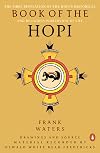
This book is one of the classics of anthropological research. It is one of the few complete resources you will find on the Hopi mythologies, including how that mythology leads to the lives they live today. From that standpoint, it is one of the best books in its field.
However, the book suffers from two major flaws. (Flaws that have resulted in many detractors in the past.) The first is that the author seems to impose a Judeo-Christian mythos over the stories he has heard. The origin stories show more and the “Great White Brother” concept (one that does indeed run through many other tribe’s stories) seem to have a spin on them, as if the author wants us to see just how closely these align to our beliefs. The second is that the author has definitely lost his objectivity. Of course he sides with the Hopis in any story involving the Navajos. But he even goes so far as to side with different Hopi villages when their stories or beliefs may diverge.
But that only means what is told here needs to be taken with a grain of salt. The mere fact that the author may have lost his researcher’s objectivity does not take away from the fact that this is an incredible collection that pulls together so much of what makes the Hopis the unique tribe they are. And, though the author tries too hard to make the point, it is apparent that the Hopi have been a part of the greater expanse of tribes that have lived in the Americas far into the past.
At times it is dry and scholarly. Other times the author repeats himself. And other times there are just too many details. But read past the author’s inability to pull his own preconceived notion out of the narrative, and you will find an intriguing mythology that few people are lucky enough to share. show less
However, the book suffers from two major flaws. (Flaws that have resulted in many detractors in the past.) The first is that the author seems to impose a Judeo-Christian mythos over the stories he has heard. The origin stories show more and the “Great White Brother” concept (one that does indeed run through many other tribe’s stories) seem to have a spin on them, as if the author wants us to see just how closely these align to our beliefs. The second is that the author has definitely lost his objectivity. Of course he sides with the Hopis in any story involving the Navajos. But he even goes so far as to side with different Hopi villages when their stories or beliefs may diverge.
But that only means what is told here needs to be taken with a grain of salt. The mere fact that the author may have lost his researcher’s objectivity does not take away from the fact that this is an incredible collection that pulls together so much of what makes the Hopis the unique tribe they are. And, though the author tries too hard to make the point, it is apparent that the Hopi have been a part of the greater expanse of tribes that have lived in the Americas far into the past.
At times it is dry and scholarly. Other times the author repeats himself. And other times there are just too many details. But read past the author’s inability to pull his own preconceived notion out of the narrative, and you will find an intriguing mythology that few people are lucky enough to share. show less

They were not heroes, nor were they saints, but men doing the best they could. Thgey were in law enforcement and saloon keeping for spot cash, and they devoted their spare cash to speculating in mining claims. Mrs. Virgil, like most women, and Bat Masterson, did not like Holiday, who is currently seen as a romantic fellow in the current film world. The affair in the alley next to the photographic studio was the result of a violation of a town ordinance against carrying firearms but was a show more long awaited boiling over point. The whole story sounds real to me, especially from this woman's viewpoint. Wyatt was a bit of a show-off, all his life, Many people are sure that this book is a smear job on Wyatt, but he was certainly more like the Kevin Costner film, than the 1960's TV series. In Hollywood, remember that no one employed Wyatt was a consultant until Charlie Siringo, a very honest memoirist with a long career in law enforcement, had died. The two men were not friends. show less
Awards


You May Also Like


Associated Authors
Statistics
- Works
- 31
- Also by
- 5
- Members
- 2,295
- Popularity
- #11,185
- Rating
- 3.8
- Reviews
- 19
- ISBNs
- 99
- Languages
- 4