
About the Author
Series
Works by Paul Horgan
Great River: The Rio Grande in North American History. Vol. 1, Indians and Spain. Vol. 2, Mexico and the United States. 2 vols. in one (1960) 371 copies, 2 reviews
The heroic triad; essays in the social energies of three Southwestern cultures (1960) 51 copies, 1 review
Great River: The Rio Grande in North American History, Vol. 2: Mexico and the United States (1954) 28 copies, 2 reviews
The Richard Trilogy: Things As They Are, Everything to Live For, The Thin Mountain Air (1990) 21 copies
Figures in a landscape 6 copies
A Lamp On The Plains 3 copies
Dimentica il futuro 2 copies
The Huntsmen (Condensed) 2 copies
Devil in the Desert 1 copy
Mountain Standard Time--Main Line West, Far From Cibola, The Common Heart: Three enduring novels of the 20th century west (1962) 1 copy
Mensen van Whitewater 1 copy
Terror at Daybreak {story} 1 copy
Men of arms, 1 copy
Agua Blanca 1 copy
Associated Works
N.C. Wyeth - The collected paintings, illustrations and murals (1972) — Foreword — 204 copies, 3 reviews
Reader's Digest Condensed Books 1970 v04: Lone Woman / The Homecoming / Papillon / Whitewater / The Unexpected Mrs. Pollifax (1970) — Contributor — 48 copies
Savoring The Southwest: A Cookbook And More From The Land Of Enchantment (1992) — Introduction — 38 copies, 1 review
John Gaw Meem: Southwestern Architect (School of American Research Book) (1983) — Foreword — 22 copies
Many-Colored Fleece: An Anthology of Twentieth-Century Catholic Fiction (2022) — Contributor — 9 copies
The Best Short Stories of 1937 and the Yearbook of the American Short Story (1937) — Contributor — 8 copies
The Best Short Stories of 1939 and the Yearbook of the American Short Story (1939) — Contributor — 8 copies
The Best Short Stories of 1931 and the Yearbook of the American Short Story (1931) — Contributor — 7 copies, 1 review
Diary & Letters of Josiah Gregg Excursions in Mexico & California: 1847-1850 & Diary & Letters of Josiah Gregg Southwestern Enterprises 1840-1847. Two volumes (1944) — Introduction — 3 copies
Vader is de beste — Author — 3 copies
The Saturday Evening Post Stories of 1949 — Contributor — 2 copies
Dede O'Shea / Bird of Sorrow / One Red Rose for Christmas / Beyond All Horizons (1957) — Contributor — 2 copies
The Best Short Stories of 1935 and the Yearbook of the American Short Story (1935) — Contributor — 2 copies
One Red Rose - Dramatization Of The Novel One Red Rose For Christmas By Paul Horgan (1954) — Original Book — 1 copy
Reader's Digest Auswahlbücher 71 - Die Leute Von Whitewater. Hundeleben in Herrlichkeit. Sally. Die Wildnis Vor Der Tür (1972) 1 copy
The Bond and the Free; The Wooden Statue; The Priestly Heart; The Saintmaker's Christmas Eve (1956) — Author — 1 copy
Tagged
Common Knowledge
- Birthdate
- 1903-08-01
- Date of death
- 1995-03-08
- Gender
- male
- Education
- New Mexico Military Institute
Eastman School of Music - Occupations
- novelist
historian
short story writer
professor
lieutenant colonel
librarian - Organizations
- American Academy of Arts and Letters
United States Army
Wesleyan University
American Catholic Historical Association (President)
New Mexico Military Institute - Awards and honors
- Campion Award (1957)
Laetare Medal (1976)
Robert Kirsch Award (1987)
Western Literature Association's Distinguished Achievement Award (1973) - Relationships
- Hurd, Peter (friend)
- Nationality
- USA
- Birthplace
- Buffalo, New York, USA
- Places of residence
- Buffalo, New York, USA
Middletown, Connecticut, USA
Albuquerque, New Mexico, USA - Place of death
- Middletown, Connecticut, USA
- Burial location
- Mount Calvary Cemetery, Cheektowaga, New York, USA
- Associated Place (for map)
- USA
Members
Reviews
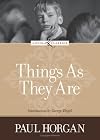
A rather different sort of "coming of age" novel in which young Richard learns that one thing after another in his privileged life is not quite what it seems, and that even the people he loves and feels he knows the best are less marvelous than he has imagined them to be. Life's lessons are frequently disturbing and profound, from the death of a friend to his ill-conceived attempt to prove his determination to become a priest, to the loss of his father's business. Not nearly as grim and show more depressing as it sounds, each instance of disillusionment makes the boy more prepared to anticipate, meet, and understand the next revelation of "things as they are". Richard's gradual awakening to the fact that he is not the center of the universe culminates in a moment in which his mother forces him to face a long-standing fear, bringing him to the realization that "There is something dangerous in all beauty, and yet it is still beautiful". He goes forward with more confidence in himself, and his ability to learn from his experiences. show less
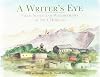
The subtitle here tells you what's inside: "Field Notes and Watercolors". Paul Horgan was a prolific author of both fiction and non-fiction, much of it centered on the American Southwest. I recall reading his novel, [A Distant Trumpet] as a teenager. A recent foray into a collection of essays by [[David McCullough]] brought Horgan back onto my radar, and now I want to immerse myself in his work, both literary and visual. McCullough wrote the introduction to this volume of Horgan's notes and show more sketches, which were made on trips preparatory to three of his major writings: [Great River: The Rio Grande in North American History], [Conquistadors in North American History], and the biographical [Lamy of Santa Fe] (Archbishop Lamy was purportedly the inspiration for Cather's [Death Comes for the Archbishop]. The two men were friends, and Horgan's circle also included the Wyeth family, Senator Daniel Patrick Moynihan, the artist Paul Hurd, Father Theodore Hesburgh, Igor Stravinsky, Robert Oppenheimer...it's a bit puzzling how so highly regarded an author and artist seems to have completely fallen into obscurity now. I can't recall a single reference to him here on LT in the last 20+ years. McCullough places him in the company of such historians as Gibbon, Macaulay and Francis Parkman. I love the watercolors in this collection. Some of them reflect the quickness with which they were drawn (and, presumably later, colored); they were, after all, intended to be aides de memoire. Others have a depth and a subtlety that is breath-taking; they are simply Art in their own right. show less

I shuffled this book to the bottom of the pile twice before I caved in and read it. It is touted, currently, as a Western, and on the cover of the older editions, it is said to be a love story. Turns out what it is, is a book that I plan to add to my keeper shelf, that shelf of books that ought to get 6 stars minimum, once I get a copy that stays in one piece. The glue on the spine of the 1962 paperback from Crest/Fawcett seems determined to dry out and let go of the pages.
When Abraham show more Lincoln rolls through town, Matthew Hazard is one very, very determined boy: he’s going to meet Lincoln! He does, of course, and their meeting sets Matthew’s life on a path to the Arizona Territory, via West Point. Hazard’s determination is one of his greatest characteristics. It brings him everything he has in his life, including his wife Laura, whose mother was none too keen on her daughter marrying a man who would drag her to the end of civilization and beyond. Their life is full of the sort of adventure that makes up the best and bravest, and the worst and saddest, in our history.
The first surprise for me was that this really is a love story. And the second was that it isn’t. There are several stories of couples here, and most of them are love stories, but they’re more than that. Who the characters are in their relationships – romantic and otherwise – defines who they are when the chips are down, and the chips are down often out west at that time. Many, many books weave sub-stories in and out, some successfully, some predictably. A Distant Trumpet is far more successful than others. What a wonderful surprise this book turned out to be!
- AnnaLovesBooks show less
When Abraham show more Lincoln rolls through town, Matthew Hazard is one very, very determined boy: he’s going to meet Lincoln! He does, of course, and their meeting sets Matthew’s life on a path to the Arizona Territory, via West Point. Hazard’s determination is one of his greatest characteristics. It brings him everything he has in his life, including his wife Laura, whose mother was none too keen on her daughter marrying a man who would drag her to the end of civilization and beyond. Their life is full of the sort of adventure that makes up the best and bravest, and the worst and saddest, in our history.
The first surprise for me was that this really is a love story. And the second was that it isn’t. There are several stories of couples here, and most of them are love stories, but they’re more than that. Who the characters are in their relationships – romantic and otherwise – defines who they are when the chips are down, and the chips are down often out west at that time. Many, many books weave sub-stories in and out, some successfully, some predictably. A Distant Trumpet is far more successful than others. What a wonderful surprise this book turned out to be!
- AnnaLovesBooks show less
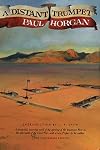
A nice to surprise to find this book in a thrift store with zero prior knowledge of the author and end up with a great reading experience. Too many 'westerns' or at least books set in the west of the frontier are the Louis L'amour or Ralph Compton variety, they may be ok but are a little one-dimensional. I won't throw Elmer Kelton under that bus, too good! But A Distant Trumpet on the other hand is a long book with a fully developed set of interesting and complex characters and is a portrait show more of a slice of America at that time not likely to be bested. I'm surprised this is not on a list of the best books about the American West, at least the few I checked out. I've read a few that are on such lists and this surpasses most entirely. Will definitely be looking for something else by Paul Horgan, as I learned he was a two-time winner of the Pulitzer Prize for History (and it shows in this book!). Interestingly, he was also friends with J. Robert Oppenheimer. Those must have been some interesting conversations! show less
Lists
Awards


You May Also Like


Associated Authors
Statistics
- Works
- 70
- Also by
- 34
- Members
- 2,070
- Popularity
- #12,411
- Rating
- 3.9
- Reviews
- 28
- ISBNs
- 96
- Languages
- 2
- Favorited
- 5
