
Oliver La Farge (1901–1963)
Author of Laughing Boy: A Navajo Love Story
About the Author
Image credit: NYWT&S Collection, Library of Congress Prints and Photographs Division, Reproduction Number LC-USZ62-116958
Works by Oliver La Farge
Long Pennant 3 copies
The Year Bearer's People 3 copies
Prelude to Reunion 2 copies
The Eight-Oared Shell 1 copy
We Need Private Schools 1 copy
Spud and Cochise 1 copy
Albatross 1 copy
Indios americanos 1 copy
Associated Works
The Best of the West: An Anthology of Classic Writing from the American West (1991) — Contributor — 286 copies, 1 review
Murder on the Menu: Cordon Bleu Stories of Crime and Mystery, Volume 1 (1984) — Contributor; Contributor — 212 copies, 2 reviews
Ants, Indians, and Little Dinosaurs: A Celebration of Man & Nature for the 75th Anniversary of Natural History Magazine (1975) — Contributor — 203 copies, 1 review
100 Best True Stories of World War II (WW2) (with 32 illustrations) (2011) — Contributor — 36 copies
Great American Short Stories: O. Henry Memorial Prize Winning Stories, 1919-1934 (1935) — Contributor — 11 copies, 1 review
The Best Short Stories of 1927 and the Yearbook of the American Short Story (1927) — Contributor — 3 copies
A Modern Galaxy — Contributor — 2 copies
The Ethnic Image in Modern American Literature, 1900-1950, Volumes 1-2 (1984) — Contributor — 1 copy
Tagged
Common Knowledge
- Canonical name
- La Farge, Oliver
- Legal name
- La Farge, Oliver Hazard Perry
- Birthdate
- 1901-12-19
- Date of death
- 1963-08-02
- Gender
- male
- Education
- Harvard University
- Occupations
- anthropologist
short story writer
novelist - Organizations
- American Academy of Arts and Letters (Literature, 1957)
- Nationality
- USA
- Birthplace
- New York, New York, USA
- Places of residence
- Newport, Rhode Island, USA
Santa Fe, New Mexico, USA - Place of death
- Albuquerque, New Mexico, USA
- Associated Place (for map)
- USA
Members
Reviews

First published in 1929, but still eminently readable, this novel tells the story of Laughing Boy and Slim Girl, two young Navajo who earn the disapproval of his peers by marrying without family approval.
Slim Girl is one of the countless young Native Americans who was taken away from her home in early childhood and sent to one of the Indian Boarding Schools designed to "civilize" young Native Americans by denying them their cultural heritage. Now a young woman wanting to return to tribal show more ways, she finds herself with a foot in each culture.
Introspective and low-key, the novel nevertheless is profoundly moving as these two young people try hard to build a life, but the falseness of their relationship's foundation foreshadows heartbreak.
Slim Girl's character is particularly well-written; LaFarge manages to make her understandable, if not particularly pleasant. Taught by harsh reality to survive in any way she can, she manipulates Laughing Boy, yet underneath that manipulation is a genuine love for him. Her struggles to succeed both as a traditional Navajo wife and to accumulate the material wealth of the "American" world by which she has been brutalized make her a flawed but fascinating character. show less
Slim Girl is one of the countless young Native Americans who was taken away from her home in early childhood and sent to one of the Indian Boarding Schools designed to "civilize" young Native Americans by denying them their cultural heritage. Now a young woman wanting to return to tribal show more ways, she finds herself with a foot in each culture.
Introspective and low-key, the novel nevertheless is profoundly moving as these two young people try hard to build a life, but the falseness of their relationship's foundation foreshadows heartbreak.
Slim Girl's character is particularly well-written; LaFarge manages to make her understandable, if not particularly pleasant. Taught by harsh reality to survive in any way she can, she manipulates Laughing Boy, yet underneath that manipulation is a genuine love for him. Her struggles to succeed both as a traditional Navajo wife and to accumulate the material wealth of the "American" world by which she has been brutalized make her a flawed but fascinating character. show less
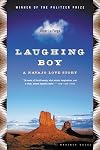
Really good novel about a Navajo couple. Quite poetic and tries to give the flavor of their religion. I don't know how accurate it is, since the author lived among them but was not Navajo, but still worth reading for the story and appreciation of the culture.
I have a habit of regularly picking up a prize winner as one of my ways of making sure I read a variety of authors. Sometimes I am disappointed or even bored with the result, but more often I am thrilled to make a new discovery. Laughing Boy was one of those discoveries. The story begins in a very simple manner, what even feels initially to be overly simple. Boy meets girl: a love story.
But as you read, the story becomes more complex. Laughing Boy was raised in a traditional Navajo family. show more He is very astute and capable in that lifestyle; he can make a living. However, when it comes to love, he seems quite naïve. Slim Girl was removed from her family at an early age and given an American education. She feels something has been stolen from her, and she is on the outside looking in. The relationship between Laughing Boy and Slim Girl reflects the conflict developing between the traditional Navajo way of life and the American culture that is encroaching all around them.
Their relationship is complicated in other ways as well. Slim Girl is conniving and manipulative. Is she just using Laughing Boy? It is clear she loves him though. What drives her dishonesty? She is very focused on building as much security as possible before giving up the benefits of living among the Americans. Why is she not willing to take risks for the life she wants?
This novel won the Pulitzer Prize in 1930, and in my opinion, was very much deserving. show less
But as you read, the story becomes more complex. Laughing Boy was raised in a traditional Navajo family. show more He is very astute and capable in that lifestyle; he can make a living. However, when it comes to love, he seems quite naïve. Slim Girl was removed from her family at an early age and given an American education. She feels something has been stolen from her, and she is on the outside looking in. The relationship between Laughing Boy and Slim Girl reflects the conflict developing between the traditional Navajo way of life and the American culture that is encroaching all around them.
Their relationship is complicated in other ways as well. Slim Girl is conniving and manipulative. Is she just using Laughing Boy? It is clear she loves him though. What drives her dishonesty? She is very focused on building as much security as possible before giving up the benefits of living among the Americans. Why is she not willing to take risks for the life she wants?
This novel won the Pulitzer Prize in 1930, and in my opinion, was very much deserving. show less
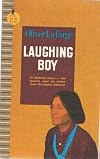
Set in the year 1915, in the Navajo nation. Laughing Boy is a young man attending a large gathering where there are dances, horse races, trading and gambling. He’s excited to compete with his favorite pony and make some good trades, but something momentous happens when Slim Girl catches his eye. He’s fascinated by her bold behavior, when she speaks to him directly (something a proper girl would never do) and on impulse, they decide soon after to run off and get married. Laughing Boy show more hears rumors from others and faces criticism from his family about Slim Girl- she’s bad they say. She’s not a proper Navajo. He doesn’t understand what they’re talking about. Slim Girl had been taken away by the Americans when she was a little girl, sent to a boarding school where her language and culture were forbidden (to put it mildly). She is full of bitterness against the Americans and desperately wants to rejoin The People. She sees her union with Laughing Boy as a way back in, and for a time, this seems to work. They set up a little household together on the outskirts of a small dusty American town, where Slim Girl has a job she doesn’t want to leave, quite yet. She wants security, to earn and save up money so she and Laughing Boy could return with wealth to live among the Navajo among respect and admiration. Unfortunately, her means to that goal were also her undoing.
There were many parts of this story I really enjoyed. Reading of this young couple’s determination to flaunt the norms- Laughing Boy ignoring all the whispers about his wife and refusing to believe any ill of her, certain they were wrong and that he could make a happy home. Slim Girl’s stubborn desire to learn skills that were taken for granted by other Navajo women and she struggled with- mainly weaving, but other things as well. Their joy in each other, and the complications that arose when doubts crept into their relationship, becoming a gap they struggled to repair. The one thing I felt dubious about was the casual mention of Slim Girl’s years in the boarding school. While it was obvious she was somewhat traumatized and turned callous by that experience, I felt like it could have been dealt with in much greater depth. Perhaps it was written this way though, because most of the story is told from Laughing Boy’s perspective, and he never really understood what an impact that experience had on her.
This book won a Pulitzer in 1930. Sadly, it’s one of those that I feel dismayed about, when looking up more info after I’m done reading. The author is not Native American, he wrote from outside the culture, though he spent several years working in Navajo territory, and admired them greatly. But it sounds like he got a lot of it wrong: American Indians in Children’s Literature. Regardless, I still think it’s a good story, I’m just disappointed it’s got false portrayals.
more at the Dogear Diary show less
There were many parts of this story I really enjoyed. Reading of this young couple’s determination to flaunt the norms- Laughing Boy ignoring all the whispers about his wife and refusing to believe any ill of her, certain they were wrong and that he could make a happy home. Slim Girl’s stubborn desire to learn skills that were taken for granted by other Navajo women and she struggled with- mainly weaving, but other things as well. Their joy in each other, and the complications that arose when doubts crept into their relationship, becoming a gap they struggled to repair. The one thing I felt dubious about was the casual mention of Slim Girl’s years in the boarding school. While it was obvious she was somewhat traumatized and turned callous by that experience, I felt like it could have been dealt with in much greater depth. Perhaps it was written this way though, because most of the story is told from Laughing Boy’s perspective, and he never really understood what an impact that experience had on her.
This book won a Pulitzer in 1930. Sadly, it’s one of those that I feel dismayed about, when looking up more info after I’m done reading. The author is not Native American, he wrote from outside the culture, though he spent several years working in Navajo territory, and admired them greatly. But it sounds like he got a lot of it wrong: American Indians in Children’s Literature. Regardless, I still think it’s a good story, I’m just disappointed it’s got false portrayals.
more at the Dogear Diary show less
Lists
Awards


You May Also Like


Associated Authors
Statistics
- Works
- 36
- Also by
- 30
- Members
- 1,607
- Popularity
- #16,043
- Rating
- 3.7
- Reviews
- 32
- ISBNs
- 71
- Languages
- 3
- Favorited
- 1