

William R. Ferris
Author of Encyclopedia of Southern Culture [complete]
About the Author
Works by William R. Ferris
You Live and Learn. Then You Die and Forget It All: Ray Lum's Tales of Horses, Mules and Men (1992) 26 copies
Images of the South: Visits With Eudora Welty and Walker Evans (Southern Folklore Reports ; No. 1) (1978) 7 copies
Mississippi Black folklore;: A research bibliography and discography (The University & College Press of Mississippi series--humanities) (1976) 4 copies
Associated Works
Tagged
Common Knowledge
- Birthdate
- 1942-02-05
- Gender
- male
- Nationality
- USA
- Birthplace
- Vicksburg, Mississippi, USA
- Associated Place (for map)
- Mississippi, USA
Members
Reviews
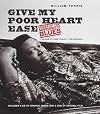
Give My Poor Heart Ease is not a book about racial politics or injustice. It’s a book about life. The racism is there, of course, as are the churches and preachers, the cotton fields and the nightclubs and the parties. Ferris says in his introduction that “Though we rarely think about it, every member of my family loves to tell stories. Storytelling runs in our blood, and when we gather for the holidays, the stories begin. They start over breakfast and do not stop until we retire to show more sleep. We push back the sleep, not wanting to miss the end of a story.” I think it is this—the author’s determination not to miss the end of a story that is the drive behind his life filled with decades of wandering in and out of towns, farms, prisons and bars collecting the memories and songs of the Mississippi Delta. It’s also the thing that gives this book its heart.
The book is loosely divided into sections: “Blues Roots” which looks at the country people and the music they sing in the fields and churches. (It’s a famous saying, notes the author, that blues and sacred music are so close that if a singer wants to switch over from one to the other he simply replaces “my God” with “my baby” and keeps singing the same song). “Blues Towns and Cities” which explores the people in Leland and Clarkesdale (home of Muddy Waters and the place where Bessie Smith died), and the WOKJ radio station in Jackson, and “Looking Back” which is an extended section of reminisces of Willie Dixon and B.B. King. The book also comes with a CD of Ferris’s original recordings on the Sony reel-to-reel from those long ago-days of living in his Chevy Nova, and a DVD with the original footage made on that old Super 8 movie camera.
But Ferris doesn’t let theory get in the way of story—Give My Poor Heart Ease is no dissertation on the origins of blues music. It’s a witnessing. The author could probably make all sorts of pronouncements about the similarity or differences in blues as sung in the cities and blues as sung in the country. In blues that is born out of church hymns and blues that is borne out of field songs. But he doesn’t. He lets the singers sing and the storytellers talk and the readers come to their own conclusions.
And the one conclusion that is inescapable is that the blues is a kind of spontaneous musical combustion. It just bursts out of a person like a cry or a laugh. Fannie Bell Chapman said it when she claimed “my mouth just opened up and sang.” John “Son Ford” Thomas said it when he said “Your mind is on your woman. She’s giving you the blues. You get worried over something, what you call a “deep study.” That’s the blues.” B.B. King says it when he says “There’s always been blues.” If life has a sound track, then these are the people who hear it and can sing it. And William Ferris has caught it on tape and in print for the rest of us. read full review show less
The book is loosely divided into sections: “Blues Roots” which looks at the country people and the music they sing in the fields and churches. (It’s a famous saying, notes the author, that blues and sacred music are so close that if a singer wants to switch over from one to the other he simply replaces “my God” with “my baby” and keeps singing the same song). “Blues Towns and Cities” which explores the people in Leland and Clarkesdale (home of Muddy Waters and the place where Bessie Smith died), and the WOKJ radio station in Jackson, and “Looking Back” which is an extended section of reminisces of Willie Dixon and B.B. King. The book also comes with a CD of Ferris’s original recordings on the Sony reel-to-reel from those long ago-days of living in his Chevy Nova, and a DVD with the original footage made on that old Super 8 movie camera.
But Ferris doesn’t let theory get in the way of story—Give My Poor Heart Ease is no dissertation on the origins of blues music. It’s a witnessing. The author could probably make all sorts of pronouncements about the similarity or differences in blues as sung in the cities and blues as sung in the country. In blues that is born out of church hymns and blues that is borne out of field songs. But he doesn’t. He lets the singers sing and the storytellers talk and the readers come to their own conclusions.
And the one conclusion that is inescapable is that the blues is a kind of spontaneous musical combustion. It just bursts out of a person like a cry or a laugh. Fannie Bell Chapman said it when she claimed “my mouth just opened up and sang.” John “Son Ford” Thomas said it when he said “Your mind is on your woman. She’s giving you the blues. You get worried over something, what you call a “deep study.” That’s the blues.” B.B. King says it when he says “There’s always been blues.” If life has a sound track, then these are the people who hear it and can sing it. And William Ferris has caught it on tape and in print for the rest of us. read full review show less
Give My Poor Heart Ease: Voices of the Mississippi Blues (H. Eugene and Lillian Youngs Lehman Series) by William Ferris
The largely context-less transcriptions here in the book of deep-in-the-delta Bluesmen, along with BB King & Willie Dixon, makes for detailed and complete but not compelling narrative. This is more than made up for by the accompanying field records audio CD and multi-documentary DVD

This is a delightful book about and including interviews with various artists (including writers, musicians, painters, photographers, etc). Some of those included are Eudora Welty, Cleanth Brooks, Bobby Rush, on & on. It was wonderful to read about their thoughts on the region we call the south, their views of people, and places. This volume also includes a DVD of some of these interviews, as well as a CD. This is truly a keepsake.
Afro-American Folk Art and Crafts (Center for the Study of Southern Culture Series) by William R. Ferris

Added this to my library as it had a chapter on African American quiltmkaing. Good book!
Awards


You May Also Like


Associated Authors
Statistics
- Works
- 20
- Also by
- 2
- Members
- 673
- Popularity
- #37,520
- Rating
- 3.9
- Reviews
- 7
- ISBNs
- 44