
Paul Oliver (1) (1927–2017)
Author of Blues Fell This Morning: Meaning in the Blues
For other authors named Paul Oliver, see the disambiguation page.
About the Author
Paul Hereford Oliver was born in Nottingham, England on May 25, 1927. He trained as a painter and sculptor at the Harrow School of Art, but switched to graphic design because most art materials aggravated his asthma and various allergies. After receiving a diploma from Goldsmith's College in London show more in 1948, he returned to the Harrow County School to teach art. In 1955, he received an art-history degree from the University of London. He wrote numerous books on blues music including Bessie Smith, Blues Fell This Morning, The Story of the Blues, Screening the Blues: Aspects of the Blues Tradition, Savannah Syncopators: African Retentions in the Blues, Songsters and Saints: Vocal Traditions on Race Records, Broadcasting the Blues: Black Blues in the Segregation Era, and Barrelhouse Blues: Location Recordings and the Early Traditions of the Blues. He was also as an architectural historian. His books on architecture included Shelter and Society, English Cottages and Small Farmhouses: A Study of Vernacular Shelter, Dwellings: The House Across the World, and Built to Meet Needs: Cultural Issues in Vernacular Architecture. He died on August 15, 2017 at the age of 90. (Bowker Author Biography) show less
Series
Works by Paul Oliver
Barrelhouse Blues: Location Recording and the Early Traditions of the Blues (2009) 31 copies, 1 review
The Devil's Son-in-Law: The Story of Peetie Wheatstraw & His Songs (1971) — Series Editor — 25 copies, 1 review
Associated Works
Tagged
Common Knowledge
- Legal name
- Oliver, Paul Hereford
- Birthdate
- 1927-05-25
- Date of death
- 2017-08-15
- Gender
- male
- Occupations
- architectural historian
professor emeritus - Organizations
- Oxford Brookes University
- Awards and honors
- Royal Institute of British Architects (Honorary Fellow, 2009)
- Short biography
- Paul Oliver (1927 - 2017) was a UK architectural historian who has also written extensively about blues music.
- Nationality
- England
UK - Birthplace
- Nottingham, Nottinghamshire, England, UK
- Place of death
- Oxfordshire, England
Members
Reviews
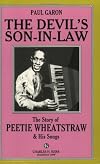
This was my yuletide present to myself, but I was a bit disappointed with it. It might be because not much is known about the life of William Bunch (Peetie Wheatstraw), but I thought it was going to be a biography.
The best bit is the discussion of the appearance of Peetie Wheatstraw in Ralph Ellison's novel, Invisible Man.
But what you get mostly is filler, sociology, and pages of lyrics. (There is a much better book that covers the same ground. -- "Screening the Blues", by Paul Oliver. It show more goes into socially taboo blues themes found in the dirty dozens, etc. )
Garon promises "insight"into Peetie Wheatstraw's persona as "The Devil's Son-In-Law", but really doesn't deliver. I suspect this may be down to the limitations of his surrealist critical view point. If surrealism really was liberatory, it wouldn't have been so easily co-opted by the advertising industry.
"Although many songs do not truly depict a singer's life in terms of concrete reality, they do often depict desire, frequently in open opposition to reality. Of course, there were songs that accurately reflected the circumstances of Peetie's life and the conditions under which he lived, but we should be careful, when analysing song lyrics, to ascertain exactly how the singer's life and songs are woven together.
Thus on the one hand we can avoid a too-literal interpretation, while on the other we can avoid an artificially metaphysical one, of the kind produced when blues and poetry are brought together in the light of dilettante academicism."
Yes, but what's the link? Between life and art?
Garon is obviously opposed to metaphysics, but why does he think William Bunch used an essentially metaphysical figure like the Devil in his byline in the first place? And when is metaphysics" artificial "? If it all is, wouldn't the Tooth Fairy have been just as good as the Devil?
Again, there's a better book which covers the same ground: Blues People, by LeRoi Jones, argues against going too far the other way . He argues against viewing blues musicians as just" existentialists with guitars", and discusses the social position of the black working class in American society, but it's just a better argued book.
So, my recommendation would be to get Blues People, and Screening the Blues, instead of this book. But if you do want to read it, check which edition you're getting. I got ripped off with the copy I bought. I got sent the 1972 studio vista edition, without the CD. These editions are generally cheaper on Amazon, so if you're on a tight budget, you can get this cheaper edition and a good CD seperately. Grooves.land in Germany sell the Wolf Records compilation "Peetie Wheatstraw :The Devil's Son-In-Law, 1934-1941" for just over a tenner including post.
Also, if you like Faustian blues, be sure to check out Robert Johnson, the master of the genre, and also the modern blues singer Adia Victoria 's fine version of Johnson' s "me and the devil blues". show less
The best bit is the discussion of the appearance of Peetie Wheatstraw in Ralph Ellison's novel, Invisible Man.
But what you get mostly is filler, sociology, and pages of lyrics. (There is a much better book that covers the same ground. -- "Screening the Blues", by Paul Oliver. It show more goes into socially taboo blues themes found in the dirty dozens, etc. )
Garon promises "insight"into Peetie Wheatstraw's persona as "The Devil's Son-In-Law", but really doesn't deliver. I suspect this may be down to the limitations of his surrealist critical view point. If surrealism really was liberatory, it wouldn't have been so easily co-opted by the advertising industry.
"Although many songs do not truly depict a singer's life in terms of concrete reality, they do often depict desire, frequently in open opposition to reality. Of course, there were songs that accurately reflected the circumstances of Peetie's life and the conditions under which he lived, but we should be careful, when analysing song lyrics, to ascertain exactly how the singer's life and songs are woven together.
Thus on the one hand we can avoid a too-literal interpretation, while on the other we can avoid an artificially metaphysical one, of the kind produced when blues and poetry are brought together in the light of dilettante academicism."
Yes, but what's the link? Between life and art?
Garon is obviously opposed to metaphysics, but why does he think William Bunch used an essentially metaphysical figure like the Devil in his byline in the first place? And when is metaphysics" artificial "? If it all is, wouldn't the Tooth Fairy have been just as good as the Devil?
Again, there's a better book which covers the same ground: Blues People, by LeRoi Jones, argues against going too far the other way . He argues against viewing blues musicians as just" existentialists with guitars", and discusses the social position of the black working class in American society, but it's just a better argued book.
So, my recommendation would be to get Blues People, and Screening the Blues, instead of this book. But if you do want to read it, check which edition you're getting. I got ripped off with the copy I bought. I got sent the 1972 studio vista edition, without the CD. These editions are generally cheaper on Amazon, so if you're on a tight budget, you can get this cheaper edition and a good CD seperately. Grooves.land in Germany sell the Wolf Records compilation "Peetie Wheatstraw :The Devil's Son-In-Law, 1934-1941" for just over a tenner including post.
Also, if you like Faustian blues, be sure to check out Robert Johnson, the master of the genre, and also the modern blues singer Adia Victoria 's fine version of Johnson' s "me and the devil blues". show less
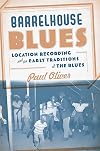
After 50 years of reading blues books, Oliver still manages to come up with more clear, insightful writing. He shows how he listens to the music and his conclusions, using as a basis a little known work by Alain Locke. By casting things with a different vocabulary, he provokes fresh thought to what sometimes feels a stale subject, where most things are just rehashes of old material. The only error I found was p. 186, where Blind Washington is credited instead of Washington Phillips. The book show more is a pleasure to hold and read, good dust jacket, sturdy binding, clear type. One innovative item is worth mentioning and adopting by others: songs are identified by artist, original label followed by the Document CD issue number, so those interested in hearing the material are readily able to track it down. This sensibly avoids a plethora of additional issues on LP and CD, which can be traced if necessary later. show less

This book show the essential relationship between people and their buildings. The architecture of ordinary people represents more than ninety per cent of the world's buildings, including some 800 million homes. Dwellings is about the types and forms of vernacular houses around the world. It documents the form of traditional buildings that are self-built by their owner-occupiers or built by members of a community, recording the means of construction and decoration of the house in many show more different cultures. show less
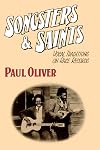
"Blues as performed on the professional stage and, later, folk blues from the South have been extensively discussed by many writers," notes Cambridge University Press on the back cover of the book. "Paul Oliver shows that this emphasis has drawn attention away from the other vocal traditions also available on Race records." Oliver devotes lengthy chapters to each of these previously neglected traditions (dance songs, ragtime numbers, the repertoire of songsters who worked the minstrel and show more medicine show circuits, the vast body of religious Race recordings from the Baptist and Sanctified churches to nonprofessional "jack-leg" preachers, and finally narrative ballads), producing a study that anyone armed with a little prior knowledge of this music will find fascinating. Naturally these traditions overlapped with the blues, and Oliver discusses a number of major figures (Peg Leg Howell, Henry Thomas, Frank Stokes, Furry Lewis and Charley Patton among them) who today are considered to have been exclusively blues artists, but who actually performed a much wider range of material. A fine scholarly work, profusely illustrated. show less
Awards


You May Also Like


Associated Authors
Statistics
- Works
- 38
- Also by
- 1
- Members
- 1,170
- Popularity
- #21,986
- Rating
- 3.8
- Reviews
- 9
- ISBNs
- 165
- Languages
- 4
- Favorited
- 1