
Robert Palmer (1) (1945–1997)
Author of Deep Blues: A Musical and Cultural History of the Mississippi Delta
For other authors named Robert Palmer, see the disambiguation page.
About the Author
Image credit: Robert Palmer (1)
Works by Robert Palmer
Associated Works
The Rolling Stone Book of the Beats: The Beat Generation and American Culture (1999) — Contributor — 181 copies, 2 reviews
Tagged
Common Knowledge
- Legal name
- Palmer, Robert Franklin, Jr.
- Birthdate
- 1945-06-19
- Date of death
- 1997-11-20
- Gender
- male
- Education
- Little Rock University
- Occupations
- musicologist
writer
musician
blues producer - Organizations
- Insect Trust (rock group)
- Relationships
- Cohen, Debra Rae (former spouse)
- Nationality
- USA
- Birthplace
- Little Rock, Arkansas, USA
- Place of death
- Valhalla, New York, USA
- Associated Place (for map)
- USA
Members
Reviews
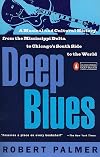
It took me way too long to get around to reading this. Deep Blues is required reading for blues fans.
Palmer did an exhaustive job of tracing the roots and connections, from turn of the century plantations along the Mississippi, through the Chicago migration, and on to the confrontation with rock in the 50s and 60s and blues’ ultimate revival. It’s a narrative genealogy of the blues, told at a fine level of who grew up where, learned from who, played what songs in what style, developed show more in what direction, and had what success (or lack of success).
Much of Palmer’s research was gathered via interviews with the principals, like Muddy Waters and Robert Lockwood, Jr. The blues spread organically and geographically, like a musical virus (in a good way) from person to person, and from style to style. Actually, I think it would be great to see a genealogical chart of origins and influences, although that may be the academic in me talking.
It’s more than just a body of knowledge — Palmer’s book enhanced my listening. He wrote in the pre-YouTube, pre-iTunes/Spotify/Pandora days when hunting down these musicians and recordings was a formidable task. Luckily, now, we can follow along with the story, looking up songs and musicians, some of whom I hadn’t known at all, or hadn’t known well. And Palmer’s musical knowledge allows him to call attention to details and aspects that I could then hunt down and appreciate for myself.
I can’t vouch for the validity of everything that Palmer recounts from his interviews and other research. Much of the history of the blues is pure folklore, often told by musicians whose currency is image, metaphor, and just plain stretching the truth, with a measure of mysticism thrown in for extra spice.
If you like the blues, this is necessary. It may be dry and factual in places, but reading the book is just part of the experience — ultimately, it’s what it adds to your experience of the music that counts. show less
Palmer did an exhaustive job of tracing the roots and connections, from turn of the century plantations along the Mississippi, through the Chicago migration, and on to the confrontation with rock in the 50s and 60s and blues’ ultimate revival. It’s a narrative genealogy of the blues, told at a fine level of who grew up where, learned from who, played what songs in what style, developed show more in what direction, and had what success (or lack of success).
Much of Palmer’s research was gathered via interviews with the principals, like Muddy Waters and Robert Lockwood, Jr. The blues spread organically and geographically, like a musical virus (in a good way) from person to person, and from style to style. Actually, I think it would be great to see a genealogical chart of origins and influences, although that may be the academic in me talking.
It’s more than just a body of knowledge — Palmer’s book enhanced my listening. He wrote in the pre-YouTube, pre-iTunes/Spotify/Pandora days when hunting down these musicians and recordings was a formidable task. Luckily, now, we can follow along with the story, looking up songs and musicians, some of whom I hadn’t known at all, or hadn’t known well. And Palmer’s musical knowledge allows him to call attention to details and aspects that I could then hunt down and appreciate for myself.
I can’t vouch for the validity of everything that Palmer recounts from his interviews and other research. Much of the history of the blues is pure folklore, often told by musicians whose currency is image, metaphor, and just plain stretching the truth, with a measure of mysticism thrown in for extra spice.
If you like the blues, this is necessary. It may be dry and factual in places, but reading the book is just part of the experience — ultimately, it’s what it adds to your experience of the music that counts. show less
Palmer's book serves as a great introduction to the Blues Greats from Charlie Patton to Otis Rush, with a big focus on Muddy Waters, whom Palmer must have talked to for days on end. It is an interesting history of how some of the poorest people in the United States created one of its enduring musical treasures--but as Ted Gioia points out in his "Subversive History of Music", new musical innovations always rise up from the minority. Palmer's writing is not always the most fluid, especially show more when reeling off so many dates and places, but when he starts to write about the music itself and its effect on him, every word rings true. show less
The best book on the blues I have read. I would like to know how something like this can be done better. Palmer uses Muddy Waters as the pivotal figure on which to base his history of the blues. It is because this device is utterly plausible that a seamless narrative account immediately takes shape and flows easily through at least a century's worth of American history and beyond. Filled with insight, research, historical and cultural information, extrapolation into folklore and African show more forms, anecdotes with the author's discographical and bibliographical sources all fully referenced. Yet the narrative style is laid-back, conversational and (given the breadth of the subject) utterly UNintimidating. A joy to read for anyone at all interested in the blues and other popular musics at any level. show less

I have a number of biographies of the Killer and haven't got around to collecting any of the latest slew of releases about the great man, I suspect that "Jerry Lee Rocks" would rank around the middle of the pack for enjoyability.
"Jerry Lee Lewis Rocks" isn't a conventional biography, rather author Robert Palmer (not the musician) jumbles the Killer's life around, concentrating on moments of Jerry Lee's life, and including a large collections of photos, including a rare shot of the Killer show more with a moustache.
I'm convinced that Jerry Lee Lewis is immortal and so his biographies can never be complete but "Jerry Lee Lewis Ricks" helps flesh out the man we call the Killer who long ago became a legend rather than a mere man. show less
"Jerry Lee Lewis Rocks" isn't a conventional biography, rather author Robert Palmer (not the musician) jumbles the Killer's life around, concentrating on moments of Jerry Lee's life, and including a large collections of photos, including a rare shot of the Killer show more with a moustache.
I'm convinced that Jerry Lee Lewis is immortal and so his biographies can never be complete but "Jerry Lee Lewis Ricks" helps flesh out the man we call the Killer who long ago became a legend rather than a mere man. show less
Awards


You May Also Like


Associated Authors
Statistics
- Works
- 10
- Also by
- 3
- Members
- 839
- Popularity
- #30,460
- Rating
- 4.1
- Reviews
- 8
- ISBNs
- 55
- Languages
- 5
- Favorited
- 1