
Cyrus Fisher (1904–1964)
Author of The Avion My Uncle Flew
About the Author
Disambiguation Notice:
Cyrus Fisher is a pen name for Darwin L. Teilhet.
Image credit: Darwin Teilhet, photo credit: Earl C. Berger
Works by Cyrus Fisher
le bidule 2 copies
Skwee-Gee 2 copies
The Road to Glory 1 copy
Take Me As I Am 1 copy
Mission of Jeffery Tolamy 1 copy
The Lion's Skin 1 copy
Tagged
Common Knowledge
- Legal name
- Teilhet, Darwin LeOra
- Other names
- Fisher, Cyrus (pen name)
Fisher, Cyrus T. (pen name) - Birthdate
- 1904-05-20
- Date of death
- 1964-04-18
- Gender
- male
- Relationships
- Teilhet, Hildegarde Tolman (spouse)
- Birthplace
- Wyanet, Illinois, USA
- Place of death
- Palo Alto, California, USA
- Burial location
- Golden Gate National Cemetery, San Bruno, California, USA
- Disambiguation notice
- Cyrus Fisher is a pen name for Darwin L. Teilhet.
- Associated Place (for map)
- California, USA
Members
Discussions
The Avion My Uncle Flew in Combiners! (December 2022)
Reviews

When twelve-year-old Johnny Littlehorn's father returns from the front lines, after WWII is over, and announces they're spending the summer in France, Johnny doesn't want to leave their Wyoming ranch. But what starts off as a boring trip soon turns into a frightening adventure. A sinister man trails Johnny throughout Paris and follows him to his uncle's village of St. Chamant.
With the help of his new friends, Suzanne and Charles, Johnny follows a winding trail that leads to a fugitive spy, a show more German pistolet hidden in a loaf of bread, and a stolen fortune. Before long, he's learning French, helping his oncle Paul build an avion, and unraveling an evil Nazi plot! show less
With the help of his new friends, Suzanne and Charles, Johnny follows a winding trail that leads to a fugitive spy, a show more German pistolet hidden in a loaf of bread, and a stolen fortune. Before long, he's learning French, helping his oncle Paul build an avion, and unraveling an evil Nazi plot! show less

When twelve-year-old Johnny Littlehorn's father returns from the front lines, after WWII is over, and announces they're spending the summer in France, Johnny doesn't want to leave their Wyoming ranch. But what starts off as a boring trip soon turns into a frightening adventure. A sinister man trails Johnny throughout Paris and follows him to his uncle's village of St. Chamant.
With the help of his new friends, Suzanne and Charles, Johnny follows a winding trail that leads to a fugitive spy, a show more German pistolet hidden in a loaf of bread, and a stolen fortune. Before long, he's learning French, helping his oncle Paul build an avion, and unraveling an evil Nazi plot! show less
With the help of his new friends, Suzanne and Charles, Johnny follows a winding trail that leads to a fugitive spy, a show more German pistolet hidden in a loaf of bread, and a stolen fortune. Before long, he's learning French, helping his oncle Paul build an avion, and unraveling an evil Nazi plot! show less

When twelve-year-old Johnny Littlehorn's father returns from the front lines, after WWII is over, and announces they're spending the summer in France, Johnny doesn't want to leave their Wyoming ranch. But what starts off as a boring trip soon turns into a frightening adventure. A sinister man trails Johnny throughout Paris and follows him to his uncle's village of St. Chamant.
With the help of his new friends, Suzanne and Charles, Johnny follows a winding trail that leads to a fugitive spy, a show more German pistolet hidden in a loaf of bread, and a stolen fortune. Before long, he's learning French, helping his oncle Paul build an avion, and unraveling an evil Nazi plot! show less
With the help of his new friends, Suzanne and Charles, Johnny follows a winding trail that leads to a fugitive spy, a show more German pistolet hidden in a loaf of bread, and a stolen fortune. Before long, he's learning French, helping his oncle Paul build an avion, and unraveling an evil Nazi plot! show less
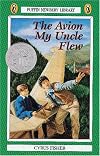
As read from OpenLibrary, I found this surprisingly charming.
It's mostly about the boy, John (Jean when he's in France) as he faces the challenges of growing from a pampered boy to a stronger and wiser young man. He's sort of forced to 'man up' in just a few weeks, as he's left to live with his 'oncle' in a poor village where there are almost no speakers of English, while still recovering from a badly broken leg, without his parents.... and then a thrilling adventure on top of it all!
But the show more 'German spies' are individuals, not indicated to be representative of Germans in general. Ditto the French, and the Americans for that matter.
The boy does complain how the French language makes no sense (for example, 'the house of the woman' instead of 'the woman's house), but it's obviously meant to be humor, as the reader laughs at (and with) the boy instead of at the French.
I believe the Newbery committee liked the idea of pointing out that war also has an impact on the home front, and that recovery is a challenge in that war isn't actually over when it's dated as such. I believe they also liked all the French vocabulary words, and the bits of French culture and history. Of course they liked the boy's developing maturity, and probably they hoped that young readers would like the humor and the adventure, too.
I think this story would make a terrific movie.
This edition, the 1967 Scholastic, downloaded as scanned, does contain some typos. The most annoying was, sometimes, viola for voila. (They did use the accent marks, but I can't seem to reproduce them here without screwing up the rest of my text.) show less
It's mostly about the boy, John (Jean when he's in France) as he faces the challenges of growing from a pampered boy to a stronger and wiser young man. He's sort of forced to 'man up' in just a few weeks, as he's left to live with his 'oncle' in a poor village where there are almost no speakers of English, while still recovering from a badly broken leg, without his parents.... and then a thrilling adventure on top of it all!
But the show more 'German spies' are individuals, not indicated to be representative of Germans in general. Ditto the French, and the Americans for that matter.
The boy does complain how the French language makes no sense (for example, 'the house of the woman' instead of 'the woman's house), but it's obviously meant to be humor, as the reader laughs at (and with) the boy instead of at the French.
I believe the Newbery committee liked the idea of pointing out that war also has an impact on the home front, and that recovery is a challenge in that war isn't actually over when it's dated as such. I believe they also liked all the French vocabulary words, and the bits of French culture and history. Of course they liked the boy's developing maturity, and probably they hoped that young readers would like the humor and the adventure, too.
I think this story would make a terrific movie.
This edition, the 1967 Scholastic, downloaded as scanned, does contain some typos. The most annoying was, sometimes, viola for voila. (They did use the accent marks, but I can't seem to reproduce them here without screwing up the rest of my text.) show less
Lists
Awards


You May Also Like


Associated Authors
Statistics
- Works
- 29
- Members
- 792
- Popularity
- #32,169
- Rating
- 4.0
- Reviews
- 8
- ISBNs
- 8