
Helen E. Fisher (1945–2024)
Author of Why We Love: The Nature and Chemistry of Romantic Love
About the Author
Works by Helen E. Fisher
Anatomy of Love: A Natural History of Mating, Marriage, and Why We Stray (1993) 353 copies, 6 reviews
The First Sex: The Natural Talents of Women and How They Are Changing the World (1999) 101 copies, 1 review
Associated Works
What Is Your Dangerous Idea? Today's Leading Thinkers on the Unthinkable (2007) — Contributor — 668 copies, 8 reviews
This Is My Best: Great Writers Share Their Favorite Work (2004) — Contributor — 173 copies, 3 reviews
Tagged
Common Knowledge
- Birthdate
- 1945-05-31
- Date of death
- 2024-08-17
- Gender
- female
- Occupations
- biological anthropologist
physical anthropologist - Organizations
- Kinsey Institute
- Cause of death
- endometrial cancer
- Birthplace
- Manhattan, New York, USA
- Place of death
- The Bronx, New York, USA
- Associated Place (for map)
- New York, USA
Members
Reviews
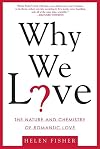
Why do we love?
Love inspired myths, legends, religions, and artworks from paintings to sculptures, and music to literature. Love affects even our most basic biological functions -appetite, sleep. Love can also be the source of sadness, depression, anger, and (paradoxically) hate, divorces, having even extreme consequences in some cases, including for example murders and suicides. In a word: love is but one big mystery! Or... Is it?
Helen Fisher, an anthropologist who seemed to have become show more the reference on the topic, attempts to answer the question. Surveying thousands of people across the continents, she starts by barging through an open door: no matter our ethnical background, our culture, our age, our education, even our sexual orientation, love is shared by us all and affects us all in the same ways. More than being universal, then, love is, first and foremost, something natural, biological, those origins must therefore be searched biologically: within the human brain.
She, therefore, first distinguishes three different phases (not necessarily inter-dependents): desire that is, sexual attraction for someone; romantic love that is, the famous 'love at first sight'; and attachment that is, the bond tying a loving relationship for the long term. She then tackles 'the mystery', working alongside neuroscientists and psychologists.
The result? Love is but a chemical reaction! Dopamine, norepinephrine, serotonin, testosterone, oestrogen, oxytocin, vasopressin... All various components getting activated in different parts of the brain depending on the different phases involved. From then on, of course, more questions arise! Like every chemical reactions, it cannot be eternal. How long does it last? Why these special bonds with that special someone? Why monogamy? Why faithfulness? Why jealousy? Why depression and/ or anger coming with unfulfilled, unrequited, failed love stories? This is where her expertise as an anthropologist is coming in handy! Helped by evolutionary biology, she, here, completes the answers brought about by chemistry... and Darwin meets poetry!
Here's a beautiful read, accessible, and full of literary references. Has the mystery been explained? Or, are here 'just so stories', seductive but reductionist somehow? I suspect, as with everything flirting with evolutionary psychology, that it's a mix of both. Nevertheless, it is, in any case, very engrossing! Love, after all, is about biology. show less
Love inspired myths, legends, religions, and artworks from paintings to sculptures, and music to literature. Love affects even our most basic biological functions -appetite, sleep. Love can also be the source of sadness, depression, anger, and (paradoxically) hate, divorces, having even extreme consequences in some cases, including for example murders and suicides. In a word: love is but one big mystery! Or... Is it?
Helen Fisher, an anthropologist who seemed to have become show more the reference on the topic, attempts to answer the question. Surveying thousands of people across the continents, she starts by barging through an open door: no matter our ethnical background, our culture, our age, our education, even our sexual orientation, love is shared by us all and affects us all in the same ways. More than being universal, then, love is, first and foremost, something natural, biological, those origins must therefore be searched biologically: within the human brain.
She, therefore, first distinguishes three different phases (not necessarily inter-dependents): desire that is, sexual attraction for someone; romantic love that is, the famous 'love at first sight'; and attachment that is, the bond tying a loving relationship for the long term. She then tackles 'the mystery', working alongside neuroscientists and psychologists.
The result? Love is but a chemical reaction! Dopamine, norepinephrine, serotonin, testosterone, oestrogen, oxytocin, vasopressin... All various components getting activated in different parts of the brain depending on the different phases involved. From then on, of course, more questions arise! Like every chemical reactions, it cannot be eternal. How long does it last? Why these special bonds with that special someone? Why monogamy? Why faithfulness? Why jealousy? Why depression and/ or anger coming with unfulfilled, unrequited, failed love stories? This is where her expertise as an anthropologist is coming in handy! Helped by evolutionary biology, she, here, completes the answers brought about by chemistry... and Darwin meets poetry!
Here's a beautiful read, accessible, and full of literary references. Has the mystery been explained? Or, are here 'just so stories', seductive but reductionist somehow? I suspect, as with everything flirting with evolutionary psychology, that it's a mix of both. Nevertheless, it is, in any case, very engrossing! Love, after all, is about biology. show less
Intriguing book with a breakdown of multiple surveys, brain chemistry, and anatomy. Loses one star based on the promotion of ignoring others.
The book states you should ignore another to remove them from your thoughts. Yet also states that memories of a lover may never leave you but is reduced in time. As explained in the book, one of the main questions one may ask after a relationship has ended is what they did wrong. By endorsing others to ignore, the rejected may never receive that answer show more and can not move on.
The reason anger develops is from being ignored. Do not promote this. By talking things through you can identify differences, and reasons for relationship failure to easily move on.
I've had no interest in reigniting past relationships but human nature, the selfishness of others, and the common practice of ignoring instead of treating those with respect as people has driven me to reconsider life.
I appreciate the honesty in this book and the poor outlook of long term relationships due to human evolution has further decreased my view on mankind. show less
The book states you should ignore another to remove them from your thoughts. Yet also states that memories of a lover may never leave you but is reduced in time. As explained in the book, one of the main questions one may ask after a relationship has ended is what they did wrong. By endorsing others to ignore, the rejected may never receive that answer show more and can not move on.
The reason anger develops is from being ignored. Do not promote this. By talking things through you can identify differences, and reasons for relationship failure to easily move on.
I've had no interest in reigniting past relationships but human nature, the selfishness of others, and the common practice of ignoring instead of treating those with respect as people has driven me to reconsider life.
I appreciate the honesty in this book and the poor outlook of long term relationships due to human evolution has further decreased my view on mankind. show less
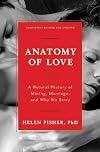
Hmmm. It is difficult to rate. As far as a scholarly work it seems to do well, as far as how I can apply it to my life as a conservative Catholic who has struggled with infidelity I don't know. I had hoped to spur good conversation with my wife based on its content but all it did was make her depressed that there was no hope for true love.

Packed with fascinating information and analysis. The writing is clear, organized and consistent. She uses great quotes and analogies. She shows incredible insight! There are huge subjects and competing powers at play in this study and discussion. The anthropology is given a great weight and she has obviously studied, thought and compared to draw her conclusions. The book is certainly "food for thought" and will rattle in my brain for a long time. The battle of moving humanity toward less show more selfishness and more love is not ruled out of the book. The scientific and genetic focus leave me wondering if she may have given too little attention to the power of the human soul to reduce the conflict among the urges she documents so well. show less
Lists
Awards

You May Also Like


Associated Authors
Statistics
- Works
- 9
- Also by
- 3
- Members
- 1,374
- Popularity
- #18,723
- Rating
- 3.6
- Reviews
- 16
- ISBNs
- 75
- Languages
- 11