
Karl Kautsky (1854–1938)
Author of Foundations of Christianity
About the Author
Image credit: George Grantham Bain Collection (Library of Congress)
Works by Karl Kautsky
Terrorism and Communism: A Contribution to the Natural History of Revolution (2009) 20 copies, 1 review
LE CHEMIN DU POUVOIR 3 copies
Demokratie oder Diktatur 3 copies
Das Weitertreiben der Revolution 2 copies
The Economic Doctrine Of Marx : A Synopsis and Analysis of Marx's Economic Theories. (2021) 2 copies
Kautsky : La dittatura del proletariato - Lenin : La rivoluzione proletaria e il rinnegato Kautsky 2 copies, 1 review
Bernstein und das sozialdemokratische Programm: Eine Antikritik (Internationale Bibliothek) (1976) 1 copy
El camino del poder 1 copy
Sbornik stateĭ 1 copy
Die wilden Zwanziger - Demokratie oder Diktatur, 2 Bände: Die Diktatur des Proletariats; Die proletarische Revolution / (1990) 1 copy
Dijalektika 1 copy
A szocializmus előfutárai 1 copy
Auf dem Weg zur Permanenten Revolution: Texte zur Russischen Revolution 1905 (Marxistische Schriften) (2017) 1 copy
Η καταγωγή του Χριστιανισμού 1 copy
Den sociala revolutionen 1 copy
Il programma di erfirt 1 copy
The Abolition of the State 1 copy
Nisjeta filosofii i Kapital 1 copy
Vorläufer des neueren Sozialismus - Zweiter Band: Der Kommunismus in der deutschen Reformation 1 copy
Poreklo hrišćanstva 1 copy
Preteče novijeg socijalizma 1 copy
Die Befreiung der Nationen 1 copy
Luokkaharrastuksia 1 copy
Het bolsjewisme in het slop 1 copy
The Twelve Who Are to Die: The Trial of the Socialists-Revolutionists in Moscow (Classic Reprint) (2012) 1 copy
Comentarios al Capital 1 copy
Die materialistische Geschichtsauffassung. Komplett in 2 Bänden. 1) Natur und Gesellschaft. 2) Der Staat und die Entwicklung der Menschheit. (1927) 1 copy, 1 review
Pochodzenie Chrześcijaństwa 1 copy
Les trois sources de la pensée de Marx: Suivi de Friedrich Engels, l'histoire de la ligue des communistes (2000) 1 copy
Teorie delle crisi 1 copy
Associated Works
The German Revolution and the Debate on Soviet Power: Documents, 1918-1919; Preparing the Founding Congress (1986) — Contributor — 31 copies
Tagged
Common Knowledge
- Canonical name
- Kautsky, Karl
- Legal name
- Kautsky, Karl Johann
- Birthdate
- 1854-10-16
- Date of death
- 1938-10-17
- Gender
- male
- Occupations
- philosopher
journalist
Marxist - Relationships
- Kautsky, Luise (spouse)
Luxemburg, Rosa (friend) - Nationality
- Czechoslovakia
- Birthplace
- Prague, Czechoslovakia
- Place of death
- Amsterdam, Netherlands
- Associated Place (for map)
- Czechoslovakia
Members
Reviews

As the Second World War was coming to an end, anti-Stalinists on the Left found themselves facing a difficult problem. The Soviet Union had won a resounding victory against Nazi Germany. Stalin was widely perceived, especially in left and liberal circles, as an ally. Many expected the Soviet Union to open up a bit, to introduce some elements of democracy.
Communist Parties in many countries — including the USA — had grown enormously, and in some Western countries, including Italy and show more France, seemed to be on the cusp of power. The Rand School Press in New York City, linked to the American Socialist Party (which was then in deep decline), rushed to get this book into print to help thwart the Communists.
The eminent philosopher Sidney Hook wrote a long introduction. David Shub (author of a later excellent biography of Lenin) and Joseph Shaplen translated and edited the book. But it’s a very strange book — a collection of writings of Kautsky’s from his last years (1932-37), though none of the chapters cite sources. We don’t know when each chapter was written, what has been left out, or where the articles originally appeared. An attempt has been made to make this read like a coherent book, starting with essays on the origins of socialism and running right up to the rise of Nazism.
Kautsky was the original anti-Stalinist, having written critical letters and articles about the Bolshevik regime just days after Lenin’s seizure of power in 1917. He died in 1938. By 1945, his ideas about Communism had begun to take hold in Social Democratic and Labour parties; by 1952, with the re-foundation of the Socialist International in Frankfurt, its founding declaration was lifted almost word for word from Kautsky’s writings on the Soviet Union.
It is clear that much was not understood about what was happening in the Soviet Union at the time Kautsky wrote some of these essays. He noted the purges and show trials, but seemed to believe that they reflected growing unrest in the USSR, which was not the case. Similarly, he acknowledges the terror famines of the early 1930s which at least in the case of Ukraine were a form of genocide. He seems unaware of their full scale.
Kautsky’s didactic style, very much in the mode of German academia, was already dated by the 1930s. While books like Orwell’s Homage to Catalonia remain vivid indictments of Stalinism and are well-read today, Kautsky is largely forgotten. This collection, for example, has not been reprinted and can only be found in some libraries and used bookstores.
Nevertheless, it remains a useful book. The most surprising part was Kautsky’s use of what would now be called “alternate history” — a few pages of “what if” scenarios had the Bolsheviks decided in early 1918 to accept the results of the elections to the Constituent Assembly and form a coalition government with the Social Revolutionaries and Mensheviks. Knowing what actually happened makes this painful reading. show less
Communist Parties in many countries — including the USA — had grown enormously, and in some Western countries, including Italy and show more France, seemed to be on the cusp of power. The Rand School Press in New York City, linked to the American Socialist Party (which was then in deep decline), rushed to get this book into print to help thwart the Communists.
The eminent philosopher Sidney Hook wrote a long introduction. David Shub (author of a later excellent biography of Lenin) and Joseph Shaplen translated and edited the book. But it’s a very strange book — a collection of writings of Kautsky’s from his last years (1932-37), though none of the chapters cite sources. We don’t know when each chapter was written, what has been left out, or where the articles originally appeared. An attempt has been made to make this read like a coherent book, starting with essays on the origins of socialism and running right up to the rise of Nazism.
Kautsky was the original anti-Stalinist, having written critical letters and articles about the Bolshevik regime just days after Lenin’s seizure of power in 1917. He died in 1938. By 1945, his ideas about Communism had begun to take hold in Social Democratic and Labour parties; by 1952, with the re-foundation of the Socialist International in Frankfurt, its founding declaration was lifted almost word for word from Kautsky’s writings on the Soviet Union.
It is clear that much was not understood about what was happening in the Soviet Union at the time Kautsky wrote some of these essays. He noted the purges and show trials, but seemed to believe that they reflected growing unrest in the USSR, which was not the case. Similarly, he acknowledges the terror famines of the early 1930s which at least in the case of Ukraine were a form of genocide. He seems unaware of their full scale.
Kautsky’s didactic style, very much in the mode of German academia, was already dated by the 1930s. While books like Orwell’s Homage to Catalonia remain vivid indictments of Stalinism and are well-read today, Kautsky is largely forgotten. This collection, for example, has not been reprinted and can only be found in some libraries and used bookstores.
Nevertheless, it remains a useful book. The most surprising part was Kautsky’s use of what would now be called “alternate history” — a few pages of “what if” scenarios had the Bolsheviks decided in early 1918 to accept the results of the elections to the Constituent Assembly and form a coalition government with the Social Revolutionaries and Mensheviks. Knowing what actually happened makes this painful reading. show less
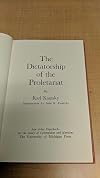
I am of two minds about this book. On the one hand, it hasn’t stood the test of time. Kautsky’s predictions from 1918 about what was going to happen next in Soviet Russia turned out to be wildly off the mark. To be fair, he could not have known about the new totalitarian society that was then being born. And yet it is strange that in a book so critical of Lenin and his party, there is no mention of the Red Terror, the creation of the feared Cheka or the labour camps that grew into the show more GULAG. Some of Kautsky’s criticisms of the Bolsheviks come, strangely, from the left — for example, he chastises them for encouraging peasants to seize the land and divvy it up among themselves, rather than turn it over to the state.
But on the other hand, when Kautsky wrote the book in the summer of 1918, just nine months after the Bolsheviks seized power, hardly any socialists outside of Russia had a bad thing to say about them. Even Rosa Luxemburg’s short book, though critical of the Bolsheviks, is extremely enthusiastic about their revolution. But in this book, Kautsky slowly, methodically explains the connection between socialism and democracy, completely rejecting dictatorship. He even does an effective job of explaining precisely what Karl Marx meant when he used the phrase “dictatorship of the proletariat” on one or two occasions. (Spoiler alert: it didn’t mean banning socialist parties, shooting hostages, invading neighbouring countries and creating an entire economy based on slave labour.)
This edition of the book includes a long introduction by Kautsky’s grandson John, which is terrific — and not least because he quotes Max Shachtman, a personal favourite. John Kautsky calls his grandfather’s book “an important document in the history of Marxism and of the socialist movement and a milestone at the point of its path where communism and democratic socialism parted ways.” I would argue that it took another six years for that to happen, and that the suppression of the 1924 uprising in Georgia played a surprising role in that. But it was in this book that Kautsky first laid out the distinction between democracy and dictatorship that played such a critical role in the creation of the modern socialist movement. show less
But on the other hand, when Kautsky wrote the book in the summer of 1918, just nine months after the Bolsheviks seized power, hardly any socialists outside of Russia had a bad thing to say about them. Even Rosa Luxemburg’s short book, though critical of the Bolsheviks, is extremely enthusiastic about their revolution. But in this book, Kautsky slowly, methodically explains the connection between socialism and democracy, completely rejecting dictatorship. He even does an effective job of explaining precisely what Karl Marx meant when he used the phrase “dictatorship of the proletariat” on one or two occasions. (Spoiler alert: it didn’t mean banning socialist parties, shooting hostages, invading neighbouring countries and creating an entire economy based on slave labour.)
This edition of the book includes a long introduction by Kautsky’s grandson John, which is terrific — and not least because he quotes Max Shachtman, a personal favourite. John Kautsky calls his grandfather’s book “an important document in the history of Marxism and of the socialist movement and a milestone at the point of its path where communism and democratic socialism parted ways.” I would argue that it took another six years for that to happen, and that the suppression of the 1924 uprising in Georgia played a surprising role in that. But it was in this book that Kautsky first laid out the distinction between democracy and dictatorship that played such a critical role in the creation of the modern socialist movement. show less
Terrorism And Communism (Routledge Revivals): A Contribution to the Natural History of Revolution by Karl Kautsky
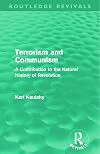
When Lenin and the Bolsheviks seized power in Petrograd in the first days of November 1917, socialists everywhere greeted the news with delight. But not Karl Kautsky, the German Social Democrat then widely known as the “Pope of Marxism”. Within a week of the Bolshevik “revolution” Kautsky was already writing up his criticisms of the new regime. By the following summer, he published these as a book, The Dictatorship of the Proletariat, which was a blistering attack on the new Soviet show more state. Lenin, for whom Kautsky was a mentor, was furious. He took a break from running that Soviet state to writing a book-length rebuttal to Kautsky in which he famously described his former teacher as a “renegade”. This book is Kautsky’s followup to the earlier one — but it is not in any way a direct answer to Lenin. This book got Trotsky to hastily write a reply, also called Terrorism and Communism, which the Red Army commander drafted while leading troops into battle from his armoured train.
I was frankly disappointed with this book. It is not Kautsky at his best. In some senses, it is Kautsky at his worst — pedantic, repetitive, and wandering. The first half of the book doesn’t even mention Russia and the Bolsheviks. Instead it is a ponderous history of the French Revolution of 1789 and the Paris Commune of 1871. Kautsky is trying to draw out some general rules of revolution, but without much success. The remaining bits of the book reiterate arguments he made about the Bolsheviks in his earlier book. I imagine that Trotsky felt the need to reply not because of the power of Kautsky’s arguments, but because of who Kautsky was — the pre-eminent Marxist theoretician of his time.
One of the biggest surprises of this book is how amorphous Kautsky’s views really were at this time (1919). After criticising the Bolsheviks for a long list of sins, he concludes: “Whatever one may think of the Bolshevik methods, the fact that a proletarian government in a great state has not only come into power, but been able to maintain itself for nearly two years under the most difficult conditions conceivable, naturally increases the feeling of power among the proletariat of all countries. For the world-revolution therefore, in this respect, the Bolsheviks have rendered an enormous service …”
Strange words coming from a man who a year or two later would be comparing the Bolsheviks to Mussolini’s Fascists. Kautsky eventually convinced the Social Democratic and Labour parties in Euroope into supporting armed insurrections against the Soviet government — which he was still calling “proletarian” at this stage.
This edition fo the book is ill-served by its original translation. W.H. Kerridge, the translator, was a church organist and pianist for an opera company. He was also, apparently, a linguist, though it’s not clear if he had any background on the Left. It would be a good thing if someone would come along and do a new, better translation from the original German. show less
I was frankly disappointed with this book. It is not Kautsky at his best. In some senses, it is Kautsky at his worst — pedantic, repetitive, and wandering. The first half of the book doesn’t even mention Russia and the Bolsheviks. Instead it is a ponderous history of the French Revolution of 1789 and the Paris Commune of 1871. Kautsky is trying to draw out some general rules of revolution, but without much success. The remaining bits of the book reiterate arguments he made about the Bolsheviks in his earlier book. I imagine that Trotsky felt the need to reply not because of the power of Kautsky’s arguments, but because of who Kautsky was — the pre-eminent Marxist theoretician of his time.
One of the biggest surprises of this book is how amorphous Kautsky’s views really were at this time (1919). After criticising the Bolsheviks for a long list of sins, he concludes: “Whatever one may think of the Bolshevik methods, the fact that a proletarian government in a great state has not only come into power, but been able to maintain itself for nearly two years under the most difficult conditions conceivable, naturally increases the feeling of power among the proletariat of all countries. For the world-revolution therefore, in this respect, the Bolsheviks have rendered an enormous service …”
Strange words coming from a man who a year or two later would be comparing the Bolsheviks to Mussolini’s Fascists. Kautsky eventually convinced the Social Democratic and Labour parties in Euroope into supporting armed insurrections against the Soviet government — which he was still calling “proletarian” at this stage.
This edition fo the book is ill-served by its original translation. W.H. Kerridge, the translator, was a church organist and pianist for an opera company. He was also, apparently, a linguist, though it’s not clear if he had any background on the Left. It would be a good thing if someone would come along and do a new, better translation from the original German. show less

Kautsky's magnum opus remains a classic of historical scholarship and Marxian social analysis. Completed in 1908, its short opening section on "The Person of Jesus" reflects the undeveloped state of Biblical scholarship at the time. But after these few pages, his volume offers a wealth of historical materials and interpretations which retain their value to this day.
The body of the volume is divided into three books of approximately equal size: "Society in the Roman Empire," "The Jew," and show more "The Beginnings of Christianity." Each of these represents a penetrating essay in the social, economic, and cultural aspects of its subject. Each illuminates matters of great historical importance: for the Roman Empire, the analysis of slavery; for the Jews, the ethos of trade; and for the origins of Christianity, the vague but energetic communism that permeated the early Christian community.
Is Jesus a Socialist?
As the debate over the government’s debt and its role in assisting the poor intensifies, some Leftists claim that Jesus and the Bible advocate socialism and preach against capitalism.
In citing examples from the Bible that calls for outright socialism of the type described millennia later by Marx several may be cited. The first example is focused upon Jesus’ warning to the wealthy that they may not inherit the kingdom of God (Matthew 19:24, which reads, “Again I tell you, it is easier for a camel to go through the eye of a needle than for someone who is rich to enter the kingdom of God.”). Then, there are the verses in the book of Acts. Acts 2:42-47 reads:
They devoted themselves to the apostles’ teaching and to fellowship, to the breaking of bread and to prayer. Everyone was filled with awe at the many wonders and signs performed by the apostles. All the believers were together and had everything in common. They sold property and possessions to give to anyone who had need. Every day they continued to meet together in the temple courts. They broke bread in their homes and ate together with glad and sincere hearts, praising God and enjoying the favor of all the people. And the Lord added to their number daily those who were being saved.
And then Acts 4:32-35 reads:
All the believers were one in heart and mind. No one claimed that any of their possessions was their own, but they shared everything they had. With great power the apostles continued to testify to the resurrection of the Lord Jesus. And God’s grace was so powerfully at work in them all that there were no needy persons among them. For from time to time those who owned land or houses sold them, brought the money from the sales and put it at the apostles’ feet, and it was distributed to anyone who had need.
These Biblical accounts, teamed with a story in chapter five in which a man and wife were stricken dead for failing “to turn over all…property to the church,“ could constitute the first description of socialism in history. Over time, some might argue that Christianity has separated itself from the socialistic nature of the Book.
For example, some might argue that the intellectual foundations for the alliance between capital and God were laid after World War II by Roman Catholic William Buckley, who, like some others contrived to maneuver around their churches’ skepticism about mercantile interests, worked to convert frugal church goers into materialistic consumers who spend their Sundays watching spectator sports and charging up interest loaded debt at the mall.
After reading this account of Christianity‘s origins and the Bible’s alleged economic contents, others might argue that socialism is a relatively new construct, and dismiss the notion that Jesus was “pro-Socialist.”
Furthermore, it is problematic to view socialism as a “biblical mandate” and that the better question should not be, “Does the Bible mandate socialism?” Instead, critics and adherents, alike, should be asking, “Is socialism compatible with the Bible?”
A socialist interprets Jesus’s substantial encouragement for the poor and warnings against the moral pitfalls of wealth as support for socialism. Yet one has to travel quite the intellectual and theological distance to equate admonitions towards charity and warnings against greed with divine sanction for the appropriation of private property rights, handing over monies to the Roman tax collectors--which Jesus did not do--and the forcible redistribution of wealth.
The man and wife who were stricken dead in Acts perished because of their deceit, not because they hadn’t turned all of their possessions over to the church. Also, in Luke, Chapter 10, Jesus says that “the worker deserves his wages” (clearly, this statement meshes more with capitalism). Expounding upon these ideas, there are other themes and statements throughout the Bible that contradict socialism’s tenets:
While the Bible calls us to help the poor, it is also clear that the poor must help themselves to the extent they are able. In 2 Thessalonians 3, Paul warns against idleness and says, “The one who is unwilling to work shall not eat.” In 1 Timothy 5, Paul also declares, “Anyone who does not provide for their relatives, and especially for their own household, has denied the faith and is worse than an unbeliever.” Even inclusion on the widows’ “list” (which entitled widows to receive aid from the church) was conditioned upon age and good conduct.
Socialism creates poverty, witness for example the few remaining socialistic nations are stricken with economic deficiency and intense interdependence as a result of the economic system. Today, the recent events striking Europe — London’s riots and Greece, Spain, Italy and Ireland’s economic woes — to failed experiments with socialism. Concerning these nations, their idle but well-fed youth, demanding ever-more from a state they give nothing, are either in the streets or threatening chaos.
At the end of the day, Christians have overwhelmingly rejected socialism because the Bible is contradictory to its underpinnings.
The Bible isn’t an economics textbook, but many Christians believe its underlying principles are most consistent with the free economy. There are reasonable critiques of that opinion, but the verses cited in favor of socialism do not support socialism. show less
The body of the volume is divided into three books of approximately equal size: "Society in the Roman Empire," "The Jew," and show more "The Beginnings of Christianity." Each of these represents a penetrating essay in the social, economic, and cultural aspects of its subject. Each illuminates matters of great historical importance: for the Roman Empire, the analysis of slavery; for the Jews, the ethos of trade; and for the origins of Christianity, the vague but energetic communism that permeated the early Christian community.
Is Jesus a Socialist?
As the debate over the government’s debt and its role in assisting the poor intensifies, some Leftists claim that Jesus and the Bible advocate socialism and preach against capitalism.
In citing examples from the Bible that calls for outright socialism of the type described millennia later by Marx several may be cited. The first example is focused upon Jesus’ warning to the wealthy that they may not inherit the kingdom of God (Matthew 19:24, which reads, “Again I tell you, it is easier for a camel to go through the eye of a needle than for someone who is rich to enter the kingdom of God.”). Then, there are the verses in the book of Acts. Acts 2:42-47 reads:
They devoted themselves to the apostles’ teaching and to fellowship, to the breaking of bread and to prayer. Everyone was filled with awe at the many wonders and signs performed by the apostles. All the believers were together and had everything in common. They sold property and possessions to give to anyone who had need. Every day they continued to meet together in the temple courts. They broke bread in their homes and ate together with glad and sincere hearts, praising God and enjoying the favor of all the people. And the Lord added to their number daily those who were being saved.
And then Acts 4:32-35 reads:
All the believers were one in heart and mind. No one claimed that any of their possessions was their own, but they shared everything they had. With great power the apostles continued to testify to the resurrection of the Lord Jesus. And God’s grace was so powerfully at work in them all that there were no needy persons among them. For from time to time those who owned land or houses sold them, brought the money from the sales and put it at the apostles’ feet, and it was distributed to anyone who had need.
These Biblical accounts, teamed with a story in chapter five in which a man and wife were stricken dead for failing “to turn over all…property to the church,“ could constitute the first description of socialism in history. Over time, some might argue that Christianity has separated itself from the socialistic nature of the Book.
For example, some might argue that the intellectual foundations for the alliance between capital and God were laid after World War II by Roman Catholic William Buckley, who, like some others contrived to maneuver around their churches’ skepticism about mercantile interests, worked to convert frugal church goers into materialistic consumers who spend their Sundays watching spectator sports and charging up interest loaded debt at the mall.
After reading this account of Christianity‘s origins and the Bible’s alleged economic contents, others might argue that socialism is a relatively new construct, and dismiss the notion that Jesus was “pro-Socialist.”
Furthermore, it is problematic to view socialism as a “biblical mandate” and that the better question should not be, “Does the Bible mandate socialism?” Instead, critics and adherents, alike, should be asking, “Is socialism compatible with the Bible?”
A socialist interprets Jesus’s substantial encouragement for the poor and warnings against the moral pitfalls of wealth as support for socialism. Yet one has to travel quite the intellectual and theological distance to equate admonitions towards charity and warnings against greed with divine sanction for the appropriation of private property rights, handing over monies to the Roman tax collectors--which Jesus did not do--and the forcible redistribution of wealth.
The man and wife who were stricken dead in Acts perished because of their deceit, not because they hadn’t turned all of their possessions over to the church. Also, in Luke, Chapter 10, Jesus says that “the worker deserves his wages” (clearly, this statement meshes more with capitalism). Expounding upon these ideas, there are other themes and statements throughout the Bible that contradict socialism’s tenets:
While the Bible calls us to help the poor, it is also clear that the poor must help themselves to the extent they are able. In 2 Thessalonians 3, Paul warns against idleness and says, “The one who is unwilling to work shall not eat.” In 1 Timothy 5, Paul also declares, “Anyone who does not provide for their relatives, and especially for their own household, has denied the faith and is worse than an unbeliever.” Even inclusion on the widows’ “list” (which entitled widows to receive aid from the church) was conditioned upon age and good conduct.
Socialism creates poverty, witness for example the few remaining socialistic nations are stricken with economic deficiency and intense interdependence as a result of the economic system. Today, the recent events striking Europe — London’s riots and Greece, Spain, Italy and Ireland’s economic woes — to failed experiments with socialism. Concerning these nations, their idle but well-fed youth, demanding ever-more from a state they give nothing, are either in the streets or threatening chaos.
At the end of the day, Christians have overwhelmingly rejected socialism because the Bible is contradictory to its underpinnings.
The Bible isn’t an economics textbook, but many Christians believe its underlying principles are most consistent with the free economy. There are reasonable critiques of that opinion, but the verses cited in favor of socialism do not support socialism. show less
You May Also Like


Associated Authors
Statistics
- Works
- 111
- Also by
- 4
- Members
- 640
- Popularity
- #39,394
- Rating
- 3.9
- Reviews
- 14
- ISBNs
- 121
- Languages
- 11
- Favorited
- 1
