
Sandra Scofield
Author of The Scene Book: A Primer for the Fiction Writer
About the Author
Works by Sandra Scofield
Associated Works
Family Trouble: Memoirists on the Hazards and Rewards of Revealing Family (2013) — Contributor — 21 copies
Tagged
Common Knowledge
Members
Reviews
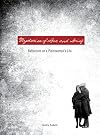
Novelist Sandra Scofield’s memoir, Mysteries of Love and Grief, is composed of a series of essays about her family. Frieda, her maternal grandmother, widowed in her 30s with three kids to raise in the midst of the Great Depression in hardscrabble Texas, is the principal character in an ensemble that includes Edith, Scofield’s free-spirited, fragile and doomed mother, an ever-changing cast of husbands and boyfriends, and Scofield, the precocious, spoiled, determined-to-escape child of show more these complicated women.
This story feels like Scofield sitting in a comfortable chair telling us stories about her family. In the first chapter, “The Story Test,” Scofield explains how she came to write this book about her grandmother. I finished it and thought, “Okay, I understand this woman, Frieda.” And then I read the next essay, about the distribution of Frieda’s meager estate and I was surprised. Surprise was a common element in all of these essays, which I guess shouldn’t be surprising. Scofield probes the mysteries of her grandmother and her mother and the father she never knew and the baby she lost and with each discovery there is more mystery.
Scofield has a clear eye. She loves Frieda and her mother and many of the other characters, but is able to still see clearly both their mysterious strengths (such as Frieda’s never complain – never explain guiding principle) and their failings. She’s writing about real people and she makes them real for us. They are unbelievably generous and courageous and petty and shortsighted. It is written with love. She treats everyone fairly, even the characters she doesn’t love.
At the end of Scofield’s chapter, “Anger” she learns that because of her misdemeanor drug offense during the early 70s, the FBI came to her grandmother’s house to intimidate her, but her grandmother stared them down.
Scofield writes: “I hadn’t learned the beautiful power of anger when it is rooted in God’s love…I had never seen it on the faces of strong people standing up to injustice and suffering because I had never looked…
Something stirred: a sorrow for the many time I had hurt her with my absences and my wasted opportunities and her steady love. I ached for her to care about something better, steadier and more deserving than me, something worthy of her defiance. Something holy.”
A poignant, powerful story, beautifully written.
show less
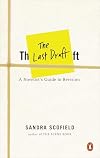
Award-winning novelist, Sandra Scofield (her novel, Beyond Deserving was a finalist for the National Book Award) has been working with aspiring novelists for over two decades.
As an aspiring writer myself, I know that completing a first draft, while not easy, is not all that difficult if you have some discipline. But the really daunting challenge is what to do next. How do we make this rough manuscript into a real novel, something we can be proud of? Something that others might want to show more read?
There is no magical formula, but Scofield’s guide provides a map for how we can proceed. She writes clearly and humbly and doesn’t try to overpromise. Most writers know that the odds against being published are huge.
I’ve used Scofield’s guide and it has helped me to write a much better novel. And just as important as the guidance she provides for the revision process, is the honest perspective she shares on the writing life.
Here is what Scofield had to say about her own career:
“I’ve never had a book with large sales. All my books, however received warm critical praise including a nomination for the National Book Award…I’m proud of my books. I’ve known writers who, to me, are famous, but who feel they didn’t get the acclaim they deserved. Some died still lamenting their careers. I can only say: Get over it. Write what you love; love writing it; hope for a readership; appreciate every reader. So a million people don’t buy your book? Would it be such a terrible thing to say that only ten thousand, or four thousand, or hell, four hundred people read your book? Think about that. Every reader’s time is precious. I love all my readers.”
I highly recommend this guide for anyone who has a first draft or is just considering writing a novel. It is an incredible resource. show less
As an aspiring writer myself, I know that completing a first draft, while not easy, is not all that difficult if you have some discipline. But the really daunting challenge is what to do next. How do we make this rough manuscript into a real novel, something we can be proud of? Something that others might want to show more read?
There is no magical formula, but Scofield’s guide provides a map for how we can proceed. She writes clearly and humbly and doesn’t try to overpromise. Most writers know that the odds against being published are huge.
I’ve used Scofield’s guide and it has helped me to write a much better novel. And just as important as the guidance she provides for the revision process, is the honest perspective she shares on the writing life.
Here is what Scofield had to say about her own career:
“I’ve never had a book with large sales. All my books, however received warm critical praise including a nomination for the National Book Award…I’m proud of my books. I’ve known writers who, to me, are famous, but who feel they didn’t get the acclaim they deserved. Some died still lamenting their careers. I can only say: Get over it. Write what you love; love writing it; hope for a readership; appreciate every reader. So a million people don’t buy your book? Would it be such a terrible thing to say that only ten thousand, or four thousand, or hell, four hundred people read your book? Think about that. Every reader’s time is precious. I love all my readers.”
I highly recommend this guide for anyone who has a first draft or is just considering writing a novel. It is an incredible resource. show less
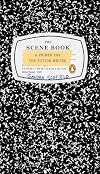
I've always considered good writing an art, something that can't really be taught or learned. This book showed me how wrong that idea was. Talent is important to good writing, but so is form and technique. Scofield teaches how pulse, events, beats, point of view, scenarios, and several other tools add up to create a story that really works. She also gives some really good tips for revising your own writing. I would recommend this book to anyone who is seriously considering writing a novel.
I feel like the book could have been restructured in a way that it becomes a really good diagnostic tool, but most of the book was analysis and excerpts from books the author enjoys or has written.
However, there were some good nuggets in here, and I think a really good template/checklist at the end for trying to figure out why scenes you may have written feel 'muddy' or aren't working right. That's the stuff beginners like me really need
However, there were some good nuggets in here, and I think a really good template/checklist at the end for trying to figure out why scenes you may have written feel 'muddy' or aren't working right. That's the stuff beginners like me really need
Lists
Awards


You May Also Like


Associated Authors
Statistics
- Works
- 13
- Also by
- 2
- Members
- 492
- Popularity
- #50,225
- Rating
- 3.5
- Reviews
- 13
- ISBNs
- 35
- Languages
- 1