
Barbara Frale
Author of The Templars: The Secret History Revealed
Works by Barbara Frale
Il papato e il processo ai templari: l'inedita assoluzione di Chinon alla luce della diplomatica pontificia (2003) 8 copies
L'inganno del gran rifiuto. La vera storia di Celestino V, papa dimissionario (2013) 7 copies, 1 review
L'ultima battaglia dei Templari : dal codice ombra d'obbedienza militare alla costruzione del processo per eresia (2001) 4 copies
Tagged
Common Knowledge
- Canonical name
- Frale, Barbara
- Birthdate
- 1970
- Gender
- female
- Education
- University of Venice (Ph.D.)
- Occupations
- Historian of the Vatican Secret Archives
- Nationality
- Italy
- Places of residence
- Viterbo, Italy
- Associated Place (for map)
- Viterbo, Italy
Members
Reviews

Not a literary classic but you never know whether to blame translator, the author, or both. However, this is the first Templar book without any mystical Dan Brown sort of conspiracy theory through the ages bullshit. It’s just the facts. Frale has a bias towards the Vatican side of things but she doesn’t gloss over the blemishes in the Military Orders. The Templars are revealed for what they are, a holy military order. They were the best of a rotten lot of Crusaders. If you were a woman show more or child you would much rather face a Templar or Hospitaler than the average Frankish Crusader, if you know what I mean.
In short a good book if you want the basic facts and no fantasy.
Before I go, Frale points out that many modern “societies” claim descent from the Templars, who’s first vows were celibacy and poverty. When was the last time you saw a Shriner or Mason that was celibate and destitute? show less
In short a good book if you want the basic facts and no fantasy.
Before I go, Frale points out that many modern “societies” claim descent from the Templars, who’s first vows were celibacy and poverty. When was the last time you saw a Shriner or Mason that was celibate and destitute? show less

It’s hard for me to decide what I think about this book. For virtually my entire life, I’ve heard and read rumors, stories, and myths about the mysterious Knights Templar, and most people know about the Holy Grail and have heard stories that the organization continues to secretly exist to the present day. When I got this book, I wasn’t exactly looking for or expecting to find these stories were justified. However, while I admittedly did enjoy learning about how the Templars were show more founded, and for what reasons, and the qualities one had to have and the sacrifices one had to make in order to become one, this book then quickly turned into basically a dry textbook of history, places, several events, politics, culminating in a very disappointing (for me) end to what had been an admirable organization, complete with confessions tortured out of the Templars who had been arrested due to political BS between the King of France and the Pope. It was further disappointing to learn that at least some of the confessions were true, as in the Templars’ secret initiation rites, which I cannot believe were original, had degraded into something undeserving of the name and purpose of the organization, and personal requirements and standards had been lowered to recruit new members, thus making for a lack of morals in some that would have probably gotten an original Templar killed by his fellows. It was also disappointing to learn of such a once-splendid organization’s demise, and as the primary author was granted access to the “secret” Vatican files, it’s highly likely that the reports of its termination as an organization are and were indeed true, thus destroying my youthful fantasies of a super-secret organization existing over the centuries to the present, exercising power in all sorts of areas. Like I originally stated, I knew that was essentially a myth, but it was still disappointing to read the historical truth.
This is a well-researched, and professionally written history of a fascinating organization that was quite powerful for several hundred years and which still interests numerous people til this day. The writing gets fairly dry at times, even boring, but there’s enough good details and history in it to make it worth reading. I’d give this book a solid four stars and state that it’s recommended. show less
This is a well-researched, and professionally written history of a fascinating organization that was quite powerful for several hundred years and which still interests numerous people til this day. The writing gets fairly dry at times, even boring, but there’s enough good details and history in it to make it worth reading. I’d give this book a solid four stars and state that it’s recommended. show less
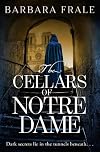
Two things attracted me to this book - the subject matter and the author, whose book on the Templars I had read in the past.
Medieval politics is a difficult path to navigate at the best of times. Throw in some papal discord, political and religious machinations, mysterious cabals, superstition, rumour and inuendo, and two political giants in Philip the Fair of France and Pope Boniface VIII, and you have the makings of a very good historical fiction thriller.
Frale is a noted historian and show more paleographer at the Vatican Secret Archives, and her previous works have been in the non-fiction genre and this is her first novel (as far as I am aware). The amount of research that has gone into this book is (at times, painfully) evident.
I would strongly suggest that having some interest in this particular period would be a good thing as there are a plethora of characters (real and fictional) that walk across the pages; some add to the story, others are not so critical, leaving me wondering if they were necessary in the first place (mayhap a short list of essential characters at the very start might be an idea). There are also a number of themes running through the narrative - some evident; others not so and these are not cleared up until towards the end. At times, the reader could be left wondering which narrative it is that they should be following and what should be discarded. Despite this being an area of interest for me, the dearth of information provided sometimes felt oppressive - at page 50 I felt like I was at page 500!
Once you get past all of this, the story itself it rather an interesting premise. I will most likely read this again. show less
Medieval politics is a difficult path to navigate at the best of times. Throw in some papal discord, political and religious machinations, mysterious cabals, superstition, rumour and inuendo, and two political giants in Philip the Fair of France and Pope Boniface VIII, and you have the makings of a very good historical fiction thriller.
Frale is a noted historian and show more paleographer at the Vatican Secret Archives, and her previous works have been in the non-fiction genre and this is her first novel (as far as I am aware). The amount of research that has gone into this book is (at times, painfully) evident.
I would strongly suggest that having some interest in this particular period would be a good thing as there are a plethora of characters (real and fictional) that walk across the pages; some add to the story, others are not so critical, leaving me wondering if they were necessary in the first place (mayhap a short list of essential characters at the very start might be an idea). There are also a number of themes running through the narrative - some evident; others not so and these are not cleared up until towards the end. At times, the reader could be left wondering which narrative it is that they should be following and what should be discarded. Despite this being an area of interest for me, the dearth of information provided sometimes felt oppressive - at page 50 I felt like I was at page 500!
Once you get past all of this, the story itself it rather an interesting premise. I will most likely read this again. show less

The translation is quite spotty in places, done by an outfit "Corporate Translation Services," whatever that is. The writing is a bit academic and choppy in spots. The gist builds off two prongs: (1) Frale's complete immersion and knowledge of Templar documents, many that scholars have not really accessed before (and many that escape the view of English readers); and (2) the theory of Ian Wilson's that between the time the Shroud/Mandylion was looted from Constantinople in 1204 (during the show more Fourth Crusade) and it's appearance in France in the mid-1300s, it was in the care of the Templars. Frale builds on earlier theories and connects it to documents to come up with some pretty good circumstantial evidence that the Templars did indeed have the Shroud and venerated it as a relic, almost as an idol, which got them in trouble come Philip of France in 1307. For instance, she maintains that the "head" that the Templars supposedly confessed to "worshiping," under torture, mind you, was, in reality, painted copies of the Shroud's head (like the copies of Mandylion venerated in Eastern Orthodoxy as icons).
Frale makes a pretty good case, though it is a bit difficult to follow and roundabout. Frale is definitely not a popular history writer, like Ian Wilson, but she is a thorough scholar, so the book drags from time to time. But, diligent readers and researchers will benefit from careful study of the thesis. Frale is not as good as others (Wesselow, for instance, more recently, or Wilson, for instance) in showing that the Shroud is an authentic, first century artifact, but she does so competently enough. The meat of this book is to show that, indeed, the Templars had something that was probably the Shroud, that they got it (through many hands) from Constantinople (i.e., it was the Mandylion), and that when the Shroud appeared in the mid-1300s in France, it was in the hands of Templar-related families.
Again, Frale's writing is not the smoothest, nor is the translation, but it is a fine addition to the story of the Shroud of Turin. Kudos for proper footnotes for citations. It has a nice bibliography (lots of books in Frale's native Italian, which opens up whole new scholarly vistas for English-speaking enthusiasts of the Shroud). It has a serviceable index. A few pictures, but could use quite a number more (nota bene, the paperback edition has color plates yet the hardcover edition has black-and-white images, which makes no sense). For instance, the Templecombe face of Christ, which is a very Shroud/Mandylion-looking face found in a Templar church, is mentioned several times in the text, but no image of it appears in the book.
Still, a fine addition to the story of the Shroud of Turin, connecting Constantinople in 1204 to France in the mid-1300s via the Knights Templar. show less
Frale makes a pretty good case, though it is a bit difficult to follow and roundabout. Frale is definitely not a popular history writer, like Ian Wilson, but she is a thorough scholar, so the book drags from time to time. But, diligent readers and researchers will benefit from careful study of the thesis. Frale is not as good as others (Wesselow, for instance, more recently, or Wilson, for instance) in showing that the Shroud is an authentic, first century artifact, but she does so competently enough. The meat of this book is to show that, indeed, the Templars had something that was probably the Shroud, that they got it (through many hands) from Constantinople (i.e., it was the Mandylion), and that when the Shroud appeared in the mid-1300s in France, it was in the hands of Templar-related families.
Again, Frale's writing is not the smoothest, nor is the translation, but it is a fine addition to the story of the Shroud of Turin. Kudos for proper footnotes for citations. It has a nice bibliography (lots of books in Frale's native Italian, which opens up whole new scholarly vistas for English-speaking enthusiasts of the Shroud). It has a serviceable index. A few pictures, but could use quite a number more (nota bene, the paperback edition has color plates yet the hardcover edition has black-and-white images, which makes no sense). For instance, the Templecombe face of Christ, which is a very Shroud/Mandylion-looking face found in a Templar church, is mentioned several times in the text, but no image of it appears in the book.
Still, a fine addition to the story of the Shroud of Turin, connecting Constantinople in 1204 to France in the mid-1300s via the Knights Templar. show less
You May Also Like


Associated Authors
Statistics
- Works
- 22
- Members
- 433
- Popularity
- #56,453
- Rating
- 3.6
- Reviews
- 14
- ISBNs
- 56
- Languages
- 7