
Richard H. Francis
Author of Judge Sewall's Apology: The Salem Witch Trials and the Forming of an American Conscience
About the Author
Works by Richard H. Francis
Judge Sewall's Apology: The Salem Witch Trials and the Forming of an American Conscience (2005) 227 copies, 5 reviews
Ann the Word : The Story of Ann Lee, Female Messiah, Mother of the Shakers (2000) 138 copies, 1 review
Transcendental Utopias: Individual and Community at Brook Farm, Fruitlands, and Walden (1997) 11 copies
Associated Works
Tagged
Common Knowledge
- Gender
- male
- Relationships
- Francis, Matthew
- Nationality
- UK
- Associated Place (for map)
- UK
Members
Reviews
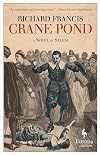
This spare, beautiful novel retells a story at once familiar yet full of surprises, that of the Salem witch trials in Massachusetts Bay Colony. Samuel Sewall, a Boston merchant and a man widely respected, tells how those infamous proceedings occurred; how he became one of the presiding judges; what he was thinking during the testimony and deliberations; what the community thought of them (and him); and how he felt afterward. That premise is itself a bold undertaking, because it implies show more creating sympathy for a judicial murderer who thought a witch hunt was the right idea.
But Francis goes even one better. Not only does he show Sewall at his worst and compel you to consider his protagonist fairly, he begins the narrative years before the Salem trials. There’s no prologue, no portents, no gimmick to placate a reader who might become antsy during such a lengthy backstory. Francis wants you to understand the political, religious, and emotional reasons an honest man like Sewall winds up participating in and endorsing procedures that are flagrantly dishonest. Yet despite what might seem a digression, the tension never flags. Why not?
I think it’s because Francis has entered Sewall’s everyday life, beliefs, and psyche so thoroughly that I can’t help being drawn in. Sewall’s a man who constantly wrestles with his faith. “Trouble and disgrace can come from any source; the world is composed of little things as well as great ones,” he observes. Every conversational misunderstanding, fib, nightmare, unguarded impulse, or declaration of spiritual terror from any of his beloved children sets him off on a soul-searching expedition that will inevitably lead to prayer on bruised knees. Even the bruises prompt reflection.
That enemy, Sewall believes, runs rife in his community, as in others everywhere. Massachusetts Bay Colony, though held to be blessed by God, may well have lost its way and fallen under the Devil’s influence. And since Sewall feels himself capable of temptation, whether by lustful impulses toward his pretty sister-in-law or the desire to please men in power, he’s not in the least self-righteous, whereas his judicial colleagues clearly are.
Moreover, he’s convinced that the impieties he perceives in himself have brought God’s wrath, which explains, for example, why several of his children have been stillborn. Notice that he never blames Hannah. Rather, he’s quick to tell his wife and children that they have nothing to be afraid of before God, while he spends sleepless nights worrying about his soul.
Consequently, well before the witchcraft trials begin, you know that Sewall does nothing lightly, and that he’s trying his best to do right, if he can only figure out what it is. But aberrations like the witch hunts don’t spring out of nowhere, and it’s hard to pinpoint exactly where the purge takes on a life of its own, and who’s the driving force. That doesn’t excuse what happens, only to illuminate it. And what a horrifying story it is, told so brilliantly that even though you know how it must end, you keep hoping that someone will have the sense to say, What nonsense.
But as the judges hunt down any who object and twist themselves into knots attempting to justify the course they’ve chosen, they silence any voice of reason. Crane Pond thus captures the smug, hypocritical rigidity of fundamentalism at its deadliest, and in that, the novel could not be more timely. With extreme religious factions exerting their muscle in our nation and around the globe, daring to think for oneself or hold a healthy skepticism can be a called a crime, even to deserve a capital penalty.
Crane Pond springs from careful research; Francis has written a biography of Sewall, so he knows his ground. But it’s one thing to go to the library, and another to weave fact into sturdy fictional fabric. Like Russell, Francis does so with utter confidence, because he’s imagined what his characters would say or do in any situation, and, most importantly, why. What’s more, he’s kept his prose style muted and plain, like the churches in which they pray, yet the words spring vividly to life, proving that a gifted author need not display verbal pyrotechnics to create a luminous work of literary fiction. show less
But Francis goes even one better. Not only does he show Sewall at his worst and compel you to consider his protagonist fairly, he begins the narrative years before the Salem trials. There’s no prologue, no portents, no gimmick to placate a reader who might become antsy during such a lengthy backstory. Francis wants you to understand the political, religious, and emotional reasons an honest man like Sewall winds up participating in and endorsing procedures that are flagrantly dishonest. Yet despite what might seem a digression, the tension never flags. Why not?
I think it’s because Francis has entered Sewall’s everyday life, beliefs, and psyche so thoroughly that I can’t help being drawn in. Sewall’s a man who constantly wrestles with his faith. “Trouble and disgrace can come from any source; the world is composed of little things as well as great ones,” he observes. Every conversational misunderstanding, fib, nightmare, unguarded impulse, or declaration of spiritual terror from any of his beloved children sets him off on a soul-searching expedition that will inevitably lead to prayer on bruised knees. Even the bruises prompt reflection.
That enemy, Sewall believes, runs rife in his community, as in others everywhere. Massachusetts Bay Colony, though held to be blessed by God, may well have lost its way and fallen under the Devil’s influence. And since Sewall feels himself capable of temptation, whether by lustful impulses toward his pretty sister-in-law or the desire to please men in power, he’s not in the least self-righteous, whereas his judicial colleagues clearly are.
Moreover, he’s convinced that the impieties he perceives in himself have brought God’s wrath, which explains, for example, why several of his children have been stillborn. Notice that he never blames Hannah. Rather, he’s quick to tell his wife and children that they have nothing to be afraid of before God, while he spends sleepless nights worrying about his soul.
Consequently, well before the witchcraft trials begin, you know that Sewall does nothing lightly, and that he’s trying his best to do right, if he can only figure out what it is. But aberrations like the witch hunts don’t spring out of nowhere, and it’s hard to pinpoint exactly where the purge takes on a life of its own, and who’s the driving force. That doesn’t excuse what happens, only to illuminate it. And what a horrifying story it is, told so brilliantly that even though you know how it must end, you keep hoping that someone will have the sense to say, What nonsense.
But as the judges hunt down any who object and twist themselves into knots attempting to justify the course they’ve chosen, they silence any voice of reason. Crane Pond thus captures the smug, hypocritical rigidity of fundamentalism at its deadliest, and in that, the novel could not be more timely. With extreme religious factions exerting their muscle in our nation and around the globe, daring to think for oneself or hold a healthy skepticism can be a called a crime, even to deserve a capital penalty.
Crane Pond springs from careful research; Francis has written a biography of Sewall, so he knows his ground. But it’s one thing to go to the library, and another to weave fact into sturdy fictional fabric. Like Russell, Francis does so with utter confidence, because he’s imagined what his characters would say or do in any situation, and, most importantly, why. What’s more, he’s kept his prose style muted and plain, like the churches in which they pray, yet the words spring vividly to life, proving that a gifted author need not display verbal pyrotechnics to create a luminous work of literary fiction. show less
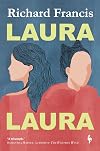
Publisher’s synopsis:
An elderly academic on his way home from the cinema is accosted by a homeless woman. She tells him her name is Laura. So begins a nightmarish journey for Gerald, a historian forced to confront the mystery of his own past, and to ask himself if he has lived a good life—or even a decent one.
In the course of this very funny, sometimes disturbing and often moving novel, suppressed memories return to haunt him, including the question of the role he played in a family show more tragedy. Above all he has to assess the harm he may have done in a long-forgotten love affair.
Even those close to him suddenly appear unfathomable. How well does he really know his friend Terence, an apparently unworldly physics professor who inspired Gerald’s course on quantum history, or the vivacious, recently widowed Judith, his sister-in-law? And what about Abby, to whom he has been married the whole of his adult life? He seems to understand her as little as he understands himself.
The problem with exploring the past, Gerald begins to see, is that there are an infinite number of ways to travel through it.
By the time I’d reached the end of the first page of this story I’d already discovered that, in spite of his advanced years, life was seldom straightforward for Gerald, possibly still even something of a mystery at times. For a start, having just spent an evening watching a film about a serial killer, one which would have appealed to his wife Abby (who was at her pottery class) but hadn’t to him … ‘He preferred his terror to be spectral or otherworldly, the sort that suggested more to life than you’d thought’ … he reflects that he must have read the wrong review! Then, as he begins to walk home he becomes aware of the smell of cooking sausages and although tempted to buy one, dissuades himself … ‘No, too old to get a hot dog from a stand, he remembered far back, when he was only twenty-seven, somewhere about that, fearing being past the age for flared trousers. “Have the courage of your convictions, for God’s sake,” Abby had said, flaring her eyes. But you are what you are, so he gave the stand a wide berth. It would be better to have a couple of pints at The Star.’ Then another thought occurs … Maybe he should go straight home – Abby would be back from pottery by now. Cup of tea. She would envy him the stabbings.’ A vignette which so evocatively hints at their different ways of dealing with life’s decisions: she tending to be pragmatic, he to overthink, and yet, as it’s already clear that they are still married, one which also suggests that they’ve learnt to tolerate each other’s foibles. It was an absolute delight to feel so immediately engaged with the author’s storytelling and, as I turned the final page, even more of a delight, to discover that this sense of total engagement had never wavered.
As he walks home after his chance encounter with a homeless, possibly suicidal young woman, Gerald begins to reflect on why she singled him out and why, when she told him her name was Laura, he’d ‘felt arrested by her name, as if it had a certain heft or resonance.’ This disturbing experience marks the start of a year during which, through an almost constant stream of flashbacks, Gerald looks back on his life, examines and re-evaluates all his relationships, remembers, and mis-remembers, certain significant events, the decisions he’s made (or not made) and how these have shaped how he’s lived his life. I loved how the author’s ‘streams of consciousness’ writing- style enabled me to feel that I was living inside Gerald’s head as he attempted to make sense of all the supressed memories which were being triggered, and which were making him feel so utterly bemused. I don’t want to go into any detail about the revelations which emerge, and help to make sense of why he’s been so unsettled by his meeting with Laura, because I think it’s important that the reader accompanies Gerald step-by-step on his emotional journey. Suffice it to say that, as the story unfolds, we gradually gain insights into why some past events have been either forgotten, mis-remembered or rationalised. Some of these insights are gained through his own reflections but others come through challenges from his wife Abby, his friend Terence and Judith, his recently-widowed sister-in-law, to the accuracy of his memories. Each of these characters is as well-portrayed as Gerald and I loved how the author managed to capture the changing dynamics of their various interactions so convincingly – not just with the main character, but also with each other.
Whenever we look back on significant events in our lives, I think it’s human nature to wonder what the outcome would have been if we’d made different decisions so I enjoyed how the author very effectively used the ‘many worlds’ theory in quantum mechanics as an interlinking thread through the story. This theory allowed Gerald to take comfort from the idea that whatever choices he’d made in his life, the options he’d rejected hadn’t just disappeared but were being lived out in a parallel universes. ‘That was what made Gerald feel that there was a certain kindness about the quantum world. Nothing, nobody, was left out.’ As I read the story I felt there was also a certain kindness in the way in which the author presented a hugely-complex theory in such an accessible way so that I didn’t end up feeling confused by it!
Accompanying Gerald as he looked back on his life, work, marriage, relationships and the unreliability of memory, I found his reflections poignant, disturbing, thought-provoking, frequently gently humorous … and occasionally laugh-out-loud funny. The author’s elegant prose, his pin-sharp, yet compassionate, observations of relationships and people’s vanities and eccentricities, brought each of his characters so vividly to life that, although I was reluctant to let them go when the story ended, I know they will remain vivid in my memory for a long time. However, although it’s an entertaining read, it definitely wasn’t a quick one for me because on almost every page there was a sentence or a paragraph which so perfectly captured a moment, or so succinctly encapsulated an idea, that I felt impelled to re-read and reflect … in fact, by the time I reached the end I’d jotted down enough quotes to fill several pages of a notebook. The temptation to include more than I already have has been huge but, as that would have made this review even longer than it already is, I’ve managed to resist! Instead I urge you to get hold of a copy of this wonderful novel and discover its cornucopia of delights for yourself … as well as the brilliant link between the start and the end of Gerald’s journey.
With many thanks to the publisher for my review copy. show less
An elderly academic on his way home from the cinema is accosted by a homeless woman. She tells him her name is Laura. So begins a nightmarish journey for Gerald, a historian forced to confront the mystery of his own past, and to ask himself if he has lived a good life—or even a decent one.
In the course of this very funny, sometimes disturbing and often moving novel, suppressed memories return to haunt him, including the question of the role he played in a family show more tragedy. Above all he has to assess the harm he may have done in a long-forgotten love affair.
Even those close to him suddenly appear unfathomable. How well does he really know his friend Terence, an apparently unworldly physics professor who inspired Gerald’s course on quantum history, or the vivacious, recently widowed Judith, his sister-in-law? And what about Abby, to whom he has been married the whole of his adult life? He seems to understand her as little as he understands himself.
The problem with exploring the past, Gerald begins to see, is that there are an infinite number of ways to travel through it.
By the time I’d reached the end of the first page of this story I’d already discovered that, in spite of his advanced years, life was seldom straightforward for Gerald, possibly still even something of a mystery at times. For a start, having just spent an evening watching a film about a serial killer, one which would have appealed to his wife Abby (who was at her pottery class) but hadn’t to him … ‘He preferred his terror to be spectral or otherworldly, the sort that suggested more to life than you’d thought’ … he reflects that he must have read the wrong review! Then, as he begins to walk home he becomes aware of the smell of cooking sausages and although tempted to buy one, dissuades himself … ‘No, too old to get a hot dog from a stand, he remembered far back, when he was only twenty-seven, somewhere about that, fearing being past the age for flared trousers. “Have the courage of your convictions, for God’s sake,” Abby had said, flaring her eyes. But you are what you are, so he gave the stand a wide berth. It would be better to have a couple of pints at The Star.’ Then another thought occurs … Maybe he should go straight home – Abby would be back from pottery by now. Cup of tea. She would envy him the stabbings.’ A vignette which so evocatively hints at their different ways of dealing with life’s decisions: she tending to be pragmatic, he to overthink, and yet, as it’s already clear that they are still married, one which also suggests that they’ve learnt to tolerate each other’s foibles. It was an absolute delight to feel so immediately engaged with the author’s storytelling and, as I turned the final page, even more of a delight, to discover that this sense of total engagement had never wavered.
As he walks home after his chance encounter with a homeless, possibly suicidal young woman, Gerald begins to reflect on why she singled him out and why, when she told him her name was Laura, he’d ‘felt arrested by her name, as if it had a certain heft or resonance.’ This disturbing experience marks the start of a year during which, through an almost constant stream of flashbacks, Gerald looks back on his life, examines and re-evaluates all his relationships, remembers, and mis-remembers, certain significant events, the decisions he’s made (or not made) and how these have shaped how he’s lived his life. I loved how the author’s ‘streams of consciousness’ writing- style enabled me to feel that I was living inside Gerald’s head as he attempted to make sense of all the supressed memories which were being triggered, and which were making him feel so utterly bemused. I don’t want to go into any detail about the revelations which emerge, and help to make sense of why he’s been so unsettled by his meeting with Laura, because I think it’s important that the reader accompanies Gerald step-by-step on his emotional journey. Suffice it to say that, as the story unfolds, we gradually gain insights into why some past events have been either forgotten, mis-remembered or rationalised. Some of these insights are gained through his own reflections but others come through challenges from his wife Abby, his friend Terence and Judith, his recently-widowed sister-in-law, to the accuracy of his memories. Each of these characters is as well-portrayed as Gerald and I loved how the author managed to capture the changing dynamics of their various interactions so convincingly – not just with the main character, but also with each other.
Whenever we look back on significant events in our lives, I think it’s human nature to wonder what the outcome would have been if we’d made different decisions so I enjoyed how the author very effectively used the ‘many worlds’ theory in quantum mechanics as an interlinking thread through the story. This theory allowed Gerald to take comfort from the idea that whatever choices he’d made in his life, the options he’d rejected hadn’t just disappeared but were being lived out in a parallel universes. ‘That was what made Gerald feel that there was a certain kindness about the quantum world. Nothing, nobody, was left out.’ As I read the story I felt there was also a certain kindness in the way in which the author presented a hugely-complex theory in such an accessible way so that I didn’t end up feeling confused by it!
Accompanying Gerald as he looked back on his life, work, marriage, relationships and the unreliability of memory, I found his reflections poignant, disturbing, thought-provoking, frequently gently humorous … and occasionally laugh-out-loud funny. The author’s elegant prose, his pin-sharp, yet compassionate, observations of relationships and people’s vanities and eccentricities, brought each of his characters so vividly to life that, although I was reluctant to let them go when the story ended, I know they will remain vivid in my memory for a long time. However, although it’s an entertaining read, it definitely wasn’t a quick one for me because on almost every page there was a sentence or a paragraph which so perfectly captured a moment, or so succinctly encapsulated an idea, that I felt impelled to re-read and reflect … in fact, by the time I reached the end I’d jotted down enough quotes to fill several pages of a notebook. The temptation to include more than I already have has been huge but, as that would have made this review even longer than it already is, I’ve managed to resist! Instead I urge you to get hold of a copy of this wonderful novel and discover its cornucopia of delights for yourself … as well as the brilliant link between the start and the end of Gerald’s journey.
With many thanks to the publisher for my review copy. show less
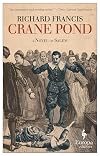
When I was asked to review this novel about the Salem witch trials, I readily agreed because it is a period of history which has always fascinated me. However, I have to admit that I did wonder whether any author could possibly add anything new to this well known and often told story. I was delighted to discover that Richard Francis has done just that in this wonderful novel. He has done so by focusing on Samuel Sewell, a respected Boston merchant who was appointed to serve as one of the show more judges at the trials and who was, eventually, the only one to admit that there had been a mistake, a terrible miscarriage of justice. Increasingly troubled by his conscience, four years after the trials he publicly repented his involvement and then continued to seek atonement.
The story starts in 1690 with the reader being introduced to Samuel as he makes his way to breakfast on a bitterly cold, snowy day in January. With a bedcover wrapped over his “ample nightshirt”, his wife Hannah commenting that he has “brought the bed” with him, his four children sitting at the table, and with a fire burning in the grate of a draughty room, he announces to his gathered family, “First prayer, then pie.” This level of intimacy sets the tone for why this is such a remarkably different telling of a familiar story – and it also gives the reader a couple of clues to indicate that Samuel is rather partial to his food!
Through Samuel’s eyes the reader is drawn into the social, political and religious influences of life in Massachusetts. He is a loving family man, a committed Puritan who not only wants to think well of himself and to live a moral life, but also to be thought well of by his family and fellow citizens. Consequently he constantly wrestles with his conscience, his faith and the value of his own judgments. It seems that everything that goes wrong, on a personal as well as on a broader social and political level, he can attribute to sinful thoughts or behaviour. As the novel opens he is involved in the trial of seven men who, after much debate between the judges, are eventually found guilty of piracy and sentenced to be hanged. Before the executions are due to take place pressure is brought to bear on him, from people with vested interests, to agree to review these sentences. After some initial resistance, and against his better judgment, he finds himself agreeing, incrementally, to reprieve all seven men. However, he ends up believing that he has been weak to go against his better judgment, and that he has compromised his principles. Subsequently, when he learns of the developing events in Salem, he even starts to wonder whether his compromise has contributed to the wickedness being perpetrated. It is with these turbulent feelings that he approaches his role of judge when the witchcraft trials begin.
I grew very fond of Samuel and his family as the story progressed. I felt myself becoming very involved with his inner struggles to be truthful, to maintain his integrity, to be a good man and to interpret the scriptures wisely in order to decide what was just or unjust. His love for his wife and his children shone through the narrative and it was clear that, whatever his night-time, lustful fantasies, he was a faithful husband. However, because he knows that he is subject to temptation, he wonders whether the stillbirths, or subsequent deaths, of some of his children are God’s way of punishing him for his weaknesses. The mundane little asides (often about food!) amidst all his philosophical musings, in addition to often being very amusing, were part of what really brought him to life and made him such a vivid, three dimensional character.
The details of the background to the trials are well known but, by giving Samuel Sewell such an authentic voice, Richard Francis has offered a powerful new perspective on this shameful miscarriage of justice. I had never imagined that I could feel any more shocked by the escalation of public hysteria which led to the horrors which ensued but, through this intimate portrait of a compassionate, flawed and well-meaning man, who was constantly struggling with his conscience, I found myself feeling even more angry about all the religious and political conditions which enabled such horrors to be perpetrated. The fact that bigotry, hysteria and suspicion remain in today’s world means that there can never be any room for complacency, for a belief that nothing like this could ever happen again. The forms it takes may be different but there are clear examples that it can, and it does. I also found it interesting to note that at the time of the trials concern was expressed that the executive might interfere with the deliberations of the judiciary – a timely reminder that history can, and does, repeat itself!
Throughout the narrative the author evoked a powerful sense of time and place and his elegant, literate prose created wonderfully vivid imagery of life in late seventeenth century Boston, as well as within the Sewell household. This thread of intimacy, which ran throughout the story and made every single character come to life, made me feel that I didn’t want to let them go when the story ended; I know that they will remain vivid in my memory for a long time to come. The most memorable books for me are those which not only fully engage my interest and imagination, but also teach me something new – Crane Pond did both. Amongst other things, I discovered the true horror behind the meaning of the phrase “the full weight of the law” – never again will I be able to use it in a casual way.
I cannot recommend this wonderful novel highly enough. The author’s comprehensive research into this period of history, and his fascination with Sewell, informs all his narrative and yet I never felt that it overwhelmed the sensitive story-telling. It is a real reflection of his thoughtful, measured writing that he was able to imbue the story with moments of wonderful humour, without detracting from the horrors being perpetrated. He treated all his characters with huge empathy and, in doing so, encourages his readers to do likewise. I certainly found myself reflecting on the influences on Samuel and the dilemmas he faced, making it possible for me to understand more fully how an essentially decent, if flawed, man found himself making the decisions he did. Such was the quality of the spare, elegant writing that at times I felt so totally immersed in the developing tragedy that there were moments when I even found myself expecting justice to prevail!
As I write this review I am finding myself tempted to go into great detail about the many themes which emerge, making it an excellent choice for reading groups; however, if I did so I would end up writing an extended essay! So, I just have to hope that, if you enjoy well-researched and well-written historical fiction, what I have written will encourage you to rush out and buy a copy of this exceptional book. It is certainly one I plan to re-read and I think it deserves to be showered with literary awards! show less
The story starts in 1690 with the reader being introduced to Samuel as he makes his way to breakfast on a bitterly cold, snowy day in January. With a bedcover wrapped over his “ample nightshirt”, his wife Hannah commenting that he has “brought the bed” with him, his four children sitting at the table, and with a fire burning in the grate of a draughty room, he announces to his gathered family, “First prayer, then pie.” This level of intimacy sets the tone for why this is such a remarkably different telling of a familiar story – and it also gives the reader a couple of clues to indicate that Samuel is rather partial to his food!
Through Samuel’s eyes the reader is drawn into the social, political and religious influences of life in Massachusetts. He is a loving family man, a committed Puritan who not only wants to think well of himself and to live a moral life, but also to be thought well of by his family and fellow citizens. Consequently he constantly wrestles with his conscience, his faith and the value of his own judgments. It seems that everything that goes wrong, on a personal as well as on a broader social and political level, he can attribute to sinful thoughts or behaviour. As the novel opens he is involved in the trial of seven men who, after much debate between the judges, are eventually found guilty of piracy and sentenced to be hanged. Before the executions are due to take place pressure is brought to bear on him, from people with vested interests, to agree to review these sentences. After some initial resistance, and against his better judgment, he finds himself agreeing, incrementally, to reprieve all seven men. However, he ends up believing that he has been weak to go against his better judgment, and that he has compromised his principles. Subsequently, when he learns of the developing events in Salem, he even starts to wonder whether his compromise has contributed to the wickedness being perpetrated. It is with these turbulent feelings that he approaches his role of judge when the witchcraft trials begin.
I grew very fond of Samuel and his family as the story progressed. I felt myself becoming very involved with his inner struggles to be truthful, to maintain his integrity, to be a good man and to interpret the scriptures wisely in order to decide what was just or unjust. His love for his wife and his children shone through the narrative and it was clear that, whatever his night-time, lustful fantasies, he was a faithful husband. However, because he knows that he is subject to temptation, he wonders whether the stillbirths, or subsequent deaths, of some of his children are God’s way of punishing him for his weaknesses. The mundane little asides (often about food!) amidst all his philosophical musings, in addition to often being very amusing, were part of what really brought him to life and made him such a vivid, three dimensional character.
The details of the background to the trials are well known but, by giving Samuel Sewell such an authentic voice, Richard Francis has offered a powerful new perspective on this shameful miscarriage of justice. I had never imagined that I could feel any more shocked by the escalation of public hysteria which led to the horrors which ensued but, through this intimate portrait of a compassionate, flawed and well-meaning man, who was constantly struggling with his conscience, I found myself feeling even more angry about all the religious and political conditions which enabled such horrors to be perpetrated. The fact that bigotry, hysteria and suspicion remain in today’s world means that there can never be any room for complacency, for a belief that nothing like this could ever happen again. The forms it takes may be different but there are clear examples that it can, and it does. I also found it interesting to note that at the time of the trials concern was expressed that the executive might interfere with the deliberations of the judiciary – a timely reminder that history can, and does, repeat itself!
Throughout the narrative the author evoked a powerful sense of time and place and his elegant, literate prose created wonderfully vivid imagery of life in late seventeenth century Boston, as well as within the Sewell household. This thread of intimacy, which ran throughout the story and made every single character come to life, made me feel that I didn’t want to let them go when the story ended; I know that they will remain vivid in my memory for a long time to come. The most memorable books for me are those which not only fully engage my interest and imagination, but also teach me something new – Crane Pond did both. Amongst other things, I discovered the true horror behind the meaning of the phrase “the full weight of the law” – never again will I be able to use it in a casual way.
I cannot recommend this wonderful novel highly enough. The author’s comprehensive research into this period of history, and his fascination with Sewell, informs all his narrative and yet I never felt that it overwhelmed the sensitive story-telling. It is a real reflection of his thoughtful, measured writing that he was able to imbue the story with moments of wonderful humour, without detracting from the horrors being perpetrated. He treated all his characters with huge empathy and, in doing so, encourages his readers to do likewise. I certainly found myself reflecting on the influences on Samuel and the dilemmas he faced, making it possible for me to understand more fully how an essentially decent, if flawed, man found himself making the decisions he did. Such was the quality of the spare, elegant writing that at times I felt so totally immersed in the developing tragedy that there were moments when I even found myself expecting justice to prevail!
As I write this review I am finding myself tempted to go into great detail about the many themes which emerge, making it an excellent choice for reading groups; however, if I did so I would end up writing an extended essay! So, I just have to hope that, if you enjoy well-researched and well-written historical fiction, what I have written will encourage you to rush out and buy a copy of this exceptional book. It is certainly one I plan to re-read and I think it deserves to be showered with literary awards! show less
Crane Pond is a novel about the Salem witch trials. I suspect like many people my introduction to Salem was Miller's play 'The Crucible' (1953). Miller used Salem as an allegory in the era of McCarthyism illustrating how deeply these events at the birth of modern America resonate down the centuries. So Crane Pond is tackling an important piece of the American story.
The trials, which spread throughout the new colony, resulted in the execution of twenty people. Five more died in prison before show more a halt was finally called to the 'inquisition' and the remaining victims were released. Arthur Miller described Salem as one of the 'strangest and most awful chapters in human history'.
The central character in Crane Pond is Judge Samuel Sewell and the book spans the last decade of the seventeenth century, prefacing, encompassing and following the witch trials at which Sewell was one of the presiding judges. He was the only man involved to admit to having made a terrible mistake, giving him a unique place in history and attracting Francis to his story.
Clearly this portrait of Sewell is a Labour of love for Francis but this is also a very balanced view of a man in trying times, 'warts and all'. Francis has previously produced a biography of Sewell, 'Judge Sewell's Apology' (2005) and obviously felt he was not finished with his subject believing that fiction enabled him to imagine the inner life of the Judge, (thoughts and feelings).
Sewell is a man at odds with his contemporaries; Men like Cotton Mather, who never repented their actions. He is plausibly drawn and human, very real, mildly heroic, and essentially honest. A man struggling with dark times and inner demons.
From the first chapter, portraying a family breakfast, Francis sets the tone of this world. A child's nightmare prefaces the terror to come. The religious context is defined and crucially events assume a life of their own that Sewell and his contemporaries cannot/will not control. This world, so different from the modern world, is populated with powerful well educated men and ordinary folk but they share a common set of beliefs. Normal events are seen as portents, as having meaning, (a dead child is a punishment for sin and a failed crop must have happened for a bad reason). It is a 'new' world, inchoate, a harsh world where children often die young and where the devil is as real as anything in people's lives. A world ruled by religious/political idealism and vicious pragmatism.
At the heart of the novel Francis is addressing questions of how a good man, a good citizen can become embroiled in such horrific events and in the case of Sewell make atonement.
The Salem witch trials are the first example of mass hysteria in American culture. The children infect people's fears, feeding their hatred and making everyone suspicious of each other with terrible consequences and even though this isn't the focus of the book it is adequately represented by Francis.
Sewell, as a character is treated with respect and Francis avoids any post-dated moralisation of his role in the events. Through the people of the time Francis lets the story tell itself allowing the reader make judgements for themselves. Crane Pond benefits from a cool, calm style, (no fireworks), allowing a time and place to speak to the reader and hopefully avoid any leaden hindsight.
To take Judge Sewell as the central protagonist adds a new interesting dimension to a story often told from the victims point of view. Crane Pond is a success in transporting the reader to an earlier age and adding to the understanding of the times. Although this is one man's view of Sewell's inner life it rings true and I think adds to the understanding that a pure biography can bring.
If I have one caveat it is that his novel is better read with some prior knowledge of the events of 1692/3 in the new colony as it naturally skirts some events in delivering Sewell's narrative and inevitably as some of the story unfolds off page some background knowledge is useful. Yet I think this is the kind of novel that will attract a ready/prepared readership.
I would suggest this book would appeal to lovers of intelligent, thoughtful historical fiction. Similar in intent to Hilary Mantel and Robert Harris in bringing real history to life in fiction. show less
The trials, which spread throughout the new colony, resulted in the execution of twenty people. Five more died in prison before show more a halt was finally called to the 'inquisition' and the remaining victims were released. Arthur Miller described Salem as one of the 'strangest and most awful chapters in human history'.
The central character in Crane Pond is Judge Samuel Sewell and the book spans the last decade of the seventeenth century, prefacing, encompassing and following the witch trials at which Sewell was one of the presiding judges. He was the only man involved to admit to having made a terrible mistake, giving him a unique place in history and attracting Francis to his story.
Clearly this portrait of Sewell is a Labour of love for Francis but this is also a very balanced view of a man in trying times, 'warts and all'. Francis has previously produced a biography of Sewell, 'Judge Sewell's Apology' (2005) and obviously felt he was not finished with his subject believing that fiction enabled him to imagine the inner life of the Judge, (thoughts and feelings).
Sewell is a man at odds with his contemporaries; Men like Cotton Mather, who never repented their actions. He is plausibly drawn and human, very real, mildly heroic, and essentially honest. A man struggling with dark times and inner demons.
From the first chapter, portraying a family breakfast, Francis sets the tone of this world. A child's nightmare prefaces the terror to come. The religious context is defined and crucially events assume a life of their own that Sewell and his contemporaries cannot/will not control. This world, so different from the modern world, is populated with powerful well educated men and ordinary folk but they share a common set of beliefs. Normal events are seen as portents, as having meaning, (a dead child is a punishment for sin and a failed crop must have happened for a bad reason). It is a 'new' world, inchoate, a harsh world where children often die young and where the devil is as real as anything in people's lives. A world ruled by religious/political idealism and vicious pragmatism.
At the heart of the novel Francis is addressing questions of how a good man, a good citizen can become embroiled in such horrific events and in the case of Sewell make atonement.
The Salem witch trials are the first example of mass hysteria in American culture. The children infect people's fears, feeding their hatred and making everyone suspicious of each other with terrible consequences and even though this isn't the focus of the book it is adequately represented by Francis.
Sewell, as a character is treated with respect and Francis avoids any post-dated moralisation of his role in the events. Through the people of the time Francis lets the story tell itself allowing the reader make judgements for themselves. Crane Pond benefits from a cool, calm style, (no fireworks), allowing a time and place to speak to the reader and hopefully avoid any leaden hindsight.
To take Judge Sewell as the central protagonist adds a new interesting dimension to a story often told from the victims point of view. Crane Pond is a success in transporting the reader to an earlier age and adding to the understanding of the times. Although this is one man's view of Sewell's inner life it rings true and I think adds to the understanding that a pure biography can bring.
If I have one caveat it is that his novel is better read with some prior knowledge of the events of 1692/3 in the new colony as it naturally skirts some events in delivering Sewell's narrative and inevitably as some of the story unfolds off page some background knowledge is useful. Yet I think this is the kind of novel that will attract a ready/prepared readership.
I would suggest this book would appeal to lovers of intelligent, thoughtful historical fiction. Similar in intent to Hilary Mantel and Robert Harris in bringing real history to life in fiction. show less
Lists
Awards


You May Also Like


Statistics
- Works
- 17
- Also by
- 1
- Members
- 637
- Popularity
- #39,574
- Rating
- 4.1
- Reviews
- 16
- ISBNs
- 51
- Languages
- 1