
John Putnam Demos
Author of The Unredeemed Captive: A Family Story from Early America
About the Author
John Putnam Demos is Samuel Knight Professor of History, Yale University.
Image credit: Radcliffe College
Works by John Putnam Demos
The Heathen School: A Story of Hope and Betrayal in the Age of the Early Republic (2014) 142 copies, 3 reviews
Associated Works
Changes in the Land: Indians, Colonists, and the Ecology of New England (1983) — Foreword, some editions — 1,571 copies, 14 reviews
Novel History: Historians and Novelists Confront America's Past and Each Other (2001) — Contributor — 139 copies, 1 review
The Family in History; Interdisciplinary Essays (Harper Torchbooks, Tb 1757) (1973) — Contributor — 34 copies, 1 review
Inventing the Psychological: Toward a Cultural History of Emotional Life in America (1997) — Contributor — 18 copies
The American Family in Social-Historical Perspective, Second Edition (1978) — Contributor — 17 copies
Tagged
Common Knowledge
- Canonical name
- Demos, John Putnam
- Birthdate
- 1937-03-02
- Gender
- male
- Occupations
- historian
professor - Organizations
- Yale University
- Nationality
- USA
- Birthplace
- Cambridge, Cambridgeshire, England, UK
- Places of residence
- Cambridge, Massachusetts, USA
Tyringham, Massachusetts, USA - Associated Place (for map)
- Massachusetts, USA
Members
Reviews
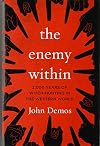
Distinguished Yale historian John Demos tries his hand at popular history with The Enemy Within: 2,000 Years of Witch-Hunting in the Western World (just out from Viking). In his preface, Demos calls this a "broad-gauge summary and synthesis of the entire subject," noting "synthesis itself was an unfamiliar process for me. I have previously made my way as a historian of very specific times, places, and events. My aim in all my other projects has been depth more than breadth. Those priorities show more are reversed here; the coverage is nothing if not broad."
That's certainly true. In four large sections, Demos examines various phases of witchcraft history and witch-hunting: Europe in the early modern era, the American colonies prior to Salem, the Salem events themselves, and America in modern times. Each of those sections contains a broad overview chapter, bookended by vignettes focusing on specific cases, characters, or objects (Cotton Mather and Rebecca Nurse or profiled, for example, as is the Malleus Maleficarum).
Through the first three segments of the book, Demos is on firm ground as he surveys the general trends in witch-hunting across the centuries through the crisis at Salem. His historiographical analysis of that phenomenon is fascinating, although it suffered much from the lack of scholarly apparatus in the text (just because a book is being written for a popular audience doesn't mean it can't have footnotes, I say, for the umpteenth time - or at least a thorough bibliography).
In the final section, Demos extends the witch-hunting metaphor to the present day, testing various possible "witch-hunts" (the Anti-Masonic movement, the Red Scare, McCarthyism, &c.) against its criteria to see which fit. As final chapters often do, this part of the book seemed forced and somewhat strained: even Demos admits that not all of his examples work well. His conclusions, at least, do work: for all that the reality of witches may be more "fictive than actual," the psychological impulses at the root of witch-hunting are "all too real. More than anything else," he concludes, "this constitutes the enemy which has through the centuries exacted such a terrible toll. To reduce its power is no easy task. Yet by deepening knowledge of both self and society, we create at least an opening for change. To that most important process 'history' offers its own hopeful, if uncertain, contribution."
Like Demos as a writer, as a reader I tend to prefer narrower studies to works of broad synthesis - I think much of my (minor) discomfort with this book stems directly from that mindset. That said, this is fundamentally a strong book, by one of the foremost authorities in witchcraft scholarship. I think it does just what it's meant to do.
http://philobiblos.blogspot.com/2008/09/book-review-enemy-within.html show less
That's certainly true. In four large sections, Demos examines various phases of witchcraft history and witch-hunting: Europe in the early modern era, the American colonies prior to Salem, the Salem events themselves, and America in modern times. Each of those sections contains a broad overview chapter, bookended by vignettes focusing on specific cases, characters, or objects (Cotton Mather and Rebecca Nurse or profiled, for example, as is the Malleus Maleficarum).
Through the first three segments of the book, Demos is on firm ground as he surveys the general trends in witch-hunting across the centuries through the crisis at Salem. His historiographical analysis of that phenomenon is fascinating, although it suffered much from the lack of scholarly apparatus in the text (just because a book is being written for a popular audience doesn't mean it can't have footnotes, I say, for the umpteenth time - or at least a thorough bibliography).
In the final section, Demos extends the witch-hunting metaphor to the present day, testing various possible "witch-hunts" (the Anti-Masonic movement, the Red Scare, McCarthyism, &c.) against its criteria to see which fit. As final chapters often do, this part of the book seemed forced and somewhat strained: even Demos admits that not all of his examples work well. His conclusions, at least, do work: for all that the reality of witches may be more "fictive than actual," the psychological impulses at the root of witch-hunting are "all too real. More than anything else," he concludes, "this constitutes the enemy which has through the centuries exacted such a terrible toll. To reduce its power is no easy task. Yet by deepening knowledge of both self and society, we create at least an opening for change. To that most important process 'history' offers its own hopeful, if uncertain, contribution."
Like Demos as a writer, as a reader I tend to prefer narrower studies to works of broad synthesis - I think much of my (minor) discomfort with this book stems directly from that mindset. That said, this is fundamentally a strong book, by one of the foremost authorities in witchcraft scholarship. I think it does just what it's meant to do.
http://philobiblos.blogspot.com/2008/09/book-review-enemy-within.html show less
Impeccable scholarship, vital insights into culture conflicts of the past, and present.
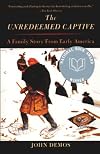
This wonderful book is the best kind of popular history: uncompromising in the standards of its scholarship, yet accessible and fascinating to a broad, non-academic audience of readers interested in the nature of cultural identity, and clashing/co-existing societies. It tells the story of one family forcibly ruptured into two worlds, when an Indian raid carries off family members, including a show more seven-year-old daughter so thoroughly embedded in her new, Indian (sorry; the tribe are not native Americans but a Canadian offshoot of various native groups) world that by the time her "redemption" is possible, she no longer wishes to return to the world of her birth. Insights, and ironies abound. (Her Puritan family is more distressed at her succumbing to "Popery" than to nativism.) The author meticulously collates, and limits himself to, documented historical data, yet does not hesitate to draw broader, thoughtful conclusions, always delineating the border between provable fact and well-founded projection. This is a work of both socio-psychological depth, and tremendous historic integrity. Whether you come to the book for interesting historical fact, or for deep insight into the nature of cultural intersections and conflicts, you will be well rewarded. show less
This wonderful book is the best kind of popular history: uncompromising in the standards of its scholarship, yet accessible and fascinating to a broad, non-academic audience of readers interested in the nature of cultural identity, and clashing/co-existing societies. It tells the story of one family forcibly ruptured into two worlds, when an Indian raid carries off family members, including a show more seven-year-old daughter so thoroughly embedded in her new, Indian (sorry; the tribe are not native Americans but a Canadian offshoot of various native groups) world that by the time her "redemption" is possible, she no longer wishes to return to the world of her birth. Insights, and ironies abound. (Her Puritan family is more distressed at her succumbing to "Popery" than to nativism.) The author meticulously collates, and limits himself to, documented historical data, yet does not hesitate to draw broader, thoughtful conclusions, always delineating the border between provable fact and well-founded projection. This is a work of both socio-psychological depth, and tremendous historic integrity. Whether you come to the book for interesting historical fact, or for deep insight into the nature of cultural intersections and conflicts, you will be well rewarded. show less
Looking back from the vantage point of the world today, it seems almost inconceivable that such things as witch-crazes and mass witch-hunting could still occur and the fact that they did occur is often puzzling. Yet if we delve a little deeper at what witch-hunting truly means and its role in society, it becomes clear that not only is it imaginable but also that it could reappear at any time. Witch-hunting is not simply the hunting of witches; it is the ousting of the other in our midst and show more the affirmation of what the current culture deems appropriate and desirable. Viewed in this way, we can see modern day examples of witches and their hunters by another name.
John Demos, a renowned history scholar, is particularly well-suited to process and synthesize the history of knowledge on witch-hunting and the more recent incarnations of the practice. Hunting witches, he tells readers, begins closest to home, and accusers are often neighbors of the accused. In a way, to designate someone as a witch is a simple way to call attention to their behaviors that are undesirable. To execute them is to execute that behavior found offensive.
The author chronicles the history of witch-hunting through this lens of extracting the other and establishing standards of society, and it becomes increasingly clear how these hunts and executions could have happened. After the Enlightenment, we may have moved away from using the term witch to castigate, but the practice of hunting down and ousting remains in many forms to the present time. Demos illustrates his point through more modern day hunts of the Freemasons, Bavarian Illuminati, Haymarket activism, the Great Red Scare, McCarthyism, and child sex-abuse cases. In the witch-hunting cases of the past as well as with the more modern examples, there are recurring themes that emerge that help us to make sense of these incidents: conspiracy, secrecy, large scope, fundamentally subversive ends, hidden contaminating means, apocalyptic danger, and negative emotional repercussions. show less
John Demos, a renowned history scholar, is particularly well-suited to process and synthesize the history of knowledge on witch-hunting and the more recent incarnations of the practice. Hunting witches, he tells readers, begins closest to home, and accusers are often neighbors of the accused. In a way, to designate someone as a witch is a simple way to call attention to their behaviors that are undesirable. To execute them is to execute that behavior found offensive.
The author chronicles the history of witch-hunting through this lens of extracting the other and establishing standards of society, and it becomes increasingly clear how these hunts and executions could have happened. After the Enlightenment, we may have moved away from using the term witch to castigate, but the practice of hunting down and ousting remains in many forms to the present time. Demos illustrates his point through more modern day hunts of the Freemasons, Bavarian Illuminati, Haymarket activism, the Great Red Scare, McCarthyism, and child sex-abuse cases. In the witch-hunting cases of the past as well as with the more modern examples, there are recurring themes that emerge that help us to make sense of these incidents: conspiracy, secrecy, large scope, fundamentally subversive ends, hidden contaminating means, apocalyptic danger, and negative emotional repercussions. show less
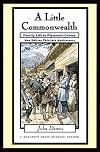
We are all familiar with the national myth of the Pilgrim story: the Mayflower landing on Plymouth Rock, their encounters with Squanto, and Thanksgiving. But how much do we know about the Pilgrims as people, their relationships with each other both within the context of the family and community? John Demos, a professor of history at Yale University, wrote the classic account of Plymouth family life in 1970, and with its' reissue we can examine anew the significance of his scholarship in show more extending our understanding of this important subject.
The overlaying dynamic of Pilgrim life, according to Demos, was that it was a patriarchal society (82). Like many societies (arguably including our own), the male ruled both the household and the community. "The proper attitude of a wife toward her husband was 'a reverend subjection'" (83). With few exceptions (88-90), husbands had full control over their homes and businesses; indeed they were even able to dispose and assign their children to other households with little to no consultation with their wives (88).
Demos' most interesting argument concerns the dynamic that served to keep the community (and family) together as a cohesive unit: repression. When one thinks of Puritan repression, one thinks of sexual repression; indeed, it is almost an accepted stereotype. But it seems that repression was instead directed at actions committed by members of the community, especially those actions that could be characterized as hostile or aggressive (136-137). Demos uses that psychological framework of Erik Erikson (outlined 138-139) to explain how the repression of impulses (especially individualistic impulses) was institutionalized within the Puritan family, and how its consequence (shame) became a defining characteristic of Pilgrim life (139). Children were "broken," their individuality destroyed, so that they met the expectation of obedience to authority, whether it be obedience to their father or obedience to the government (134-135). A child's "stubbornness" is broken; he is now able to develop into a model God-fearing Pilgrim (135).
While it is difficult for historians to fully understand such a nebulous concept as 'family life' even within the context of the recent past, it is doubly difficult to ascertain relationships that occurred within the distant past. This is because what was considered normal within the community was seldom documented; there was little reason to record what everyone already knew and understood. Demos makes a valiant effort to reconstruct these relationships by examining physical artifacts, wills, court decisions, and estate inventories. While his account of Pilgrim life is necessarily incomplete, his evidence allows us to begin to understand the dynamics at work. While his evidence (especially court cases) might serve merely to show the exceptions to the rule, enough of this evidence exists to demonstrate what the expected norm might be.
It appears that Demos attempted to examine all major dynamics at work within the family—relationships between family members—but by necessity he merely outlined these relations in broad strokes. It might have been desirable to present a case study of one particular family, following its development and changes through time. Enough evidence may exist to provide a more in depth look at one family; such an exercise might serve to increase our understanding of the relations within an 'average' Puritan household.
It appears, however, that Demos has provided us a valuable glimpse into the Pilgrim family life that, while incomplete, gives a sense of how things were. There are few silences in the narrative of family life (such as the daily life and play of children), but these may be unavoidable. In the end, it appears that Pilgrim family life was as complex (if not more so) than family life today. show less
The overlaying dynamic of Pilgrim life, according to Demos, was that it was a patriarchal society (82). Like many societies (arguably including our own), the male ruled both the household and the community. "The proper attitude of a wife toward her husband was 'a reverend subjection'" (83). With few exceptions (88-90), husbands had full control over their homes and businesses; indeed they were even able to dispose and assign their children to other households with little to no consultation with their wives (88).
Demos' most interesting argument concerns the dynamic that served to keep the community (and family) together as a cohesive unit: repression. When one thinks of Puritan repression, one thinks of sexual repression; indeed, it is almost an accepted stereotype. But it seems that repression was instead directed at actions committed by members of the community, especially those actions that could be characterized as hostile or aggressive (136-137). Demos uses that psychological framework of Erik Erikson (outlined 138-139) to explain how the repression of impulses (especially individualistic impulses) was institutionalized within the Puritan family, and how its consequence (shame) became a defining characteristic of Pilgrim life (139). Children were "broken," their individuality destroyed, so that they met the expectation of obedience to authority, whether it be obedience to their father or obedience to the government (134-135). A child's "stubbornness" is broken; he is now able to develop into a model God-fearing Pilgrim (135).
While it is difficult for historians to fully understand such a nebulous concept as 'family life' even within the context of the recent past, it is doubly difficult to ascertain relationships that occurred within the distant past. This is because what was considered normal within the community was seldom documented; there was little reason to record what everyone already knew and understood. Demos makes a valiant effort to reconstruct these relationships by examining physical artifacts, wills, court decisions, and estate inventories. While his account of Pilgrim life is necessarily incomplete, his evidence allows us to begin to understand the dynamics at work. While his evidence (especially court cases) might serve merely to show the exceptions to the rule, enough of this evidence exists to demonstrate what the expected norm might be.
It appears that Demos attempted to examine all major dynamics at work within the family—relationships between family members—but by necessity he merely outlined these relations in broad strokes. It might have been desirable to present a case study of one particular family, following its development and changes through time. Enough evidence may exist to provide a more in depth look at one family; such an exercise might serve to increase our understanding of the relations within an 'average' Puritan household.
It appears, however, that Demos has provided us a valuable glimpse into the Pilgrim family life that, while incomplete, gives a sense of how things were. There are few silences in the narrative of family life (such as the daily life and play of children), but these may be unavoidable. In the end, it appears that Pilgrim family life was as complex (if not more so) than family life today. show less
Lists
Awards


You May Also Like


Associated Authors
Statistics
- Works
- 13
- Also by
- 6
- Members
- 2,659
- Popularity
- #9,646
- Rating
- 3.9
- Reviews
- 27
- ISBNs
- 61
- Languages
- 2
- Favorited
- 1