
Esther M. Friesner
Author of Nobody's Princess
About the Author
Image credit: Esther Friesner. Photo by Catriona Sparks. Wikimedia Commons
Series
Works by Esther M. Friesner
Helen Remembers the Stork Club 4 copies
Birthday (short story) 4 copies
Last Man Standing 3 copies
How to Make Unicorn Pie 3 copies
The Wedding Of Wylda Serene 2 copies
If Looks Could Kill 2 copies
Hallowmass 2 copies
Jesus at the Bat 2 copies
Saint Willibald's Dragon 2 copies
Benny Comes Home 2 copies
Told You So {short story} 1 copy
Troll by Jury 1 copy
A Rosé For Emily 1 copy
Crumbs 1 copy
Mummy Knows Best 1 copy
The Bones of Mammoth Malone 1 copy
Gut Feeling 1 copy
In a Dark Wood Dreaming 1 copy
The Face is Familiar 1 copy
A Sacred Institution 1 copy
You Got Served 1 copy
No Children, No Pets 1 copy
Giants in the Earth 1 copy
The Grasshopper and My Aunts 1 copy
In the Can {short story} 1 copy
Woman In The Reeds 1 copy
Primary {short work} 1 copy
Isn't That Special 1 copy
The Death of Nimuë 1 copy
Brown Dust {short story} 1 copy
Long in the Tooth 1 copy
Simpson's Lesser Sphynx 1 copy
The Diplomatic Thing 1 copy
Cross CHILDREN Walk 1 copy
Dead Ringer [short story] 1 copy
King of the Cyber Trifles 1 copy
A Beltaine and Suspenders 1 copy
Men in the Rain 1 copy
It's a Gift 1 copy
At These Prices 1 copy
Abductio ad Absurdum 1 copy
Mortal Things 1 copy
True Believer 1 copy
Au Purr {ss} 1 copy
Reclusion: The Anthology 1 copy
Miss Thang 1 copy
Chestnut Street 1 copy
Blunderbore 1 copy
Gunsel And Gretel 1 copy
Uncle Henry Passes 1 copy
Seeking The Master 1 copy
Puss 1 copy
Big Hair {short story} 1 copy
All Vows 1 copy
Wake-up Call 1 copy
Sea-Section 1 copy
The Three Queens 1 copy
Johnny Beansprout 1 copy
I Killed Them in Vegas 1 copy
Just Another Cowboy 1 copy
Warts and All 1 copy
The Godsman and the Goblin 1 copy
Home For The Holidays 1 copy
Associated Works
Murder by Magic: Twenty Tales of Crime and the Supernatural (2004) — Contributor, some editions — 266 copies, 4 reviews
The Year's Best Fantasy and Horror: Fourteenth Annual Collection (2001) — Contributor — 258 copies, 2 reviews
Don't Forget Your Spacesuit, Dear: The Mother of All Anthologies (1996) — Contributor — 229 copies, 5 reviews
Masterpieces of Terror and the Unknown: A Treasury of Bizarre Tales Old and New (1993) — Contributor — 212 copies, 2 reviews
Southern Blood: Vampire Stories from the American South (1997) — Contributor — 168 copies, 2 reviews
The Best From Fantasy and Science Fiction: The Fiftieth Anniversary Anthology (1999) — Contributor — 127 copies, 3 reviews
Alternate Americas (What Might Have Been, Vol. 4) (1992) — Contributor, some editions — 101 copies, 1 review
Nebula Awards 32: SFWA's Choices for the Best Science Fiction and Fantasy of the Year (1998) — Contributor — 98 copies, 1 review
Nebula Awards 31: SFWA's Choices For The Best Science Fiction And Fantasy Of The Year (Nebula Awards Showcase) (1997) — Contributor — 97 copies
Graven Images: Fifteen Tales of Dark Magic and Ancient Myth (2000) — Contributor — 57 copies, 1 review
Further Adventures of Xena: Warrior Princess (Xena: Warrior Princess (Berkley)) (2001) — Contributor — 55 copies, 1 review
The Magazine of Fantasy and Science Fiction October/November 1994, Vol. 87, No. 4 & 5 (1994) — Author — 34 copies, 1 review
Kong Unbound: The Cultural Impact, Pop Mythos, and Scientific Plausibility of a Cinematic Legend (2005) — Contributor — 21 copies
That Is Not Dead: Tales of the Cthulhu Mythos Through the Centuries (2015) — Contributor — 19 copies
The Magazine of Fantasy and Science Fiction September/October 2019, Vol. 137, Nos. 3 & 4 (1991) — Contributor — 18 copies
White House Pet Detectives: Tales of Crime and Mystery at the White House from a Pet's-Eye View (2002) — Contributor — 17 copies
The Magazine of Fantasy and Science Fiction March 2005, Vol. 108, No. 3 (2005) — Contributor — 15 copies
The Magazine of Fantasy and Science Fiction January 1992, Vol. 82, No. 1 (1992) — Contributor — 14 copies
Asimov's Science Fiction: Vol. 24, No. 2 [February 2000] (1999) — Contributor — 14 copies, 2 reviews
The Magazine of Fantasy and Science Fiction September 2003, Vol. 105, No. 3 (2003) — Contributor — 14 copies
The Magazine of Fantasy and Science Fiction September/October 2011, Vol. 121, Nos. 3 & 4 (2011) — Contributor — 14 copies
The Magazine of Fantasy and Science Fiction November/December 2016, Vol. 131, Nos. 5 & 6 (2016) — Contributor — 13 copies, 1 review
The Magazine of Fantasy and Science Fiction August 1998, Vol. 95, No. 2 (1998) — Contributor — 11 copies, 1 review
The Magazine of Fantasy and Science Fiction April 2002, Vol. 102, No. 4 (2002) — Contributor — 10 copies
Hamsters over Schenectady — Contributor — 2 copies
Tagged
Common Knowledge
- Legal name
- Friesner-Stutzman, Esther Mona
- Other names
- Friesner, Esther M.
Friesner, Esther - Birthdate
- 1951-07-16
- Gender
- female
- Education
- Vassar College (BA|Spanish, BA|Drama)
Yale University (MA|Spanish, PhD|Spanish) - Occupations
- professor
editor
poet
playwright
advice columnist - Organizations
- Science Fiction and Fantasy Writers of America
- Awards and honors
- E.E. Smith Memorial Award for Imaginative Fiction (1994)
Skylark Award from NESFA
Most Promising New Fantasy Writer of 1986 from "Romantic Times" - Relationships
- Stutzman, Walter J. (husband)
- Nationality
- USA
- Birthplace
- New York, New York, USA
- Places of residence
- Connecticut, USA
New York, New York, USA - Associated Place (for map)
- USA
Members
Discussions
The real world of Call Centers in Good Show Sir! — bad science fiction and fantasy covers (June 2025)
YA Fiction about A Genie at Genie school. in Name that Book (December 2010)
Reviews

It does feel a bit like Brave, but this is Maeve of Connacht, iron age princess, and star of ancient ballads. Fiesty, clever, strong-willed Maeve is her father's treasure; after that incident with the bull, anyway. Friesner deftly walks the line of story, keeping to a realistic depiction of what such a life may have looked liked historically while drawing her audience inexorably along, behind Maeve's courageous, forthright, wildly intelligent example. It's much like reading a really good show more King Arthur retelling, but refreshing that she's bringing such a different mythological tradition to life. And I like a strong princess, one who's learning hard lessons in betrayal and manipulation and staying true to her own honor. show less

A friend gave this book to me with his recommendation as one of the best numbered novels. This is true.
Warchild came out around the time Season Three was premiering, and Friesner has an astonishing grasp on the characters as they existed at this point in time. Kira is wary of the Federation, but knows it can help her world; Sisko is skeptical of being involved in local political and religious matters. It even manifests in the small touches and running jokes, such as Kira's weariness when show more Bashir brings up the pre/postganglionic exam mistake that cost him the valedictorian position in his class at Starfleet Medical. As this indicates, where Friesner especially nails it is Bashir. Long before the show did any of those (usually strong) Bashir's idealism and propensity for personal investment causes him to throw himself into a medical crisis beyond his capacity to handle ("The Quickening," "Hippocratic Oath," "Chrysalis"), Friesner captures that very well here. I think this might also be Bashir's first romance in the course of the series, as he gets involved with a young Bajoran healer who ends up entering into a religious order. Friesner also portrays Bashir as an excellent multitasker-- something that neatly ties into the Season Five revelations that he's genetically engineered. (Though here he has no experience with genetic engineering himself, and in fact, Jadzia does the heavy lifting in this regard when it comes to finding a cure for a Bajoran epidemic.) Let me quote a passage (at length, sorry), that I think really captures her handle on his character:
He often told himself that he'd chosen a career in medicine first of all as a result of that incident during the ion storm on Invaria II,* when simple medical knowledge might have saved that poor girl's life. Having his career as a professional tennis player pop like a soap bubble during his first match merely confirmed his choice. But he knew as well that he had chosen to become a physician because it satisfied many different urges of his soul. As a doctor, he would be able to solved a thousand fascinating human puzzles-- puzzles that must be solved, with stakes of life and death in the balance. His expertise would earn him as much admiration as any of his boyhood heroes, and even if dashing bladesmen no longer existed outside of holosuite programs, he could still save the lives of countless damsels in distress with a scalpel if not with a sword.
But even the many promises of a medical career were not enough for him. He refused to become just another doctor; he would become the best. He joined Starfleet because their standards were almost as high as his own, and because the dream of adventure on some distant frontier still beckoned.
His posting to Deep Space Nine seemed like the fulfillment of his every desire. And once here, finding Garak was icing on the cake. Julian was never more pleased with himself than after having a long and-- he hoped-- revealing interview with the Cardassian. He couldn't for the life of him understand why no one else on the station seemed to recognize or appreciate his efforts.
That didn't stop him from trying to make them see what a good job of amateur espionage he was doing.
I quote all this because I think Friesner captures elements of Bashir that the writers of show had scarcely pinned down at this time: his need to solve puzzles, his need to be the best at everything he does without fail, his desire to play the spy, even his propensity for placing himself in heroic roles in holoprograms, which the show didn't give us until Season Four! It synthesizes some of the disparate rationales given for Bashir's desire to be a doctor, something the writers on the show would grapple with in Season Five when it came time to write "Doctor Bashir, I Presume." There, it's kind of explained by Bashir lying/deflecting, but here it's more because our motivations are complex and disparate.
Friesner is more interested in the realities of decolonization that any of the DS9 novels I read: her Bajor is fragmented into political and religious factions trying to decide the destiny of their world, and the portrayal of the refugee camps feels very authentic to the Bajor of the early seasons. One wishes the show had done more Bajor episodes like this, as opposed to making them gullible superstitious peasants like in "The Storyteller." Friesner gives names and identities to different political and religious groups, something the show did only sparingly. It's a damaged world, with a significant need for healing, and Friesner makes that seem like real, important work, instead of writing it off as the show often did.
Sometimes the book feels ambling and unfocused: it's about an epidemic, it's about Bashir's going rogue, it's about a child of Bajoran prophecy gone missing first on Bajor and then on the station. But what makes it work is Friesner's keen grasp of the characters. It's a shame her only other piece of Star Trek fiction is a TNG book written during the "rainbow stripe" era, where I feel like the books got particularly generic; I'd love to see what she could do with the DS9 characters as they were made even richer by the later seasons of the show.
Continuity Notes:
Warchild came out around the time Season Three was premiering, and Friesner has an astonishing grasp on the characters as they existed at this point in time. Kira is wary of the Federation, but knows it can help her world; Sisko is skeptical of being involved in local political and religious matters. It even manifests in the small touches and running jokes, such as Kira's weariness when show more Bashir brings up the pre/postganglionic exam mistake that cost him the valedictorian position in his class at Starfleet Medical. As this indicates, where Friesner especially nails it is Bashir. Long before the show did any of those (usually strong) Bashir's idealism and propensity for personal investment causes him to throw himself into a medical crisis beyond his capacity to handle ("The Quickening," "Hippocratic Oath," "Chrysalis"), Friesner captures that very well here. I think this might also be Bashir's first romance in the course of the series, as he gets involved with a young Bajoran healer who ends up entering into a religious order. Friesner also portrays Bashir as an excellent multitasker-- something that neatly ties into the Season Five revelations that he's genetically engineered. (Though here he has no experience with genetic engineering himself, and in fact, Jadzia does the heavy lifting in this regard when it comes to finding a cure for a Bajoran epidemic.) Let me quote a passage (at length, sorry), that I think really captures her handle on his character:
He often told himself that he'd chosen a career in medicine first of all as a result of that incident during the ion storm on Invaria II,* when simple medical knowledge might have saved that poor girl's life. Having his career as a professional tennis player pop like a soap bubble during his first match merely confirmed his choice. But he knew as well that he had chosen to become a physician because it satisfied many different urges of his soul. As a doctor, he would be able to solved a thousand fascinating human puzzles-- puzzles that must be solved, with stakes of life and death in the balance. His expertise would earn him as much admiration as any of his boyhood heroes, and even if dashing bladesmen no longer existed outside of holosuite programs, he could still save the lives of countless damsels in distress with a scalpel if not with a sword.
But even the many promises of a medical career were not enough for him. He refused to become just another doctor; he would become the best. He joined Starfleet because their standards were almost as high as his own, and because the dream of adventure on some distant frontier still beckoned.
His posting to Deep Space Nine seemed like the fulfillment of his every desire. And once here, finding Garak was icing on the cake. Julian was never more pleased with himself than after having a long and-- he hoped-- revealing interview with the Cardassian. He couldn't for the life of him understand why no one else on the station seemed to recognize or appreciate his efforts.
That didn't stop him from trying to make them see what a good job of amateur espionage he was doing.
I quote all this because I think Friesner captures elements of Bashir that the writers of show had scarcely pinned down at this time: his need to solve puzzles, his need to be the best at everything he does without fail, his desire to play the spy, even his propensity for placing himself in heroic roles in holoprograms, which the show didn't give us until Season Four! It synthesizes some of the disparate rationales given for Bashir's desire to be a doctor, something the writers on the show would grapple with in Season Five when it came time to write "Doctor Bashir, I Presume." There, it's kind of explained by Bashir lying/deflecting, but here it's more because our motivations are complex and disparate.
Friesner is more interested in the realities of decolonization that any of the DS9 novels I read: her Bajor is fragmented into political and religious factions trying to decide the destiny of their world, and the portrayal of the refugee camps feels very authentic to the Bajor of the early seasons. One wishes the show had done more Bajor episodes like this, as opposed to making them gullible superstitious peasants like in "The Storyteller." Friesner gives names and identities to different political and religious groups, something the show did only sparingly. It's a damaged world, with a significant need for healing, and Friesner makes that seem like real, important work, instead of writing it off as the show often did.
Sometimes the book feels ambling and unfocused: it's about an epidemic, it's about Bashir's going rogue, it's about a child of Bajoran prophecy gone missing first on Bajor and then on the station. But what makes it work is Friesner's keen grasp of the characters. It's a shame her only other piece of Star Trek fiction is a TNG book written during the "rainbow stripe" era, where I feel like the books got particularly generic; I'd love to see what she could do with the DS9 characters as they were made even richer by the later seasons of the show.
Continuity Notes:
- Supposedly the book takes place between "In the Hands of the Prophets" and "The Homecoming," as I stated earlier. I'd favor a slightly earlier placement, as the references to the death of Kai Opaka make it seem like the election for the next kai hasn't really gotten started yet; certainly the DS9 crew doesn't have the personal investment that would come from the Winn/Bareil showdown. The latest episode to have an explicit reference is "Progress" (Mullibok puts in a nice little cameo), so I'd put it sometime after that.
- Though, ideally, I'd like to put it before "The Storyteller," as Sisko is very nervous about sending Bashir on a medical mission to Bajor-- something he's already done if this takes place after "Progress"!
- Contrary to what is stated on Memory Beta, the Revanche party (a faction of the Cardassian government from the novels Valhalla and Betrayal) have nothing to do with this book.
- The end of the book nicely sets up Season Two's opening trilogy, with this novel's major antagonist revealed as an adherent of the Alliance for Global Unity, a.k.a. the Circle.
- "The Temple" is referred to throughout the book, which is the complex we occasionally see in matte paintings where Opaka and later Winn hang out. I don't think this term was ever used on screen, but it made me realize that this location has no name at all on screen! Warchild indicates that all Bajoran religious orders are housed in the Temple.
- Friesner draws on the fact that Bashir's father was a diplomat, as mentioned in "Melora."
- I can't say that I ever noticed the earrings of Bajoran children on the show. When talking to a 17-year-old boy who looks much younger because of malnutrition, Bashir observes that he ought to have known the boy was 17 because of his earring: "I see you're well past the age of initiation."
- The Ferengi have epic poetry about price wars; Nog recited one for a school assignment. Jake, of course, recited "Casey at the Bat."
[review written 2013]
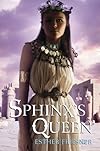
actually i liked this book a lot better than sphinx’s princess. there was more suspense in it, and the plot moved quickly enough for me to keep interested and this time i actually cared about the romance subplot between nefertiti and amenophis.
it was good, but it wasn’t great. one thing i both loved and hated was the face heel turn (i am using tv tropes to describe things again) by thutmose and later, queen tiye. on one hand, i was rooting constantly for them to show more realize that their paranoia was completely unwarranted, but i was dismayed at how quick it seemed to be.
which was why i used the term face heel turn. (or heel face turn?) but no! i liked it and i liked how everything wrapped up neatly in the end and most of all how it was a happy ending.
i’m definitely going to reread her series about helen of troy now (well, i read the first book, so reread that.) i liked nefertiti in this book, i liked nava, and most oddly of all, i liked thutmose, even though he irritated me through most of the book. by the end, i felt sorry for him.
this book is an 8/10 and once again, for people who like history or strong women rulers. (because even if nefertiti isn’t a ruler when the books take place, she is unarguably strong. in regards to femininity and strength, friesner does not do the thing where nefertiti switches between masculine ideals of strength and feminine ideals of beauty. she is feminine and she is strong because she is clever and smart and ready to fight for herself, and she will not let anyone control her, and i loved that.) show less
actually i liked this book a lot better than sphinx’s princess. there was more suspense in it, and the plot moved quickly enough for me to keep interested and this time i actually cared about the romance subplot between nefertiti and amenophis.
it was good, but it wasn’t great. one thing i both loved and hated was the face heel turn (i am using tv tropes to describe things again) by thutmose and later, queen tiye. on one hand, i was rooting constantly for them to show more realize that their paranoia was completely unwarranted, but i was dismayed at how quick it seemed to be.
which was why i used the term face heel turn. (or heel face turn?) but no! i liked it and i liked how everything wrapped up neatly in the end and most of all how it was a happy ending.
i’m definitely going to reread her series about helen of troy now (well, i read the first book, so reread that.) i liked nefertiti in this book, i liked nava, and most oddly of all, i liked thutmose, even though he irritated me through most of the book. by the end, i felt sorry for him.
this book is an 8/10 and once again, for people who like history or strong women rulers. (because even if nefertiti isn’t a ruler when the books take place, she is unarguably strong. in regards to femininity and strength, friesner does not do the thing where nefertiti switches between masculine ideals of strength and feminine ideals of beauty. she is feminine and she is strong because she is clever and smart and ready to fight for herself, and she will not let anyone control her, and i loved that.) show less

An historical novel about Helen of Sparta (before she grew up and became Helen of Troy)? Sounded compelling to me! Especially because Sparta is such a fascinating, complex and often-problematic culture.
Unfortunately, I got the impression from this book that it was written as a generic Western-princess-fairytale, the publisher thought it was too bland, and encouraged the author to put a Grecian gloss over the thing. It's still generic and bland - and at no point does it feel like it takes show more place in Sparta.
Helen is a spoiled brat who reads like a modern pre-teen. She spends most of the book whining.
Helen's big thing is that she wants to train with her brothers, doing physical exercise instead of sitting in the house spinning and weaving with her mother and sisters. Later, she meets an oh-so-unusual horsewoman and has to sneak around to learn to ride, secretly.
Here's in thing: in Sparta, spinning and weaving was done ONLY BY SLAVES. No upper-class Spartan woman did that sort of work, let alone a "princess." And - could we POSSIBLY call the garments worn by Spartan women 'chitons' not 'dresses'? Speaking of clothing, Spartan women frequently did not wear clothing - when they were doing the strenuous exercise and physical training that ALL young Spartans, male and female, participated in. A young Spartan woman would have had a time of it getting OUT of having to exercise, not getting TO exercise. Not only that, but upper-class Spartan women frequently rode horses, bred horses, and owned horses.
OK, I don't mind having preconceptions challenged by a novel. Perhaps the past wasn't like our concepts about it. Open my horizons. Challenge me. But - nothing about this book's setting felt 'Spartan' - or even 'foreign' at all. It was more Ren-Faire Medieval than anything. I have no problem at all with stories that show young women struggling against the sexist expectations of their society.
The problem here, though, is that this ISN'T a Spartan society. It's Our society, with a pseudo-Medieval, pseudo-Greek gloss on it.
The end result was that I felt that this book ends up being the opposite of empowering, because by showing a culture far removed from our own being sexist in so exactly the same ways as our own, instead of showing that sexist stereotypes can be overcome and defeated, it actually reinforces the message that these ideas about women are universal throughout the world and history and therefore are likely true.
Don't get me wrong - I don't demand that every book have an 'empowering' message. But I felt like this one meant to, and it backfired.The reason I like to read historical novels is to feel like I have been transported into another culture, another way of living, another way of seeing the world. Based on those criteria, this book was a complete failure.
It went to the top of my to-read list because I saw the sequel at the discount store, and I was wondering if I should buy it. The answer is "no." show less
Unfortunately, I got the impression from this book that it was written as a generic Western-princess-fairytale, the publisher thought it was too bland, and encouraged the author to put a Grecian gloss over the thing. It's still generic and bland - and at no point does it feel like it takes show more place in Sparta.
Helen is a spoiled brat who reads like a modern pre-teen. She spends most of the book whining.
Helen's big thing is that she wants to train with her brothers, doing physical exercise instead of sitting in the house spinning and weaving with her mother and sisters. Later, she meets an oh-so-unusual horsewoman and has to sneak around to learn to ride, secretly.
Here's in thing: in Sparta, spinning and weaving was done ONLY BY SLAVES. No upper-class Spartan woman did that sort of work, let alone a "princess." And - could we POSSIBLY call the garments worn by Spartan women 'chitons' not 'dresses'? Speaking of clothing, Spartan women frequently did not wear clothing - when they were doing the strenuous exercise and physical training that ALL young Spartans, male and female, participated in. A young Spartan woman would have had a time of it getting OUT of having to exercise, not getting TO exercise. Not only that, but upper-class Spartan women frequently rode horses, bred horses, and owned horses.
OK, I don't mind having preconceptions challenged by a novel. Perhaps the past wasn't like our concepts about it. Open my horizons. Challenge me. But - nothing about this book's setting felt 'Spartan' - or even 'foreign' at all. It was more Ren-Faire Medieval than anything. I have no problem at all with stories that show young women struggling against the sexist expectations of their society.
The problem here, though, is that this ISN'T a Spartan society. It's Our society, with a pseudo-Medieval, pseudo-Greek gloss on it.
The end result was that I felt that this book ends up being the opposite of empowering, because by showing a culture far removed from our own being sexist in so exactly the same ways as our own, instead of showing that sexist stereotypes can be overcome and defeated, it actually reinforces the message that these ideas about women are universal throughout the world and history and therefore are likely true.
Don't get me wrong - I don't demand that every book have an 'empowering' message. But I felt like this one meant to, and it backfired.The reason I like to read historical novels is to feel like I have been transported into another culture, another way of living, another way of seeing the world. Based on those criteria, this book was a complete failure.
It went to the top of my to-read list because I saw the sequel at the discount store, and I was wondering if I should buy it. The answer is "no." show less
Lists
Awards


You May Also Like


Associated Authors
Statistics
- Works
- 150
- Also by
- 188
- Members
- 12,197
- Popularity
- #1,924
- Rating
- 3.5
- Reviews
- 209
- ISBNs
- 154
- Languages
- 4
- Favorited
- 21