

Jeremias Gotthelf (1797–1854)
Author of The Black Spider
About the Author
Image credit: From Wikimedia Commons
Works by Jeremias Gotthelf
Historisch-kritische Gesamtausgabe 5 copies
Lesen und Üben : Jeremias Gotthelf : Die Schwarze Spinne [book + sound recording] (2008) — Writer — 4 copies
Die schwarze Spinne / Elsi, die seltsame Magd / Der Besenbinder von Rychiswyl / Erdbeeri- Mareili. (1997) 3 copies
Wie 5 Mädchen im Branntwein jämmerlich umkommen : eine Geschichte = [Fin lamentable de cinq jeunes filles victimes de l'eau-de-vie : une nouvelle] = [Come cinque ragazze… (2018) — Author — 2 copies
Kleine Erzählungen, 2. Band 2 copies
Novelle 2 copies
Erzählungen in einem Band 1 copy
Predigten. Zweiter Teil 1 copy
Kirche und Schule 1 copy
Kleine Erzählungen, 3. Band 1 copy
Michels Brautscau 1 copy
Berner Erzählungen 1 copy
Wealth and Welfare 1 copy
Kleine Erzählungen, 1. Band 1 copy
Der Pachthof 1 copy
Frühschriften 1 copy
Der Herr Esau 1 copy
Gedanken 1 copy
Associated Works
Czarny pająk : opowieści niesamowite z literatury niemieckojęzycznej (1988) — Contributor — 3 copies
Der Zauberspiegel. Phantastische Erzählungen der Weltliteratur — Contributor — 2 copies
Tagged
Common Knowledge
- Legal name
- Bitzius, Albert
- Birthdate
- 1797-10-04
- Date of death
- 1854-10-22
- Gender
- male
- Education
- University of Bern (Theology)
University of Göttingen (Theology) - Occupations
- novelist
short story writer
pastor - Relationships
- Bitzius, Siegmund (Vater)
Zeender, Henriette (Ehefrau)
Bitzius, Marie Henriette (Tochter)
Bitzius, Albert junior (1835-1882) (Sohn)
Bitzius, Cecile (Tochter) - Nationality
- Switzerland
- Birthplace
- Murten, Switzerland
- Places of residence
- Utzenstorf BE, Switzerland
Lützelflüh BE, Switzerland (death)
Morat, Switzerland (birth) - Place of death
- Lützelflüh, Switzerland
- Associated Place (for map)
- Switzerland
Members
Reviews
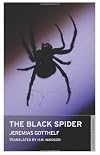
I have a general rule that, once I have started to read a book, I must continue with it to the end before I can claim the right to comment on it.
In the case of 'The Black Spider', I was beginning to get depressed by page 20 of this classic early nineteenth century Swiss horror novella. One fifth of the tale gone and I had been treated to a lengthy, rather dull and wholesome account of a christening feast for the child of a prosperous Swiss peasant circa 1842.
But 'Jeremias Gotthelf' knows show more what he is doing. He has set the reader up for a multi-layered morality tale that loosely bases itself on pre-modern folk interpretations of the causes of the plague. He weaves, from the security of the first section, a genuinely horrific and disturbing tale of a demon black spider that punishes all those who have defied God and tried to short-circuit the demands of authority with an appeal to the Devil. The spider, a truly nasty creation, punishes not a few good people also (although the reader knows that these latter die only to take the straight path to Heaven).
I wonder which is more horrific today - the graphic account of death and mayhem at the behest of the spider or the fact that a whole society was being held together socially on the basis of fear and anxiety. The horror, for me, lay as much in the latter as the former but then, if the author is right, my lack of fear of God would have meant that I would not have lasted long if the demon spider had been released in my town.
How ironic was Gotthelf (actually a Protestant pastor called Josef Bitzius) in his portayal of the roots of evil? One suspects not at all. Allowing for any problems of translation, irony - that irony that says that, surely, this writer cannot possibly have believed this nonsense (not the spider as such, of course, because it is clearly allegorical but the pre-scientific belief-system to which the spider belongs)- is absent. Even if he gives himself a pseudonym, Pastor Bitzius fully endorses the values of the Swiss free peasant in a story that is valuable evidence of what historian Peter Laslett once called ' The World We Have Lost'.
However, we know that he was also a progressive by contemporary standards - interested in welfare issues - so there is an ambiguity in the tale. It is as if he wants to improve the lot of his peasant congregation but not at the expense of the values that hold the community together. Right conduct is cemented by a horror story that provides the space in which right-minded persons like Pastor Bitzius can do their stuff.
Regardless of Bitzius' own views (we are not expert), there is much meat for a cultural analysis of Middle European pre-modernity in its last days in this story. It is instructive to see how the recalcitrant crooked timber of men (house timber represents an apposite metaphor as you will see if you read the tale) is brought into line by fear of the physical and supernatural consequences of questioning tradition and defying authority. This is a quietly sinister book in more ways than the obvious ones.
'The Black Spider' is highly recommended if you are interested in the self-policing of sexuality and private conduct and the maintenance of order in pre-industrial rural Europe (remember that this is the world of witch-hunts as you read the tale) but also if you are interested in the evolution of the European tale of horror. show less
In the case of 'The Black Spider', I was beginning to get depressed by page 20 of this classic early nineteenth century Swiss horror novella. One fifth of the tale gone and I had been treated to a lengthy, rather dull and wholesome account of a christening feast for the child of a prosperous Swiss peasant circa 1842.
But 'Jeremias Gotthelf' knows show more what he is doing. He has set the reader up for a multi-layered morality tale that loosely bases itself on pre-modern folk interpretations of the causes of the plague. He weaves, from the security of the first section, a genuinely horrific and disturbing tale of a demon black spider that punishes all those who have defied God and tried to short-circuit the demands of authority with an appeal to the Devil. The spider, a truly nasty creation, punishes not a few good people also (although the reader knows that these latter die only to take the straight path to Heaven).
I wonder which is more horrific today - the graphic account of death and mayhem at the behest of the spider or the fact that a whole society was being held together socially on the basis of fear and anxiety. The horror, for me, lay as much in the latter as the former but then, if the author is right, my lack of fear of God would have meant that I would not have lasted long if the demon spider had been released in my town.
How ironic was Gotthelf (actually a Protestant pastor called Josef Bitzius) in his portayal of the roots of evil? One suspects not at all. Allowing for any problems of translation, irony - that irony that says that, surely, this writer cannot possibly have believed this nonsense (not the spider as such, of course, because it is clearly allegorical but the pre-scientific belief-system to which the spider belongs)- is absent. Even if he gives himself a pseudonym, Pastor Bitzius fully endorses the values of the Swiss free peasant in a story that is valuable evidence of what historian Peter Laslett once called ' The World We Have Lost'.
However, we know that he was also a progressive by contemporary standards - interested in welfare issues - so there is an ambiguity in the tale. It is as if he wants to improve the lot of his peasant congregation but not at the expense of the values that hold the community together. Right conduct is cemented by a horror story that provides the space in which right-minded persons like Pastor Bitzius can do their stuff.
Regardless of Bitzius' own views (we are not expert), there is much meat for a cultural analysis of Middle European pre-modernity in its last days in this story. It is instructive to see how the recalcitrant crooked timber of men (house timber represents an apposite metaphor as you will see if you read the tale) is brought into line by fear of the physical and supernatural consequences of questioning tradition and defying authority. This is a quietly sinister book in more ways than the obvious ones.
'The Black Spider' is highly recommended if you are interested in the self-policing of sexuality and private conduct and the maintenance of order in pre-industrial rural Europe (remember that this is the world of witch-hunts as you read the tale) but also if you are interested in the evolution of the European tale of horror. show less
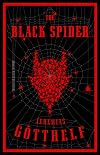
An antiquated morality tale that seeks to punish its female characters, and so therefore is not the most riveting read; HOWEVER also features some grotesque cosmic horror, interesting labor politics, and a scene in which a woman gives birth to a spider plague from a mole on her face whilst another simultaneously gives birth to a human child. A great portrait of motherhood :-D
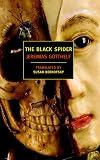
This review applies to the NYRB version translated by Susan Bernofsky.
Published in 1842, Gotthelf's The Black Spider, though clearly written by a devout man as a warning to Christians to take their faith seriously and not neglect their worship of god, turns out to be a great horror tale due to its author's vivid imagination. Peasants, under the rule of a cruel master, are faced with the impossible task of transferring 100 full grown trees to the lane leading up to the castle the same show more peasants have just broken their backs building. It is an impossible task--until a mysterious green man appears. Of course, we all know who he is, and so did the peasants, who were terrified. But faced with ruin at the hands of their evil master or immediate relief of their problem by the green man, perhaps there is room to consider. It is left to a woman to actually take the initiative....and that is about all you need to know. The story is told many years later in a nice framing device concerning the baptism of a new baby. You'll be lulled into this peaceful world, notable for the baptism feast, which the author describes lovingly and at great length. But then--the horror, the horror!
It certainly isn't necessary to be religious to enjoy this tale--I'm not. The descriptions of the horrible black spider and its rampage are quite graphic and very well done. Translator Susan Bernofsky has done a great job. Before buying this version, I read a comparison of this translation with another one, and this came out on top. It's a quick and worthwhile read. Unusally, for an NYRB published book, there is no foreword, no afterword, no supplementary material at all. Since such material often gives away the entire plot, and this book really doesn't require explanation, I'll count that as a plus. show less
Published in 1842, Gotthelf's The Black Spider, though clearly written by a devout man as a warning to Christians to take their faith seriously and not neglect their worship of god, turns out to be a great horror tale due to its author's vivid imagination. Peasants, under the rule of a cruel master, are faced with the impossible task of transferring 100 full grown trees to the lane leading up to the castle the same show more peasants have just broken their backs building. It is an impossible task--until a mysterious green man appears. Of course, we all know who he is, and so did the peasants, who were terrified. But faced with ruin at the hands of their evil master or immediate relief of their problem by the green man, perhaps there is room to consider. It is left to a woman to actually take the initiative....and that is about all you need to know. The story is told many years later in a nice framing device concerning the baptism of a new baby. You'll be lulled into this peaceful world, notable for the baptism feast, which the author describes lovingly and at great length. But then--the horror, the horror!
It certainly isn't necessary to be religious to enjoy this tale--I'm not. The descriptions of the horrible black spider and its rampage are quite graphic and very well done. Translator Susan Bernofsky has done a great job. Before buying this version, I read a comparison of this translation with another one, and this came out on top. It's a quick and worthwhile read. Unusally, for an NYRB published book, there is no foreword, no afterword, no supplementary material at all. Since such material often gives away the entire plot, and this book really doesn't require explanation, I'll count that as a plus. show less
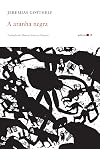
Continuando na minha saga de livros pandêmicos, o da semana é o A Aranha Negra de Jeremias Gotthelf, livro este que é uma alegoria da peste negra na Idade Média, mesmo tendo sido escrito no século XIX.
Como era de esperar num livro escrito por um pastor há muitas referências bíblicas e de quebra muita misoginia, como toda boa religião patriarcal é perita em fazer. A narrativa é um grande exemplo de unheimliche freudiano, mas a misoginia presente nele quase deixa o livro show more intragável, tem que ser muito zen para atravessar essa grande narrativa e não deixá-la se conspurcar pelo ódio às mulheres que o autor evidentemente tem.
É um livro que indico pela narrativa que beira um livro de horror e que é muito boa, mas que deve ser lido com o devido espírito crítico e sem passar a mão na cabeça do autor. show less
Como era de esperar num livro escrito por um pastor há muitas referências bíblicas e de quebra muita misoginia, como toda boa religião patriarcal é perita em fazer. A narrativa é um grande exemplo de unheimliche freudiano, mas a misoginia presente nele quase deixa o livro show more intragável, tem que ser muito zen para atravessar essa grande narrativa e não deixá-la se conspurcar pelo ódio às mulheres que o autor evidentemente tem.
É um livro que indico pela narrativa que beira um livro de horror e que é muito boa, mas que deve ser lido com o devido espírito crítico e sem passar a mão na cabeça do autor. show less
Lists
Short and Sweet (1)
Metamorphoses (1)
Awards


You May Also Like


Associated Authors
Statistics
- Works
- 118
- Also by
- 5
- Members
- 1,234
- Popularity
- #20,805
- Rating
- 3.6
- Reviews
- 24
- ISBNs
- 139
- Languages
- 11
- Favorited
- 4
