
About the Author
As Irving Lo has written of him in Sunflower Splendor: "Certainly no Chinese writer has mirrored in his work more completely the world he lives in than Tu Fu. Nor has anyone revealed himself with greater passion and candor, or displayed a greater dedication to his craft, or achieved such consummate show more mastery of his art." Lo's words echo what the Chinese have felt about this writer for more than 10 centuries, for he is revered as the finest poet China has ever produced. Tu Fu truly is outstanding for his humility, his passion, his social concern, and his extraordinary experimentations with the shih form. Though he never passed the official examinations and held only minor posts, he wrote prolifically of his patriotic concern for the nation's welfare and his own search for the most suitable way to be true to himself and to serve society. He had the misfortune of living just as the T'ang dynasty was reeling under the great challenge of the An Lu-shan Rebellion. As a result, he spent some of his best years away from his beloved capital of Ch'ang-an seeking refuge from the incessant warfare and resulting social dislocations in the north. Two of his most moving ballads in the folk style are narrative accounts, one of meeting soldiers on the road, and the other of meeting an abandoned imperial prince on a crossroads near the capital after the emperor and his entourage have fled to the southwest. Tu Fu's poetry is complex, polished, and emotionally powerful. One of his poems contains the line "If my words don't startle people, I won't rest even in death." (Bowker Author Biography) show less
Image credit: From Wikipedia
Works by Du Fu
Li Po and Tu Fu: Poems Selected and Translated with an Introduction and Notes (1973) — Contributor — 417 copies, 4 reviews
Thirty-six poems : y Tu Fu 4 copies
Poetry 2 copies
the selected poems of du fu 2 copies
杜甫草堂詩注 1 copy
La Guerre Civile (755-759): Oeuvre Poetique II (Bibliotheque Chinoise) (Chinese and French Edition) (2018) 1 copy
Kam spěchají ty květy 1 copy
Associated Works
A Book of Luminous Things: An International Anthology of Poetry (1996) — Contributor — 941 copies, 12 reviews
World Poetry: An Anthology of Verse from Antiquity to Our Time (1998) — Contributor — 496 copies, 2 reviews
Buzz Words: Poems About Insects (Everyman's Library Pocket Poets Series) (2021) — Contributor — 56 copies
Oogst Der Tijden. keur uit de werken van schrijvers en dichters aller volken en eeuwen (1940) — Contributor — 12 copies
Joham: Drei Themen = Joham: Three Themes — Contributor — 1 copy
Tagged
Common Knowledge
Members
Reviews
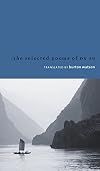
It was a splendid journey with Du Fu, portraying a humble man from the Tang times, that was torn between longing for home, care for his family, fulfillment of Confucian ideals, and conflict between love of poetry and leading a life of a Chan Buddhist. The elegant way everything is translated, one knows that the originals must have been masterful, yet a token left by Burton Watson is sufficient to gaze into the poet's life. Du Fu complained that he has failed to be of political significance, show more and as a person "far from ideal", yet by small signs, he was rewarded and immortalized in poetry; It was a journey of a common man, that nevertheless was highly skilled, a master in poetry; How many others whose stories unwritten in such a great way of his times - Dragons only know. Reading also Chuang Tzu in Watson's translation - was not Du Fu a "true man", that in honest manner traversed his authentic genii, or as the Chinese call it - Hsing - human nature.
"Sleepless, I listen for the sound of bronze locks,
in the wind imagine I hear jeweled horse bells.
I’ve sealed papers to present to the Throne at dawn;
again and again I ask the hour of the night."
For it is a timeless anthem to the starry night. Longing to melt between us and the world, yet separated and contemplated only in this very moment, to be cast away with a whim of circumstance, or a short breath. For some longing is between a place on Earth, transposing it towards the Stars, how solitary a man's, a woman's life. To find home everywhere is to be at home everywhere, not to find home anywhere on Earth, how do we imagine to find oneself at ease with another place beyond it? show less
"Sleepless, I listen for the sound of bronze locks,
in the wind imagine I hear jeweled horse bells.
I’ve sealed papers to present to the Throne at dawn;
again and again I ask the hour of the night."
For it is a timeless anthem to the starry night. Longing to melt between us and the world, yet separated and contemplated only in this very moment, to be cast away with a whim of circumstance, or a short breath. For some longing is between a place on Earth, transposing it towards the Stars, how solitary a man's, a woman's life. To find home everywhere is to be at home everywhere, not to find home anywhere on Earth, how do we imagine to find oneself at ease with another place beyond it? show less
It was a splendid journey with Du Fu, portraying a humble man from the Tang times, that was torn between longing for home, care for his family, fulfillment of Confucian ideals, and conflict between love of poetry and leading a life of a Chan Buddhist. The elegant way everything is translated, one knows that the originals must have been masterful, yet a token left by Burton Watson is sufficient to gaze into the poet's life. Du Fu complained that he has failed to be of political significance, show more and as a person "far from ideal", yet by small signs, he was rewarded and immortalized in poetry; It was a journey of a common man, that nevertheless was highly skilled, a master in poetry; How many others whose stories unwritten in such a great way of his times - Dragons only know. Reading also Chuang Tzu in Watson's translation - was not Du Fu a "true man", that in honest manner traversed his authentic genii, or as the Chinese call it - Hsing - human nature.
"Sleepless, I listen for the sound of bronze locks,
in the wind imagine I hear jeweled horse bells.
I’ve sealed papers to present to the Throne at dawn;
again and again I ask the hour of the night."
For it is a timeless anthem to the starry night. Longing to melt between us and the world, yet separated and contemplated only in this very moment, to be cast away with a whim of circumstance, or a short breath. For some longing is between a place on Earth, transposing it towards the Stars, how solitary a man's, a woman's life. To find home everywhere is to be at home everywhere, not to find home anywhere on Earth, how do we imagine to find oneself at ease with another place beyond it? show less
"Sleepless, I listen for the sound of bronze locks,
in the wind imagine I hear jeweled horse bells.
I’ve sealed papers to present to the Throne at dawn;
again and again I ask the hour of the night."
For it is a timeless anthem to the starry night. Longing to melt between us and the world, yet separated and contemplated only in this very moment, to be cast away with a whim of circumstance, or a short breath. For some longing is between a place on Earth, transposing it towards the Stars, how solitary a man's, a woman's life. To find home everywhere is to be at home everywhere, not to find home anywhere on Earth, how do we imagine to find oneself at ease with another place beyond it? show less
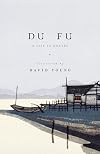
Du Fu (712-770) lived during the Tang dynasty, a period which the translator David Young states “was perhaps the greatest age for poetry that the history of civilization has known”. In this book, Young puts Du Fu’s poems in chronological order and at the beginning of each block of years, e.g., “Early Years in the East, 737-744", he gives a précis of Du Fu’s activities during this time, as well as what was going on politically in China. The result for this reader was a fascinating show more glimpse at an ancient era but more importantly, at the evolution of a man’s life and his contemplation about that life.
Du Fu was, in his younger days, exactly what you would expect of a young person: ambitious, a bit cocky, fond of wine and the good life. But already there is a difference in his voice which sets him apart from 'ordinary' young folk. He looks at daily life around him, incorporating both the world of nature and the world of people. Sometimes his voice is deeply personal and yet he has the distance, the separateness, of a philosopher.
As I progressed through his poems, I felt tremendous compassion for this man, for the vagaries of his life, for his forced exiles and escapes as Tibetan forces attacked the Empire making life so dangerous and uncertain. Across centuries he made me feel his love for his son, Pony Boy, and his wife - unusual for a poet to write a poem for his wife, usually it is for a courtesan or a lover - and his two daughters. I felt his joy in his cottage with the thatched roof and the bamboo he planted there. I understood his frustration with the wars and politics. I delighted in his friendships and how dearly he loved certain individuals. When his hair turned white and he became an ill old man, I ached that his death was on a boat on the Yangtze river, once again shifting and moving, never able to settle, no quiet and peace available for a sick old poet.
His poems are beautiful. They moved me profoundly. Read in sequence as Young placed them, they represent the record of a man’s life, of a time long gone, and reach over that long span of years to touch me with a common humanity. His economy with words and yet his mastery of an image, of a mood, impressed me, particularly as you could see this skill growing with him as he aged.
Between 759-762 he wrote “Rain on a Spring Night”:
"Congratulations, rain
you know when to fall
and you know quite well
you belong to spring
coming at night, quiet
walking in the wind
making sure things
get good and wet
the clouds hang dark
over country roads
there’s one light from a boat
coming downriver
in the red morning
everything’s wet
flowers all through Chengdu
heavy and full of rain."
I will be dipping into this beautiful book over and over. show less
Du Fu was, in his younger days, exactly what you would expect of a young person: ambitious, a bit cocky, fond of wine and the good life. But already there is a difference in his voice which sets him apart from 'ordinary' young folk. He looks at daily life around him, incorporating both the world of nature and the world of people. Sometimes his voice is deeply personal and yet he has the distance, the separateness, of a philosopher.
As I progressed through his poems, I felt tremendous compassion for this man, for the vagaries of his life, for his forced exiles and escapes as Tibetan forces attacked the Empire making life so dangerous and uncertain. Across centuries he made me feel his love for his son, Pony Boy, and his wife - unusual for a poet to write a poem for his wife, usually it is for a courtesan or a lover - and his two daughters. I felt his joy in his cottage with the thatched roof and the bamboo he planted there. I understood his frustration with the wars and politics. I delighted in his friendships and how dearly he loved certain individuals. When his hair turned white and he became an ill old man, I ached that his death was on a boat on the Yangtze river, once again shifting and moving, never able to settle, no quiet and peace available for a sick old poet.
His poems are beautiful. They moved me profoundly. Read in sequence as Young placed them, they represent the record of a man’s life, of a time long gone, and reach over that long span of years to touch me with a common humanity. His economy with words and yet his mastery of an image, of a mood, impressed me, particularly as you could see this skill growing with him as he aged.
Between 759-762 he wrote “Rain on a Spring Night”:
"Congratulations, rain
you know when to fall
and you know quite well
you belong to spring
coming at night, quiet
walking in the wind
making sure things
get good and wet
the clouds hang dark
over country roads
there’s one light from a boat
coming downriver
in the red morning
everything’s wet
flowers all through Chengdu
heavy and full of rain."
I will be dipping into this beautiful book over and over. show less
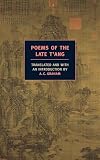
I first heard of this slim volume when I learned that Pink Floyd had borrowed some lines from it to use as lyrics in "Set the Controls For the Heart of the Sun" and "Cirrus Minor", two of their more atmospheric early psychedelic songs. The band's approach to the source material was more for the evocative quality of the lines than an attempt to set the poems to music, but the power of the lines still stood out. The actual poems themselves, however, are far more interesting, even if many of show more them are quite short, due both to the high qualities of the original works, as well as Graham's superb translations and keen sensitivity to the nuances that might have escaped a less diligent interpreter.
The poems included here date from somewhat after the midpoint of the T'ang Dynasty, from the mid-8th to the mid-9th century AD, and were authored by a variety of poets from various parts of China. That range of time and space means that this collection doesn't focus on a single poetic scene or region, so don't imagine that it's akin to a sampling of Lost Generation authors or Beat poets or anything that unified. Without a single theme, each poem can stand more or less on its own, which gives an air of discovery to the reading process, each turn of the page beginning a a new struggle for understanding.
Graham has a long introduction, modestly titled "The Translation of Chinese Poetry", with several great examples of how difficult translating this stuff is, both on the formal word-to-word level and on the higher meaning level. The extreme terseness of many classical Chinese poets, combined with the deceptively simple grammar of the language, further complicated by the typical use of poetic metaphors that take detailed knowledge of historical context, makes translating even very brief lines a challenge. Graham presents a couplet from the first poem in Tu Fu's "Autumn Meditation". A straightforward word-by-word translation would read thusly:
"Cluster chrysanthemum two open / other day tear
Lonely boat one (wholly) tie / former garden heart"
He next gives four possible translations - two his own, one from Amy Lowell, and finally William Hung's attempt:
1. "The clustered chrysanthemums have twice opened. Another day's tears.
The lonely boat is tied once and for all. Thoughts of my 'former garden' [cliché for 'home']."
2. "The clustered chrysanthemums have twice released another day's tears,
The lonely boat wholly ties the thoughts of my former garden."
3. "The myriad chrysanthemums have bloomed twice. Days to come -- tears.
The solitary little boat is moored, but my heart is in the old-time garden."
4. "The sight of chrysanthemums again loosens the tears of past memories;
To a lonely detained boat I vainly attach my hope of going home."
To the eye of a reader ignorant of the subtleties of the original, each of the various renditions on their own are equally plausible; presented together they become equally suspect. He continues:
"Neither of the translators can be convicted of saying anything not implicit in the original; they differ so widely because the English language imposes choices which the poet refrained from making. Is it the flowers which burst open or the tears, the boat which is tied up or the poet's heart? Is the 'other day' past, or a future day which may be as sad as the two autumns in which he has already seen the chrysanthemums open in this unfamiliar country? Are the tears his own, or the dew on the flowers? Were they, or will they be, shed on another day, or is he shedding them now for the sorrows of another day? Are his hopes wholly tied to the boat which may take him home, or tied down once for all by the boat which will never sail? Is his heart tied here with the boat, or or has it travelled home in his imagination to see other chrysanthemums in his former garden?"
He eventually offers his own final version:
"The clustered chrysanthemums have opened twice, in tears of other days:
The forlorn boat, once and for all, tethers my homeward thoughts."
All this for two short lines! Woe to the translator who has to fit each word in its line, each line in its couplet, each couplet in its poem, and each poem in the whole body of work while still producing a readable and enjoyable poem in English. Many of these poems can come off as flat or prosaic, through no fault of the original poet or the translator.
This isn't news to any readers of translated literature; much the same occurred with Nabokov's version of Eugene Onegin, or Michael Kandel's rendition of The Cyberiad, or Andrew Hurley's selection of Borges' poetry, and so on ad nauseum, though all of those works are excellent. I don't mean to focus on translations issues so much over the actual works, except that I found many of these works to be excellent, but probably not in the ways that the original authors intended.
Let's take the example of Li Ho's "Musing". Aesthetic considerations aside, it's hard to get the references here, and I'm honestly unsure if I'm reacting to anything "really" in the poem:
"Ssu-ma Hsiang-ju pondered Leafy Mound
Where the green grasses drooped by the stone well,
Plucked his lute and gazed at Wen-chun,
And the spring breeze in her hair blew shadows on her temples.
The Prince of Liang, the Emperor Wu,
Had cast him off like a snapped stalk:
His only memorial, one writing on bamboo,
To be sealed in gold on the summit of Mount T'ai."
Li Ho's "Up in Heaven", however, has vivid nature imagery and seems to be a little easier for a contemporary American to get into:
"The River of Heaven turns in the night and floats the stars round.
A stream of cloud between silver shores mimics the sound of water.
The cassia tree of the Jade Palace has never shed its flowers,
A houri plucks their fragrance to hang at her jewelled sash.
The Ch'in princess rolls back the blind, day breaks at the north window:
Before the window the straight wu-t'ung dwarfs the blue phoenix.
The prince blows the long goose-quills of the pan-pipes,
Calling to the dragon to plough the mist and plant the jasper herb.
With ribbons of pale dawn-cloud pink and lotus-root fibre skirts
Fairies walk on Azure Isle gathering orchids in the spring.
They point at Hsi-ho in the Eastern sky, who so deftly speeds his horses,
While out of the sea the new land silts beneath the stony mountains."
As a contrast, a poem like Li Shang-Yin's "Written On a Monastery Wall" offers both an interesting look at Buddhist philosophy and some good lines:
"They rejected life to seek the Way. Their footprints are before us.
They offered up their brains, ripped up their bodies; so firm was their resolution.
See it as large, and a millet grain cheats us of the universe:
See it as small, and the world can hide in a pinpoint.
The oyster before its womb fills thinks of the new cassia;
The amber, when it first sets, remembers a former pine.
If we trust the true and sure words written on Indian leaves
We hear all past and future in one stroke of the temple bell."
Not being either formally trained in poetry or classical Chinese culture, I feel hesitation in trying to articulate why so many of the poems in this volume speak so strongly to me - maybe I'm just seeing what I want to see. Maybe my love of Robinson Jeffers has primed me for nature imagery, even if none of these poets share his Inhumanist philosophy. I think Pink Floyd did fine to just pluck arresting images out of the stream of words here to set to music; art is where you find it, and something about lines like "A thousand miles of moonlight later", or "One inch of love is one inch of shadow" have a clear power even out of context in late-60s prog rock songs. I also don't think it's a cop-out to compliment Graham on his translations as much as credit the original poets for their vision, even if the poets themselves surely deserve pride of place for having written the original material; the amount of work that went into this is phenomenal, and he deserves thanks for bringing this stuff to the world at large.
One final work of melancholy, Tu Fu's "At the Corner of the World":
"By Yangtse and Han the mountains pile their barriers.
A cloud in the wind, at the corner of the world.
Year in, year out, there's no familiar thing,
And stop after stop is the end of my road.
In ruin and discord, the Prince of Ch'in-ch'uan:
Pining in exile, the courtier of Ch'u.
My heart in peaceful times had cracked already,
And I walk a road each day more desolate." show less
The poems included here date from somewhat after the midpoint of the T'ang Dynasty, from the mid-8th to the mid-9th century AD, and were authored by a variety of poets from various parts of China. That range of time and space means that this collection doesn't focus on a single poetic scene or region, so don't imagine that it's akin to a sampling of Lost Generation authors or Beat poets or anything that unified. Without a single theme, each poem can stand more or less on its own, which gives an air of discovery to the reading process, each turn of the page beginning a a new struggle for understanding.
Graham has a long introduction, modestly titled "The Translation of Chinese Poetry", with several great examples of how difficult translating this stuff is, both on the formal word-to-word level and on the higher meaning level. The extreme terseness of many classical Chinese poets, combined with the deceptively simple grammar of the language, further complicated by the typical use of poetic metaphors that take detailed knowledge of historical context, makes translating even very brief lines a challenge. Graham presents a couplet from the first poem in Tu Fu's "Autumn Meditation". A straightforward word-by-word translation would read thusly:
"Cluster chrysanthemum two open / other day tear
Lonely boat one (wholly) tie / former garden heart"
He next gives four possible translations - two his own, one from Amy Lowell, and finally William Hung's attempt:
1. "The clustered chrysanthemums have twice opened. Another day's tears.
The lonely boat is tied once and for all. Thoughts of my 'former garden' [cliché for 'home']."
2. "The clustered chrysanthemums have twice released another day's tears,
The lonely boat wholly ties the thoughts of my former garden."
3. "The myriad chrysanthemums have bloomed twice. Days to come -- tears.
The solitary little boat is moored, but my heart is in the old-time garden."
4. "The sight of chrysanthemums again loosens the tears of past memories;
To a lonely detained boat I vainly attach my hope of going home."
To the eye of a reader ignorant of the subtleties of the original, each of the various renditions on their own are equally plausible; presented together they become equally suspect. He continues:
"Neither of the translators can be convicted of saying anything not implicit in the original; they differ so widely because the English language imposes choices which the poet refrained from making. Is it the flowers which burst open or the tears, the boat which is tied up or the poet's heart? Is the 'other day' past, or a future day which may be as sad as the two autumns in which he has already seen the chrysanthemums open in this unfamiliar country? Are the tears his own, or the dew on the flowers? Were they, or will they be, shed on another day, or is he shedding them now for the sorrows of another day? Are his hopes wholly tied to the boat which may take him home, or tied down once for all by the boat which will never sail? Is his heart tied here with the boat, or or has it travelled home in his imagination to see other chrysanthemums in his former garden?"
He eventually offers his own final version:
"The clustered chrysanthemums have opened twice, in tears of other days:
The forlorn boat, once and for all, tethers my homeward thoughts."
All this for two short lines! Woe to the translator who has to fit each word in its line, each line in its couplet, each couplet in its poem, and each poem in the whole body of work while still producing a readable and enjoyable poem in English. Many of these poems can come off as flat or prosaic, through no fault of the original poet or the translator.
This isn't news to any readers of translated literature; much the same occurred with Nabokov's version of Eugene Onegin, or Michael Kandel's rendition of The Cyberiad, or Andrew Hurley's selection of Borges' poetry, and so on ad nauseum, though all of those works are excellent. I don't mean to focus on translations issues so much over the actual works, except that I found many of these works to be excellent, but probably not in the ways that the original authors intended.
Let's take the example of Li Ho's "Musing". Aesthetic considerations aside, it's hard to get the references here, and I'm honestly unsure if I'm reacting to anything "really" in the poem:
"Ssu-ma Hsiang-ju pondered Leafy Mound
Where the green grasses drooped by the stone well,
Plucked his lute and gazed at Wen-chun,
And the spring breeze in her hair blew shadows on her temples.
The Prince of Liang, the Emperor Wu,
Had cast him off like a snapped stalk:
His only memorial, one writing on bamboo,
To be sealed in gold on the summit of Mount T'ai."
Li Ho's "Up in Heaven", however, has vivid nature imagery and seems to be a little easier for a contemporary American to get into:
"The River of Heaven turns in the night and floats the stars round.
A stream of cloud between silver shores mimics the sound of water.
The cassia tree of the Jade Palace has never shed its flowers,
A houri plucks their fragrance to hang at her jewelled sash.
The Ch'in princess rolls back the blind, day breaks at the north window:
Before the window the straight wu-t'ung dwarfs the blue phoenix.
The prince blows the long goose-quills of the pan-pipes,
Calling to the dragon to plough the mist and plant the jasper herb.
With ribbons of pale dawn-cloud pink and lotus-root fibre skirts
Fairies walk on Azure Isle gathering orchids in the spring.
They point at Hsi-ho in the Eastern sky, who so deftly speeds his horses,
While out of the sea the new land silts beneath the stony mountains."
As a contrast, a poem like Li Shang-Yin's "Written On a Monastery Wall" offers both an interesting look at Buddhist philosophy and some good lines:
"They rejected life to seek the Way. Their footprints are before us.
They offered up their brains, ripped up their bodies; so firm was their resolution.
See it as large, and a millet grain cheats us of the universe:
See it as small, and the world can hide in a pinpoint.
The oyster before its womb fills thinks of the new cassia;
The amber, when it first sets, remembers a former pine.
If we trust the true and sure words written on Indian leaves
We hear all past and future in one stroke of the temple bell."
Not being either formally trained in poetry or classical Chinese culture, I feel hesitation in trying to articulate why so many of the poems in this volume speak so strongly to me - maybe I'm just seeing what I want to see. Maybe my love of Robinson Jeffers has primed me for nature imagery, even if none of these poets share his Inhumanist philosophy. I think Pink Floyd did fine to just pluck arresting images out of the stream of words here to set to music; art is where you find it, and something about lines like "A thousand miles of moonlight later", or "One inch of love is one inch of shadow" have a clear power even out of context in late-60s prog rock songs. I also don't think it's a cop-out to compliment Graham on his translations as much as credit the original poets for their vision, even if the poets themselves surely deserve pride of place for having written the original material; the amount of work that went into this is phenomenal, and he deserves thanks for bringing this stuff to the world at large.
One final work of melancholy, Tu Fu's "At the Corner of the World":
"By Yangtse and Han the mountains pile their barriers.
A cloud in the wind, at the corner of the world.
Year in, year out, there's no familiar thing,
And stop after stop is the end of my road.
In ruin and discord, the Prince of Ch'in-ch'uan:
Pining in exile, the courtier of Ch'u.
My heart in peaceful times had cracked already,
And I walk a road each day more desolate." show less
Lists
Awards


You May Also Like


Associated Authors
Statistics
- Works
- 49
- Also by
- 10
- Members
- 1,706
- Popularity
- #15,039
- Rating
- 4.0
- Reviews
- 32
- ISBNs
- 70
- Languages
- 10
- Favorited
- 9