
Eliot Weinberger
Author of 19 Ways of Looking at Wang Wei: How a Chinese Poem is Translated
About the Author
Eliot Weinberger was born on February 6, 1949. He is a writer, editor and translator. His work has been published in 30 languages. He first gained recognition from his translations of Nobel Prize winner and poet Octavio Paz. These translations include Collected Poems 1957-1987 and In Light of show more India. He has also translated other writers such as Vicente Huidobro's Altazor. He received the National Board Critic's Circle Award for his edition of Borge's Selected Non-Fictions. Today Eliot Weinberger is mostly known for his essays and political articles focusing on U.S. politics and foreign policy. His literary writings include An Elemental Thing, which was selected by The Village Voice as one of the "20 Best Books of the Year for 2009. He is also the co-author of a study of Chinese poetry translations, 19 Ways of Looking at Wang Wei. In 2000 he was the only American literary writer to be awarded the order of the Aztec Eagle by the government of Mexico. (Bowker Author Biography) show less
Image credit: via New Directions Publishing
Series
Works by Eliot Weinberger
World Beat: International Poetry Now from New Directions (New Directions Paperbook) (2006) — Editor — 33 copies
Montemora No. 1 2 copies
Montemora 4 1 copy
Montemora 5 1 copy
Montemora 7 1 copy
Montemora 8 1 copy
Montemora 1 1 copy
Duchy ptaków 1 copy
Montemora No. 5 1 copy
Montemora No. 3 1 copy
ما سمعته عن العراق 1 copy
Montemora No. 2 1 copy
'Praise Yah' in LRB, 24 Jan 2008 [review of Alter's 'Book of Psalms: A translation with commentary'] 1 copy
3 stukken over poëzie 1 copy
My Emily Dickinson 1 copy
Montemora 3 1 copy
Associated Works
Jorge Luis Borges: Selected Non-Fictions (1999) — Editor, some editions; Translator, some editions — 1,721 copies, 10 reviews
The Perpetual Race of Achilles and the Tortoise (2010) — Translator, some editions — 128 copies, 2 reviews
In Translation: Translators on Their Work and What It Means (2013) — Contributor — 55 copies, 7 reviews
Conjunctions: 46, Selected Subversions: Essays on the World at Large (2006) — Contributor — 10 copies
Sulfur 6: The Literary Tri-Quarterly of the Whole Art. — Contributor — 2 copies
Sulfur 3 — Contributor — 2 copies
Sulfur 9 — Contributor — 1 copy
Tagged
Common Knowledge
- Birthdate
- 1949-02-06
- Gender
- male
- Occupations
- writer
editor
translator
essayist - Nationality
- USA
- Birthplace
- New York, New York, USA
- Places of residence
- New York, New York, USA
- Associated Place (for map)
- New York, New York, USA
Members
Reviews
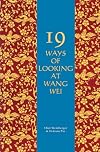
This a a very short book, and really quite a riot. Even after reading, what, 29 translations of this short poem... how is the light hitting, where is that moss? Weinberger's comments are short, pointed, and often funny. But he brings it a lot of substantial observations too. The Daoist slant, opposites playing together, the western light as Amitabha's.
The whole thing reminds me of Borges. It's even more fantastical because it is real!
The whole thing reminds me of Borges. It's even more fantastical because it is real!
Especially given that this slim volume is barely 50 pages long, I unhesitatingly recommend it to just about anyone who is even vaguely conscious about what they read, especially if they regularly read anything in translation.
On its surface, and a gossamer-thin surface it is, this book is a comparative-literature exercise, with its laser focus on a single, four-line Chinese poem by Wang Wei, dated from about 1200 years ago. Per the title, there are 19 translations investigated by Eliot show more Weinberger, including one by Octavio Paz (in two versions), who also provided commentary on the art of translation.
Weinberger's prose is about as far from the original poem as it could be -- where the poem is placid, interrupted by two sublime instances, he is stalwart, headstrong, and, in a word, loud. At times, it verges on a situation where he, through sheer force of presence, threatens to overshadow the actual subject, but he can get away with it because he is, in essence, almost always correct in his declarations about why one poem works and one doesn't (eg., "Chang translates 12 of Wang's 20 words, and makes up the rest" and, when writing of an attempt by William McNaughton, "Line 1 has been turned into a statement, almost a parody of Eastern Wisdom"). show less
On its surface, and a gossamer-thin surface it is, this book is a comparative-literature exercise, with its laser focus on a single, four-line Chinese poem by Wang Wei, dated from about 1200 years ago. Per the title, there are 19 translations investigated by Eliot show more Weinberger, including one by Octavio Paz (in two versions), who also provided commentary on the art of translation.
Weinberger's prose is about as far from the original poem as it could be -- where the poem is placid, interrupted by two sublime instances, he is stalwart, headstrong, and, in a word, loud. At times, it verges on a situation where he, through sheer force of presence, threatens to overshadow the actual subject, but he can get away with it because he is, in essence, almost always correct in his declarations about why one poem works and one doesn't (eg., "Chang translates 12 of Wang's 20 words, and makes up the rest" and, when writing of an attempt by William McNaughton, "Line 1 has been turned into a statement, almost a parody of Eastern Wisdom"). show less
I'm taking a workshop on translation next semester, and my professor assigned this book to us ahead of time. I have learned more than I expected to about the difficulties of translation, particularly the problem of ego inherent to a poet's translation of another poet, from this tiniest of books. The snarky comments about various translations of Wang Wei's short poem are wonderful. My personal favorite: "To me this sounds like Gerard Manley Hopkins on LSD..."
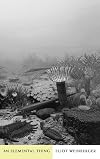
Odd experience reading this polymathic foray into the elemental connectedness of all things at the same time that a majority of U.S. citizens elected a president who has run a campaign based almost entirely on divisiveness. I found it hard to concentrate while reading, focused as it is on a very long view of history, culture, geography that is especially difficult to occupy when one feels the present so pressingly. But still, it served as a good, fascinating and reassuring ballast in show more troubled times. Worth the price of purchase for the eclectic/esoteric multicultural bibliography alone. show less
Lists
Awards


You May Also Like


Associated Authors
Statistics
- Works
- 49
- Also by
- 17
- Members
- 1,481
- Popularity
- #17,342
- Rating
- 4.2
- Reviews
- 30
- ISBNs
- 68
- Languages
- 7
- Favorited
- 5