

Jaime Manrique
Author of Latin Moon in Manhattan
About the Author
Works by Jaime Manrique
Associated Works
Sor Juana's Love Poems (Poemas de Amor) (English and Spanish Edition) (1997) — Translator — 48 copies, 1 review
Las Christmas: Favorite Latino Authors Share Their Holiday Memories (1998) — Contributor — 38 copies, 1 review
Tagged
Common Knowledge
- Canonical name
- Manrique, Jaime
- Legal name
- Manrique, Jaime
- Other names
- Manrique Ardilla, Jaime
- Birthdate
- 1949-06-16
- Gender
- male
- Education
- University of South Florida
- Occupations
- teacher
professor
author - Organizations
- Columbia University
City College of New York - Awards and honors
- Colombia's National Poetry Award
Guggenheim Fellowship
Foundation for Contemporary Arts Grants to Artists Award - Short biography
- Jaime Manrique is the award-winning author of a memoir, novels, and poetry. A contributor to Salon.com, BOMB magazine, and several other publications, he lives in New York City and is an associate professor in the MFA program at Columbia University. [adapted from Our Lives are the Rivers (2006)]
- Nationality
- Colombia (birth)
USA (passport) - Birthplace
- Barranquilla, Colombia
- Places of residence
- Barranquilla, Colombia
Florida, USA
New York, New York, USA - Associated Place (for map)
- USA
Members
Reviews

Out of the sensitive mind of author, Jaime Manrique, comes this short, tender novel which gives the reader a wee bit of Romeo and Juliet with the Catholic Church as the stage. There is nothing cheery about Manrique's novel, but it is true to its characters and to its portrayal of the country, Colombia. Against the background of drug trafficking, guerrilla warfare, corrupt politicians, and a questionable government, two young men study to be priests. One is Lucas, the son of farmers, and the show more other is Ignacio, the son of a poor family of indigenous people. Lucas feels called to a religious profession after experiencing a near miracle in which his arm was saved rather than amputated. Ignacio is pushed toward a religious life by being an excellent student and to please his parents who have chosen this vocation for him. Throughout their years studying together and later years working as ordained priests, the two men question their callings in view of their own individual beliefs in God and their own interpretations and questions about life.
Manrique chose well to focus the novel more on the bond between the two men rather than on the turmoil of Colombia during this time period. If the book had gotten bogged down in politics and warfare, the reader might have gotten lost. Not that the horrors happening in Colombia weren't important or relevant, but rather because they were so complicated. As a priest, Lucas prefers to ignore the killings, the displacement of people, the violence and terror permeating the countryside. He prefers, simply, to leave it to God. Ignacio, on the other hand, has always questioned the Church even though he has long been a part of it. In his role as priest, he becomes a champion of the people, inspiration to the poor, a guide for children, and a hero in his own right. Ignacio is not afraid. His fearlessness frightens Lucas who works in a different area and ministers to a different population. Lucas seeks peace and stability through the Church whereas Ignacio sees the Church as a vehicle for change within the community and the country.
Manrique writes well of romance and, through that view, is able to critique Catholicism in a way that is easily accessible for the reader. Most readers of romance do not want to have to wade through pages of religious analysis, yet in LIKE THIS AFTERNOON FOREVER, Manrique is able to balance religion and romance, keeping them centered in the novel, one not overtaking the other. As for the relationship between Lucas and Ignacio, Manrique develops it in a believable way, and it is, indeed, the bones of the entire book. A book built on love. Many readers will think about the connection between Lucas and Ignacio long after reading the book and closing the final page. There is something about their romance that is so true, so honest, and so real that it becomes spellbinding and goes beyond the book itself.
Comparing the Spanish version to the English version of this novel, it appears that reading it in Spanish would be preferable - not because the English edition is missing anything - perhaps because Spanish is the language of Colombia, the language of Lucas and Ignacio. If one can read it in Spanish, do. If not, the English version will be just fine. And remember, Manrique has accomplished what he set out to do in LIKE THIS AFTERNOON FOREVER. Besides giving us one of the best book titles of the year, he has given his own heart and soul to accomplishing a very true feeling and the telling of a difficult love story. Readers who appreciate LIKE THIS AFTERNOON FOREVER might also like Lawrence Scott's book AELRED'S SIN and/or Colm Toibin's THE STORY OF THE NIGHT, both similar examples of this type of gay literature. show less
Manrique chose well to focus the novel more on the bond between the two men rather than on the turmoil of Colombia during this time period. If the book had gotten bogged down in politics and warfare, the reader might have gotten lost. Not that the horrors happening in Colombia weren't important or relevant, but rather because they were so complicated. As a priest, Lucas prefers to ignore the killings, the displacement of people, the violence and terror permeating the countryside. He prefers, simply, to leave it to God. Ignacio, on the other hand, has always questioned the Church even though he has long been a part of it. In his role as priest, he becomes a champion of the people, inspiration to the poor, a guide for children, and a hero in his own right. Ignacio is not afraid. His fearlessness frightens Lucas who works in a different area and ministers to a different population. Lucas seeks peace and stability through the Church whereas Ignacio sees the Church as a vehicle for change within the community and the country.
Manrique writes well of romance and, through that view, is able to critique Catholicism in a way that is easily accessible for the reader. Most readers of romance do not want to have to wade through pages of religious analysis, yet in LIKE THIS AFTERNOON FOREVER, Manrique is able to balance religion and romance, keeping them centered in the novel, one not overtaking the other. As for the relationship between Lucas and Ignacio, Manrique develops it in a believable way, and it is, indeed, the bones of the entire book. A book built on love. Many readers will think about the connection between Lucas and Ignacio long after reading the book and closing the final page. There is something about their romance that is so true, so honest, and so real that it becomes spellbinding and goes beyond the book itself.
Comparing the Spanish version to the English version of this novel, it appears that reading it in Spanish would be preferable - not because the English edition is missing anything - perhaps because Spanish is the language of Colombia, the language of Lucas and Ignacio. If one can read it in Spanish, do. If not, the English version will be just fine. And remember, Manrique has accomplished what he set out to do in LIKE THIS AFTERNOON FOREVER. Besides giving us one of the best book titles of the year, he has given his own heart and soul to accomplishing a very true feeling and the telling of a difficult love story. Readers who appreciate LIKE THIS AFTERNOON FOREVER might also like Lawrence Scott's book AELRED'S SIN and/or Colm Toibin's THE STORY OF THE NIGHT, both similar examples of this type of gay literature. show less
 This review was written for LibraryThing Early Reviewers.
In Colombia, both sensitive Lucas and angry Ignacio accept from an early age that the priesthood offers the only path to a productive adulthood for intelligent homosexual boys like themselves. After entering the seminary as adolescents, they make a powerful and deep connection that becomes a strong sexual relationship that continues off and on for their entire lives. But can their love withstand the threats of daily life in their war-torn country and the tensions produced by their show more conflicting personalities? And what future can there be in a place where violence colors every aspect of life?
This book describes a Catholic establishment that looks the other way at homosexual and drug-abusing priests, but is unwilling to stand up to the political leaders who have mired the people in poverty and violence. Both Ignacio and Lucas are interesting, vital characters who manage to do some good despite the forces opposing them, but who are often overwhelmed by the scale of the problems they cannot solve single-handedly. Author Manrique, a poet, includes several very powerful descriptive scenes of haunting violence as well as moments of beauty, and does a great job of articulating the despair and the affection his characters feel. I would have liked to see less narrative distance between the reader and the story and more in-the-moment writing, as I felt these were the strongest parts of the book. The final chapter was quite moving. show less
This book describes a Catholic establishment that looks the other way at homosexual and drug-abusing priests, but is unwilling to stand up to the political leaders who have mired the people in poverty and violence. Both Ignacio and Lucas are interesting, vital characters who manage to do some good despite the forces opposing them, but who are often overwhelmed by the scale of the problems they cannot solve single-handedly. Author Manrique, a poet, includes several very powerful descriptive scenes of haunting violence as well as moments of beauty, and does a great job of articulating the despair and the affection his characters feel. I would have liked to see less narrative distance between the reader and the story and more in-the-moment writing, as I felt these were the strongest parts of the book. The final chapter was quite moving. show less
This review was written for LibraryThing Early Reviewers.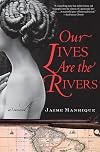
Is there anything more annoying than a man writing a romance novel...without being aware that he has, in fact, written a bodice ripper? This is a profoundly silly book that takes the lives of Bolivar and his mistress, Manuela Saenz, and reduces it to a few confused battle scenes, some chaotic political infighting, and a few frolics in the bathtub. Manrique never seems to understand his characters, or to provide them with psychological depth; Manuela comes off as the typical foot-stomping show more feisty heroine, devoid of introspection (or common sense), and Bolivar a wooden figure whose actions, so critical to the development of South America, are left unexplained. The two slave women's narratives, who might have added some well-needed perspective, are completely interchangeable, and serve as nothing more than a thin Greek chorus. A melancholy coda (though marred with some confused timeline shifts), when Manuela is exiled in Peru, is very well-written, and saves this from a one star. Even that is wrecked by a ridiculous ending (an homage to Carpentier, whom I discovered I don't really care for) that Manrique just can't pull off. Pity--there was--and is--a great novel to be written in the lives of the Liberator and La Saenz, but the reader won't find it here.
And yup, the sex scenes are really overwrought! show less
And yup, the sex scenes are really overwrought! show less

This novel tells the story of Lucas, whose mother left his violent father and managed to make a life for the two of them, and of Ignacio, son of indigenous subsistence farmers, both of whom showed an aptitude for learning which led to them being given the opportunity to go to a Catholic boarding school with the promise of being able to attend university and become priests. When they meet, they quickly become close friends, and then discover a love that would keep them together for the rest show more of their lives.
Colombia during the nineties and early 2000s was a violent place with many rural areas under the control of guerrilla groups and the military matching them in ruthlessness and corruption. As Lucas and Ignacio grow up in Catholic boarding schools and then go to university, Lucas grows stronger in his faith and Ignacio's fierce intelligence has him exploring the history of liberation theology. After they are ordained, they are sent into different neighborhoods in Bogota. Ignacio is sent to the most crime-ridden and poor parish, where he works hard to improve the lives of his parishioners and where he learns about the "false positives," and tries to get that story out into the world. Both his activism and his homosexuality put Ignacio into great danger.
This is a novel with a lot going on, so much so that it sometimes feels like a summary. The passages where Manrique slows down and describes the setting or the relationship between the men, the writing is beautiful and the story a lovely, if melancholic one. show less
Colombia during the nineties and early 2000s was a violent place with many rural areas under the control of guerrilla groups and the military matching them in ruthlessness and corruption. As Lucas and Ignacio grow up in Catholic boarding schools and then go to university, Lucas grows stronger in his faith and Ignacio's fierce intelligence has him exploring the history of liberation theology. After they are ordained, they are sent into different neighborhoods in Bogota. Ignacio is sent to the most crime-ridden and poor parish, where he works hard to improve the lives of his parishioners and where he learns about the "false positives," and tries to get that story out into the world. Both his activism and his homosexuality put Ignacio into great danger.
This is a novel with a lot going on, so much so that it sometimes feels like a summary. The passages where Manrique slows down and describes the setting or the relationship between the men, the writing is beautiful and the story a lovely, if melancholic one. show less
Awards

You May Also Like


Associated Authors
Statistics
- Works
- 15
- Also by
- 13
- Members
- 362
- Popularity
- #66,318
- Rating
- 3.6
- Reviews
- 19
- ISBNs
- 43
- Languages
- 3
