
William Bramley
Author of The Gods of Eden
About the Author
Works by William Bramley
Associated Works
Tagged
Common Knowledge
- Gender
- male
Members
Reviews

Mix one part Zecharia Sitchin and one part David Icke and what do you get? The Gods of Eden by William Bramley. Written in 1989, Bramley discusses and uses Sitchin approvingly, and predates Icke. (I wonder if Icke cites Bramley?) The gist of the book is is that aliens, menacingly called "The Custodians," secretly rule over their slave species homo sapiens, sometimes using human elites/dupes/quislings called, menacingly, The Brotherhood. The Brotherhood uses war, religion, politics, whatever, show more to keep mankind enmeshed in chains, wars, work, materialism, whatever, ad nauseum, so that they don't know that they are ruled by the Brotherhood and the Custodians. It's a a thesis that you can't prove or disprove. Especially the latter. Every claim the book makes, every event in history, no matter what, can be reduced to a Brotherhood/Custodian scheme to keep man down. Christianity vs. Islam? Both Brotherhood/Custodian. Capitalism vs. Communism? Brotherhood/Custodian. Protestants vs. Catholicism? Brotherhood/Custodian. Et cetera, et cetera, ad infinitum, ad nauseum. A theory that is un-disprovable is no theory. Besides, each chapter is full of historical errors, category errors, logical errors, interpretational errors. Too many to count. As such, it is drivel.
And the author's final chapters about how to fix things are laughable. Read this about government budgets and debts, from pp.431-432: "Major constructive changes to our world actually do not require much to bring about. As a specific example, the inflatable paper money system, which continues to create indebtedness and instability at every level, can easily be replaced with a stable monetary system by merely ending bank-created money and setting up a system whereby money is issued by national governments in proportion to their gross national products and dispersed without engendering debt. Banks could continue to participate in the system by being the conduit for the release and circulation of the money; but banks could no longer create money on their own. Governments would no longer need to tax anyone or borrow; they could simply allocate to themselves the money they needed to operate, within limits imposed by their gross national products. Under this plan, all debts owed to banks could be instantly forgiven: banks could be paid by the governments for their services in dispersing and circulating the money, and by consumers for consumer services."
Hahahaha. Read this sentence again: "Governments would no longer need to tax anyone or borrow; they could simply allocate to themselves the money they needed to operate, within limits imposed by their gross national products." Hahahahaha. Drivel. show less
And the author's final chapters about how to fix things are laughable. Read this about government budgets and debts, from pp.431-432: "Major constructive changes to our world actually do not require much to bring about. As a specific example, the inflatable paper money system, which continues to create indebtedness and instability at every level, can easily be replaced with a stable monetary system by merely ending bank-created money and setting up a system whereby money is issued by national governments in proportion to their gross national products and dispersed without engendering debt. Banks could continue to participate in the system by being the conduit for the release and circulation of the money; but banks could no longer create money on their own. Governments would no longer need to tax anyone or borrow; they could simply allocate to themselves the money they needed to operate, within limits imposed by their gross national products. Under this plan, all debts owed to banks could be instantly forgiven: banks could be paid by the governments for their services in dispersing and circulating the money, and by consumers for consumer services."
Hahahaha. Read this sentence again: "Governments would no longer need to tax anyone or borrow; they could simply allocate to themselves the money they needed to operate, within limits imposed by their gross national products." Hahahahaha. Drivel. show less
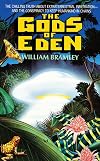
I think the author is onto something, but I do wish he had written a better, more cohesive book (maybe the author needs to update his book if he is still alive?). The book reads like a summarised history text. There are reams of information (some of it more accurate than others), but the author fails to connect the dots properly, nor does he adequately differentiate between known information and the swirling's of his own mind. The book was ok - it provided food for thought - but it will not show more be added to my reference library. show less

A very effortless read. However, it's content while sluggish to start by the middle of the book the author's unusual point-of-view literrally jumps off the page and draws you further into seeing his version of humanity's journey on Earth to a potentially drastic different path. Read it!
This is entirely fantastical fiction. This is pseudo-history that cannot possibly be taken seriously. Don't read this, unless you are only interested in having a good laugh.
You May Also Like


Associated Authors
Statistics
- Works
- 3
- Also by
- 1
- Members
- 275
- Popularity
- #84,338
- Rating
- 3.5
- Reviews
- 5
- ISBNs
- 5
- Languages
- 2