
D. K. Broster (1877–1950)
Author of The Flight of the Heron
About the Author
Series
Works by D. K. Broster
The Jacobite Trilogy: "Flight of the Heron", "Gleam in the North" and "Dark Mile" (1925) 104 copies, 4 reviews
Clairvoyance 1 copy
Día de difuntos 1 copy
Agazapado en la puerta 1 copy
The sea without a haven 1 copy
Associated Works
Alfred Hitchcock Presents: 13 More Stories They Wouldn't Let Me Do On TV (1959) — Contributor — 93 copies, 2 reviews
Women's Weird: Strange Stories by Women, 1890-1940 (Handheld Classics) (2019) — Contributor — 87 copies, 2 reviews
The Moons at Your Door: An Anthology of Hallucinatory Tales (Strange Attractor Press) (2016) — Contributor — 54 copies, 1 review
Bruin's Midnight Reader: Strange and Engaging Stories for the Curious (2022) — Contributor — 3 copies
Tagged
Common Knowledge
- Canonical name
- Broster, D. K.
- Legal name
- Broster, Dorothy Kathleen
- Birthdate
- 1877-09-02
- Date of death
- 1950-02-07
- Gender
- female
- Education
- University of Oxford (unable to graduate due to gender)
University of Oxford (1920) - Occupations
- secretary
nurse
writer - Organizations
- Red Cross
- Short biography
- D. K. Broster (1877–1950) was an English novelist and short-story writer. Her fiction consists mainly of historical romances set in the 18th or early 19th centuries. During the First World War she served as a Red Cross nurse with a voluntary Franco-American hospital, but she returned to England with a knee infection in 1916. After the war, she and a friend, Gertrude Schlich, moved near to Battle, East Sussex, where Broster worked full-time as a writer. She was in the first batch of women to receive her Bachelor of Arts and Master of Arts in 1920 at Oxford.
- Nationality
- UK
- Birthplace
- Garston, Liverpool, England, UK
- Places of residence
- Cheltenham, Gloucestershire, England, UK
Battle, East Sussex, England, UK - Place of death
- Bexhill, Sussex, England, UK
- Associated Place (for map)
- England, UK
Members
Reviews

Couching at the Door is an anthology of nine of D. K. Broster’s supernatural tales. The title story, first up in this collection, is not indicative of the author’s usual straightforward style. Here, Broster’s narrative is perfectly ornate and flowery with its pinkie perpetually raised in clear and precise mimicry of the flamboyance of the main character, the pretentious, decadent, and dandified poet Augustine Marchand. And the story itself is a memorable one, as Marchand’s plan to show more rid himself of a black magic curse (or are those infernal wriggling creatures merely hallucinatory?) has unexpected consequences. A most frightening story, very well-executed on all levels.
And most of the remaining tales are also quite engaging and effective supernatural excursions. “From the Abyss” is perhaps the best, a little masterpiece of cinematic writing in which a woman transforms into physically split personalities after a horrific automobile accident. It’s fast-paced and builds to a stunning climax. Another highlight is “The Promised Land”, an intriguing psychological study of accelerating madness, wherein a meek elderly woman, exasperated by her well-meaning but irritating travel companion, goes to extreme lengths to enjoy a few days on holiday in Italy on her own terms. “The Taste of Pomegranates” is an interesting (albeit a bit melodramatic) time travel story with a neat Twilight Zone twist at the end. Not all of the stories, however, are up to those standards. "The Pestering" is a decidely pedestrian ghost story, somewhat promising at the start but ending with a very meager payoff. show less
And most of the remaining tales are also quite engaging and effective supernatural excursions. “From the Abyss” is perhaps the best, a little masterpiece of cinematic writing in which a woman transforms into physically split personalities after a horrific automobile accident. It’s fast-paced and builds to a stunning climax. Another highlight is “The Promised Land”, an intriguing psychological study of accelerating madness, wherein a meek elderly woman, exasperated by her well-meaning but irritating travel companion, goes to extreme lengths to enjoy a few days on holiday in Italy on her own terms. “The Taste of Pomegranates” is an interesting (albeit a bit melodramatic) time travel story with a neat Twilight Zone twist at the end. Not all of the stories, however, are up to those standards. "The Pestering" is a decidely pedestrian ghost story, somewhat promising at the start but ending with a very meager payoff. show less

This is a story of ships, bays, history and romance. It’s set during the late 18th century, so about the fourth and fifth books of the Poldark series if you read those. A deserter from a Dutch prize finds sanctuary in a secluded part of the Pembrokeshire coast, thanks in no small part to Nesta Meredith, the daughter of the local precentor, and Jerome Salt, a friend of the precentor’s. The three of them become entangled in secrecy and danger, particularly when the deserter, Martin show more Tyrrell, is found to be running from an arrest warrant. Can his name be cleared and his neck saved from the gallows?
This is precisely the kind of book to read while one is in lockdown; it’s an absorbing read, with just the right amount of details and changes in scenery to keep things interesting, and a pace at once cozy and page-turning. I am not terribly romantic but love these sorts of books where you know everyone’s going to get just what they deserve: there are some dashing heroes, resourceful friends and comeuppances for the bad guys. This one doesn’t seem to be as well known as Broster’s Jacobite trilogy, but I found this a very fine read. show less
This is precisely the kind of book to read while one is in lockdown; it’s an absorbing read, with just the right amount of details and changes in scenery to keep things interesting, and a pace at once cozy and page-turning. I am not terribly romantic but love these sorts of books where you know everyone’s going to get just what they deserve: there are some dashing heroes, resourceful friends and comeuppances for the bad guys. This one doesn’t seem to be as well known as Broster’s Jacobite trilogy, but I found this a very fine read. show less

D K Broster specialises in works exploring male friendship in time of war, and the conflicting demands of that friendship and of soldierly honour. This is one of her best, following the fortunes of a captured soldier of Napoleon throughout one year of his involuntary residence in England.
The hero is most attractive, though frequently infuriating, and his sense of honour and duty entangles him in one awkward situation after another. Raoul de Sablieres – Mr Rowl – in an effort to protect show more his lady-love, the daughter of an English nobleman, first lands himself in a prison-camp, then in a prison-ship, and finally has to run for his life, almost losing it in the process. It's only by the good offices of a new-found friend, a Royal Navy captain, whom he first puts through a very humiliating experience, that the tangled affairs of Mr Rowl are unravelled.
I felt a great deal of sympathy for poor Captain Barrington, coping with the wildcat that landed in his life; liked Juliana a lot for her determination to save her Frenchman; and there's a host of minor but equally memorable characters - for instance Juliana's father, who intimidates everyone by his resemblence to the Duke of Wellington but does not share his personality, and Lavinia, Captain Barrington's sister whose good sense and sense of humour are instrumental in both complicating and the unravelling the story. And the writing; how does the author manage to convey the spirit of place and time so well? show less
The hero is most attractive, though frequently infuriating, and his sense of honour and duty entangles him in one awkward situation after another. Raoul de Sablieres – Mr Rowl – in an effort to protect show more his lady-love, the daughter of an English nobleman, first lands himself in a prison-camp, then in a prison-ship, and finally has to run for his life, almost losing it in the process. It's only by the good offices of a new-found friend, a Royal Navy captain, whom he first puts through a very humiliating experience, that the tangled affairs of Mr Rowl are unravelled.
I felt a great deal of sympathy for poor Captain Barrington, coping with the wildcat that landed in his life; liked Juliana a lot for her determination to save her Frenchman; and there's a host of minor but equally memorable characters - for instance Juliana's father, who intimidates everyone by his resemblence to the Duke of Wellington but does not share his personality, and Lavinia, Captain Barrington's sister whose good sense and sense of humour are instrumental in both complicating and the unravelling the story. And the writing; how does the author manage to convey the spirit of place and time so well? show less
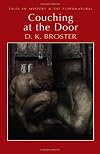
Only one duffer in this book for my money, and even then it's less of a duffer and more of a slightly hackneyed attempt at the haunted house story others have done better in the past (plus it has the faintly ludicrous title "The Pestering"). Otherwise this is surprisingly strong stuff, with the emphasis on the macabre rather than straightforward spook or weird tales. Broster's a really enjoyable writer on her own merits and it's a nice bonus that her supernatural fiction is for the most part show more bang on the money. Quietly very impressive indeed show less
Awards

You May Also Like


Associated Authors
Statistics
- Works
- 24
- Also by
- 16
- Members
- 614
- Popularity
- #40,945
- Rating
- 3.8
- Reviews
- 17
- ISBNs
- 52
- Languages
- 1
- Favorited
- 1