
Nina Burleigh
Author of Mirage: Napoleon's Scientists and the Unveiling of Egypt
About the Author
Nina Burleigh grew up in several different regions including San Francisco, Baghdad, and later Michigan. She began as an intern at the Associated Press where she learned a great deal about govenrment and writing journalism. She covered The White House and Congress for People and Time. She soon show more became a staff writer for People Magazine in the 2000's. She then went on to be a National Politics Correspondent for Newsweek in 2015. Her journalism experience motivated her to become an author. Her book title's include: Mirage: Napoleon's Scientists and the Unveiling of Egypt, Unholy Business: A True Tale of Faith, Greed and Forgery in the Holy Land, The Fatal Gift of Beauty, and The Stranger and the Statesman: Jame sSmithson, John Quincy Adams and the Making of America's Greatest Museum. (Bowker Author Biography) show less
Works by Nina Burleigh
The Stranger and the Statesman: James Smithson, John Quincy Adams, and the Making of America's Greatest Museum: The Smithsonian (2003) 241 copies, 4 reviews
A Very Private Woman: The Life and Unsolved Murder of Presidential Mistress Mary Meyer (1998) 133 copies, 2 reviews
Unholy Business: A True Tale of Faith, Greed and Forgery in the Holy Land (2008) 132 copies, 8 reviews
Virus: Vaccinations, the CDC, and the Hijacking of America's Response to the Pandemic (2021) 10 copies
Tagged
Common Knowledge
- Birthdate
- 1959
- Gender
- female
- Education
- MacMurray College (BA - English)
University of Illinois (MA - Public Affairs Reporting)
University of Chicago (MA - English Literature) - Occupations
- journalist
columnist - Organizations
- Newsweek
Huffington Post - Relationships
- Burleigh, Robert (parent)
- Nationality
- USA
- Places of residence
- Chicago, Illinois, USA
- Associated Place (for map)
- Illinois, USA
Members
Reviews

Burleigh's book is a careful, thorough, and insightful examination of the Knox investigation and trials. Her discussion of the history and culture of Italy, and specifically Perugia, is fascinating. She notes that the Italian criminal justice system is different from the U.S. system, but more importantly, her analysis places it in detailed context. She refers to Perugia's long history, its ancient pagan culture, its isolation, its location as an important freemasonry center, and other show more factors essential in the consideration of just how the crime, the investigation, the media coverage, and the verdict and sentencing happened.
At one point, late in the book, Burleigh says this: "The Perugians didn't know what to make of this unusual, slightly damaged girl with the inappropriate emotional responses, whose overconfident exterior masked a person with a deep aversion to conflict. Needing to solve the high-profile crime, they made a deduction about her and extracted a statement that put her at the scene. Everything in the investigation evolved from that...."
Two things occurred to me as I was reading this book. One is that if I had been in Amanda Knox's place, at age 20, with what I knew and how I acted at that age, I'd have looked pretty damn culpable myself, and I'd have been vulnerable to psychological coercion. It wouldn't have taken much pressure to make me wonder if what I thought was reality was actually completely wrong. And a public discussion of my short, problematic personal history wouldn't have helped at all.
The second thing that occurred to me was the remarkable similarity in process and outcome the Knox trial has with the McMartin Pre-School case and its many related iterations throughout the U.S. This 1980s and 1990s phenomenon of widespread suspicions of systematic, criminal pre-school child abuse, including Satanic ritual and sexual crimes, resulted in a panicky series of charges, arrests, and accusations. A number of people were convicted of heinous crimes, and despite the subsequent debunking, not to mention the alleged victims' recanting when they got older, a few people are still in U.S. prisons because of it. Was it because the American justice system was stupid or archaic? Were all the investigators and prosecutors stone-cold inquisitors? No. But a compelling theory got strong-armed into spurious "fact", and it took years for logical, fair, and fact-based investigation to prevail.
I think Amanda Knox got caught up in a similar civic and judicial storm, one that creates its own logic and is not easily remedied. show less
At one point, late in the book, Burleigh says this: "The Perugians didn't know what to make of this unusual, slightly damaged girl with the inappropriate emotional responses, whose overconfident exterior masked a person with a deep aversion to conflict. Needing to solve the high-profile crime, they made a deduction about her and extracted a statement that put her at the scene. Everything in the investigation evolved from that...."
Two things occurred to me as I was reading this book. One is that if I had been in Amanda Knox's place, at age 20, with what I knew and how I acted at that age, I'd have looked pretty damn culpable myself, and I'd have been vulnerable to psychological coercion. It wouldn't have taken much pressure to make me wonder if what I thought was reality was actually completely wrong. And a public discussion of my short, problematic personal history wouldn't have helped at all.
The second thing that occurred to me was the remarkable similarity in process and outcome the Knox trial has with the McMartin Pre-School case and its many related iterations throughout the U.S. This 1980s and 1990s phenomenon of widespread suspicions of systematic, criminal pre-school child abuse, including Satanic ritual and sexual crimes, resulted in a panicky series of charges, arrests, and accusations. A number of people were convicted of heinous crimes, and despite the subsequent debunking, not to mention the alleged victims' recanting when they got older, a few people are still in U.S. prisons because of it. Was it because the American justice system was stupid or archaic? Were all the investigators and prosecutors stone-cold inquisitors? No. But a compelling theory got strong-armed into spurious "fact", and it took years for logical, fair, and fact-based investigation to prevail.
I think Amanda Knox got caught up in a similar civic and judicial storm, one that creates its own logic and is not easily remedied. show less
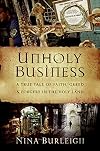
I knew archaeological forgeries were a huge industry and an enormous problem. I think, after reading this book, I understand a little better the scope of things. It's not just people in a back room putting these things together, but well-connected business men who can afford the best workers and the best DEFENSE to cover up what they're doing! Burleigh's book focuses particularly on the James Ossuary and several inscriptions (I think the Jehoash inscription?) that were "found" around the show more same time, and she even managed to somehow catch a glimpse of what appeared to be a forgery manufacturing studio. Yikes.
The key element under discussion here - whether even the author realized it or not - is the issue of unprovenanced artifacts. Should they be studied and placed on display, or is it too risky? Do these items simply encourage illegal trade, site raiding, and forgeries? Some say yes, some say no. It's a tricky situation. Either way, the book was entertaining and certainly informative. Worth the time if this is an area of interest to you. show less
The key element under discussion here - whether even the author realized it or not - is the issue of unprovenanced artifacts. Should they be studied and placed on display, or is it too risky? Do these items simply encourage illegal trade, site raiding, and forgeries? Some say yes, some say no. It's a tricky situation. Either way, the book was entertaining and certainly informative. Worth the time if this is an area of interest to you. show less
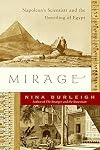
Engrossing telling of the near mystical allure of the French revolutionary army to a suicidal embrace with magical Egypt. At Karnak, I saw Frenchmen still laboring on re-building that massive complex - task descendants of Napoleon's late 18th Century invasion.
Most interesting to me in this book was the foundation work for Darwinism done by naturalists attached to the invasion force and the journey of the Rosetta Stone from French discovery to London.
Most interesting to me in this book was the foundation work for Darwinism done by naturalists attached to the invasion force and the journey of the Rosetta Stone from French discovery to London.
Unholy Business has a great tale at its heart – the tale of a forgery on an epic scale. The 2002 unveiling of an ossuary (basically a small stone casket) with the inscription “James, son of Joseph, brother of Jesus” caused a sensation in the field of Biblical archaeology – and an even bigger sensation in the religious community that follows the field closely. For them, it was a physical, tangible evidence of the existence of Jesus of Nazareth.
Except it wasn’t. As eventually show more emerged, the ossuary was a fake – a real ossuary (they’re so common in Jerusalem, they’re commonly used as garden planters, as Burleigh informs us several times), but with a faked inscription to link it to Biblical characters.
The tale, however, probably isn’t enough to sustain an entire book – and the trial of the alleged forger was still ongoing at the book’s close, so there isn’t much by way of resolution.
Burleigh makes up for this by providing a vivid background portrait of the sketchy world of Middle Eastern antiquities – the collectors, dealers, scholars and, yes, forgers, who devote themselves to the largely lost world that emerges in small pieces from the ground. This ground, as everyone knows, is very much contested, most especially in Jerusalem, which is holy ground for three major religions.
This is fascinating stuff; unfortunately it sometimes gets confusing to figure out which or whose trail we are supposed to be following, and why. If the book has a hero it’s Amir Ganor, a detective in charge of the Israel Antiquities Authority Theft-Prevention Unit – but he spends most of the book working on cases other than the James Ossuary, and the discovery of a bunch of forgery tools and altered objects in the suspect’s property feels anticlimactic. If it’s got a villain, I guess it’s that suspect though one never gets a great feel for him, what exactly he did and most importantly, why.
Burleigh’s a good writer with a nice touch; she’s working with very sensitive subject matter and she manages to make her subjects appear as human beings without coming off as patronizing or as a scold. That’s important in an area where so many invest so much faith in the history that is revealed through ancient relics. show less
Except it wasn’t. As eventually show more emerged, the ossuary was a fake – a real ossuary (they’re so common in Jerusalem, they’re commonly used as garden planters, as Burleigh informs us several times), but with a faked inscription to link it to Biblical characters.
The tale, however, probably isn’t enough to sustain an entire book – and the trial of the alleged forger was still ongoing at the book’s close, so there isn’t much by way of resolution.
Burleigh makes up for this by providing a vivid background portrait of the sketchy world of Middle Eastern antiquities – the collectors, dealers, scholars and, yes, forgers, who devote themselves to the largely lost world that emerges in small pieces from the ground. This ground, as everyone knows, is very much contested, most especially in Jerusalem, which is holy ground for three major religions.
This is fascinating stuff; unfortunately it sometimes gets confusing to figure out which or whose trail we are supposed to be following, and why. If the book has a hero it’s Amir Ganor, a detective in charge of the Israel Antiquities Authority Theft-Prevention Unit – but he spends most of the book working on cases other than the James Ossuary, and the discovery of a bunch of forgery tools and altered objects in the suspect’s property feels anticlimactic. If it’s got a villain, I guess it’s that suspect though one never gets a great feel for him, what exactly he did and most importantly, why.
Burleigh’s a good writer with a nice touch; she’s working with very sensitive subject matter and she manages to make her subjects appear as human beings without coming off as patronizing or as a scold. That’s important in an area where so many invest so much faith in the history that is revealed through ancient relics. show less
Lists
THE WAR ROOM (1)
You May Also Like


Associated Authors
Statistics
- Works
- 10
- Members
- 921
- Popularity
- #27,851
- Rating
- 3.6
- Reviews
- 26
- ISBNs
- 33
- Languages
- 1

