
Lloyd C. Gardner
Author of Iraq and the Lessons of Vietnam: Or, How Not to Learn from the Past
About the Author
Lloyd C. Gardner, emeritus professor of history at Rutgers University, is the author of over a dozen books on U.S. foreign relations. He has held two Fulbright Professorships and a Guggenheim Fellowship.
Works by Lloyd C. Gardner
The Long Road to Baghdad: A History of U.S. Foreign Policy from the 1970s to the Present (New Press) (2008) 39 copies
The Road to Tahrir Square: Egypt and the United States from the Rise of Nasser to the Fall of Mubarak (2011) 26 copies
The War on Leakers: National Security and American Democracy, from Eugene V. Debs to Edward Snowden (2016) 23 copies
Imperial America: American Foreign Policy Since 1898 (The Harbrace history of the United States) (1976) 14 copies
Associated Works
America, the Vietnam War, and the World: Comparative and International Perspectives (2003) — Editor, some editions — 9 copies
Tagged
Common Knowledge
- Birthdate
- 1934
- Gender
- male
- Education
- University of Wisconsin-Madison
- Occupations
- historian
professor - Organizations
- Rutgers University
- Nationality
- USA
- Associated Place (for map)
- USA
Members
Reviews
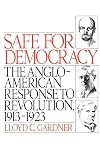
Llyod Gardner builds on the fundamental insight provided by Williams in his consideration of the Anglo-American response to revolution under Wilson and Llyod George. These two statesmen were committed to the principles of economic Liberalism, but with the significant difference that Llyod George was constrained by the politics of Imperial England. Wilson, by contrast, sought to remake the world in America's image. The British desire to preserve their empire and America's efforts to subvert show more British imperial preference in the name of the Open Door, made the two men "mismatched" allies from the outset.
Responding to the legitimate grievances of the peoples of Mexico, China, and Russia, Wilson sought to direct revolution away from radical demands and into the paths of Liberal capitalism. Wilson sought thereby to avoid the counter-revolutionary reaction which inevitably follows on the heels of radical revolution. When revolutions proved unwilling to yield to his direction, particularly in the case of the Russian revolution, Wilson responded with incomprehension. The Bolsheviks had to be German agents, for instance, if they refused his guidance. Gardner makes a point of emphasizing Wilson's attempt to maintain control of the revolutions which he confronted. show less
Responding to the legitimate grievances of the peoples of Mexico, China, and Russia, Wilson sought to direct revolution away from radical demands and into the paths of Liberal capitalism. Wilson sought thereby to avoid the counter-revolutionary reaction which inevitably follows on the heels of radical revolution. When revolutions proved unwilling to yield to his direction, particularly in the case of the Russian revolution, Wilson responded with incomprehension. The Bolsheviks had to be German agents, for instance, if they refused his guidance. Gardner makes a point of emphasizing Wilson's attempt to maintain control of the revolutions which he confronted. show less
nice collection of primary source material
Awards

You May Also Like


Associated Authors
Statistics
- Works
- 31
- Also by
- 3
- Members
- 573
- Popularity
- #43,719
- Rating
- 3.8
- Reviews
- 2
- ISBNs
- 75