
Imogen Robertson
Author of Instruments of Darkness
About the Author
Image credit: Imogen Robertson in 2019
Series
Works by Imogen Robertson
Crowther & Westerman Omnibus: Instruments of Darkness, Anatomy of Murder, Island of Bones (2014) 3 copies, 1 review
Associated Works
Tagged
Common Knowledge
- Birthdate
- 1973
- Gender
- female
- Education
- University of Cambridge
- Occupations
- crime novelist
writer
television director - Short biography
- Imogen Robertson's bio reads: I grew up in Darlington, studied Russian and German at Cambridge and now live in London. I directed for film, TV and radio, including the award-winning Numberjacks for Cbeebies, before becoming a full-time author. I was commended in the National Poetry Competition in 2005 and won the Telegraph’s"‘First Thousand Words of a Novel" competition in 2007 with the opening of Instruments of Darkness, my first novel. My second novel featuring the detective duo of Harriet Westerman and Gabriel Crowther, Anatomy of Murder, was published in April 2010, and the third in the series Island of Bones, is coming out in April 2011. My UK publisher is Headline, and Instruments has just been published in America by Pam Dorman’s imprint at Viking Books. I still go to my poetry workshop in Lambeth every week and have started teaching creative writing myself, novels allowing. The only disadvantage with swapping a career in children's TV for writing historical crime fiction is these days I have less opportunity to play with glitter glue and claim it's work.
- Nationality
- UK (England)
- Places of residence
- London, England, UK
- Associated Place (for map)
- England, UK
Members
Reviews
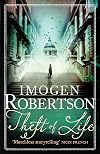
A Jamaican plantation owner is found dead in the grounds of St Paul’s Cathedral, staked out on the ground as if in preparation for a whipping and only in his undershirt. Surely this can only be the deed of some runaway slaves? Soon Crowther and Westerman find themselves in the middle of yet another investigation, asking uncomfortable questions among wealthy and influential slave traders.
This is the fifth volume in the Crowther and Westerman series, describing the unlikely friendship show more between a scholar and anatomist and the unconventional widow of a captain in the Royal Navy, intent on solving murders and thereby restoring a voice to the dead. Set in London in 1785, this novel deals with a rather dark chapter in British history: the flourishing slave trade in the West Indies. Imogen Robertson deals with the subject matter sensitively and sympathetically, never letting the reader forget the human cost, even when the plantation owners are talking about cost and profit. The mystery at the heart of the novel is complex and gripping, and involves Crowther and Westerman receiving help and support from several individuals, former slaves among them.
Imogen Robertson is one of my favourite authors: her descriptions of place and atmosphere, as well as her treatment of the characters, create a real sense of the period, and I have often thought that I know the main protagonists so well now that they have become like friends. There is a moving sub-plot involving one of Mr Graves’s wards and an extraordinary act of courage shown by the four older children that resonated deeply within me; it is not strictly necessary to have read previous volumes in the series, as some of the key points are alluded to, but it will certainly aid a fuller understanding and appreciation with regard to the recurrent characters’ motivations. The setting of the plot in 1785 and the gradual acceptance of former slaves in London society foreshadows a turning of the public mood against slavery within the next few years, yet it would still be another 22 years before the transatlantic slave trade was outlawed, and another 26 years before slavery in Britain was finally abolished in 1833, the government paying £20 million pounds in compensation to the slave owners. There are some recommended reading sources for finding out more about the slave trade, and in her historical notes the author reveals that some of the characters in the book are based on real-life figures from the time. With the chosen title, Imogen Robertson reminds us that not only do the murder victims have their lives stolen away from them, but so have the slaves at the point of capture, and that their sense of degradation and humiliation of being treated as another man’s property can never be erased, even after years of freedom, whether through escape or through buying it back. At times this makes for uncomfortable reading as everyone in the country would have benefited at least indirectly from the slave trade, but it is necessary reading nonetheless. Recommended.
(This review was originally written as part of Amazon's Vine programme.) show less
This is the fifth volume in the Crowther and Westerman series, describing the unlikely friendship show more between a scholar and anatomist and the unconventional widow of a captain in the Royal Navy, intent on solving murders and thereby restoring a voice to the dead. Set in London in 1785, this novel deals with a rather dark chapter in British history: the flourishing slave trade in the West Indies. Imogen Robertson deals with the subject matter sensitively and sympathetically, never letting the reader forget the human cost, even when the plantation owners are talking about cost and profit. The mystery at the heart of the novel is complex and gripping, and involves Crowther and Westerman receiving help and support from several individuals, former slaves among them.
Imogen Robertson is one of my favourite authors: her descriptions of place and atmosphere, as well as her treatment of the characters, create a real sense of the period, and I have often thought that I know the main protagonists so well now that they have become like friends. There is a moving sub-plot involving one of Mr Graves’s wards and an extraordinary act of courage shown by the four older children that resonated deeply within me; it is not strictly necessary to have read previous volumes in the series, as some of the key points are alluded to, but it will certainly aid a fuller understanding and appreciation with regard to the recurrent characters’ motivations. The setting of the plot in 1785 and the gradual acceptance of former slaves in London society foreshadows a turning of the public mood against slavery within the next few years, yet it would still be another 22 years before the transatlantic slave trade was outlawed, and another 26 years before slavery in Britain was finally abolished in 1833, the government paying £20 million pounds in compensation to the slave owners. There are some recommended reading sources for finding out more about the slave trade, and in her historical notes the author reveals that some of the characters in the book are based on real-life figures from the time. With the chosen title, Imogen Robertson reminds us that not only do the murder victims have their lives stolen away from them, but so have the slaves at the point of capture, and that their sense of degradation and humiliation of being treated as another man’s property can never be erased, even after years of freedom, whether through escape or through buying it back. At times this makes for uncomfortable reading as everyone in the country would have benefited at least indirectly from the slave trade, but it is necessary reading nonetheless. Recommended.
(This review was originally written as part of Amazon's Vine programme.) show less
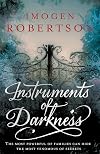
Tension builds from the moment Mrs Westerman, genteel proprietress of Caveley Park, forces her acquaintance on reclusive anatomist Gabriel Crowther, wealthy man of secrets and possessor of many strange and distasteful objects, in search of his help in dealing with the death of a stranger in her copse.
It doesn't let up. It ratchets up every time Mrs Westerman or Mr Crowther are on stage. There are flashbacks to Mrs Westerman's neighbor, Lord Hugh Thornleigh, in combat during the American show more conflict...these aren't immediately obviously relevant to the story, and I think I'd've recommended the author introduce them differently than her editor did, but have patience...and introduce us to Claver Wicksteed, then an Army procurement officer and now steward of Thornleigh, the seat of the Earls of Sussex. Then we meet the Countess of Sussex, and our central cast is complete.
The body count rises, as it must in a mystery, and the characters begin to see that they're engaged in a grisly gavotte around one central puzzle: How low can a human being sink, regardless of high birth, and how can justice seem so far from just?
Like all good mystery writers, Robertson takes us round the houses by changing the angle of view several times. She's very good at this. What seems awful becomes right and good; what seems reliably good stinks like old fish before she's done with us. Fear not: The wise and the just are rewarded! Just that they're also made to get dirty in the process.
There are first-novel issues with the book, of course, like the Parthenon being described as a round building in Rome (PANTHEON!) and the persistent misunderstanding of how one addresses Earls, Countesses, and their offspring (Earls are "Lord {Name of earldom}", their wives "Lady {Name of earldom} unless that countess is the daughter of a fellow earl or higher, in which case she's ALWAYS "Lady {Firstname}" no matter who she's married to, sons and heirs of earls are Viscounts and addressed as "Lord {Name of viscounty" even when very young, younger sons are "Lord {Family name}" and daughters of earls are "Lady {Firstname}" all their lives, etc etc). Most of this is the editor's fault. The author should be able to rely on him or her to catch these sorts of factual oopsies.
Still and all...the pleasures of reading this book are many, and *evil chortle* you'll all have to wait until at least 2011 to find out 'cause the book ain't available here yet! I borrowed mine from our own Suzanne/Chatterbox, so there nyah!
But it's recommended. Really and truly. Too good to miss. show less
It doesn't let up. It ratchets up every time Mrs Westerman or Mr Crowther are on stage. There are flashbacks to Mrs Westerman's neighbor, Lord Hugh Thornleigh, in combat during the American show more conflict...these aren't immediately obviously relevant to the story, and I think I'd've recommended the author introduce them differently than her editor did, but have patience...and introduce us to Claver Wicksteed, then an Army procurement officer and now steward of Thornleigh, the seat of the Earls of Sussex. Then we meet the Countess of Sussex, and our central cast is complete.
The body count rises, as it must in a mystery, and the characters begin to see that they're engaged in a grisly gavotte around one central puzzle: How low can a human being sink, regardless of high birth, and how can justice seem so far from just?
Like all good mystery writers, Robertson takes us round the houses by changing the angle of view several times. She's very good at this. What seems awful becomes right and good; what seems reliably good stinks like old fish before she's done with us. Fear not: The wise and the just are rewarded! Just that they're also made to get dirty in the process.
There are first-novel issues with the book, of course, like the Parthenon being described as a round building in Rome (PANTHEON!) and the persistent misunderstanding of how one addresses Earls, Countesses, and their offspring (Earls are "Lord {Name of earldom}", their wives "Lady {Name of earldom} unless that countess is the daughter of a fellow earl or higher, in which case she's ALWAYS "Lady {Firstname}" no matter who she's married to, sons and heirs of earls are Viscounts and addressed as "Lord {Name of viscounty" even when very young, younger sons are "Lord {Family name}" and daughters of earls are "Lady {Firstname}" all their lives, etc etc). Most of this is the editor's fault. The author should be able to rely on him or her to catch these sorts of factual oopsies.
Still and all...the pleasures of reading this book are many, and *evil chortle* you'll all have to wait until at least 2011 to find out 'cause the book ain't available here yet! I borrowed mine from our own Suzanne/Chatterbox, so there nyah!
But it's recommended. Really and truly. Too good to miss. show less
Harriet Westerman, a young gentlewoman living in the tranquil village of Hartswood in rural Sussex, discovers the body of a man on her lands, his throat cut. Rather than calling on the local constable, she addresses herself to Gabriel Crowther, a recluse and known anatomist, for help. As the body count rises, the two form a friendship and discover the reasons behind the murders.
Set in 1780, this is the first in a historical crime fiction series featuring the rather impulsive and show more unconventional Harriet Westerman and her partner in crime Gabriel Crowther, a gentleman with a secret past and the polar opposite to Harriet in character. Divided into six parts, each covering the span of a day, the plot is centred on the village of Hartswood where Harriet and Crowther live, London and Boston during the American Revolutionary War some five years previously. The prose is fluent and memorable in places, the atmosphere of time and place acute, but the great strength of this novel is its vivid portrayal of the characters, so much so that I felt I knew them as the novel progressed, and cared for them deeply. Even though some might criticise that the plot is too sedate in places (I don’t agree, there are three murders in three days), the author is clearly more concerned about characterisation than driving the action forward just for its own sake. (Saying that, the most memorable scenes detail the carnage after the Battle of Breed’s Hill near Charlestown and the chaos and confusion during the London riots as some of the protagonists have to cross the city to a place of refuge; the writing is incredibly tense in these places.) Here the consequences and repercussions after a violent crime has been committed ripple through the affected members of the family, friends and neighbours, and even the wider community, and Imogen Robertson makes it clear that some acts of violence are committed for personal gain, while others have a personal tragedy of their own at their heart. This is historical crime fiction at its best, and I can’t wait to get my hands on the second volume in the series, Anatomy of Murder. show less
Set in 1780, this is the first in a historical crime fiction series featuring the rather impulsive and show more unconventional Harriet Westerman and her partner in crime Gabriel Crowther, a gentleman with a secret past and the polar opposite to Harriet in character. Divided into six parts, each covering the span of a day, the plot is centred on the village of Hartswood where Harriet and Crowther live, London and Boston during the American Revolutionary War some five years previously. The prose is fluent and memorable in places, the atmosphere of time and place acute, but the great strength of this novel is its vivid portrayal of the characters, so much so that I felt I knew them as the novel progressed, and cared for them deeply. Even though some might criticise that the plot is too sedate in places (I don’t agree, there are three murders in three days), the author is clearly more concerned about characterisation than driving the action forward just for its own sake. (Saying that, the most memorable scenes detail the carnage after the Battle of Breed’s Hill near Charlestown and the chaos and confusion during the London riots as some of the protagonists have to cross the city to a place of refuge; the writing is incredibly tense in these places.) Here the consequences and repercussions after a violent crime has been committed ripple through the affected members of the family, friends and neighbours, and even the wider community, and Imogen Robertson makes it clear that some acts of violence are committed for personal gain, while others have a personal tragedy of their own at their heart. This is historical crime fiction at its best, and I can’t wait to get my hands on the second volume in the series, Anatomy of Murder. show less
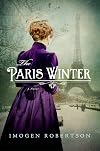
Stories taking place in turn-of-the-century Paris tend to glamorize the life of a starving artist. The night life, the camaraderie – it all has a vibe to it that makes the era so popular. In The Paris Winter, Maud’s experiences turn this idea on its head. There are no cafes or soirees for her. She can barely find enough money to eat one meal a day, let alone while away her time drinking alcohol or coffee. She is quite literally starving herself in an effort to become a better painter, show more and a reader experiences it all along with her.
The desperation Maud feels before she becomes Sylvie’s live-in companion is palpable. Even the doubts Maud has about entering into this unusual situation cannot overshadow her need to find a better place to live and a chance to earn money. That it is too good to be true is a given, but one cannot fault her for her decision because the girl is all but fainting from hunger.
While Ms. Robertson could gloss over Maud’s poverty or use it to tell a familiar cautionary tale of dreams coming true, she instead uses it to develop Maud into a fierce character. The woman she ends up becoming at the end of the novel is nothing like the meek girl from the beginning. More importantly, her journey is every bit as circuitous as real life. What she and her friends experience, at the hands of the Morel siblings and through their own decisions, are life-altering scenarios that Ms. Robertson treats with the seriousness that they deserve.
The Paris Winter is not all darkness and despair however. It is first and foremost a novel, and more importantly an entertaining one. Maud’s little band of friends provides a break in the tension and add a slight comedic presence with their unlikely friendship. In addition, it may not be the vibrant Paris experience one may expect from such a novel, but the story still occurs in Paris. One can never extinguish the Parisian mystique no matter how dark and dirty the story may get.
The Paris Winter is an unlikely amalgam of genres. It is a thriller in the guise of historical fiction; it is also a coming-of-age story. Maud must dig deep to survive everything the city throws at her. There are enough twists and turns to keep readers guessing, and the comedic scenes interspersed throughout the story prevent it from becoming too serious. The Paris Winter is a wonderful, old-fashioned story that tackles some serious subjects but never strays too far from its original plot and always stays entertaining. show less
The desperation Maud feels before she becomes Sylvie’s live-in companion is palpable. Even the doubts Maud has about entering into this unusual situation cannot overshadow her need to find a better place to live and a chance to earn money. That it is too good to be true is a given, but one cannot fault her for her decision because the girl is all but fainting from hunger.
While Ms. Robertson could gloss over Maud’s poverty or use it to tell a familiar cautionary tale of dreams coming true, she instead uses it to develop Maud into a fierce character. The woman she ends up becoming at the end of the novel is nothing like the meek girl from the beginning. More importantly, her journey is every bit as circuitous as real life. What she and her friends experience, at the hands of the Morel siblings and through their own decisions, are life-altering scenarios that Ms. Robertson treats with the seriousness that they deserve.
The Paris Winter is not all darkness and despair however. It is first and foremost a novel, and more importantly an entertaining one. Maud’s little band of friends provides a break in the tension and add a slight comedic presence with their unlikely friendship. In addition, it may not be the vibrant Paris experience one may expect from such a novel, but the story still occurs in Paris. One can never extinguish the Parisian mystique no matter how dark and dirty the story may get.
The Paris Winter is an unlikely amalgam of genres. It is a thriller in the guise of historical fiction; it is also a coming-of-age story. Maud must dig deep to survive everything the city throws at her. There are enough twists and turns to keep readers guessing, and the comedic scenes interspersed throughout the story prevent it from becoming too serious. The Paris Winter is a wonderful, old-fashioned story that tackles some serious subjects but never strays too far from its original plot and always stays entertaining. show less
Lists
Awards

You May Also Like


Associated Authors
Statistics
- Works
- 9
- Also by
- 1
- Members
- 1,786
- Popularity
- #14,415
- Rating
- 3.7
- Reviews
- 108
- ISBNs
- 96
- Languages
- 3
- Favorited
- 4
