

Byron Preiss (1953–2005)
Author of Dragonworld
About the Author
Series
Works by Byron Preiss
Constitution of the United States of America (Bicentennial Keepsake Edition) (1987) 95 copies, 1 review
The Year's Best Graphic Novels, Comics & Manga: From Blankets to Demo Blacksad (2005) 73 copies, 4 reviews
Are We Alone in the Cosmos? The Search for Alien Contact in the New Millenium (1999) 41 copies, 2 reviews
The Constitution of the U.S. 2 copies
Weird Heroes Volume 1 & 2 2 copies
Electric Company , The 1 copy
Robin 3000 # 01 1 copy
Robin 3000 # 02 1 copy
Weird Heroes, Vol. 1 1 copy
Weird Heroes Volume 2 1 copy
Weird heroes Volume 2 1 copy
Weird heroes Volume Eight 1 copy
Weird heroes Volume six 1 copy
Fiction Illustrated No.1 1 copy
The Microverse 1 copy
Associated Works
Elseworlds: Batman Vol. 1 (2016) — Story, Author, Editor - Original Series, some editions — 90 copies
Tagged
Common Knowledge
- Legal name
- Preiss, Byron Cary
- Birthdate
- 1953-04-11
- Date of death
- 2005-07-09
- Gender
- male
- Education
- University of Pennsylvania (BA ∙ 1972)
Stanford University (MA ∙ Communications) - Occupations
- author
editor
publisher - Organizations
- Byron Preiss Visual Communications (founder and president)
- Cause of death
- car crash
- Nationality
- USA
- Birthplace
- Brooklyn, New York, USA
- Places of residence
- New York, New York, USA
- Place of death
- East Hampton, New York, USA
- Burial location
- Mount Carmel Cemetery, Flushing, New York, USA
- Associated Place (for map)
- New York, USA
Members
Reviews

This is an enjoyable collection of short stories involving Philip Marlowe. All the stories are quite readable and build on the atmosphere and character that Raymond Chandler created. One is by Chandler himself, previously unpublished. (I half suspect that this is a publisher’s project to create a new book on the basis of the rights to one story. But never mind that.) The stories suffer a little from the compressed format and the need to introduce and wrap up a crime in 15 to 20 pages, show more although I believe that was Chandler’s format in many cases.
I like the chance to see so many contemporary writers interpreting Marlowe’s character in their own way. Some are a bit heavy-handed with the famous hard-boiled writing style, but some (such as Simon Brett) are quite clever and witty. A few downplay it entirely to focus on Marlowe’s character and situation. What they all do effectively is work with Marlowe’s character, placing him in different settings and times to see how he would resolve a problem. These Marlowes, like Chandler’s Marlowe, often make intuitive jumps without much real detective work, but that’s because they are not so much about working out a mystery, as working out a situation with toughness and honour.
Also quite interesting are the comments in the author’s notes after their contribution. They describe how they see Chandler’s influence (or lack of influence) on them as writers of detective stories and what they think Chandler achieved. The diversity of their impressions builds a portrait of Chandler’s influence on writing that is quite revealing and diverse, from Sara Paretsky whose reaction was to try to find a more rounded role for a woman character to Paco Ignacio Taibo who adopted a gritty neorealism as an appropriate alternative to Latin magic realism.
The overwhelming sense, of course, is one of futility in conflict with a deep personal honour. Coming out of the Depression, the world war and the Cold War, it’s easy to see how American (and other) readers would recognize the sense of darkness and futility. But against that is the belief in the individual standing up to whatever comes, even at the risk of great personal cost. As one writer, Robert Campbell, suggests, it’s the American frontier cowboy reset in the gritty urban scene. show less
I like the chance to see so many contemporary writers interpreting Marlowe’s character in their own way. Some are a bit heavy-handed with the famous hard-boiled writing style, but some (such as Simon Brett) are quite clever and witty. A few downplay it entirely to focus on Marlowe’s character and situation. What they all do effectively is work with Marlowe’s character, placing him in different settings and times to see how he would resolve a problem. These Marlowes, like Chandler’s Marlowe, often make intuitive jumps without much real detective work, but that’s because they are not so much about working out a mystery, as working out a situation with toughness and honour.
Also quite interesting are the comments in the author’s notes after their contribution. They describe how they see Chandler’s influence (or lack of influence) on them as writers of detective stories and what they think Chandler achieved. The diversity of their impressions builds a portrait of Chandler’s influence on writing that is quite revealing and diverse, from Sara Paretsky whose reaction was to try to find a more rounded role for a woman character to Paco Ignacio Taibo who adopted a gritty neorealism as an appropriate alternative to Latin magic realism.
The overwhelming sense, of course, is one of futility in conflict with a deep personal honour. Coming out of the Depression, the world war and the Cold War, it’s easy to see how American (and other) readers would recognize the sense of darkness and futility. But against that is the belief in the individual standing up to whatever comes, even at the risk of great personal cost. As one writer, Robert Campbell, suggests, it’s the American frontier cowboy reset in the gritty urban scene. show less
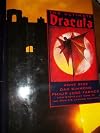
I really enjoyed this collection of vampire short stories. They were unique and well-written and whilst most were written in 1991, not too dated. Enjoyable read, especially at Halloween.

Loved this book. Read it in HS and I was just absolutely drawn into the plot and the high fantasy world. There was something about this book that I literally could not put down (Not that I wanted to). It definitely centers around human conflicts and wars, so if you are expecting a dragon every single chapter- that isn't the case here (which would be the only downfall of this book). The artwork was nice and highly detailed- some art even had a double page spread going on- which complimented show more this book nicely since the story and world is so rich. It's lengthy and may seem repetitive sometimes- but what do you expect? It's a 545 page fantasy novel, so you should expect some tropes/scenarios to be a slight reskin of the other (This especially happens when the fantasy novel concerns war and conflict since you usually read about all sides concerned). Personally, I think anyone who rates it below 3.5 is being way too picky about their fantasy tropes since a lot of complaints I hear are identical to same plot devices in many other fantasy books. I think it is an underloved/overlooked book that many more should give a try- it's rare I find anyone who has even heard of this book. show less

Some of the stories come close to approximating Chandler's prose, but a few stick out for excessive profanity (which I don't object to, it is just that in Chandler's prose profanity was rare and always redacted) and over-the-top action. I am getting pretty sick of Marlowe to be honest.
Lists
Awards


You May Also Like


Associated Authors
Statistics
- Works
- 61
- Also by
- 4
- Members
- 3,881
- Popularity
- #6,525
- Rating
- 3.6
- Reviews
- 41
- ISBNs
- 138
- Languages
- 9
- Favorited
- 1