
Frank Delaney (1942–2017)
Author of Ireland
About the Author
Francis James Joseph Raphael Delaney was born in County Tipperary, Ireland on October 24, 1942. Before becoming a full-time writer, he was a radio and television reporter for BBC broadcasting. He wrote about two dozen fiction and nonfiction books during his lifetime including Ireland, Jim Hawkins show more and the Curse of Treasure Island, The Celts, A Walk to the Western Isles, and James Joyce's Odyssey: A Guide to the Dublin of Ulysses. He died following a stroke on February 21, 2017 at the age of 74. (Bowker Author Biography) show less
Image credit: credit: Jerry Baur
Series
Works by Frank Delaney
Waking the Titanic 1 copy
2007 1 copy
Associated Works
The Public Domain Review: Selected Essays, The First Three Years, 2011-2013 (2014) — Contributor — 33 copies, 2 reviews
Tagged
Common Knowledge
- Legal name
- Delaney, Francis James Joseph Raphael
- Other names
- Bryan, Francis
- Birthdate
- 1942-10-24
- Date of death
- 2017-02-21
- Gender
- male
- Occupations
- writer
author
novelist
broadcaster
journalist
public speaker - Relationships
- Vickers, Salley (wife|divorced)
Meier, Diane (wife) - Nationality
- Ireland
- Birthplace
- Tipperary, Ireland
- Places of residence
- Shannon, Tipperary, Ireland
London, England, UK
Dublin, Ireland
Litchfield County, Connecticut, USA - Place of death
- Danbury, Connecticut, USA
- Associated Place (for map)
- Ireland
Members
Reviews
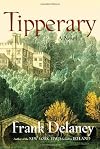
Many thanks to Random House and LibraryThing for the opportunity to review an Advance Reader's Edition of Tipperary, by Frank Delaney.
Delaney is a marvelous writer, and his descriptions of the Irish countryside and Tipperary Castle are wonderfully alive. As he details the years-long work of restoring the old castle to its original beauty, I felt I was in the rooms, observing those who worked with great skill, care, and true enjoyment, to restore the structure to brilliance.
Delaney's show more portraits of some of the novel's human characters are less complete and dazzling than of Tipperary Castle, and I believe the book suffers a bit for it, overall. I did like Charles O'Brien from the start, though his obvious intelligence seemed at odds with that streak of innocence and naivete - perhaps the best example of that being his actions after meeting Parnell. But Charles is a good and honorable man, and an interesting narrator.
In April Burke's early scenes, I admire her strength and spunk, even as she is rejecting Charles's affections. Given the situation - declarations of "love at first sight" from a man more than twice her age, a "healer" who hadn't been able to cure her new acquaintance, Oscar Wilde - her feelings are completely understandable. As she begins to pursue the rights to the castle, she does seem "icy," as Charles's mother says, and she seems to take advantage of Charles's good nature and affections. Finally, it is her own devotion to the castle, and her willingness to toil and get dirty with the rest of the workers, that makes me truly like her.
For me, the whole book became more interesting with the introduction of Joe Harney, who becomes Charles's closest friend, and then April's as well. His narration is always honest and lively, and also serves the function of showing a fuller and more objective view of Charles. Harney tells us things that Charles doesn't know or won't speak about, and gives another perspective of Charles and April's relationship.
The modern-day narrator was actually the least engaging character. His narratives helped to explain the historical events of Charles and April's era, which was very beneficial for me, as I was unfamiliar with the events depicted. Once he introduced himself at the start of chapter four, I started to get a sense of him as a character, rather than simply a voice in the present explaining events of the past; however, his own story didn't hold me as that of Charles, April, and Harney did.
Along with the restoration of the castle, the Irish war for independence from Britain is the other "sustained narrative" where Delaney excels. The fights are gripping, and the danger palpable; I feared for Harney's life! What little I have heard of the Irish Republican Army and Sinn Fein had given me a negative impression of them, yet seeing the Irish desire for independence from Britain in the novel, I sympathized with them. I'm not a great fan of history, but I appreciate those historical novels that make me want to learn more about the real events behind them.
Perhaps Tipperary would be a stronger novel without the modern-day narrator; I believe I would have enjoyed the story of long ago just as much without him in the book. But, now that I know him, perhaps I'd like him better if I had time to reread the book. I appreciate Delaney's way of telling stories through different characters, to give the reader a more complete view. Perhaps his next novel could be leaner, shorter, and a bit more focused, but with the same fine writing and fondness for storytelling he exhibits here - the ingredients for a true page-turner. show less
Delaney is a marvelous writer, and his descriptions of the Irish countryside and Tipperary Castle are wonderfully alive. As he details the years-long work of restoring the old castle to its original beauty, I felt I was in the rooms, observing those who worked with great skill, care, and true enjoyment, to restore the structure to brilliance.
Delaney's show more portraits of some of the novel's human characters are less complete and dazzling than of Tipperary Castle, and I believe the book suffers a bit for it, overall. I did like Charles O'Brien from the start, though his obvious intelligence seemed at odds with that streak of innocence and naivete - perhaps the best example of that being his actions after meeting Parnell. But Charles is a good and honorable man, and an interesting narrator.
In April Burke's early scenes, I admire her strength and spunk, even as she is rejecting Charles's affections. Given the situation - declarations of "love at first sight" from a man more than twice her age, a "healer" who hadn't been able to cure her new acquaintance, Oscar Wilde - her feelings are completely understandable. As she begins to pursue the rights to the castle, she does seem "icy," as Charles's mother says, and she seems to take advantage of Charles's good nature and affections. Finally, it is her own devotion to the castle, and her willingness to toil and get dirty with the rest of the workers, that makes me truly like her.
For me, the whole book became more interesting with the introduction of Joe Harney, who becomes Charles's closest friend, and then April's as well. His narration is always honest and lively, and also serves the function of showing a fuller and more objective view of Charles. Harney tells us things that Charles doesn't know or won't speak about, and gives another perspective of Charles and April's relationship.
The modern-day narrator was actually the least engaging character. His narratives helped to explain the historical events of Charles and April's era, which was very beneficial for me, as I was unfamiliar with the events depicted. Once he introduced himself at the start of chapter four, I started to get a sense of him as a character, rather than simply a voice in the present explaining events of the past; however, his own story didn't hold me as that of Charles, April, and Harney did.
Along with the restoration of the castle, the Irish war for independence from Britain is the other "sustained narrative" where Delaney excels. The fights are gripping, and the danger palpable; I feared for Harney's life! What little I have heard of the Irish Republican Army and Sinn Fein had given me a negative impression of them, yet seeing the Irish desire for independence from Britain in the novel, I sympathized with them. I'm not a great fan of history, but I appreciate those historical novels that make me want to learn more about the real events behind them.
Perhaps Tipperary would be a stronger novel without the modern-day narrator; I believe I would have enjoyed the story of long ago just as much without him in the book. But, now that I know him, perhaps I'd like him better if I had time to reread the book. I appreciate Delaney's way of telling stories through different characters, to give the reader a more complete view. Perhaps his next novel could be leaner, shorter, and a bit more focused, but with the same fine writing and fondness for storytelling he exhibits here - the ingredients for a true page-turner. show less
 This review was written for LibraryThing Early Reviewers.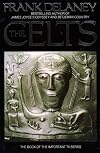
Written as a companion volume to a 1987 BBC miniseries, The Celts has the grand ambition of covering the entire sweep of Celtic history in an accessible format, and does a good job, with some compromises in terms of organization and systematic oversight.
Starting with the Hochdorf and La Tene archaeological finds, moving through Roman and Greek interactions with high Celtic culture, decline and Christianity, and the modern Celtic revivals. Art and stories are the center points, with lots of show more beautiful photographic plates of Celtic grave goods, along with translations of several Celtic myths. Unfortunately, a lot of what made the Celts tick as a culture is lost to time: their druid priestly class refused to write anything down to preserve their own power, which means that the accounts we have are Roman and Greek. From a culture which controlled territory from Austria to Ireland in the centuries BCE, the Celts were consistently forced backwards, by Roman invasion and cultural domination, by waves of Germanic migration, and then by Christian missionaries, who replaced some local heroes with saints, and then by Medieval and Early Modern monarchs who colonized Ireland, enclosed the Scottish highlands, crushed independent Brittany, etc.
For the Celts, history was very much written by the winners, and Delaney is aware that much of contemporary Celtic culture was made up wholesale by folklorists in the 19th century, that there are enough gaps in the oral tradition that reconstructing something from an old fisherman storyteller who died in 1956 may not be sufficient, that the modern (i.e. 1980s) Celtic language revival is about identity rather than history. But read with a critical eye, this book is a useful survey and introduction to the topic. show less
Starting with the Hochdorf and La Tene archaeological finds, moving through Roman and Greek interactions with high Celtic culture, decline and Christianity, and the modern Celtic revivals. Art and stories are the center points, with lots of show more beautiful photographic plates of Celtic grave goods, along with translations of several Celtic myths. Unfortunately, a lot of what made the Celts tick as a culture is lost to time: their druid priestly class refused to write anything down to preserve their own power, which means that the accounts we have are Roman and Greek. From a culture which controlled territory from Austria to Ireland in the centuries BCE, the Celts were consistently forced backwards, by Roman invasion and cultural domination, by waves of Germanic migration, and then by Christian missionaries, who replaced some local heroes with saints, and then by Medieval and Early Modern monarchs who colonized Ireland, enclosed the Scottish highlands, crushed independent Brittany, etc.
For the Celts, history was very much written by the winners, and Delaney is aware that much of contemporary Celtic culture was made up wholesale by folklorists in the 19th century, that there are enough gaps in the oral tradition that reconstructing something from an old fisherman storyteller who died in 1956 may not be sufficient, that the modern (i.e. 1980s) Celtic language revival is about identity rather than history. But read with a critical eye, this book is a useful survey and introduction to the topic. show less
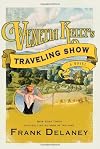
My thanks to the Librarything Early Reviewer's Program, for selecting me to read this book. I would have bought it anyway had I not received it, because it's written by a very good author.
Frank Delaney has given readers yet another fine story, one which takes place among the tumultuous events of his native Ireland's 20th century history, and one which, after you've read it, you won't soon forget. This is, of course, one of the main themes that run constantly throughout Delaney's books. This show more time, the action is centered on either side (before and after) of the general elections of 1932. It's okay if you know little to nothing about Irish political history; the author gives you enough background to make the time period and events understandable. Amid this political backdrop, Delaney introduces the reader to one Ben McCarthy, a young, naive 18-year old boy who little by little comes to be a man carrying the weight of his world on his shoulders. Ben's life, and that of his family, is altered forever by the entrance of Venetia Kelly and her Traveling Show. How this happens, and how it's connected to the 1932 elections is the main thrust of the story of this novel.
Beautifully written, the novel slowly draws you in, keeping you there until the very last page. Delaney starts out with introductions to the principal players of this novel: Ben McCarthy and his family, who live a better life than many of their neighbors & acquaintances; Sarah Kelly, actress and mother of Venetia Kelly, and King Kelly, who lives by the golden rule, which for him is "the man with the gold makes the rules." (257) Throughout the story, the author launches into "digressions," in which he gives you some of the history, folklore and other cultural bits about Ireland, all perfectly relevant to the story, and to which you should definitely pay attention. As other reviewers have noted, it starts out a bit slow and may feel a bit sloggy at first, but you will be handsomely rewarded if you continue and do not give up.
There are some wonderfully humorous moments in this book, which is also highly metaphorical in places , but Delaney does not hold back on the more frightening and sorrowful truths about the playing field of Irish politics and the lot of the poorer Irish people of the time.
This one I can definitely recommend. If you don't care about the politics, that's okay -- there are other stories at work here that will keep you reading, but the whole is so much greater than its parts. Overall -- a very good read. show less
Frank Delaney has given readers yet another fine story, one which takes place among the tumultuous events of his native Ireland's 20th century history, and one which, after you've read it, you won't soon forget. This is, of course, one of the main themes that run constantly throughout Delaney's books. This show more time, the action is centered on either side (before and after) of the general elections of 1932. It's okay if you know little to nothing about Irish political history; the author gives you enough background to make the time period and events understandable. Amid this political backdrop, Delaney introduces the reader to one Ben McCarthy, a young, naive 18-year old boy who little by little comes to be a man carrying the weight of his world on his shoulders. Ben's life, and that of his family, is altered forever by the entrance of Venetia Kelly and her Traveling Show. How this happens, and how it's connected to the 1932 elections is the main thrust of the story of this novel.
Beautifully written, the novel slowly draws you in, keeping you there until the very last page. Delaney starts out with introductions to the principal players of this novel: Ben McCarthy and his family, who live a better life than many of their neighbors & acquaintances; Sarah Kelly, actress and mother of Venetia Kelly, and King Kelly, who lives by the golden rule, which for him is "the man with the gold makes the rules." (257) Throughout the story, the author launches into "digressions," in which he gives you some of the history, folklore and other cultural bits about Ireland, all perfectly relevant to the story, and to which you should definitely pay attention. As other reviewers have noted, it starts out a bit slow and may feel a bit sloggy at first, but you will be handsomely rewarded if you continue and do not give up.
There are some wonderfully humorous moments in this book, which is also highly metaphorical in places , but Delaney does not hold back on the more frightening and sorrowful truths about the playing field of Irish politics and the lot of the poorer Irish people of the time.
This one I can definitely recommend. If you don't care about the politics, that's okay -- there are other stories at work here that will keep you reading, but the whole is so much greater than its parts. Overall -- a very good read. show less
This review was written for LibraryThing Early Reviewers.
Having read and thoroughly loved Frank Delaney's Ireland last year while enjoying a holiday in Dublin, I was thrilled to learn that I had been selected to receive an Advanced Reader's Copy of his new novel, Tipperary.
Let me say upfront that this review is based solely on what I've read of Tipperary (I've only been able to make it to page 190) as I have no desire to finish the novel.
I find myself comparing both of his novels as mirror images of each other. Both tell a history; Ireland, a show more history of the land told by a man, and Tipperary, a history of a man told through his land. Ireland reads like a remarkable novel disguised as an engrossing history lesson, while Tipperary reads like a prolonged history lesson disguised as a chaotic novel. Ireland has multiple narrators, each voicing his part of the story through clearly separated chapters that tie nicely into each other and weave a wonderful story. Tipperary jumps from narrator to narrator, not always with a clear picture of who is telling what part of the story.
Tipperary follows the twin stories of the narrator, who lives "now," and is researching the journals and papers of Charles O'Brien, who writes of his homeland and the love of his life that he discovers in England. Through a happenstance meeting with Oscar Wilde, he learns that the woman who has stolen his heart may in fact be the rightful owner of Tipperary Castle, which just so happens to be located next door to the O'Brien family's land, and of which she has no prior knowledge, since her true ancestry is a mystery. Truthfully, in my eyes, this all seems a little too contrived and coincidental. The back and forth telling of this story between a combination of Charles O'Brien's journals, stories that he relates from the people he meets in his journeys, his mother's journals and other random correspondence, along with the narrator's frequent interruptions in the story to have his say in the matter, make for a less than cohesive reading experience. I found myself struggling just to keep clear who it was telling the story, and for me, a book should not be a struggle to read, but an escape.
There are some who will love this book, and to them I give my blessing. Frank Delaney is a gifted writer, as evidenced, at least to me, by his previous novel, Ireland. My copy is a well-traveled and loved edition at this point, being lent to many a friend for their enjoyment. It seems that Delaney tried to replicate the same idea with Tipperary, to tell a grand and epic story of Ireland through the eyes of his characters, but somewhere along this particular journey, he definitely lost his way. Someday, I will revisit this book, and see where the journey takes me then, but for now, I find myself simply not caring what happens to Charles O'Brien as I glance longingly at the stack of books next to me that are crying out to be read. show less
Let me say upfront that this review is based solely on what I've read of Tipperary (I've only been able to make it to page 190) as I have no desire to finish the novel.
I find myself comparing both of his novels as mirror images of each other. Both tell a history; Ireland, a show more history of the land told by a man, and Tipperary, a history of a man told through his land. Ireland reads like a remarkable novel disguised as an engrossing history lesson, while Tipperary reads like a prolonged history lesson disguised as a chaotic novel. Ireland has multiple narrators, each voicing his part of the story through clearly separated chapters that tie nicely into each other and weave a wonderful story. Tipperary jumps from narrator to narrator, not always with a clear picture of who is telling what part of the story.
Tipperary follows the twin stories of the narrator, who lives "now," and is researching the journals and papers of Charles O'Brien, who writes of his homeland and the love of his life that he discovers in England. Through a happenstance meeting with Oscar Wilde, he learns that the woman who has stolen his heart may in fact be the rightful owner of Tipperary Castle, which just so happens to be located next door to the O'Brien family's land, and of which she has no prior knowledge, since her true ancestry is a mystery. Truthfully, in my eyes, this all seems a little too contrived and coincidental. The back and forth telling of this story between a combination of Charles O'Brien's journals, stories that he relates from the people he meets in his journeys, his mother's journals and other random correspondence, along with the narrator's frequent interruptions in the story to have his say in the matter, make for a less than cohesive reading experience. I found myself struggling just to keep clear who it was telling the story, and for me, a book should not be a struggle to read, but an escape.
There are some who will love this book, and to them I give my blessing. Frank Delaney is a gifted writer, as evidenced, at least to me, by his previous novel, Ireland. My copy is a well-traveled and loved edition at this point, being lent to many a friend for their enjoyment. It seems that Delaney tried to replicate the same idea with Tipperary, to tell a grand and epic story of Ireland through the eyes of his characters, but somewhere along this particular journey, he definitely lost his way. Someday, I will revisit this book, and see where the journey takes me then, but for now, I find myself simply not caring what happens to Charles O'Brien as I glance longingly at the stack of books next to me that are crying out to be read. show less
This review was written for LibraryThing Early Reviewers.Lists
Awards


You May Also Like


Associated Authors
Statistics
- Works
- 34
- Also by
- 5
- Members
- 4,795
- Popularity
- #5,237
- Rating
- 3.8
- Reviews
- 189
- ISBNs
- 147
- Languages
- 6
- Favorited
- 11
