
George Gamow (1904–1968)
Author of One Two Three . . . Infinity
About the Author
Born in Odessa, Russia, George Gamow, the son of a teacher, studied at the University of Leningrad, becoming professor of physics in 1931. He emigrated to the United States in 1933 and taught at George Washington University (1934-56) and at the University of Colorado (1956-68). His scientific work show more covered many fields, mostly related to nuclear physics. In the field of molecular biology, Gamow suggested the triplet mechanism for coding DNA. He and his associate Ralph Alpher developed a detailed model of the early stages of cosmic evolution in the "big bang" theory. Although Gamow's basic assumption that the primordial universe contained only neutrons was incorrect, this assumption stimulated a great deal of subsequent work in cosmology. Gamow wrote 30 popular books on astronomy, physics, and related sciences. In his "Mr. Tompkins" series (one of the most famous), Gamow used the figure of a curious, interested bank clerk as a protagonist for various journeys into quantum physics and gravity. His sense of humor is evident in his books and in his scientific career. For example, one of the key papers on the "big bang" theory is called the alpha-beta-gamma paper. In 1956, UNESCO awarded Gamow the Kalinga Prize for science writing. (Bowker Author Biography) show less
Series
Works by George Gamow
The New World of Mr Tompkins: George Gamow's Classic Mr Tompkins in Paperback (1999) — Author — 227 copies, 3 reviews
Mr. Tompkins Gets Serious: The Essential George Gamow, The Masterpiece Science Edition (2005) 38 copies
Birthmarks 4 copies
One Two Three...Infinity, Facts and Speculation of Science (A Bantam Pathfinder Edition) (1964) 2 copies
Un, Deux, Trois... L'Infini 1 copy
Aarde en heelal 1 copy
Nacimiento y Muerte del Sol 1 copy
Ordinary Geniuses: Max Delbruck, George Gamow, and the Origins of Genomics and Big Bang Cosmology by Gino Segre (2011-08-18) (1876) 1 copy
Den nya astronomin 1 copy
A Mentor book 1 copy
GRAVITY 1 copy
Associated Works
Readings in Cosmology and Extragalactic Astronomy: Physics 361-01 Cosmology, Spring Semester 1995 (1995) — Contributor — 1 copy
Tagged
Common Knowledge
- Legal name
- Gamov, Georgiy Antonovich
- Birthdate
- 1904-03-04
- Date of death
- 1968-09-19
- Gender
- male
- Education
- Novorossiya University
University of Leningrad
University of Göttingen - Occupations
- science writer
physicist
cosmologist
professor - Organizations
- Academy of Science (USSR|1931)
University of Göttingen
Niels Bohr Institute
Cavendish Laboratory
George Washington University
University of California, Berkeley (show all 7)
University of Colorado at Boulder - Awards and honors
- Royal Danish Academy of Sciences
National Academy of Sciences
Kalinga Prize (1956) - Relationships
- Gamow, Igor (son)
- Nationality
- Russian Empire (birth)
USA (naturalized 1940) - Birthplace
- Odessa, Russian Empire
- Places of residence
- Odessa, Ukrania
Copenhagen, Denmark
Cambridge, England, UK
USA
Boulder, Colorado, USA
Göttingen, Germany (show all 7)
Washington, D.C., USA - Place of death
- Boulder, Colorado, USA
- Burial location
- Green Mountain Cemetery, Boulder, Colorado, USA
Members
Reviews
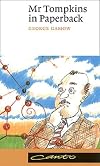
George Gamow (during his "three decade vacation" in the USA) wrote a number of articles and books featuring Mr. Tompkins, a bank clerk with an especially easily influenced dream-life. The dreams have a funny way of becoming stories and adventures that explain features of fundamental physics and cosmology (as of the 1960s). Many of the illustrations are also by Gamow. A foreword to this edition by Roger Penrose indicates where theory has moved on since Gamow's time and the few, slight show more inaccuracies in the description of Relativity.
Mr. Tompkins' adventures are charming - delightful, in fact, though they show signs of the time/culture they were written in. The appearances by Father Paulini (Pauli) and Maxwell's Demon (dressed as a Butler but never without his tennis-racquet) are particular fun for me. No-one would consider writing a popular science book via this approach these days and so this will remain a unique classic of the genre. Strongly recommended to everyone just for the fun of it. You might learn something along the way but nevermind if you don't - just wait for the bit where Tompkins turns into an electron! show less
Mr. Tompkins' adventures are charming - delightful, in fact, though they show signs of the time/culture they were written in. The appearances by Father Paulini (Pauli) and Maxwell's Demon (dressed as a Butler but never without his tennis-racquet) are particular fun for me. No-one would consider writing a popular science book via this approach these days and so this will remain a unique classic of the genre. Strongly recommended to everyone just for the fun of it. You might learn something along the way but nevermind if you don't - just wait for the bit where Tompkins turns into an electron! show less
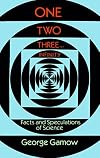
This delightful little book was first published in 1947. The author was a theoretical physicist and cosmologist with a penchant for comprehensible writing and idiosyncratic, but informative, illustration. I first read this book in high school, and it stimulated in me a life-long interest in science, particularly physics.
The book begins with a description of counting and early attempts by philosophers to come to grips with really large numbers. It quickly gets into Kantor’s theory of show more levels of infinity, all explained in language easily understood by a reasonably bright high school student. He also discusses non-Euclidian geometry, Einstein’s theory of relativity, nuclear physics, the second law of thermodynamics, Lemaître’s Big Bang theory, genetics, and the life cycle of stars.
What was interesting reading the book after a long hiatus was that there were only a few changes in our current understanding of these difficult subjects. For example, the largest operational telescope at the time of publication was Mount Palomar’s 200-inch scope, which was thought to be able to detect galaxies one billion light years away, but not much farther. By contrast, the space-based Hubble telescope has photographed galaxies almost 14 billion light years away. And in his discussion of escape velocity, he states:
"We know that no existing rockets, not even the famous V2, have enough propulsive power to escape into the free space, that they are always stopped in their ascension by the forces of gravity and are pulled back to earth."
We’ve come a long way baby. Nevertheless, I would say the book has aged quite gracefully, and it is still a lucid introduction to modern physics.
(JAB) show less
The book begins with a description of counting and early attempts by philosophers to come to grips with really large numbers. It quickly gets into Kantor’s theory of show more levels of infinity, all explained in language easily understood by a reasonably bright high school student. He also discusses non-Euclidian geometry, Einstein’s theory of relativity, nuclear physics, the second law of thermodynamics, Lemaître’s Big Bang theory, genetics, and the life cycle of stars.
What was interesting reading the book after a long hiatus was that there were only a few changes in our current understanding of these difficult subjects. For example, the largest operational telescope at the time of publication was Mount Palomar’s 200-inch scope, which was thought to be able to detect galaxies one billion light years away, but not much farther. By contrast, the space-based Hubble telescope has photographed galaxies almost 14 billion light years away. And in his discussion of escape velocity, he states:
"We know that no existing rockets, not even the famous V2, have enough propulsive power to escape into the free space, that they are always stopped in their ascension by the forces of gravity and are pulled back to earth."
We’ve come a long way baby. Nevertheless, I would say the book has aged quite gracefully, and it is still a lucid introduction to modern physics.
(JAB) show less

This is a book about Einstein's Theory of Relativity and Quantum Mechanics written in the style of "Alilce in Wonderland", thus the title. It is written by a professor at George Washington University in 1939, although this is a later edition of that text.
The whole idea is that Mr. Tompkins, a bank cashier, is looking for something interesting to do. So, he goes to this professor's lectures on Relativity and Quantum Mechanics (given at the end of the book). Mr. Tompkins doesn't understand show more much of the lectures at all. But, when he goes to sleep and thereafter, he has a series of dreams based on the lectures. His dreams are set in different "wonderlands" where different cosmological constants are modified in those universes such that some key concepts of Relativity and Quantum Mechanics are visible and everyday occurrences. For example, in one dream, the speed of light is 10 mph, so time dilation and length shortening are quite evident.
This is a clever way to take complicated, esoteric ideas from these fundamental theories of our universe and make them clear. Clever and well done.
I highly recommend this book. show less
The whole idea is that Mr. Tompkins, a bank cashier, is looking for something interesting to do. So, he goes to this professor's lectures on Relativity and Quantum Mechanics (given at the end of the book). Mr. Tompkins doesn't understand show more much of the lectures at all. But, when he goes to sleep and thereafter, he has a series of dreams based on the lectures. His dreams are set in different "wonderlands" where different cosmological constants are modified in those universes such that some key concepts of Relativity and Quantum Mechanics are visible and everyday occurrences. For example, in one dream, the speed of light is 10 mph, so time dilation and length shortening are quite evident.
This is a clever way to take complicated, esoteric ideas from these fundamental theories of our universe and make them clear. Clever and well done.
I highly recommend this book. show less
One Two Three . . . Infinity: Facts and Speculations of Science (Dover Books on Mathematics) by George Gamow
[about 2/3 of the way through; not sure whether I'll finish]
There's some interesting stuff in here, but it's marred by too many flaws.
On topics too complicated to explain fully, Gamow presents chains of reasoning that don't make sense in the absence of whatever additional evidence is left unspoken. (There's probably no perfect way of handling this, but in my opinion it's much better to acknowledge the gaps than to pretend you're walking the reader through a series of logical deductions.)
On show more topics that I'm unfamiliar with but capable of understanding (random thermal motion, diffusion) I find his explanations unnecessarily confusing.
And on a topic that I do understand (basic probability) he gets at least one thing badly wrong.
As for the style, it's fairly readable, but not to my taste. Perhaps it's standard mid-20th century American prose (it does feel somewhat familiar) but to me it reads like an awkward compromise between stuffy 19th-century English and patronisingly folksy children's edu-tainment. (That makes it sound worse than it is; it's really not terrible.) I was also frustrated by the use of imperial units, and more importantly the absence of scientific notation for very large or small numbers. (Writing out numbers like "one hundred millionths of an inch" is a bad idea, especially when it turns out to be a typo for "one hundred-millionth of an inch".)
Obviously some of these gripes are subjective, but not all. So I don't understand why this book has such a good reputation, not just as a nostalgic favourite but as a classic worth reading today. I don't recommend it. show less
There's some interesting stuff in here, but it's marred by too many flaws.
On topics too complicated to explain fully, Gamow presents chains of reasoning that don't make sense in the absence of whatever additional evidence is left unspoken. (There's probably no perfect way of handling this, but in my opinion it's much better to acknowledge the gaps than to pretend you're walking the reader through a series of logical deductions.)
On show more topics that I'm unfamiliar with but capable of understanding (random thermal motion, diffusion) I find his explanations unnecessarily confusing.
And on a topic that I do understand (basic probability) he gets at least one thing badly wrong.
As for the style, it's fairly readable, but not to my taste. Perhaps it's standard mid-20th century American prose (it does feel somewhat familiar) but to me it reads like an awkward compromise between stuffy 19th-century English and patronisingly folksy children's edu-tainment. (That makes it sound worse than it is; it's really not terrible.) I was also frustrated by the use of imperial units, and more importantly the absence of scientific notation for very large or small numbers. (Writing out numbers like "one hundred millionths of an inch" is a bad idea, especially when it turns out to be a typo for "one hundred-millionth of an inch".)
Obviously some of these gripes are subjective, but not all. So I don't understand why this book has such a good reputation, not just as a nostalgic favourite but as a classic worth reading today. I don't recommend it. show less
Lists
Awards


You May Also Like


Associated Authors
Statistics
- Works
- 62
- Also by
- 7
- Members
- 4,134
- Popularity
- #6,091
- Rating
- 3.9
- Reviews
- 49
- ISBNs
- 130
- Languages
- 16
- Favorited
- 9