
John Man
Author of Gutenberg: How One Man Remade the World with Words
About the Author
John Man is a historian specializing in the nature of leadership. John's books have been published in over twenty languages around the world and include histories of the Great Wall of China and the Mongolian Empire. He lives in England.
Works by John Man
Saladin: The Sultan Who Vanquished the Crusaders and Built an Islamic Empire (2015) 226 copies, 2 reviews
The Mongol Empire: Genghis Khan, His Heirs and the Founding of Modern China (2014) 178 copies, 3 reviews
The Traveler's Atlas: A Global Guide to the Places You Must See in your Lifetime (1998) 132 copies, 2 reviews
Associated Works
Desperta Ferro. Tamerlán — Contributor — 2 copies
Tagged
Common Knowledge
- Canonical name
- Man, John
- Legal name
- Man, John Anthony Garnet
- Other names
- Garnet, Jay
- Birthdate
- 1941-05-15
- Gender
- male
- Education
- University of Oxford (Keble College)
- Occupations
- historian
travel writer
journalist
publisher - Awards and honors
- Mongolian Friendship Medal
- Nationality
- UK
- Places of residence
- London, England, UK
- Map Location
- England, UK
Members
Reviews
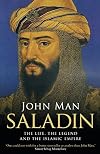
Let me be frank, John Man is an exceptional story-teller. His narrative possesses a fluidity which makes his words comprehensible while also ensuring that the reader cannot wait to devour more of his pages. What John Man, however, is not is a historian irrespective of his credentials. The reality is that only a very few writers are able to operate as historians and vice versa. Man is not one of them.
He commences from a post-modernist view that one must emphatically deconstruct one show more perspective of Saladin to up the other-that the man was an unblemished hero while alive. What he presents is the 'evil crusader' versus 'perfect Mujhaideen' dichotomy. While this might not be a great fault given that Man is, after all, human it underscores his next fault: other than a narration his book offers us nothing more. It overplays few instances of Saladin's generosity but never effectively analyzes the how and why behind them. More parochially, it fixates itself on a few figures while failing to consider contemporary economic/geopolitical factors pervading both Europe and the Middle East.
Overall, this book might act as a good introduction to Saladin as a historical personality but should not be accepted as a genuine picture of a complex personality who played a critical role in shaping the world as we know it today. There is just too much lack of detail. show less
He commences from a post-modernist view that one must emphatically deconstruct one show more perspective of Saladin to up the other-that the man was an unblemished hero while alive. What he presents is the 'evil crusader' versus 'perfect Mujhaideen' dichotomy. While this might not be a great fault given that Man is, after all, human it underscores his next fault: other than a narration his book offers us nothing more. It overplays few instances of Saladin's generosity but never effectively analyzes the how and why behind them. More parochially, it fixates itself on a few figures while failing to consider contemporary economic/geopolitical factors pervading both Europe and the Middle East.
Overall, this book might act as a good introduction to Saladin as a historical personality but should not be accepted as a genuine picture of a complex personality who played a critical role in shaping the world as we know it today. There is just too much lack of detail. show less
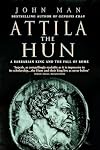
The name of Attila the Hun still resonates in western culture as "The Scourge of God" and the embodiment of barbaric mayhem. Reliable source material on Attila is scanty. His posthumous reputation was created by Christian hagiographers who magnified his accomplishments with tales of virgins, saints, and martyrs. The reality is that he was an ambitious leader who raided a vast range of territory including Syria, Thrace, the Loire valley, northern Italy, and as far north as the Baltic Sea. He show more held only a portion and his empire dissolved upon his death.
John Man does a good job outlining Attila's biography, fleshing out his book with chapters on the Hun's probably beginnings as the Xiongnu people in Mongolia, the rediscovery of rapid mounted archery by Lajos Kassai, the turmoil of the late western Roman empire, and finally a fascinating chapter on Attila's afterlife in Medieval literature. It's a mix of travelogue and history, with some imaginative reconstructions of life in Attila's court that would embarrass a university historian but make for an enjoyable book. show less
John Man does a good job outlining Attila's biography, fleshing out his book with chapters on the Hun's probably beginnings as the Xiongnu people in Mongolia, the rediscovery of rapid mounted archery by Lajos Kassai, the turmoil of the late western Roman empire, and finally a fascinating chapter on Attila's afterlife in Medieval literature. It's a mix of travelogue and history, with some imaginative reconstructions of life in Attila's court that would embarrass a university historian but make for an enjoyable book. show less
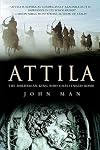
We learn from early history classes in school that Attila the Hun was a brutish, savage leader, bent on beating down the mighty Roman empire. Attila sprang from the dark recesses of northern Europe to lay siege to the civilized people of the Mediterranean. But this story is decidedly one-sided and lacking in nuance. In John Man’s Attila, he tries to gives flesh and blood to the skeleton of the tale. Man attempts to give this historical ghost a context and finds much more than we show more expected.
While Attila’s birthdate is unknown, by about 434 CE he had become the leader of the Huns and an empire that stretched from the Ural Sea to the Baltic, and from the Rhine River to the Danube. Man’s history gives a fair amount of space to the pre-Attila relationships between the Roman Empire, the Goths, and the Huns. This is necessary because of the intricate and delicate political bonds throughout Europe at the time. From then until his death in 453, Attila cements his place in history by gaining the loyalty of millions and repeatedly challenging the might of the Roman Empire. Apparently, the only thing that could stop Attila was his rather anti-climactic death (from possibly a peptic ulcer that drowned his lungs in blood).
Man relies heavily on Mierow’s 1915 translation of Jordanes’ 6th century History of the Goths. He couples this with both the histories of Procopius and the contemporaneous writings of Priscus. These works have their flaws and biases, but it’s really all we have to work with. New archaeological finds and secondary sources also help to flesh out the tale. I did find the lack of direct footnotes a bit worrying, but the biography is about as detailed and intriguing as it can get. While scholars will look elsewhere, the casual enthusiast of ancient European history or the Roman Empire will find a lot to enjoy here. A rich and adventurous read. show less
While Attila’s birthdate is unknown, by about 434 CE he had become the leader of the Huns and an empire that stretched from the Ural Sea to the Baltic, and from the Rhine River to the Danube. Man’s history gives a fair amount of space to the pre-Attila relationships between the Roman Empire, the Goths, and the Huns. This is necessary because of the intricate and delicate political bonds throughout Europe at the time. From then until his death in 453, Attila cements his place in history by gaining the loyalty of millions and repeatedly challenging the might of the Roman Empire. Apparently, the only thing that could stop Attila was his rather anti-climactic death (from possibly a peptic ulcer that drowned his lungs in blood).
Man relies heavily on Mierow’s 1915 translation of Jordanes’ 6th century History of the Goths. He couples this with both the histories of Procopius and the contemporaneous writings of Priscus. These works have their flaws and biases, but it’s really all we have to work with. New archaeological finds and secondary sources also help to flesh out the tale. I did find the lack of direct footnotes a bit worrying, but the biography is about as detailed and intriguing as it can get. While scholars will look elsewhere, the casual enthusiast of ancient European history or the Roman Empire will find a lot to enjoy here. A rich and adventurous read. show less
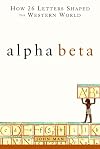
This is the history of the development of the 26 letters of the English alphabet, and it’s an interesting one, too.
I was expecting something different – maybe more a roll call of each letter, going into its development. Instead, it was more academic, and more enlightening than I had expected.
The book also concerns itself partly with the origins of written language, the move from pictographs to syllables to letters.
And about English, where the letters came from (Etruscans, we think) and show more where it went from there. He also takes a side trip into what he considers the perfect alphabet, Korean.
This is a short book but lots of fun, and makes me want to read more about the development of the alphabet. Anybody know a good book?
For more of my book reviews, go to Ralphsbooks. show less
I was expecting something different – maybe more a roll call of each letter, going into its development. Instead, it was more academic, and more enlightening than I had expected.
The book also concerns itself partly with the origins of written language, the move from pictographs to syllables to letters.
And about English, where the letters came from (Etruscans, we think) and show more where it went from there. He also takes a side trip into what he considers the perfect alphabet, Korean.
This is a short book but lots of fun, and makes me want to read more about the development of the alphabet. Anybody know a good book?
For more of my book reviews, go to Ralphsbooks. show less
Lists
Awards

You May Also Like


Associated Authors
Statistics
- Works
- 60
- Also by
- 2
- Members
- 4,934
- Popularity
- #5,091
- Rating
- 3.6
- Reviews
- 63
- ISBNs
- 275
- Languages
- 18
- Favorited
- 1