
Rami M. Shapiro
Author of Minyan: Ten Principles for Living a Life of Integrity
About the Author
Rabbi Rami Shapiro, PhD, is the award-winning author of over 36 books on religion, spirituality, and recovery. He codirects the One River Foundation, is a contributing editor at Spirituality and Health magazine, and hosts the podcasts Essential Conversations with Rabbi Rami and Conversations on the show more Edge and the weekly Zoom talk show Roadside Assistance at the Corner of Tohu va-Vohu ("Wild and Chaos"). He received the Huston Smith Award for Interfaith Education and Service in 2020. show less
Image credit: Holy Rascals
Works by Rami M. Shapiro
The Divine Feminine in Biblical Wisdom Literature: Selections Annotated & Explained (SkyLight Illuminations) (2005) 59 copies
Tanya the Masterpiece of Hasidic Wisdom: Selections Annotated & Explained (SkyLight Illuminations) (2010) — Editor, Translator, Commentary — 24 copies
Judaism Without Tribalism: A Guide to Being a Blessing to All the Peoples of the Earth (2022) 13 copies
Mount and Mountain: A Reverend and a Rabbi Talk about the Ten Commandments (Volume 1) (2012) 4 copies
The Golden Rule and the Games People Play: The Ultimate Strategy for a Meaning-Filled Life (2015) 3 copies
How to Be a Holy Rascal: A Magical Mystery Tour to Liberate Your Deepest Wisdom, Access Radical Compassion, and Set Yourself Free (2017) 2 copies
This Is The Path 1 copy
Associated Works
Dialogue: 5 Selections -- Spiritual Dialog In the Light of the Oneness of God (2002) — Introduction — 1 copy
Tagged
Common Knowledge
- Birthdate
- 1951-04-26
- Gender
- male
- Education
- Union Graduate School (Ph.D.|Religious Studies)
Hebrew Union College (Rabbinic Ordination)
University of Massachusetts, Amherst
McMaster University (MA) - Occupations
- rabbi
poet
essayist - Organizations
- Temple Beth Or in Miami
Simply Jewish Foundation
Sh'ma Center for Jewish Meditation
Wright-Patterson Air Force Base
Temple Beth Or - Nationality
- USA
- Birthplace
- Springfield, Massachusetts, USA
- Places of residence
- Hamilton, Ontario, Canada
Miami, Florida, USA - Associated Place (for map)
- USA
Members
Reviews
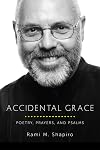
Rabbi Rami Shapiro is no ordinary poet. A student of Zen Buddhism and Hasidim, he was challenged to become a 'Zen rabbi' in 1973. He got ordained as a Reformed rabbi (1981) and served a congregation for twenty years. Today, he writes, leads retreats, and co-directs One River Wisdom School. Much of the poetry in Accidental Grace: Poetry, Prayers and Psalms was birthed for liturgical use in the congregation of Beth Or (in Miami), but is accessible to people across religious traditions.
As I show more thumbed through this book, my first question was "What the heck is a Zen rabbi?" This is a curious blending of religious traditions, to say the least! Shapiro writes:
Shapiro blends traditions, sounding Jewish one moment, the next like an Eastern mystic. His source material remains the Hebrew scriptures and extant writings ('everything has a hook in traditional Jewish texts,' xi); yet he deconstructs much of this, sending it through his 'Zen shredder.' He rages against text and tradition but speaks reverently of the ineffable God who cannot be named.
Shapiro's poems (proper) are bordered by his treatment of two types of texts from the Ketuvim(the writings in the Jewish Tanakh). He begins with the Psalms, offering poetic paraphrases and meditation on twenty psalms. The word "God" doesn't always appear in these Psalms and there is no version of the tetragrammaton (YHWH). Shapiro most often refers to God as "You," with occasional titles like, "Holy One of Being" and "Ground of all ground"(Ps. 90, p.14). References to "Israel" and "Zion" are excised from most of his rephrasings. The exception, is Psalm 137, which describes the Jewish experience of their exile in Babylon. Here Shapiro says with the Psalmist, "I sat down by the rivers of Babylon. . ."and "If, I forget you, O Jerusalem. . ."(22). But he modifies the psalm's baby-killing conclusion to read, "Please, God, silence the vengefulness within me/that justifies battering the babies of my enemies/on the rocks of their city until their bodies dissolve in pools of blood and fat"(23). He pays homage to the psalms, but also critiques, and rewrites them to reflect his own understanding of the God described in the text.
In the final section of this book, Shapiro presents a parabolic and dramatic retelling of the book of Job. His first act describes the wager between God and Satan and the havoc this wreaks on Job. The second act presents Job's argument with his three friends about the cause of his suffering. Act three appears in two scenes: scene one has God appear in a sandstorm; scene two describe an aftermath conversation between Job, Satan and God. Shapiro touches on the ambiguities and absurdities in the Job narrative, offering a humorous, if irreverent conclusion.
The poems in the middle of the book vary. Some reflect on particular scriptures or liturgical settings. Some talk about spirituality: Sabbath, Torah, the Holocaust, pain, death, joy. Some poems are prayers to God, while others describe the divine in significant and mundane moments of life. There are poems which rage, and poems that praise.
When a Christian publishing house (Paraclete Press) puts out a book of poetry from a 'Zen Rabbi,' it is worth taking notice. It is not every day these traditions converge amicably without something of their particularity being sacrificed. I am a convinced Christian and no relativiser of the world's religious traditions, but I can appreciate insights from other traditions. I found myself appreciative of Shapiro's playfulness with Scripture and his imaging of the God "beyond imaging." Many of his poems on the spiritual life are quite moving. I loved his description of the Spirit, and how we don't just "breathe," but "are breathed" (Attending, 36). At some points, his spirituality was too vague for my tastes, but overall, I appreciated this collection. I give this four stars.
Note: I recieved this book from Paraclete press in exchange for my honest review.
show less
As I show more thumbed through this book, my first question was "What the heck is a Zen rabbi?" This is a curious blending of religious traditions, to say the least! Shapiro writes:
At first I thought a Zen rabbi was a rabbi who wrapped a tallit/prayer shawl around the Buddha: making Buddhism kosher by finding ways to read Buddhism into Jewish text and tradition. I wasn't wrong, but I wasn't quite right. As it turns out, a Zen Rabbi is a rabbi who isn't all that concerned with being a rabbi or a Jew. A Zen rabbi is a rabbi who, if she met Buddha on the road, wouldn't kill him, but would take him out for bagels and lox. A Zen rabbi is a rabbi who thinks that God is reality manifesting as everything, the way an ocean manifests waves. (p. x, from the introduction).
Shapiro blends traditions, sounding Jewish one moment, the next like an Eastern mystic. His source material remains the Hebrew scriptures and extant writings ('everything has a hook in traditional Jewish texts,' xi); yet he deconstructs much of this, sending it through his 'Zen shredder.' He rages against text and tradition but speaks reverently of the ineffable God who cannot be named.
Shapiro's poems (proper) are bordered by his treatment of two types of texts from the Ketuvim(the writings in the Jewish Tanakh). He begins with the Psalms, offering poetic paraphrases and meditation on twenty psalms. The word "God" doesn't always appear in these Psalms and there is no version of the tetragrammaton (YHWH). Shapiro most often refers to God as "You," with occasional titles like, "Holy One of Being" and "Ground of all ground"(Ps. 90, p.14). References to "Israel" and "Zion" are excised from most of his rephrasings. The exception, is Psalm 137, which describes the Jewish experience of their exile in Babylon. Here Shapiro says with the Psalmist, "I sat down by the rivers of Babylon. . ."and "If, I forget you, O Jerusalem. . ."(22). But he modifies the psalm's baby-killing conclusion to read, "Please, God, silence the vengefulness within me/that justifies battering the babies of my enemies/on the rocks of their city until their bodies dissolve in pools of blood and fat"(23). He pays homage to the psalms, but also critiques, and rewrites them to reflect his own understanding of the God described in the text.
In the final section of this book, Shapiro presents a parabolic and dramatic retelling of the book of Job. His first act describes the wager between God and Satan and the havoc this wreaks on Job. The second act presents Job's argument with his three friends about the cause of his suffering. Act three appears in two scenes: scene one has God appear in a sandstorm; scene two describe an aftermath conversation between Job, Satan and God. Shapiro touches on the ambiguities and absurdities in the Job narrative, offering a humorous, if irreverent conclusion.
The poems in the middle of the book vary. Some reflect on particular scriptures or liturgical settings. Some talk about spirituality: Sabbath, Torah, the Holocaust, pain, death, joy. Some poems are prayers to God, while others describe the divine in significant and mundane moments of life. There are poems which rage, and poems that praise.
When a Christian publishing house (Paraclete Press) puts out a book of poetry from a 'Zen Rabbi,' it is worth taking notice. It is not every day these traditions converge amicably without something of their particularity being sacrificed. I am a convinced Christian and no relativiser of the world's religious traditions, but I can appreciate insights from other traditions. I found myself appreciative of Shapiro's playfulness with Scripture and his imaging of the God "beyond imaging." Many of his poems on the spiritual life are quite moving. I loved his description of the Spirit, and how we don't just "breathe," but "are breathed" (Attending, 36). At some points, his spirituality was too vague for my tastes, but overall, I appreciated this collection. I give this four stars.
Note: I recieved this book from Paraclete press in exchange for my honest review.
show less
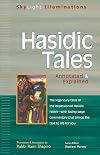
This is a very thought provoking book. Wonderful layout, with each story on one side of the page and the notes opposite it. Great stories, the notations make it good for discussion. Each story is just a couple of pages. I found it to be lovely bedtime reading with easy stopping places. In a group each story could be read aloud and thoughts shared. I've not seen anything else like this. I'm glad to have stumbled upon it.
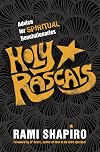
While I love Rabbi Rami's writings and general slant on things, I think this book was a little repetitive and choppily written. I found the related "How to Be A Holy Rascal" audiobook to be MUCH better.
Writing, the Sacred Art: Beyond the Page to Spiritual Practice (Art of Spiritual Living) by Rami M. Shapiro
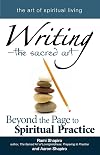
Review for Catholic Library World by Reviewer: Michael F. Bemis, Freelance Reference Book Reviewer, St. Paul, Minn.
The bulk of this slender volume is a series of writing exercises designed as a roadmap to inner discovery. This is both its strength and weakness. It’s as if Senior and Junior Shapiro can’t decide if they want to produce a self-help manual or a primer on creative writing. While there is some helpful advice sprinkled throughout the text – to overcome writer’s block, for show more instance, this duo suggests going for a walk and then writing about what you saw along the way, how you felt, etc. – too much verbiage is devoted to digression and mysticism. Numerous references are made to this sage or that philosopher, none of which is particularly enlightening for the reader. The lack of an index forces one to flip constantly back and forth to find a specific passage. Here’s this reviewer’s advice: if you want to be a better person, read something by Dale Carnegie. If you want to be a better wordsmith, read On Writing Well by William Zinsser. In so doing, the reader will understand why both of these gentlemen have been in print for decades. show less
The bulk of this slender volume is a series of writing exercises designed as a roadmap to inner discovery. This is both its strength and weakness. It’s as if Senior and Junior Shapiro can’t decide if they want to produce a self-help manual or a primer on creative writing. While there is some helpful advice sprinkled throughout the text – to overcome writer’s block, for show more instance, this duo suggests going for a walk and then writing about what you saw along the way, how you felt, etc. – too much verbiage is devoted to digression and mysticism. Numerous references are made to this sage or that philosopher, none of which is particularly enlightening for the reader. The lack of an index forces one to flip constantly back and forth to find a specific passage. Here’s this reviewer’s advice: if you want to be a better person, read something by Dale Carnegie. If you want to be a better wordsmith, read On Writing Well by William Zinsser. In so doing, the reader will understand why both of these gentlemen have been in print for decades. show less
Lists
The Writing Life (1)
You May Also Like


Associated Authors
Statistics
- Works
- 49
- Also by
- 1
- Members
- 948
- Popularity
- #27,124
- Rating
- 3.9
- Reviews
- 10
- ISBNs
- 68
- Languages
- 3