
Evie Wyld
Author of All the Birds, Singing
About the Author
Evie Wyld won the 2014 Barnes and Noble Discover Award for her title All the Birds, Singing. This is a Great New Writers Award in the category of fiction. Wyld will receive US$10,000 and a year's worth of marketing and merchandising support for her book from B&N. The awards are part of B&N's show more Discover. (Bowker Author Biography) show less
Works by Evie Wyld
Associated Works
Tagged
Common Knowledge
- Birthdate
- 1980
- Gender
- female
- Education
- Bath Spa University (BA|Creative Writing)
Goldsmiths College, University of London (MA|Creative Writing) - Occupations
- novelist
bookseller - Awards and honors
- New Voices 2008 (Granta magazine)
Granta's Best of Young British Novelists (2013) - Short biography
- Evie Wyld groeide op in Australië en Londen. Ze behaalde een diploma in creative writing aan de universiteit Goldsmiths in Londen. Haar verhalen zijn gepubliceerd in verschillende literaire tijdschriften. Het tijdschrift Granta noemde haar een van de 'New Voices of 2008'.
- Nationality
- Australia
- Birthplace
- London, England, UK
- Places of residence
- Australia
- Associated Place (for map)
- England, UK
Members
Reviews
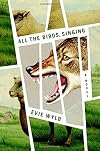
This book! Powerful prose oozing with ominousness, the pages practically sticky with sinisterness! The timeline was a little jumpy, disconcerting at first, but the pattern is quickly established and I soon developed a strange appreciation for it. The chapters alternate present and past, with the present moving forward, the past lapsing deeper and deeper into days gone by.
The reader is filled with anticipation while being unable to pinpoint the cause of suspense, knowing only that menace show more lurks somewhere in the shadows nearby. It was literary without being dull or boring, the refined edges sharp enough to cut yourself on. I can't say I understood all of the slang, but I thoroughly enjoyed my time with the main character, an Aussie living on a remote island off the coast of Britain. A quick read that portrays a perfect example of how to break the rules of grammar the right way. Impactful writing, eloquent imagery, a beautiful work of art. 5 stars! show less
The reader is filled with anticipation while being unable to pinpoint the cause of suspense, knowing only that menace show more lurks somewhere in the shadows nearby. It was literary without being dull or boring, the refined edges sharp enough to cut yourself on. I can't say I understood all of the slang, but I thoroughly enjoyed my time with the main character, an Aussie living on a remote island off the coast of Britain. A quick read that portrays a perfect example of how to break the rules of grammar the right way. Impactful writing, eloquent imagery, a beautiful work of art. 5 stars! show less
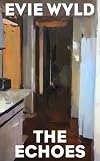
Ex-pat Australian Hannah has travelled thousands of miles to escape her family and the secrets they hide but when her boyfriend dies unexpectedly, grief forces Hannah to remember the cycles of trauma. Max cannot escape the flat he stayed in with Hannah and he wants to protect her still but he has no corporeal being so he tries to help her confront her past.
This is a very beautiful love story that is hidden under layers of history. I love Wylde's writing, it is dreamy and ethereal even when show more describing quite unpleasant things. The life of the 'bogan' family is pitched just right, confronting racism, abuse and violence in the bush without being graphic - the reader has to fill in the gaps. show less
This is a very beautiful love story that is hidden under layers of history. I love Wylde's writing, it is dreamy and ethereal even when show more describing quite unpleasant things. The life of the 'bogan' family is pitched just right, confronting racism, abuse and violence in the bush without being graphic - the reader has to fill in the gaps. show less
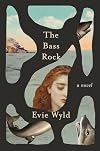
''The crow takes off and flies to the top branches of the monkey puzzle tree. It ye;;s at me from there.''
Three women, three different eras. Sarah, Ruth, Viviane. Witchcraft, abusing relationships, loss, depressions, danger in every corner. Shadows and omens. And the wild beauty of the Bass Rock witnessing everything. The relationships between women and men, the cruelty against the former, the violence of the later, the betrayal, the naivety.
But no matter how hard I tried, I couldn't bring show more myself to like this book at all.
Wyld definitely gave us excellent moments of mystery and atmospheric lyricism, like the extract that follows:
''In the third tree drawing a figure appeared high up in the branches, a black shape, inexpertly drawn, clumsily posed. The next page, closer still, the man was missing his shoes and his feet were white blocks, like a duck's, and he leaned back in the tree, and when you really looked you could I
imagine that the man was dead with a branch thrust through his chest.''
There are wolves and ghosts, and crows and crackling sounds. Proper atmosphere, no doubt about that. The problem is that to me it felt forced, as if it HAD to be there to justify the word ''Gothic'' on the back cover of the book. The feeling of impending danger was indeed effective and helped me not to lose interest completely as the novel progressed and my patience with the writing was growing thin. Elements of Folk Horror were evident in Ruth's storyline which started brilliantly and then became a silly, predictable, unbearable soap-opera.
Read and weep...
''Honestly, it's no problem, I'm putting my shoes on now.
Really no need, everything's fine.
I don't believe you, leaving now, will be there soon.
Seriously don't, I'm fine.''
I grew up in the company of Shakespeare, and Tolstoy, Austen, Bronte, Dickens and Dostoevsky. I worship on the altar of Sarah Perry, Daisy Johnson, Emma Donoghue and Colm Tóibín. Do not ask me to accept that this isn't awful writing...
Why the need to have 90% of the female characters with a glass of wine to soothe their troubles away in Contemporary Literature? It's a stereotype, a nightmare of an idea, as was the constant, dirty, illogical, disgusting swearing in Viviane's chapters. As if her story wasn't already pretty bad... I am tired, sick and stored of the ''I am a modern witch'' trope to justify plot ''twists and turns'' that are in fact, predictable and unoriginal.
On top of that, a serial-killer subplot? No. And why do certain writers believe that all readers are interested in reading about sex every other page? Her chapters were a real torture. The endless descriptions of bodily odours, the numerous (more than I've ever seen in a novel) descriptions of basic bodily functions. So excuse me, this isn't my idea of Literature. There's raw and realistic, and there's disgusting and forced provocative. And I never vote for the latter.
In a newspaper, I read about the ''toxic masculinity'' in the novel and this only touched the tip of the iceberg. This is the one thing the novel did right. Seen here at its worse and most realistic form. It was powerful, infuriating, shuttering, and I am never the one to build barriers between the two sexes. But repetition and the same-old ''haunted house'' tropes formed a clumsily depicted combination. Are all men monsters and all women victims? Of course not. We have fathers, partners, sons, brothers, husbands we love with all our heart and at times, the message the novel wanted to convey left me thinking. But we are here for Literature, not politics (at least I am...) and by my standards, The Bass Rock left me utterly indifferent. In addition, the three women aren't exactly interesting. On the contrary, they are extremely average, underdeveloped to the point of serving as stereotypical substitutes for agendas. Viviane is disgusting, Ruth is hugely problematic and docile, Sarah remained a mystery. In fact, every character apart from Betty, Christopher and Michael was horrible and this is neither realistic nor interesting.
And what did Pride and Prejudice ever do to you, dear writer? Don't mess with works you can't fathom.
So. Love triangles (Jesus!), marital problems, endless swearing with uncountable times when the word ''fuck'' and its derivatives ''graced'' the pages of the novel, toilet descriptions, tropes that have been done to perfection by more competent peers of Wyld, painfully irritating characters. This is what I found. A wasted potential, a setting that deserved a better story, better characters. The themes of abuse and retribution are so strong. They formed an excellent premise but they were not enough. Many loved this, many will. But I have the right of my own opinion and for me, it was a frightening failure.
Many thanks to Pantheon and Edelweiss for the ARC in exchange for an honest review.
My reviews can also be found on https://theopinionatedreaderblog.wordpress.com/ show less
Three women, three different eras. Sarah, Ruth, Viviane. Witchcraft, abusing relationships, loss, depressions, danger in every corner. Shadows and omens. And the wild beauty of the Bass Rock witnessing everything. The relationships between women and men, the cruelty against the former, the violence of the later, the betrayal, the naivety.
But no matter how hard I tried, I couldn't bring show more myself to like this book at all.
Wyld definitely gave us excellent moments of mystery and atmospheric lyricism, like the extract that follows:
''In the third tree drawing a figure appeared high up in the branches, a black shape, inexpertly drawn, clumsily posed. The next page, closer still, the man was missing his shoes and his feet were white blocks, like a duck's, and he leaned back in the tree, and when you really looked you could I
imagine that the man was dead with a branch thrust through his chest.''
There are wolves and ghosts, and crows and crackling sounds. Proper atmosphere, no doubt about that. The problem is that to me it felt forced, as if it HAD to be there to justify the word ''Gothic'' on the back cover of the book. The feeling of impending danger was indeed effective and helped me not to lose interest completely as the novel progressed and my patience with the writing was growing thin. Elements of Folk Horror were evident in Ruth's storyline which started brilliantly and then became a silly, predictable, unbearable soap-opera.
Read and weep...
''Honestly, it's no problem, I'm putting my shoes on now.
Really no need, everything's fine.
I don't believe you, leaving now, will be there soon.
Seriously don't, I'm fine.''
I grew up in the company of Shakespeare, and Tolstoy, Austen, Bronte, Dickens and Dostoevsky. I worship on the altar of Sarah Perry, Daisy Johnson, Emma Donoghue and Colm Tóibín. Do not ask me to accept that this isn't awful writing...
Why the need to have 90% of the female characters with a glass of wine to soothe their troubles away in Contemporary Literature? It's a stereotype, a nightmare of an idea, as was the constant, dirty, illogical, disgusting swearing in Viviane's chapters. As if her story wasn't already pretty bad... I am tired, sick and stored of the ''I am a modern witch'' trope to justify plot ''twists and turns'' that are in fact, predictable and unoriginal.
On top of that, a serial-killer subplot? No. And why do certain writers believe that all readers are interested in reading about sex every other page? Her chapters were a real torture. The endless descriptions of bodily odours, the numerous (more than I've ever seen in a novel) descriptions of basic bodily functions. So excuse me, this isn't my idea of Literature. There's raw and realistic, and there's disgusting and forced provocative. And I never vote for the latter.
In a newspaper, I read about the ''toxic masculinity'' in the novel and this only touched the tip of the iceberg. This is the one thing the novel did right. Seen here at its worse and most realistic form. It was powerful, infuriating, shuttering, and I am never the one to build barriers between the two sexes. But repetition and the same-old ''haunted house'' tropes formed a clumsily depicted combination. Are all men monsters and all women victims? Of course not. We have fathers, partners, sons, brothers, husbands we love with all our heart and at times, the message the novel wanted to convey left me thinking. But we are here for Literature, not politics (at least I am...) and by my standards, The Bass Rock left me utterly indifferent. In addition, the three women aren't exactly interesting. On the contrary, they are extremely average, underdeveloped to the point of serving as stereotypical substitutes for agendas. Viviane is disgusting, Ruth is hugely problematic and docile, Sarah remained a mystery. In fact, every character apart from Betty, Christopher and Michael was horrible and this is neither realistic nor interesting.
And what did Pride and Prejudice ever do to you, dear writer? Don't mess with works you can't fathom.
So. Love triangles (Jesus!), marital problems, endless swearing with uncountable times when the word ''fuck'' and its derivatives ''graced'' the pages of the novel, toilet descriptions, tropes that have been done to perfection by more competent peers of Wyld, painfully irritating characters. This is what I found. A wasted potential, a setting that deserved a better story, better characters. The themes of abuse and retribution are so strong. They formed an excellent premise but they were not enough. Many loved this, many will. But I have the right of my own opinion and for me, it was a frightening failure.
Many thanks to Pantheon and Edelweiss for the ARC in exchange for an honest review.
My reviews can also be found on https://theopinionatedreaderblog.wordpress.com/ show less
Another sheep, mangled and bled out, her innards not yet crusting and the vapours rising from her like a steamed pudding.
Man, I love a good opening sentence. Here we have one that immediately grabs you (Another???), resonates with poetry, and, though you won’t realize it quite yet, sets up the book’s pattern of misdirection. For despite what a reading of that first sentence would lead you to believe, this is not going to unfold like a mystery novel. We are not going to have what killed show more these sheep ever spelled out for us. This book is about something more interesting, and far more disturbing.
Crows, their beaks shining, strutting and rasping, and when I waved my stick they flew to the trees and watched, flaring out their wings, singing, if you could call it that.
Let's not overlook the second sentence, either. The prose poetry continues, and it connects with the book's title: birds are going to be a persistent element in the story, looking down from a distance, observing (and judging?). Crows specifically are symbolic of a number of things: doom (the protagonist's back story, told backwards), trickery (the author's misdirections, including the protagonist's very name: Jake, suggesting a male), supernatural mystery (what might that dark shadow be that she suspects of killing the sheep?).
Jake is living on an unnamed (invented?) island off the coast of England, running a farm of 50 sheep... now down to 48. She has come for the isolation, running away from a past in Australia that will be revealed in pieces in alternating chapters that run back in time. She shies away from contact with her neighbors, believing that she's always being negatively judged.
The chapters of her past tease with gradually parceled out information. How did she get those scars on her back? What sort of relationship did she have with this Otto person? What happened to her relationship with, and within, her family? How did she come to be working as ateenage prostitute ?
The chapters of her present, in contrast to the dry heat and sharp edges of her Australian past, are wet, muddy and blurred on her English island. A drunk man stumbles onto her property and she develops perhaps a slightly unlikely relationship with him, allowing him to move in to her downstairs and help a bit with the sheep. His past is a bit shrouded, though nothing like hers. The main focus, however, is on what is killing her sheep.
This is never revealed, we are given only clues, and is the obvious source of conjecture/confusion in reviews here. Here's my guess, and you might want to stop reading now if you're reading reviews before reading the book rather than after..
The large, shadowy presence she blames for the killings is not actually an earthly physical entity, nor is it some supernatural entity acting with agency in the world. It is a metaphor for a dark past, filled with guilt. One reason for believing it's not actually "real", besides the unlikelihood of a large unknown animal living on a small island, is that on a couple of occasions she believes it enters her house: though she doesn't ever actually see it, she hears it. But she hears it doing impossible things, like racing up the stairs - where no stairs actually exist. And when she thinks see sees it in her sheep pen and shoots at it, Lloyd tells her she hit a sheep. At the end of the novel, Lloyd believes he sees it in the woods, but then he’s another person living with dark event over his head. It is suggested, though only conjectured, that another character has seen it as well – this a young man with a troubled upbringing who began acts of arson after his mother died and recently returned from being sent to jail after his father pressed charges. So it seems to make sense that this shadow is just that, a shadow, a metaphor.
What is actually killing her sheep? Just an average, everyday fox, perhaps the one she sees lurking on the edge of her woods, with two small cubs. Lurking nightmares flung up by our imaginations, informed by our past, can be far worse than what we actually find right in front of us, today. show less
Man, I love a good opening sentence. Here we have one that immediately grabs you (Another???), resonates with poetry, and, though you won’t realize it quite yet, sets up the book’s pattern of misdirection. For despite what a reading of that first sentence would lead you to believe, this is not going to unfold like a mystery novel. We are not going to have what killed show more these sheep ever spelled out for us. This book is about something more interesting, and far more disturbing.
Crows, their beaks shining, strutting and rasping, and when I waved my stick they flew to the trees and watched, flaring out their wings, singing, if you could call it that.
Let's not overlook the second sentence, either. The prose poetry continues, and it connects with the book's title: birds are going to be a persistent element in the story, looking down from a distance, observing (and judging?). Crows specifically are symbolic of a number of things: doom (the protagonist's back story, told backwards), trickery (the author's misdirections, including the protagonist's very name: Jake, suggesting a male), supernatural mystery (what might that dark shadow be that she suspects of killing the sheep?).
Jake is living on an unnamed (invented?) island off the coast of England, running a farm of 50 sheep... now down to 48. She has come for the isolation, running away from a past in Australia that will be revealed in pieces in alternating chapters that run back in time. She shies away from contact with her neighbors, believing that she's always being negatively judged.
The chapters of her past tease with gradually parceled out information. How did she get those scars on her back? What sort of relationship did she have with this Otto person? What happened to her relationship with, and within, her family? How did she come to be working as a
The chapters of her present, in contrast to the dry heat and sharp edges of her Australian past, are wet, muddy and blurred on her English island. A drunk man stumbles onto her property and she develops perhaps a slightly unlikely relationship with him, allowing him to move in to her downstairs and help a bit with the sheep. His past is a bit shrouded, though nothing like hers. The main focus, however, is on what is killing her sheep.
This is never revealed, we are given only clues, and is the obvious source of conjecture/confusion in reviews here. Here's my guess, and you might want to stop reading now if you're reading reviews before reading the book rather than after..
The large, shadowy presence she blames for the killings is not actually an earthly physical entity, nor is it some supernatural entity acting with agency in the world. It is a metaphor for a dark past, filled with guilt. One reason for believing it's not actually "real", besides the unlikelihood of a large unknown animal living on a small island, is that on a couple of occasions she believes it enters her house: though she doesn't ever actually see it, she hears it. But she hears it doing impossible things, like racing up the stairs - where no stairs actually exist. And when she thinks see sees it in her sheep pen and shoots at it, Lloyd tells her she hit a sheep. At the end of the novel, Lloyd believes he sees it in the woods, but then he’s another person living with dark event over his head. It is suggested, though only conjectured, that another character has seen it as well – this a young man with a troubled upbringing who began acts of arson after his mother died and recently returned from being sent to jail after his father pressed charges. So it seems to make sense that this shadow is just that, a shadow, a metaphor.
What is actually killing her sheep? Just an average, everyday fox, perhaps the one she sees lurking on the edge of her woods, with two small cubs. Lurking nightmares flung up by our imaginations, informed by our past, can be far worse than what we actually find right in front of us, today. show less
Lists
Missing Books (1)
Awards


You May Also Like


Associated Authors
Statistics
- Works
- 11
- Also by
- 2
- Members
- 2,073
- Popularity
- #12,399
- Rating
- 3.6
- Reviews
- 115
- ISBNs
- 99
- Languages
- 5
- Favorited
- 1