
Works by Clara Bingham
Class Action: The Story of Lois Jenson and the Landmark Case That Changed Sexual Harassment Law (2002) 139 copies, 6 reviews
Witness to the Revolution: Radicals, Resisters, Vets, Hippies, and the Year America Lost Its Mind and Found Its Soul (2016) 129 copies, 6 reviews
Associated Works
Tagged
Common Knowledge
- Legal name
- Bingham, Clara York
- Birthdate
- 1963
- Gender
- female
- Education
- Harvard University
- Organizations
- Newsweek (magazine)
- Relationships
- Michaelis, David Tead (spouse)
Bingham, Joan (mother)
Bingham, R. Worth (father)
Members
Reviews
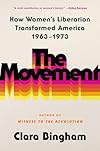
The Movement by Clara Bingham is a collection of oral histories from women active in the women’s liberation movement. It is presented in chronological order from 1963 to 1973.
Reliving this history was such a revelation; it riled my blood and made me appreciate the hard work of women who made my life choices possible.
In 1963 I was in Sixth Grade and in 1973 I had been married for a year. I remember this history as it played out.
In 1972, I dropped out of college to marry. We both worked as show more he attended seminary. The women at my workplace took me under their wing. Widows warned me to get credit in my name, one telling how she could not get a car loan after her husband’s death. Another coworker discovered she wasn’t paid as much as the man who had held the position before her. She was told it was because he had a family to support, but she had a husband to support her.
I remember the fear people had about ERA. Would men and women have to share bathrooms? Would women be drafted into the armed services?
Roaming the stacks at the seminary, I discovered and read The Feminine Mystique by Betty Friedan and other feminist literature.
In 1975, my husband graduated and was in his first pastorate. Parishioners asked if we were planning on having children now and were surprised when I said I was returning to school the next semester. Some didn’t understand, while other women congratulated me. It was rare for a woman to return to school after she married.
I graduated in 1978. At that time, my husband’s conservative parishioners believed that the Bible forbade women from wearing pants, and they couldn’t tolerate the idea of a woman’s voice in the pulpit. (Before my husband’s retirement, there were more women going into ministry than men. Women have always done the work in the church; now they pastor them.)
I saw how societal attitudes changed. My mother-in-law, a good Methodist who was against smoking and gambling and taking the Lord’s name in vain, told me she supported a women’s right to abortion.
The narratives in The Movement are from diverse women who fought for equality in the workplace, academia, education, sports, and politics; for racial and gender equality; and for the freedom to control their own bodies.
It was a civil rights movement, a women’s movement, a Puerto Rican movement, an American Indian movement, an antiwar movement, a student movement. And what you felt is that you were part of the movement. And I felt it was just a question of what people chose to emphasize, but all of our interests were deeply connected. Heather Book quoted in The Movement by Clara Bingham
The book refreshed my understanding of how special interest groups came to be born. After the death of Martin Luther King, Jr., Black Power arose. Black women were sidelined, and they started their own movement. The white women’s liberation movement didn’t want to be stereotyped as Lesbians, which birthed a Lesbian rights movement. Each special interest group had to create their own movement.
In 1960, it was illegal in most states for doctors to prescribe birth control to unmarried women, and the right for married women to obtain birth control wasn’t constitutionally protected in every state until…1965… from The Movement by Clara Bingham
Abortion and a woman’s control over her body was a main focus of The Movement. Poor women and immigrants were sterilized with federal funds! Women did not have choices about how they gave birth. Abortions were illegal and dangerous. My aunt had an abortion in the late 1940s. Mom told me she was dropped off in the country, blindfolded, and returned to the crossroads afterwards.
Men don’t get pregnant, men don’t bear children. Men just make laws. demonstrator quoted by Susan Brownmiller in The Movement
So many things are covered: Our Bodies, Ourselves, the rise of Now, the publication of Ms. magazine, protesting Miss America, voting rights, affirmative action, the right to privacy, the ERA, women’s sports, the rise of Women’s Studies, gender discrimination.
I appreciated reading about Shirley Chisholm’s political career. She is quoted about how men in politics “submit to forces they know are wrong and fail to stand up for what they believe.” Some things don’t change.
Today we are dealing with a backlash by men bent on retracting women’s hard won freedom and rights. This book could not have come out at a better time.
Thanks to the publisher for a free book through NetGalley. show less
Reliving this history was such a revelation; it riled my blood and made me appreciate the hard work of women who made my life choices possible.
In 1963 I was in Sixth Grade and in 1973 I had been married for a year. I remember this history as it played out.
In 1972, I dropped out of college to marry. We both worked as show more he attended seminary. The women at my workplace took me under their wing. Widows warned me to get credit in my name, one telling how she could not get a car loan after her husband’s death. Another coworker discovered she wasn’t paid as much as the man who had held the position before her. She was told it was because he had a family to support, but she had a husband to support her.
I remember the fear people had about ERA. Would men and women have to share bathrooms? Would women be drafted into the armed services?
Roaming the stacks at the seminary, I discovered and read The Feminine Mystique by Betty Friedan and other feminist literature.
In 1975, my husband graduated and was in his first pastorate. Parishioners asked if we were planning on having children now and were surprised when I said I was returning to school the next semester. Some didn’t understand, while other women congratulated me. It was rare for a woman to return to school after she married.
I graduated in 1978. At that time, my husband’s conservative parishioners believed that the Bible forbade women from wearing pants, and they couldn’t tolerate the idea of a woman’s voice in the pulpit. (Before my husband’s retirement, there were more women going into ministry than men. Women have always done the work in the church; now they pastor them.)
I saw how societal attitudes changed. My mother-in-law, a good Methodist who was against smoking and gambling and taking the Lord’s name in vain, told me she supported a women’s right to abortion.
The narratives in The Movement are from diverse women who fought for equality in the workplace, academia, education, sports, and politics; for racial and gender equality; and for the freedom to control their own bodies.
It was a civil rights movement, a women’s movement, a Puerto Rican movement, an American Indian movement, an antiwar movement, a student movement. And what you felt is that you were part of the movement. And I felt it was just a question of what people chose to emphasize, but all of our interests were deeply connected. Heather Book quoted in The Movement by Clara Bingham
The book refreshed my understanding of how special interest groups came to be born. After the death of Martin Luther King, Jr., Black Power arose. Black women were sidelined, and they started their own movement. The white women’s liberation movement didn’t want to be stereotyped as Lesbians, which birthed a Lesbian rights movement. Each special interest group had to create their own movement.
In 1960, it was illegal in most states for doctors to prescribe birth control to unmarried women, and the right for married women to obtain birth control wasn’t constitutionally protected in every state until…1965… from The Movement by Clara Bingham
Abortion and a woman’s control over her body was a main focus of The Movement. Poor women and immigrants were sterilized with federal funds! Women did not have choices about how they gave birth. Abortions were illegal and dangerous. My aunt had an abortion in the late 1940s. Mom told me she was dropped off in the country, blindfolded, and returned to the crossroads afterwards.
Men don’t get pregnant, men don’t bear children. Men just make laws. demonstrator quoted by Susan Brownmiller in The Movement
So many things are covered: Our Bodies, Ourselves, the rise of Now, the publication of Ms. magazine, protesting Miss America, voting rights, affirmative action, the right to privacy, the ERA, women’s sports, the rise of Women’s Studies, gender discrimination.
I appreciated reading about Shirley Chisholm’s political career. She is quoted about how men in politics “submit to forces they know are wrong and fail to stand up for what they believe.” Some things don’t change.
Today we are dealing with a backlash by men bent on retracting women’s hard won freedom and rights. This book could not have come out at a better time.
Thanks to the publisher for a free book through NetGalley. show less
Witness to the Revolution: Radicals, Resisters, Vets, Hippies, and the Year America Lost Its Mind and Found Its Soul by Clara Bingham
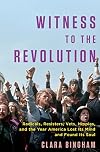
This is my favorite book (so far) of 2016!
The author takes an in-depth look at the school year of August 1969 to August 1970 and addresses almost every milestone that happened in that time frame - and there were quite a few (draft resisting, the formation of the Weathermen, Nixon trying to take down any and all perceived threats to his power, the release of the Pentagon Papers, Kent State, Woodstock, breaking the My Lai massacre in the news, women's lib, the Black Panther Party, etc, etc). show more And she doesn't write it down like a textbook; instead, the major players who were willing to talk about what they saw, experienced, did, and thought tell the tales. The result is an incredibly engrossing read, and I am so sad that it is now over, although the author provides an extensive "further reading" category with well over a hundred books, and I want to read at least half of them.
The 60s were such a fascinating time frame for me and how society changed so dramatically, and even though a lot of people seem to think that it was a bunch of hippies who smoked dope and listened to trippy music, there is so much that happened during this time frame that still affects us to this day. And the book doesn't shy away from the good, the bad, and the downright ugly. Reading this book was an eye-opener for me, showing just how disconnected I feel from the political process. It is amazing to me to see so many hundreds of thousands, perhaps millions, of people who saw what they knew to be wrong and did what they could to change it. And now, today, we have such an amazing network available to us to organize (the internet), and we don't use it. It just blows my mind. And so many people think that Edward Snowden is an enemy. Also blows my mind. Listen to some of the songs from the era (Steppenwolf's "Monster" is a great place to start and is mentioned in this book) and they apply so, so much to modern day problems too.
Highly recommended. show less
The author takes an in-depth look at the school year of August 1969 to August 1970 and addresses almost every milestone that happened in that time frame - and there were quite a few (draft resisting, the formation of the Weathermen, Nixon trying to take down any and all perceived threats to his power, the release of the Pentagon Papers, Kent State, Woodstock, breaking the My Lai massacre in the news, women's lib, the Black Panther Party, etc, etc). show more And she doesn't write it down like a textbook; instead, the major players who were willing to talk about what they saw, experienced, did, and thought tell the tales. The result is an incredibly engrossing read, and I am so sad that it is now over, although the author provides an extensive "further reading" category with well over a hundred books, and I want to read at least half of them.
The 60s were such a fascinating time frame for me and how society changed so dramatically, and even though a lot of people seem to think that it was a bunch of hippies who smoked dope and listened to trippy music, there is so much that happened during this time frame that still affects us to this day. And the book doesn't shy away from the good, the bad, and the downright ugly. Reading this book was an eye-opener for me, showing just how disconnected I feel from the political process. It is amazing to me to see so many hundreds of thousands, perhaps millions, of people who saw what they knew to be wrong and did what they could to change it. And now, today, we have such an amazing network available to us to organize (the internet), and we don't use it. It just blows my mind. And so many people think that Edward Snowden is an enemy. Also blows my mind. Listen to some of the songs from the era (Steppenwolf's "Monster" is a great place to start and is mentioned in this book) and they apply so, so much to modern day problems too.
Highly recommended. show less
Class Action: The Story of Lois Jenson and the Landmark Case That Changed Sexual Harassment Law by Clara Bingham
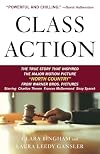
This was an excellent read. Being a true story about the U.S.'s first sexual harrassment class action, I expected it to be a dry chore to read, but the opposite proved true. The writers wrote it in the style of "creative nonfiction" weaving the kind of compelling narrative usually not found within nonfiction legal cases. Even though I was already aware of the overall outcome of the lawsuit, having been introduced to the story via the movie North Country, and had researched the case itself show more afterward, still the writing was engaging enough that it was difficult to pry myself away from the book once I started reading. show less
Witness to the Revolution: Radicals, Resisters, Vets, Hippies, and the Year America Lost Its Mind and Found Its Soul by Clara Bingham
Witness to the Revolution is a powerful, compelling, intense, immersive, easy to read, hard to put down, brilliant book. I absolutely loved the author's unique approach in writing this. Rather than using interviews as research, then stringing together a chronological, impersonal narration, the author lets her interviewees tell the story in their own words. Clara Bingham puts these pieces together in order of events, as well as dividing them by specific topics (Woodstock, Weathermen, My Lai, show more etc.). We're shown all sides of the tumultuous era; from conservatives, to hippies and the drug culture, to hard-core activists. The result is a stunning and comprehensive account of one of the most divisive periods in American history.
Time and distance allow us to reexamine past events, but even then we are often shown a skewed image, or perhaps a narrow and biased (unintentional or not) focus. Clara Bingham has given us the gift of an expansive view, so we all might see what the other side saw at the time, good, bad, or indifferent.
In reading this, it's difficult not to be struck by just how close the US came to a full out revolution. I also found myself pondering our current state of general complacency. Some people say that eliminating the draft was not a good thing, because it allows us the freedom to disconnect from politics that aren't directly effecting us. Perhaps that's true. This book certainly gives us much to consider.
I could go on and on about the attributes of this book. But, really, the most important thing I can tell you is to read it.
*I received an advance copy from the publisher, via Amazon Vine, for my honest review.* show less
Time and distance allow us to reexamine past events, but even then we are often shown a skewed image, or perhaps a narrow and biased (unintentional or not) focus. Clara Bingham has given us the gift of an expansive view, so we all might see what the other side saw at the time, good, bad, or indifferent.
In reading this, it's difficult not to be struck by just how close the US came to a full out revolution. I also found myself pondering our current state of general complacency. Some people say that eliminating the draft was not a good thing, because it allows us the freedom to disconnect from politics that aren't directly effecting us. Perhaps that's true. This book certainly gives us much to consider.
I could go on and on about the attributes of this book. But, really, the most important thing I can tell you is to read it.
*I received an advance copy from the publisher, via Amazon Vine, for my honest review.* show less
You May Also Like


Associated Authors
Statistics
- Works
- 4
- Also by
- 1
- Members
- 365
- Popularity
- #65,882
- Rating
- 4.2
- Reviews
- 14
- ISBNs
- 23