
Jean de Brunhoff (1899–1937)
Author of The Story of Babar: The Little Elephant
About the Author
Jean de Brunhoff 1899 - 1937 Jean de Brunhoff (born December 9, 1899) was a French writer and illustrator known for creating the Babar books, the first of which appeared in 1931. He was the fourth and youngest child of Maurice de Brunhoff, a publisher. After the first book Histoire de Babar (The show more Story of Babar), six more titles followed before Jean de Brunhoff died of tuberculosis at the age of 37. He was buried in Père Lachaise Cemetery in Paris. Many people credit Jean's wife, Cécile de Brunhoff, as the real creator of Babar. After Jean's death, his brother Michel de Brunhoff, who was the editor of French Vogue, oversaw the publication in book form of his two last books, Babar and His Children and Babar and Father Christmas. The Babar series continues to be an international bestseller. Babar the elephant is an iconic character who has also been paid tribute by many museums worldwide. (Bowker Author Biography) show less
Works by Jean de Brunhoff
Babar Slipcase: The classic tale of an adventurous elephant that has enchanted generations of readers! (2020) 8 copies
Babar's cousin, that rascal Arthur 3 copies
Histoire de Babar, le petit éléphant Livre 1 AUDIO CD ( nouvelle edition ) (French Edition) (2015) 3 copies
Le Noël de Babar 3 copies
Babar: "Story of Babar", "Babar's Travels", "Babar the King", "Babar at Home" (Babar Reduced Facsimiles) (1991) 2 copies
BABAR IMAGES AUTOCOLLANTES 2 copies
LES DINOSAURES 2 copies
The Babar story-book 2 copies
Babar i el cocodril 1 copy
Babar och hans trädgård 1 copy
The Story of Babar 1 copy
Babar l'elefantino 1 copy
Babar Musicien 1 copy
Babar et son ami Zephir 1 copy
BABAR S'AMUSE 1 copy
Babar Slipcase: The classic tale of an adventurous elephant that has enchanted generations of readers! (2020) 1 copy
Babar; King of the Elephants 1 copy
Le couronnement de babar 1 copy
Babar y el cocodrilo 1 copy
Babar sur l'île déserte 1 copy
L'Ecole De Babar 1 copy
Babar au cirque 1 copy
Echelle de mesure Babar 1 copy
The Story of Babar Heidi 1 copy
Babar. 2 1 copy
Babar en el circo 1 copy
La corona de Babar 1 copy
Babar på badort 1 copy
Babar es vesteix 1 copy
Associated Works
The 20th-Century Children's Book Treasury: Picture Books and Stories to Read Aloud (1998) — Contributor — 1,834 copies, 14 reviews
The Illustrated Treasury of Children's Literature, Volumes 1-2 (1955) — Contributor — 523 copies, 4 reviews
The Graphic Canon of Children's Literature: The World's Greatest Kids' Lit as Comics and Visuals (2014) — Contributor — 101 copies, 1 review
Tagged
Common Knowledge
- Canonical name
- Brunhoff, Jean de
- Birthdate
- 1899-12-09
- Date of death
- 1937-10-16
- Gender
- male
- Education
- L'Ecole Alsacienne
Académie de la Grande Chaumière, Paris, France - Occupations
- children's book author
illustrator - Relationships
- Brunhoff, Laurent de (son)
Brunhoff, Cécile de (spouse) - Cause of death
- tuberculosis
- Nationality
- France
- Birthplace
- Paris, Île-de-France, France
- Places of residence
- Paris, Île-de-France, France
- Place of death
- Paris, Île-de-France, France
- Burial location
- Cimetière du Père-Lachaise, Paris, France
- Associated Place (for map)
- Paris, Île-de-France, France
Members
Discussions
The Story of Babar: Limited Edition in Folio Society Devotees (August 2024)
Reviews

Royal pachyderm newlyweds Babar and Celeste set out on their honeymoon voyage in this sequel to Jean de Brunhoff's The Story of Babar, finding that their balloon ride ends in disaster when a storm sends them crash-landing on an island inhabited by "fierce and savage cannibals." Escaping with the help of an obliging whale, the couple endure many more hardships, from being stranded together on a reef to being forced to perform in a circus, before being reunited with the Old Lady who aided show more Babar in his first adventure, and being returned to their own land. Here, however, they discover that their travails are far from over, as a war with the rhinoceros nation has developed in their absence...
As mentioned in my review of the first volume, the Babar books have garnered quite a bit of critical attention over the last few decades, with accusations of colonialist apologia/celebration coming from some (see the collection of essays, Should We Burn Babar?: Essays on Children's Literature and the Power of Stories), and counter-claims of self-conscious colonialist parody coming from others (see the essay, Freeing the Elephants: What Babar Brought, published in The New Yorker magazine). It wasn't clear to me, reading The Story of Babar, which interpretation was the correct one, and I'm afraid it still isn't. Unfortunately, even without the issue of the colonialist narrative (whatever one makes of it), I found The Travels of Babar painfully offensive. The overtly racist visual depiction of the "savage cannibals" that Babar and Celeste encounter on the tropical island where they land - black skin, exaggerated red lips - was painful to see, and while I accept that it was a product of its time, I cannot see it as anything but a relic of a very ugly past. I think that it cannot be an accident that Gopnick, who penned the defense above, chose to base his argument primarily on the first and third Babar titles (The Story of Babar and Babar the King), and neglected to mention this one. It certainly does not lend itself to the notion that there is no harm in de Brunhoff's work... show less
As mentioned in my review of the first volume, the Babar books have garnered quite a bit of critical attention over the last few decades, with accusations of colonialist apologia/celebration coming from some (see the collection of essays, Should We Burn Babar?: Essays on Children's Literature and the Power of Stories), and counter-claims of self-conscious colonialist parody coming from others (see the essay, Freeing the Elephants: What Babar Brought, published in The New Yorker magazine). It wasn't clear to me, reading The Story of Babar, which interpretation was the correct one, and I'm afraid it still isn't. Unfortunately, even without the issue of the colonialist narrative (whatever one makes of it), I found The Travels of Babar painfully offensive. The overtly racist visual depiction of the "savage cannibals" that Babar and Celeste encounter on the tropical island where they land - black skin, exaggerated red lips - was painful to see, and while I accept that it was a product of its time, I cannot see it as anything but a relic of a very ugly past. I think that it cannot be an accident that Gopnick, who penned the defense above, chose to base his argument primarily on the first and third Babar titles (The Story of Babar and Babar the King), and neglected to mention this one. It certainly does not lend itself to the notion that there is no harm in de Brunhoff's work... show less

Originally published in 1936 as Les vacances de Zéphir - alternately translated in English as Zephir's Holidays, Babar's Friend Zephir and Babar and Zephir - this fifth of Jean de Brunhoff's classic picture-books featuring the elephant Babar shifts focus, concentrating on the adventures of the little monkey Zephir, who returns home for the holidays at the beginning of the story. When Princess Isabelle, the daughter of General Huc, goes missing, clever Zephir calls upon the mermaid he has show more recently caught and set free for help, and sets out on a rescue mission...
Given my mixed reactions to this series thus far - some of the books (The Story of Babar) have left me fairly indifferent, while others (The Travels of Babar) I have actively disliked - I was surprised to discover that I really enjoyed Babar and Zephir. Perhaps this is because, despite the title, this is very much Zephir's story, with Babar having little to nothing to do with it. The fairy-tale elements here - the wild creature whom the hero aids, and who aids the hero in return; the quest to rescue the threatened princess - are very appealing, and the artwork is charming. Recommended to Babar fans, with the proviso that Babar himself appears only in one scene. show less
Given my mixed reactions to this series thus far - some of the books (The Story of Babar) have left me fairly indifferent, while others (The Travels of Babar) I have actively disliked - I was surprised to discover that I really enjoyed Babar and Zephir. Perhaps this is because, despite the title, this is very much Zephir's story, with Babar having little to nothing to do with it. The fairy-tale elements here - the wild creature whom the hero aids, and who aids the hero in return; the quest to rescue the threatened princess - are very appealing, and the artwork is charming. Recommended to Babar fans, with the proviso that Babar himself appears only in one scene. show less

Originally published in 1933, this third Babar book picks up just where its predecessor, The Travels of Babar, left off, as Babar, Celeste and the Old Lady adjust to being back in the land of the elephants. When all of the many goods he purchased on his recent travels arrive by special dromedary delivery, Babar puts his grand plan into motion, proposing that the elephants build their own city, to be named Celesteville after their queen. All goes according to plan, and soon the pachyderm show more metropolis is a reality. But just when all seems well, and the elephants are celebrating their achievement, a double tragedy strikes, in the form of a snakebite that leaves the Old Lady gravely ill, and a house fire which injures wise old Cornelius. As Babar slips into a troubled dream that night, the question hangs in the air: which will triumph, Misfortune or Happiness...?
Although I do recall reading them as a young girl, I can't say that the Babar books have ever been amongst my particular favorites - they're interesting, the artwork is lovely, but the stories never really appealed to me, and I did not read them again and again, as I did some other titles. I would imagine that those readers who perceive in these books an apologia for colonialism (see Should We Burn Babar?: Essays on Children's Literature and the Power of Stories) will be incensed at the story here, in which Babar, with the Old Lady by his side, brings "civilization" to the elephants, in the form of urban development. For my part, I continue to waffle, as it concerns the question of Jean de Brunhoff's worldview and storytelling intent. Did he mean these books to be a glorification of France's colonization of Africa, or as a gentle parody (as Adam Gopnick has argued) of it? If the latter, does that mean that they are less problematic? I have no answers, but the parallel between France and Africa in the early twentieth century, and the humans and elephants in these stories, seems fairly clear. There were no "fierce cannibals" here, as there were in The Travels of Babar - something for which I am grateful, given the offensive way in which they were portrayed - but I can't honestly say I enjoyed the story that much. Leaving aside all political and/or ethical issues, it just felt a little disjointed to me. show less
Although I do recall reading them as a young girl, I can't say that the Babar books have ever been amongst my particular favorites - they're interesting, the artwork is lovely, but the stories never really appealed to me, and I did not read them again and again, as I did some other titles. I would imagine that those readers who perceive in these books an apologia for colonialism (see Should We Burn Babar?: Essays on Children's Literature and the Power of Stories) will be incensed at the story here, in which Babar, with the Old Lady by his side, brings "civilization" to the elephants, in the form of urban development. For my part, I continue to waffle, as it concerns the question of Jean de Brunhoff's worldview and storytelling intent. Did he mean these books to be a glorification of France's colonization of Africa, or as a gentle parody (as Adam Gopnick has argued) of it? If the latter, does that mean that they are less problematic? I have no answers, but the parallel between France and Africa in the early twentieth century, and the humans and elephants in these stories, seems fairly clear. There were no "fierce cannibals" here, as there were in The Travels of Babar - something for which I am grateful, given the offensive way in which they were portrayed - but I can't honestly say I enjoyed the story that much. Leaving aside all political and/or ethical issues, it just felt a little disjointed to me. show less
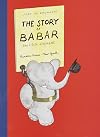
Odd little childrens book. A minor quibble, elephants live in a matriarchy, so not only is this not educational its actively uneducational :P .
I'm sure there must be some other versions of this book but the one i read had hand-written text!, and in cursive! Even i had issues deciphering a word here or there but i can only imagine the horror on a child's face if they were handed this :lol. And their growing horror if they actually managed to figure out what it says ;) .
There are several show more dark moments in this which are not well dealt with to say the least. Also Babar is elected King rather than inheriting it, which seems a nice change... until you find out why he in particular is elected. Part of me wants to think it's a biting satire on elections but i suspect not :lol.
The art's still nice though :) . show less
I'm sure there must be some other versions of this book but the one i read had hand-written text!, and in cursive! Even i had issues deciphering a word here or there but i can only imagine the horror on a child's face if they were handed this :lol. And their growing horror if they actually managed to figure out what it says ;) .
There are several show more dark moments in this which are not well dealt with to say the least. Also Babar is elected King rather than inheriting it, which seems a nice change... until you find out why he in particular is elected. Part of me wants to think it's a biting satire on elections but i suspect not :lol.
The art's still nice though :) . show less
Lists
Awards


You May Also Like


Associated Authors
Statistics
- Works
- 181
- Also by
- 14
- Members
- 8,592
- Popularity
- #2,799
- Rating
- 3.9
- Reviews
- 99
- ISBNs
- 523
- Languages
- 17
- Favorited
- 5