
Oliver Morton
Author of Eating the Sun : the everyday miracle of how plants power the planet
About the Author
Works by Oliver Morton
Mars 1 copy
Associated Works
Seeing Further: The Story of Science, Discovery, and the Genius of the Royal Society (2010) — Contributor — 1,155 copies, 19 reviews
What Is Your Dangerous Idea? Today's Leading Thinkers on the Unthinkable (2007) — Contributor — 668 copies, 8 reviews
Tagged
Common Knowledge
- Birthdate
- 20th century
- Gender
- male
- Education
- University of Cambridge
- Nationality
- UK
- Places of residence
- Greenwich, London, England, UK
- Associated Place (for map)
- England, UK
Members
Reviews
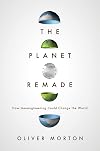
Morton begins the book with two questions: 1) Do you think human emissions of carbon dioxide are changing Earth's climate? 2) Do you think it will be difficult to transition away from the centuries-long and multi-trillion dollar reliance on fossil fuels? If your answer is "yes and yes", then it may be necessary to embark on some form of geoengineering, the deliberate introduction of (most likely) sulfur aerosols into the stratosphere to reflect more light into space and counter the show more greenhouse effect.
Morton is a professional science writer, and he has a keen grasp of good analogies to describe the flows of energy through the upper surface of Earth, and the scientific discoveries that lead to theories of geoengineering. Major volcanic eruptions in the late 90s offered a case to test the assumptions of primitive climate models against the introduction of bulk surfer aerosols, with sudden cooling and associated hemispheric changes in the weather. Of course climate models are relatively crude, and there's still much that we don't know about the effects on weather, which is what people notice and care about, rather than the climate. The ease of geoengineering is stark. Perhaps $10 billion to set up a fleet of stratospheric tankers, and a $2 billion annually to maintain the program. Big science, yes, but costs on the order of a few large nuclear plants.
The problem with geoengineering is it's Promethean potential. It's not that the actual practice is wholly new. Climate change is just one natural cycle now substantially influence-to-completely dominated by human activity, from the Haber-Bosch process and nitrogen fertilizer, to phosphorus fertilizer, to the narrowly averted disaster of CFCs and the ozone layers. To take a major Earth system deliberately in hand and say "this is what we want it to be" is a new level of planetary ambition. Geonegineering induced cooling will have some losers, and the politics of those harms are not well mapped out.
This is where Morton falls short. He imagines a scenarios where a "Concord" of minor states threatened by climate change enact geoengineering, but it seems more likely that a major power or even a billionaire operating under a flag of convenience will get there first. The internal politics of geoengineering, its scientific debates, and relationship to mainstream atmospheric physics and ecological activism, are sorely under-reported. Still, I can't think of a better book on the topic. show less
Morton is a professional science writer, and he has a keen grasp of good analogies to describe the flows of energy through the upper surface of Earth, and the scientific discoveries that lead to theories of geoengineering. Major volcanic eruptions in the late 90s offered a case to test the assumptions of primitive climate models against the introduction of bulk surfer aerosols, with sudden cooling and associated hemispheric changes in the weather. Of course climate models are relatively crude, and there's still much that we don't know about the effects on weather, which is what people notice and care about, rather than the climate. The ease of geoengineering is stark. Perhaps $10 billion to set up a fleet of stratospheric tankers, and a $2 billion annually to maintain the program. Big science, yes, but costs on the order of a few large nuclear plants.
The problem with geoengineering is it's Promethean potential. It's not that the actual practice is wholly new. Climate change is just one natural cycle now substantially influence-to-completely dominated by human activity, from the Haber-Bosch process and nitrogen fertilizer, to phosphorus fertilizer, to the narrowly averted disaster of CFCs and the ozone layers. To take a major Earth system deliberately in hand and say "this is what we want it to be" is a new level of planetary ambition. Geonegineering induced cooling will have some losers, and the politics of those harms are not well mapped out.
This is where Morton falls short. He imagines a scenarios where a "Concord" of minor states threatened by climate change enact geoengineering, but it seems more likely that a major power or even a billionaire operating under a flag of convenience will get there first. The internal politics of geoengineering, its scientific debates, and relationship to mainstream atmospheric physics and ecological activism, are sorely under-reported. Still, I can't think of a better book on the topic. show less
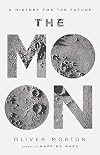
The Moon bounces and drifts languidly over its topic, Earth's nearest neighbor and how it's been conceptualized and made concrete.
As a world just out of reach, but easily visible even with the naked eye, the Moon has proven important to theories of Copernican astronomy and geological understanding of the world. The book doesn't really get moving until Morton describes 'the Orphans of Apollo', his own generation who were promised a new world, and left instead with scattered bootprints and a show more few thousand kg of moon rocks. In the 50 years since Apollo, no human has gone beyond Low Earth Orbit. The big science agencies turned their attention to Mars, Jupiter, and the stars.
This may all be changing, of course, with SpaceX and Blue Origin, and the revolution in launch costs. Oliver's discussion of the contemporary landscape of space exploration is not systematic enough to call a survey, but lays out the major economic reasons to exploit the Moon's resources, and why He3 and ice mining might be bad ideas, unless using the Moon's resources is axiomatic.
Discussion of speculative literature, starting with early modern Utopians and closing with a wonderful critical essay on Heinelin's The Moon is a Harsh Mistress in light of the Anthropocene are the true heart of the book. Morton is a scifi nerd par excelance, and you think fans are slans, that essay is worth the price of admission. And you don't, you'll probably enjoy hearing what Morton thinks of Elon Musk. show less
As a world just out of reach, but easily visible even with the naked eye, the Moon has proven important to theories of Copernican astronomy and geological understanding of the world. The book doesn't really get moving until Morton describes 'the Orphans of Apollo', his own generation who were promised a new world, and left instead with scattered bootprints and a show more few thousand kg of moon rocks. In the 50 years since Apollo, no human has gone beyond Low Earth Orbit. The big science agencies turned their attention to Mars, Jupiter, and the stars.
This may all be changing, of course, with SpaceX and Blue Origin, and the revolution in launch costs. Oliver's discussion of the contemporary landscape of space exploration is not systematic enough to call a survey, but lays out the major economic reasons to exploit the Moon's resources, and why He3 and ice mining might be bad ideas, unless using the Moon's resources is axiomatic.
Discussion of speculative literature, starting with early modern Utopians and closing with a wonderful critical essay on Heinelin's The Moon is a Harsh Mistress in light of the Anthropocene are the true heart of the book. Morton is a scifi nerd par excelance, and you think fans are slans, that essay is worth the price of admission. And you don't, you'll probably enjoy hearing what Morton thinks of Elon Musk. show less
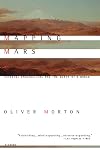
I picked up this book expecting it to be sort of a comprehensive travelers guide to Mars (despite the book with that same name). Instead of giving me a blow-by-blow account of the wonders of individual named features, Oliver Morton provided a seemingly complete review of the geography and geology of Mars. He discusses the creation of Martian maps by Schappiarelli, Lowell and modern geologists. He talks about the spacecraft that have informed us about Mars. He then introduces us to the show more major people behind Martian science. His book attempts to make Mars something concrete and sensible and to give dimension to flatness of the images through which we perceive it. Almost immediately upon picking up the book, I found that childlike glee about Mars again. Ive felt it a couple of other times, when I read KSRs Mars series, and also after reading Zubrins Case for Mars. In fact, those three books (along with my fervent belief in the power of science obtained from Sagan) nicely encapsulate when I want to devote my life to helping humans get to Mars. To sum up Mapping Marss contribution to my current high enthusiasm, I would have to say that its completely responsible. I am excited about my career again, and Im refocused. I have a great review of the current state of Martian science under my belt. Enough so that I am going to write a fairly long paper here pretty soon that will sort of formalize everything for me. Im energized, enthused, and excited. show less
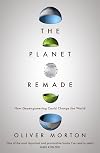
Mankind has spent millennia altering and changing their local environment, but with the discovery of fossil fuels and our current addiction to them we have begun the process of changing the entire global climate. He explores the effect we have had on our world with carbon dioxide, nitrogen fertilisers and sulphate in the atmosphere and considers the perilous situation that the world could be in just a few years. Even though some choose to ignore it, climate change is the thing that isn’t show more going to go away.
A need to address the risks of global warming is urgent and pressing. A small group of scientists are looking at proposals such as cultivation of photosynthetic plankton or a stratospheric veil against the sun or having automated robotic ships cloud seeding for intervention against the effect of climate change. In this book Morton seeks to inform us about the benefits and hazards of these geoengineering strategies. Even trying to change things in a positive way is fraught with danger, but inaction holds equal dangers.
Morton has drawn together a broad overview on the coming threats of climate change and the possibilities that geoengineering offers in digging us out of the mire. It does make for interesting reading the discussion of the technologies available to reduce carbon emissions and reflect sunlight back into space. While he covers various new technologies and new ways that are being considered to combat this, he didn’t seem to be bold enough to commit to the one he would recommend. Overall this isn’t a bad book, but didn’t seem to have the focus that I was expecting, but then that might be because the solution might be as dangerous as the problem. 2.5 stars. show less
A need to address the risks of global warming is urgent and pressing. A small group of scientists are looking at proposals such as cultivation of photosynthetic plankton or a stratospheric veil against the sun or having automated robotic ships cloud seeding for intervention against the effect of climate change. In this book Morton seeks to inform us about the benefits and hazards of these geoengineering strategies. Even trying to change things in a positive way is fraught with danger, but inaction holds equal dangers.
Morton has drawn together a broad overview on the coming threats of climate change and the possibilities that geoengineering offers in digging us out of the mire. It does make for interesting reading the discussion of the technologies available to reduce carbon emissions and reflect sunlight back into space. While he covers various new technologies and new ways that are being considered to combat this, he didn’t seem to be bold enough to commit to the one he would recommend. Overall this isn’t a bad book, but didn’t seem to have the focus that I was expecting, but then that might be because the solution might be as dangerous as the problem. 2.5 stars. show less
Lists
Awards


You May Also Like


Associated Authors
Statistics
- Works
- 13
- Also by
- 9
- Members
- 680
- Popularity
- #37,180
- Rating
- 3.7
- Reviews
- 16
- ISBNs
- 29
- Languages
- 2