
Vaclav Smil
Author of How the World Really Works: The Science Behind How We Got Here and Where We're Going
About the Author
Vaclav Smil is Distinguished Professor Emeritus at the University of Manitoba. He is the author of forty books, including Energy and Civilization, published by the MIT Press. In 2010 he was named by Foreign Policy as one of the Top 100 Global Thinkers.
Works by Vaclav Smil
How the World Really Works: The Science Behind How We Got Here and Where We're Going (2022) 775 copies, 19 reviews
Creating the Twentieth Century: Technical Innovations of 1867-1914 and Their Lasting Impact (2005) 92 copies
Prime Movers of Globalization: The History and Impact of Diesel Engines and Gas Turbines (2010) 71 copies
Enriching the Earth: Fritz Haber, Carl Bosch, and the Transformation of World Food Production (2001) 67 copies, 1 review
Power Density: A Key to Understanding Energy Sources and Uses (The MIT Press) (2015) 53 copies, 2 reviews
Transforming the Twentieth Century: Technical Innovations and Their Consequences (v. 2) (2006) 50 copies
Creating and Transforming the Twentieth Century, Revised and Expanded: Technical Innovations and Their Lasting Impact (2025) 7 copies
Biomass Energies: Resources, Links, Constraints (Modern perspectives in energy) (Critical Issues in Social Justice) (1983) 7 copies
Energy Analysis And Agriculture: An Application To U.s. Corn Production (Westview Special Studies in Agriculture Science and Policy) (1982) 3 copies
Invenzione e innovazione 1 copy
Cómo funciona la comida / How to Feed the World: The History and Future of Food (Spanish Edition) (2026) 1 copy
Associated Works
The Earth as Transformed by Human Action: Global and Regional Changes in the Biosphere over the Past 300 Years (1991) — Contributor — 18 copies
Tagged
Common Knowledge
- Canonical name
- Smil, Vaclav
- Birthdate
- 1943
- Gender
- male
- Occupations
- professor
- Organizations
- University of Manitoba (professor)
- Nationality
- Czechoslovakia (birth)
- Associated Place (for map)
- Czechoslovakia
Members
Discussions
Who designed the cover of Numbers don't lie : 71 stories to help us understand the modern world by Vaclav Smil in Book talk (February 2024)
Reviews
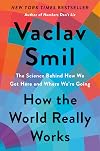
Summary: A scientific, data-based assessment of how our advanced technological global civilization has developed, the challenges we face, and what it realistically will take to address these challenges.
Can we get to “carbon zero” by 2050? Why has it been so hard to get everything from computer chips to PPE? Why didn’t the dire predictions of The Population Bomb come true? Vaclav Smil would maintain that to respond to these questions, we need to understand the science, the data, of how show more the world really works. And it is often the case in our public discussions, we have refused to take a hard look at the scientific realities and the technological possibilities.
Take the Population Bomb illustration for example. Back in 1968, Paul Ehrlich predicted massive deaths from famine resulting from overpopulation. At that time, the world population was 3.7 billion. Now it is over 8 billion, and no mammoth famines have occurred (yet). How could this be? It was the result of vastly increased grain yields resulting from hybrids and the intensive application of nitrogenous fertilizers manufactured with carbon-based fuels. Could we go back? Not easily–manure, the primary source of nitrogen before chemical fertilizers provides far less fertilizer, weighs far more and requires far more labor.
Or those shortages of chips and PPE. Facilitated by global supply chains, far-flung factories with lower wage scales, and container shipping, it was economically feasible to “offshore” manufacturing throughout the world. But is it wise, Smil asks, to manufacture 70 percent of rubber gloves in a single factory, or all our computer chips elsewhere? Manufacturing shutdowns and transport delays during the pandemic exposed this supply chain that all of us took for granted.
Smil challenges us to face the realities of modern life. Take our dependence on electric power. Apart from nuclear, carbon-fueled power plants offer the maximum of power-generating capability and reliability. Hydro, wind, and solar are both less efficient and reliable. And our increased energy usage offsets the gains we are making in renewables. Getting free of carbon-based power generation is not happening in places like China and India who are increasing their usage of such power.
Then there are what Smil calls “the four pillars of modern civilization”: cement, steel, plastics, and ammonia. Ammonia is what feeds the world in terms of those nitrogenous fertilizers. The lightweight durability and moldability of plastic makes it widely used in everything from water bottles to airframes, yet also troublesome as it breaks down and infiltrates our water, and our bodies. The world runs on concrete in our highways and buildings, yet it also deteriorates over time as witnessed in bridge and high-rise collapses. Likewise, steel is ubiquitous in our building, various utensils, our vehicles, our tools and more. It is very recyclable. The fundamental truth we need to face is that, at present, the manufacture of all of these are massively dependent on fossil fuels. As yet, no renewable power sources exist to manufacture these.
Smil assesses our environmental challenges. These do not come in terms of oxygen, food, and water, basic constituents of life but in terms of decarbonization. He argues that none of the “zero carbon” goals even begins to wrestle with the “four pillars” of modern life, nor the challenges of electricity generation globally. This doesn’t prevent him for arguing that we must do what we can, from reducing waste in food production to converting to cleaner forms of transport and reducing energy use (such as installing triple-paned windows, and reducing meat consumption. But that won’t get us anywhere close to carbon zero and he excoriates the magical thinking of so many public pronouncements without substantive changes.
Smil includes a chapter on understanding risk, which seemed a bit of a diversion from the other subjects in the book, but also connects to his basic theme of how the world works. He illustrates that many of the risks we fear are less than the ones to which we are daily exposed–for example the risk of dying at the hands of a foreign terrorist are infinitesimal to that of dying from domestic gun violence of various sorts and that often we do not make policies on the basis of rational factors.
His final chapter deals with understanding the future, the flaws in all our future predictions (again, remember The Population Bomb). The reality is that we are navigating a space that is somewhere between apocalypse and singularity. While the future is uncertain, understanding in realistic terms our past and our present helps us recognize one thing–our actions do matter.
This is a daunting book, both in terms of technical detail and its dose of hard empirical reality–a bucket of cold water drenching our idealistic dreams of a carbon-free world. Smil does not say we shouldn’t work toward these things. Instead, I hear him saying, “Let’s get real and talk about how we are going to get there and how long it will take and what that will mean.” He resists pessimism, but also points tellingly to the lack of little more than empty promises on the global stage. He wants us to stop thinking we can evacuate to other planets. We’re not going to terraform Mars. As a scientist, he wants us to focus on how modern life in the only world we have really works. show less
Can we get to “carbon zero” by 2050? Why has it been so hard to get everything from computer chips to PPE? Why didn’t the dire predictions of The Population Bomb come true? Vaclav Smil would maintain that to respond to these questions, we need to understand the science, the data, of how show more the world really works. And it is often the case in our public discussions, we have refused to take a hard look at the scientific realities and the technological possibilities.
Take the Population Bomb illustration for example. Back in 1968, Paul Ehrlich predicted massive deaths from famine resulting from overpopulation. At that time, the world population was 3.7 billion. Now it is over 8 billion, and no mammoth famines have occurred (yet). How could this be? It was the result of vastly increased grain yields resulting from hybrids and the intensive application of nitrogenous fertilizers manufactured with carbon-based fuels. Could we go back? Not easily–manure, the primary source of nitrogen before chemical fertilizers provides far less fertilizer, weighs far more and requires far more labor.
Or those shortages of chips and PPE. Facilitated by global supply chains, far-flung factories with lower wage scales, and container shipping, it was economically feasible to “offshore” manufacturing throughout the world. But is it wise, Smil asks, to manufacture 70 percent of rubber gloves in a single factory, or all our computer chips elsewhere? Manufacturing shutdowns and transport delays during the pandemic exposed this supply chain that all of us took for granted.
Smil challenges us to face the realities of modern life. Take our dependence on electric power. Apart from nuclear, carbon-fueled power plants offer the maximum of power-generating capability and reliability. Hydro, wind, and solar are both less efficient and reliable. And our increased energy usage offsets the gains we are making in renewables. Getting free of carbon-based power generation is not happening in places like China and India who are increasing their usage of such power.
Then there are what Smil calls “the four pillars of modern civilization”: cement, steel, plastics, and ammonia. Ammonia is what feeds the world in terms of those nitrogenous fertilizers. The lightweight durability and moldability of plastic makes it widely used in everything from water bottles to airframes, yet also troublesome as it breaks down and infiltrates our water, and our bodies. The world runs on concrete in our highways and buildings, yet it also deteriorates over time as witnessed in bridge and high-rise collapses. Likewise, steel is ubiquitous in our building, various utensils, our vehicles, our tools and more. It is very recyclable. The fundamental truth we need to face is that, at present, the manufacture of all of these are massively dependent on fossil fuels. As yet, no renewable power sources exist to manufacture these.
Smil assesses our environmental challenges. These do not come in terms of oxygen, food, and water, basic constituents of life but in terms of decarbonization. He argues that none of the “zero carbon” goals even begins to wrestle with the “four pillars” of modern life, nor the challenges of electricity generation globally. This doesn’t prevent him for arguing that we must do what we can, from reducing waste in food production to converting to cleaner forms of transport and reducing energy use (such as installing triple-paned windows, and reducing meat consumption. But that won’t get us anywhere close to carbon zero and he excoriates the magical thinking of so many public pronouncements without substantive changes.
Smil includes a chapter on understanding risk, which seemed a bit of a diversion from the other subjects in the book, but also connects to his basic theme of how the world works. He illustrates that many of the risks we fear are less than the ones to which we are daily exposed–for example the risk of dying at the hands of a foreign terrorist are infinitesimal to that of dying from domestic gun violence of various sorts and that often we do not make policies on the basis of rational factors.
His final chapter deals with understanding the future, the flaws in all our future predictions (again, remember The Population Bomb). The reality is that we are navigating a space that is somewhere between apocalypse and singularity. While the future is uncertain, understanding in realistic terms our past and our present helps us recognize one thing–our actions do matter.
This is a daunting book, both in terms of technical detail and its dose of hard empirical reality–a bucket of cold water drenching our idealistic dreams of a carbon-free world. Smil does not say we shouldn’t work toward these things. Instead, I hear him saying, “Let’s get real and talk about how we are going to get there and how long it will take and what that will mean.” He resists pessimism, but also points tellingly to the lack of little more than empty promises on the global stage. He wants us to stop thinking we can evacuate to other planets. We’re not going to terraform Mars. As a scientist, he wants us to focus on how modern life in the only world we have really works. show less
This is a data-rich discussion on the threats to the planet and some of the considerations that should govern our responses. He begins with an analysis of our dependence on fossil fuels and demolishes the notion that decarbonization is the magical cure that is right around the corner. He asserts (and suports with lots of data), that civilization is built on four things: cement, steel, plastic, and ammonia. Each of these will be in ever greater demand in the coming century as less developed show more countries rush to modernize. Each of this will require additional investments in energy that are ever greater that in the past 50 years. Simil believes that technological developments will be important but that policy decisions will be even more necessary if the planet will sustain us.
He does not deal very much with the political realities of all this,other than to say it will be very, very challenging to make the changes we need. However he does make a strong case that the currently popular suggestions such as the Green New Deal may not really be very useful---they underestimate the problem. show less
He does not deal very much with the political realities of all this,other than to say it will be very, very challenging to make the changes we need. However he does make a strong case that the currently popular suggestions such as the Green New Deal may not really be very useful---they underestimate the problem. show less
Numbers fill almost every paragraph of this book, and it was honestly hard not to glaze over a lot. This is the fault of myself and not the book; a book like this is all about numbers, as it's about facts, how the world "really" works, after all.
The "four pillars of modern civilization" for Smil are: cement, steel, plastics, and ammonia. Overall this book is about that material, tangible, real-world "stuff" of civilization; and Smil casts snarky asides at every opportunity towards show more microprocessors, smartphones, AI, and anything else that isn't "stuff." We need the "stuff", continuously, and in abundance, and the non-stuff isn't going to save us.
You might recognize cement, steel, and plastic as literal building blocks of civilization; but just in case you can't see how ammonia fits into the top four, it's due to importance as fertilizer. And abundant synthetic fertilizer was a crucial input to Earth's population boom. Simply put, "nearly 4 billion people would not have been alive without synthetic ammonia." More existentially important than silicon wafers, to be sure.
Cement? "Yet another [!] astounding statistic is that the world now consumes in one year more cement than it did during the entire first half of the 20th century."
And as for fossil fuels, and hopes for our conversion to renewable sources of energy? "Until all energies used to extract and process these materials come from renewable conversions, modern civilization will remain fundamentally dependent on the fossil fuels used in [their] production." It's the oil and natural gas that get us all this steel, cement, plastic, and ammonia. Electric cars are great. But renewable electricity is not going to be able to perform the herculean job that fossil fuels do today in terms of producing the material that makes our world go round.
Smil is neither an optimist nor a pessimist, but a scientist, and it comes through. It is refreshing to read someone who neither is gung ho about how we're gonna solve everything, nor ready to lay down and die. He thinks we'll muddle through. But here he cuts through the "muddle" of misleading information that comes from both optimists and pessimists. show less
The "four pillars of modern civilization" for Smil are: cement, steel, plastics, and ammonia. Overall this book is about that material, tangible, real-world "stuff" of civilization; and Smil casts snarky asides at every opportunity towards show more microprocessors, smartphones, AI, and anything else that isn't "stuff." We need the "stuff", continuously, and in abundance, and the non-stuff isn't going to save us.
You might recognize cement, steel, and plastic as literal building blocks of civilization; but just in case you can't see how ammonia fits into the top four, it's due to importance as fertilizer. And abundant synthetic fertilizer was a crucial input to Earth's population boom. Simply put, "nearly 4 billion people would not have been alive without synthetic ammonia." More existentially important than silicon wafers, to be sure.
Cement? "Yet another [!] astounding statistic is that the world now consumes in one year more cement than it did during the entire first half of the 20th century."
And as for fossil fuels, and hopes for our conversion to renewable sources of energy? "Until all energies used to extract and process these materials come from renewable conversions, modern civilization will remain fundamentally dependent on the fossil fuels used in [their] production." It's the oil and natural gas that get us all this steel, cement, plastic, and ammonia. Electric cars are great. But renewable electricity is not going to be able to perform the herculean job that fossil fuels do today in terms of producing the material that makes our world go round.
Smil is neither an optimist nor a pessimist, but a scientist, and it comes through. It is refreshing to read someone who neither is gung ho about how we're gonna solve everything, nor ready to lay down and die. He thinks we'll muddle through. But here he cuts through the "muddle" of misleading information that comes from both optimists and pessimists. show less
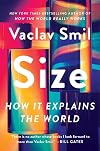
I just reviewed a terrific book by Vaclav Smil a couple of months ago, and now here is already another. Prodigious doesn’t begin to describe this author and academic. There are nearly 50 titles listed in the Also By. All of his books that I have reviewed have been fascinating. Until this one, Size. This one is a crazy quilt of trivia and topline findings on anything even remotely to do with sizes. And if size is not an issue, Smil finds a way to make it one. This is not the Vaclav Smil we show more have come to appreciate and love.
He wanders from the astronomical (the known universe so far is 93 billion light-years across and each light-year itself is about six trillion miles) to the submicroscopic atomic (a difference of 35 orders of magnitude from the universe), and settles in on mammals. There’s lots to examine in Man, including overall size, length of limbs, size of skull, height, BMI, heart functions, sight, and so on. It becomes a festival of little known facts, and the people who determined them.
In his usual thoroughly numbers-based way, he makes endless points about endless things. Of cars, he points out that SUVs produce 25% more emissions than sedans at a time when environmental consciousness would normally have focused on more efficiency, not less.
Size differences impress him. He loves comparing the smallest to the largest: the smallest engine, producing five watts, is the model airplane motor Tee-Dee. The largest is the Wartsila Marine Diesel, producing 84 megawatts. It’s a kind of randomized Guinness Book of Records for the first hundred pages.
But soon, Smil starts applying the concept of scale. By enlarging something, will it perform better, consume more, or even be feasible? Some things scale in a linear fashion; if you double the size, it will be doubly powerful, and/or consume double the fuel. Motors are like that. Some things are less than linear, and give back less than simply having two of them would. All very reasonable, but still left me wondering what the book was about.
In terms of profundity, Smil still says some very Smil-like things (thankfully): “Modern civilization will not be able to design its way out of its many predicaments.” Cities cannot simply get more and more crowded. Greater Tokyo, at 40 million people, is as populous as Canada, the second largest country in the world. That sort of thing.
It is interesting, but less so as it goes on. Screen sizes range from four cm (an Apple watch) to 150 meters (a Jumbotron). Or this: “More than a billion people (the global count of all road vehicles is now approaching 1.5 billion) are now individually commanding machines whose unit power is commonly an order of magnitude higher than the power of the largest mid-19th-century industrial waterwheel designs used in large flour mills and textile factories.” What to do with that data?
Everything is getting bigger, from cars to ships, from homes to office towers. People want bigger, including their own bodies. This leads to how to calculate your own BMI, and how obesity besets people in various societies.
He analyzes just how big things can possibly be. Steel lets us build taller buildings than wood does, for example. But traveling up the world’s tallest buildings is a commute itself. How much of that can we take? This leads to two chapters on of all things Gulliver’s Travels. Smil criticizes Swift for his math. Reading Swift without a calculator will let gullible readers believe what he says about tiny Lilliputians and gigantic Brobdinagians. They’re impossible, Smil says. He says the Lilliputians needn’t have worried about feeding the gigantic Gulliver, because food requirements aren’t linear with size. Lilliputians eat more per gram of body mass than Gulliver would.
He also shows that Lilliputians could not exist at all, because things like lungs and hearts can’t simply scale down and operate at the same efficiencies as man-size. Cell size would not change, for instance. A Lilliputian brain in such a tiny skull would not permit the bearer to act as a human. Brobdinagians would have to have bones like no other beings on earth to support their weight vertically. They would not be able to move, much less thrive at the heights Swift cites (65-70 feet tall). Their hearts would be impossible. Their brains, in skulls that gigantic, … well, you get the idea.
I just kept thinking, this is fiction, a fairytale. Why are you bothering to assassinate a 300 year old fairytale? Over two chapters of this slim book?
But then the book turned really sour for me. Smil decides to devote the last quarter of the book to the Statisticians Hall of Fame. He is all over his heroes from, France, Germany and his native Czechoslovakia who founded or developed major portions of Statistics. There is a segment on how to calculate a standard deviation that I could have lived without. There’s an ode to the beauty of normal distribution, how it got its name, and how many places it can be applied, mostly accurately. How largely predictable patterns in the natural world give comfort to statisticians. Inverse power law gets its own section, too. It actually became a hard slog, uniquely in my experience with the books of Vaclav Smil.
He lost my interest to the point of me thinking, how is he going to tie all this together? Because so far, it was life, the universe and everything. When I finally got to the Conclusions (yes, plural. He has FOUR of them: a thousand words, a hundred words, ten words and one word), my worst fears were realized: “Anybody expecting a grand synthesis culminating in a small number of conclusions imparting concentrated wisdom about size will be disappointed.”
Well to Smil’s credit, that was another prediction that came true.
David Wineberg show less
He wanders from the astronomical (the known universe so far is 93 billion light-years across and each light-year itself is about six trillion miles) to the submicroscopic atomic (a difference of 35 orders of magnitude from the universe), and settles in on mammals. There’s lots to examine in Man, including overall size, length of limbs, size of skull, height, BMI, heart functions, sight, and so on. It becomes a festival of little known facts, and the people who determined them.
In his usual thoroughly numbers-based way, he makes endless points about endless things. Of cars, he points out that SUVs produce 25% more emissions than sedans at a time when environmental consciousness would normally have focused on more efficiency, not less.
Size differences impress him. He loves comparing the smallest to the largest: the smallest engine, producing five watts, is the model airplane motor Tee-Dee. The largest is the Wartsila Marine Diesel, producing 84 megawatts. It’s a kind of randomized Guinness Book of Records for the first hundred pages.
But soon, Smil starts applying the concept of scale. By enlarging something, will it perform better, consume more, or even be feasible? Some things scale in a linear fashion; if you double the size, it will be doubly powerful, and/or consume double the fuel. Motors are like that. Some things are less than linear, and give back less than simply having two of them would. All very reasonable, but still left me wondering what the book was about.
In terms of profundity, Smil still says some very Smil-like things (thankfully): “Modern civilization will not be able to design its way out of its many predicaments.” Cities cannot simply get more and more crowded. Greater Tokyo, at 40 million people, is as populous as Canada, the second largest country in the world. That sort of thing.
It is interesting, but less so as it goes on. Screen sizes range from four cm (an Apple watch) to 150 meters (a Jumbotron). Or this: “More than a billion people (the global count of all road vehicles is now approaching 1.5 billion) are now individually commanding machines whose unit power is commonly an order of magnitude higher than the power of the largest mid-19th-century industrial waterwheel designs used in large flour mills and textile factories.” What to do with that data?
Everything is getting bigger, from cars to ships, from homes to office towers. People want bigger, including their own bodies. This leads to how to calculate your own BMI, and how obesity besets people in various societies.
He analyzes just how big things can possibly be. Steel lets us build taller buildings than wood does, for example. But traveling up the world’s tallest buildings is a commute itself. How much of that can we take? This leads to two chapters on of all things Gulliver’s Travels. Smil criticizes Swift for his math. Reading Swift without a calculator will let gullible readers believe what he says about tiny Lilliputians and gigantic Brobdinagians. They’re impossible, Smil says. He says the Lilliputians needn’t have worried about feeding the gigantic Gulliver, because food requirements aren’t linear with size. Lilliputians eat more per gram of body mass than Gulliver would.
He also shows that Lilliputians could not exist at all, because things like lungs and hearts can’t simply scale down and operate at the same efficiencies as man-size. Cell size would not change, for instance. A Lilliputian brain in such a tiny skull would not permit the bearer to act as a human. Brobdinagians would have to have bones like no other beings on earth to support their weight vertically. They would not be able to move, much less thrive at the heights Swift cites (65-70 feet tall). Their hearts would be impossible. Their brains, in skulls that gigantic, … well, you get the idea.
I just kept thinking, this is fiction, a fairytale. Why are you bothering to assassinate a 300 year old fairytale? Over two chapters of this slim book?
But then the book turned really sour for me. Smil decides to devote the last quarter of the book to the Statisticians Hall of Fame. He is all over his heroes from, France, Germany and his native Czechoslovakia who founded or developed major portions of Statistics. There is a segment on how to calculate a standard deviation that I could have lived without. There’s an ode to the beauty of normal distribution, how it got its name, and how many places it can be applied, mostly accurately. How largely predictable patterns in the natural world give comfort to statisticians. Inverse power law gets its own section, too. It actually became a hard slog, uniquely in my experience with the books of Vaclav Smil.
He lost my interest to the point of me thinking, how is he going to tie all this together? Because so far, it was life, the universe and everything. When I finally got to the Conclusions (yes, plural. He has FOUR of them: a thousand words, a hundred words, ten words and one word), my worst fears were realized: “Anybody expecting a grand synthesis culminating in a small number of conclusions imparting concentrated wisdom about size will be disappointed.”
Well to Smil’s credit, that was another prediction that came true.
David Wineberg show less
Lists
Climate Change (1)
Awards


You May Also Like


Associated Authors
Statistics
- Works
- 66
- Also by
- 1
- Members
- 4,973
- Popularity
- #5,039
- Rating
- 3.8
- Reviews
- 65
- ISBNs
- 296
- Languages
- 14
- Favorited
- 6