
Andrew Nikiforuk
Author of Tar Sands: Dirty Oil and the Future of a Continent
About the Author
Image credit: From the author official page: http://www.andrewnikiforuk.com/
Works by Andrew Nikiforuk
The Fourth Horseman: A Short History of Epidemics, Plagues, Famine and Other Scourges (1991) 110 copies, 2 reviews
Empire of the Beetle: How Human Folly and a Tiny Bug Are Killing North America's Great Forests (2011) 55 copies, 1 review
Pandemonium: Bird Flu, Mad Cow Disease and Other Biological Plagues of the 21st Century (2006) 44 copies, 1 review
Tagged
Common Knowledge
- Birthdate
- 1955
- Gender
- male
- Occupations
- journalist
- Awards and honors
- Matt Cohen Prize (2013)
- Nationality
- Canada
- Places of residence
- Calgary, Alberta, Canada
- Associated Place (for map)
- Alberta, Canada
Members
Reviews
An excellent book which not only gives the reader an inside view into the workings of the tar sands, but also assess its environmental and social impact. Andrew Nikiforuk illustrates the true cost of oil extraction in Alberta while showing us the irreversible damage to the environment that has been done. As oil reserves are finite, it is important that Alberta and Canada be ready for the day when there is no oil left, and transition to a sustainable economy.
I enjoyed Andrew's insights into show more how little companies pay to extract oil in the tar sands. As such, not only is there no money left over to cleanup the environment when the oil runs out, but the fund that was created to help the economy transition to a carbon neutral one is empty. It takes leaders with a long term plan and foresight to be able to properly manage this resource, which unfortunately has not been the case in Alberta since the days of Peter Lougheed. Those that came after him, as Andrew pointed out, have been more concerned for creating a friendly business climate than tending to the needs of the public. This results in human rights, such as the right to clean water and air, being neglected while companies profit. show less
I enjoyed Andrew's insights into show more how little companies pay to extract oil in the tar sands. As such, not only is there no money left over to cleanup the environment when the oil runs out, but the fund that was created to help the economy transition to a carbon neutral one is empty. It takes leaders with a long term plan and foresight to be able to properly manage this resource, which unfortunately has not been the case in Alberta since the days of Peter Lougheed. Those that came after him, as Andrew pointed out, have been more concerned for creating a friendly business climate than tending to the needs of the public. This results in human rights, such as the right to clean water and air, being neglected while companies profit. show less
Andrew Nikiforuk is a good writer. This book, like others of his I've read, is easy to read and written in an engaging style. It looks at the development of Alberta's tar sands from environmental, political and socio-economic perspectives. Compared to other books he's written, I found this one less objective, but I did appreciate the variety of lenses through which he described the industry and the communities where they operate.
A thorough examination of the consequences of the tar sands project in Alberta. The author looks at this situation from a number of angles, including the project's water and methane usage, the wasting of the Athabascan watershed and millions of acres of boreal forest, the ruinous air quality in the area where the bitumen is refined, the devastation of community and economy in the area surrounding Fort McMurray, the contribution dirty oil makes to climate change, the possibility of nuclear show more reactors being used simply to help power the project, the failure of the project to benefit the citizens of Alberta, the redirection of the oil itself to the United States, and the growing "Saudi Arabization" of Canada and particularly of Alberta.
My biggest complaint with the book is that the author all but ignored making any consideration for the Dene people, whose ancestral land is being turned into a moonscape in the name of "energy security". I also disliked the author's nonsensical belief that driving less is an effective means of helping to halt the tar sands project. As a non-driver, I do not believe this. I can understand a corporation using the "It's up to individual consumers to change things" remedy to social and environmental ills, but it's depressing to hear it come from the social and environmental activists themselves. show less
My biggest complaint with the book is that the author all but ignored making any consideration for the Dene people, whose ancestral land is being turned into a moonscape in the name of "energy security". I also disliked the author's nonsensical belief that driving less is an effective means of helping to halt the tar sands project. As a non-driver, I do not believe this. I can understand a corporation using the "It's up to individual consumers to change things" remedy to social and environmental ills, but it's depressing to hear it come from the social and environmental activists themselves. show less
Empire of the Beetle: How Human Folly and a Tiny Bug Are Killing North America's Great Forests (David Suzuki Foundation Series) by Andrew Nikiforuk
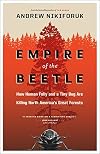
Wow, great read heartbreaking and life-affirming at the same time. Nikiforuk really brings out the complexity of the beetle-tree interaction and tries to disabuse us of the notion that we can control ecosystems.
Lists
Awards


You May Also Like


Statistics
- Works
- 14
- Members
- 494
- Popularity
- #50,037
- Rating
- 3.7
- Reviews
- 13
- ISBNs
- 39
- Languages
- 3