

Gavin de Becker
Author of The Gift of Fear
About the Author
Gavin de Becker is widely regarded as the nation's foremost authority on the protection of public figures. His 900-person firm advises and protects many of the most prominent people and families in the world. He designed the Mosaic Threat Assessment method used to analyze threats to justices of the show more U.S. Supreme Court and members of Congress, and his work has earned him three presidential appointments. In addition to advising many law enforcement and government agencies on predicting violence, de Beeker's firm also serves regular citizens who are victims of domestic abuse and stalking. The Gift of Fear has been published in eighteen languages. show less
Series
Works by Gavin de Becker
Protecting the Gift: Keeping Children and Teenagers Safe (and Parents Sane) (1999) 497 copies, 12 reviews
Fear Less: Real Truth About Risk, Safety, and Security in a Time of Terrorism (2002) 219 copies, 2 reviews
Forbidden Facts: Government Deceit & Suppression About Brain Damage from Childhood Vaccines (2025) 15 copies, 1 review
Tagged
Common Knowledge
- Birthdate
- 1954-26-10
- Gender
- male
- Nationality
- USA (birth)
- Birthplace
- Los Angeles, California, USA
- Associated Place (for map)
- California, USA
Members
Reviews

***NO SPOILERS***
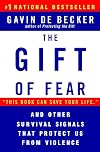
Something about the title and cover design of The Gift of Fear gives the impression that it’s a self-help book about self-defense. It isn’t. The only good thing on the cover is the quotation separating title from subtitle: “This Book Can Save Your Life.” That’s true.
The author is a specialist in security issues and threat assessment who owns a successful private security firm in Los Angeles called Gavin de Becker & Associates. His clients include many high-profile show more figures. (The acknowledgements section shares an impressive array of many famous names.) His love for the topic is evident, and his reasoning and explanations intelligent and clear.
Really explaining The Gift of Fear in a way that does it justice will easily overwhelm this review space, but its main idea is that human intuition (or “gut feeling”) is more powerful and helpful than it gets credit for and absolutely can save one’s life. Logic is always viewed as superior to “mere feelings,” and intuition is feeling; however, de Becker explains that it’s when one employs logic in situations that feel uncomfortable or “off” in some way that those situations can turn dangerous. De Becker says so much about intuition that sounds radical to those who have been taught that logic is paramount.
Fans of true-crime stories will enjoy The Gift of Fear. De Becker intermingled numerous stories—all true, some famous and some not—throughout. Some of the stories illustrate instances when someone’s intuition protected them; other stories are the opposite. De Becker examined the criminal mind and broke apart many famous cases to bolster his chapters on assassins, stalking, domestic violence, violent children, and workplace violence, among others.
He strongly opposes how some movies and TV shows depict romantic relationships, particularly how men are portrayed pursuing women.* He also opposes how media report crime and portray criminals and explains why, after one kind of crime occurs, copycat crimes occur not long thereafter. Criminals receive lionizing media attention, and de Becker argues for a sea change:
"I propose that we don’t show the bullets on the bureau in the seedy hotel room; show instead the dirty underwear and socks on the bathroom floor. I propose that we don’t arrange photo opportunities that show the offender being escorted by ten federal agents from a helicopter to a motorcade of waiting cars. [...]
"Conversely, guarded by federal agents (just like the president), whisked into waiting helicopters (just like the president), his childhood home shown on TV (just like the president), the type of gun he owned fired on the news by munitions experts extolling its killing power, the plans he made described as “meticulous”—these presentations promote the glorious aspects of assassination and other media crimes. Getting caught for some awful violence should be the start of oblivion, not the biggest day of one’s life.
"But it was the biggest day in the life of accused Oklahoma City bomber Timothy McVeigh, who was paraded in front of the waiting press surrounded by FBI agents, rushed to a motorcade, and then whisked away in a two-helicopter armada. We saw this even more with accused Unabomber Ted Kaczynski, whose close-up appeared on the covers of Time, U.S. News & World Report, and Newsweek (twice). The cover text of all three described Kaczynski as a “genius.”
"Reporters usually refer to assassins with triple names, like Mark David Chapman, Lee Harvey Oswald, Arthur Richard Jackson. One might come to believe that assassins actually used these pretentious triple names in their pre-attack lives; they didn’t. They were Mark, Lee, and Arthur.
"I propose promoting the least glamorous incarnation of their names. Call a criminal Ted Smith instead of Theodore Bryant Smith. Better still, find some nickname used in his pre-attack life:
"Federal agent: His name is Theodore Smith, but he was known as Chubby Ted."
Furthermore, although media are fond of reporting that criminals “snapped” or claim “nobody could have seen this coming,” de Becker explains that there are, unequivocally, “pre-incident indicators” before violent acts. He lists and explains these in detail.
The Gift of Fear was published in 1997 but fortunately has aged well. The only topic not covered that definitely would be covered in an updated edition is cyber-stalking and general internet safety. As the book stands now, however, the chapter on stalking contains information that can apply to cyber-stalking. Statistics on various types of violence have no doubt changed also. (For instance, the book says 75 women are raped every hour in the U.S., but as of this writing, it’s a little more: 78 every hour, according to the National Center on Domestic and Sexual Violence.)
Ironically, those living in fear are the ones most in need of The Gift of Fear. It’s captivating, educational, and stunning, but even more than that, it really is empowering, life-altering, and life-saving.
*He would appreciate this article:
"How Rom-Coms Undermine Women": http://www.theatlantic.com/entertainment/archive/2016/11/its-rom-coms-fault-too/...
Update, September 13, 2017: "Stalking, actually: why men who reject rejection are not romantic heroes": https://www.theguardian.com/commentisfree/2017/sep/12/stalking-men-rejection-rom... show less
Something about the title and cover design of The Gift of Fear gives the impression that it’s a self-help book about self-defense. It isn’t. The only good thing on the cover is the quotation separating title from subtitle: “This Book Can Save Your Life.” That’s true.
The author is a specialist in security issues and threat assessment who owns a successful private security firm in Los Angeles called Gavin de Becker & Associates. His clients include many high-profile show more figures. (The acknowledgements section shares an impressive array of many famous names.) His love for the topic is evident, and his reasoning and explanations intelligent and clear.
Really explaining The Gift of Fear in a way that does it justice will easily overwhelm this review space, but its main idea is that human intuition (or “gut feeling”) is more powerful and helpful than it gets credit for and absolutely can save one’s life. Logic is always viewed as superior to “mere feelings,” and intuition is feeling; however, de Becker explains that it’s when one employs logic in situations that feel uncomfortable or “off” in some way that those situations can turn dangerous. De Becker says so much about intuition that sounds radical to those who have been taught that logic is paramount.
Fans of true-crime stories will enjoy The Gift of Fear. De Becker intermingled numerous stories—all true, some famous and some not—throughout. Some of the stories illustrate instances when someone’s intuition protected them; other stories are the opposite. De Becker examined the criminal mind and broke apart many famous cases to bolster his chapters on assassins, stalking, domestic violence, violent children, and workplace violence, among others.
He strongly opposes how some movies and TV shows depict romantic relationships, particularly how men are portrayed pursuing women.* He also opposes how media report crime and portray criminals and explains why, after one kind of crime occurs, copycat crimes occur not long thereafter. Criminals receive lionizing media attention, and de Becker argues for a sea change:
"I propose that we don’t show the bullets on the bureau in the seedy hotel room; show instead the dirty underwear and socks on the bathroom floor. I propose that we don’t arrange photo opportunities that show the offender being escorted by ten federal agents from a helicopter to a motorcade of waiting cars. [...]
"Conversely, guarded by federal agents (just like the president), whisked into waiting helicopters (just like the president), his childhood home shown on TV (just like the president), the type of gun he owned fired on the news by munitions experts extolling its killing power, the plans he made described as “meticulous”—these presentations promote the glorious aspects of assassination and other media crimes. Getting caught for some awful violence should be the start of oblivion, not the biggest day of one’s life.
"But it was the biggest day in the life of accused Oklahoma City bomber Timothy McVeigh, who was paraded in front of the waiting press surrounded by FBI agents, rushed to a motorcade, and then whisked away in a two-helicopter armada. We saw this even more with accused Unabomber Ted Kaczynski, whose close-up appeared on the covers of Time, U.S. News & World Report, and Newsweek (twice). The cover text of all three described Kaczynski as a “genius.”
"Reporters usually refer to assassins with triple names, like Mark David Chapman, Lee Harvey Oswald, Arthur Richard Jackson. One might come to believe that assassins actually used these pretentious triple names in their pre-attack lives; they didn’t. They were Mark, Lee, and Arthur.
"I propose promoting the least glamorous incarnation of their names. Call a criminal Ted Smith instead of Theodore Bryant Smith. Better still, find some nickname used in his pre-attack life:
"Federal agent: His name is Theodore Smith, but he was known as Chubby Ted."
Furthermore, although media are fond of reporting that criminals “snapped” or claim “nobody could have seen this coming,” de Becker explains that there are, unequivocally, “pre-incident indicators” before violent acts. He lists and explains these in detail.
The Gift of Fear was published in 1997 but fortunately has aged well. The only topic not covered that definitely would be covered in an updated edition is cyber-stalking and general internet safety. As the book stands now, however, the chapter on stalking contains information that can apply to cyber-stalking. Statistics on various types of violence have no doubt changed also. (For instance, the book says 75 women are raped every hour in the U.S., but as of this writing, it’s a little more: 78 every hour, according to the National Center on Domestic and Sexual Violence.)
Ironically, those living in fear are the ones most in need of The Gift of Fear. It’s captivating, educational, and stunning, but even more than that, it really is empowering, life-altering, and life-saving.
*He would appreciate this article:
"How Rom-Coms Undermine Women": http://www.theatlantic.com/entertainment/archive/2016/11/its-rom-coms-fault-too/...
Update, September 13, 2017: "Stalking, actually: why men who reject rejection are not romantic heroes": https://www.theguardian.com/commentisfree/2017/sep/12/stalking-men-rejection-rom... show less
A staggering read. Vital for anyone raising children, or whose work regularly brings them in contact with 'the public '. A lot of this is things we all know instinctively, but it is unbelievably useful to see it all pulled together and analysed by a professional with unquestionable resources at his disposal. If you have ever been a victim of unwanted attention or a violent attack you will be amazed to see that it did not 'suddenly come out of nowhere'. Nothing is random. But ultimately, we show more are all much safer than we might think. The ultimate lesson is: Don't give in to fear, harness it. show less
This book may contain the highest internal contradiction set, the largest concentration of logical fallacy, and the greatest use of strategies of influence it decries of any book I've read.
Hugest example: We - "Force teaming," Considered bad. Proceeds to use force teaming pretty much non-stop.
Does a fantastic job of creating fear. Fails at citation. Does an excellent job of self advertizement. Fails at ethics.
Presumes men are evil, guns are evil, and women are victims. Presumes that to know show more a thing, a reader must take the word of the author - That, "If you think about it, X."
In all, an excellent example of how this gentleman, as an advisory on security issues, promoted fear to the nth degree.
Domestic violence chapter: Positively toxic.
In short, male of female, competent familiarity with social patterns, violence, and tracking cause and effect presents as indicator of violent tendencies.
Presumes possession, familiarity, and condition imply violent action. show less
Hugest example: We - "Force teaming," Considered bad. Proceeds to use force teaming pretty much non-stop.
Does a fantastic job of creating fear. Fails at citation. Does an excellent job of self advertizement. Fails at ethics.
Presumes men are evil, guns are evil, and women are victims. Presumes that to know show more a thing, a reader must take the word of the author - That, "If you think about it, X."
In all, an excellent example of how this gentleman, as an advisory on security issues, promoted fear to the nth degree.
Domestic violence chapter: Positively toxic.
In short, male of female, competent familiarity with social patterns, violence, and tracking cause and effect presents as indicator of violent tendencies.
Presumes possession, familiarity, and condition imply violent action. show less
I don’t remember exactly why I picked up this one ; my best guess it was on the recommendation list of some other book about human nature and behavior. At any rate, The Gift of Fear is by Gavin de Becker, who runs a private protective service specializing in dealing with stalkers, domestic violence, and workplace violence. The book is good, but not great; the main problem is the extensive use of anecdotes – repeated accounts of how somebody ignored obvious warning signs that a relation show more was going badly or that something was not quite right in an encounter or that letters from a celebrity admirer were taking on a disturbing tone. De Becker has a long list of such warning signs – “forced teaming”, where somebody you don’t especially want to deal with keeps referring to “we”; “too many details”, where somebody you encounter keeps providing personal information; “loan sharking”, where somebody performs some apparently generous act only to demand something in return; and so on. The catch, of course, is that anecdotal evidence is evidence, just not very good evidence; the generalization de Becker provides could apply to so many situations that they cease being useful. The flip side is that if de Becker had written a book with tables of probabilities and Monte Carlo event trees (where, for example, you could decide that if I guy buys you an expensive present on the second date what are the chances that things will go badly at the end) nobody would read it. I seem to think this sort of thing is common in the law enforcement world; a lot of expert opinion is just that – opinion rather than data. Not necessarily bad, of course; expert opinion is sometimes the best you can do, especially in areas where data is hard to come by. Still, I’d like to hear of some cases where all the signs were there but things ended well or where no signs were in evidence but things went badly.
There are plenty of cases where things go badly and there is apparently abundant advance evidence; a boy who decapitates a neighbor’s dog ends up as a mass murderer; a boy who molests children in grade school ends up continuing to do it. We all remember reading about the Navy Yard shooting (too recent for this book) where there was all sorts of evidence that the perpetrator was at least a bubble off level. Still, I’d like to see more numbers. Worth reading for the shock value of some of the cases, and the advice about being careful in dangerous situations is well taken. A fairly long bibliography, but mostly consisting of similar “pop psychology” books. show less
There are plenty of cases where things go badly and there is apparently abundant advance evidence; a boy who decapitates a neighbor’s dog ends up as a mass murderer; a boy who molests children in grade school ends up continuing to do it. We all remember reading about the Navy Yard shooting (too recent for this book) where there was all sorts of evidence that the perpetrator was at least a bubble off level. Still, I’d like to see more numbers. Worth reading for the shock value of some of the cases, and the advice about being careful in dangerous situations is well taken. A fairly long bibliography, but mostly consisting of similar “pop psychology” books. show less
Lists
Awards


You May Also Like


Statistics
- Works
- 15
- Members
- 4,498
- Popularity
- #5,571
- Rating
- 4.0
- Reviews
- 92
- ISBNs
- 40
- Languages
- 7
- Favorited
- 3