

Lundy Bancroft
Author of Why Does He Do That? Inside the Minds of Angry and Controlling Men
About the Author
Lundy Bancroft has spent the last fifteen years of his career specializing in the field of domestic abuse and the behavior of abusive men, and is considered one of the world's experts on the subject.
Image credit: via Amazon.com
Works by Lundy Bancroft
Why Does He Do That? Inside the Minds of Angry and Controlling Men (2002) — Author — 1,100 copies, 25 reviews
When Dad Hurts Mom: Helping Your Children Heal the Wounds of Witnessing Abuse (2004) 82 copies, 1 review
Should I Stay or Should I Go? A Guide to Knowing If Your Relationship Can and Should Be Saved (2011) 79 copies, 2 reviews
The Batterer as Parent: Addressing the Impact of Domestic Violence on Family Dynamics (2002) 62 copies, 1 review
Daily Wisdom for 'Why Does He Do That?' Encouragement for Women Involved with Angry and Controlling Men (2015) 49 copies, 3 reviews
3-book set: Why Does He Do That? | Daily Wisdom for Why Does He Do That? | The Fitness Mindset (2018) 7 copies
Tagged
Common Knowledge
- Birthdate
- 1960
- Gender
- male
- Short biography
- Lundy Bancroft is an author, workshop leader, and consultant on domestic abuse and child maltreatment. His best known book is Why Does He Do That?: Inside the Minds of Angry and Controlling Men (first published in 2002). With 20 years of experience specializing in interventions for abusive men and their families, he is a former co-director of Emerge, the first counseling program in the United States for men who batter. He has worked with abusers directly as an intervention counselor, and has served as clinical supervisor. He has also served extensively as a custody evaluator, child abuse investigator, and expert witness in domestic violence and child abuse cases. [from GoodReads]
- Nationality
- USA
- Birthplace
- Ohio, USA
- Places of residence
- Massachusetts, USA
- Associated Place (for map)
- USA
Members
Reviews
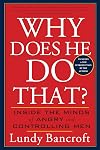
You do not have to be a survivor of abuse, physical and emotional, to read and share this manual on how to recognize and remove yourself from a horrible situation. The author's 15 year experience with Emerge, a Boston organization established to help men recover from the power and control habits that cause such misery to their partners and children, make him an expert on defining the problem and on determining possible solutions, which admittedly are unlikely to occur. With both anecdotes of show more his own clients and those of the victims, he makes the causes clear: "Abuse doesn't come from people's inability to resolve conflicts, but from one person's decision to claim a higher status than another. Some people feel threatened by the concept that abuse is a solvable problem because, if it is, there's not excuse for NOT solving it." An absolutely authoritative treatise! show less
Daily Wisdom for Why Does He Do That?: Encouragement for Women Involved with Angry and Controlling Men by Lundy Bancroft
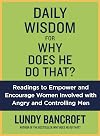
First of all: one must be very clear about differentiating what this is and what it isn't; for it can make a great difference in assessing how useful or rubbish it all is.
What it is, is a manual of sorts to empower women trapped in an abusive relationship where the abuse is verbal and emotional that is, about coercive control. It's not a book that purports to nudge you towards staying or leaving, nor does it contains instructions about how you should (or not) go on about your relationship, show more no matter how toxic. Since it's about empowerment, these are, indeed, choices that will belong to you, and you only. The author is very clear: it's about offering clarity, helping you to understand what, exactly, is happening to you (get that you are, indeed, being abused even if you are not physically hit -most abusive relationships do not involve physical violence...) and what you can do to find coping mechanisms of some sorts, not only for you, but, also, to help the children, also trapped in-between, to go through it all.
The coping mechanisms are also healthy, and straightforward. For example, he does not condone the denigration of an abusive father, to his children, by an abused mother. An abused mother is here to offer a counter-example to the abusive behaviours of her partner, and make sure that the children are safe -not to undermine a father's relationship with his own kids (again: how such relationship will build up is his own choice, not yours). Most importantly, he does not condone retaliation. It's a common trope among neo-feminists indeed that, in such relationships, female perpetrated violence should be perceived as of lesser importance since it's merely 'reactive', or 'self-defence'. It's everything but. Here are behaviours which are, also, abusive; and, again, if children are trapped in-between, it is a form of violence which will also affect them, and as damagingly. Put bluntly, her 'I did that because he did...' is as poisonous and dangerous as his 'I did that because she did...' -we ought to bear that in mind.
Is it useful, then?
Personally, as a man who went through such abuse (but perpetrated by a woman), I found it so (although I got this years after my relationship ended). I have been writing a book on domestic violence too, and I had other men, who contacted me to share their experiences about being in abusive relationships with controlling, manipulative, coercive, aggressive women, who also reported that the book had helped them to make sense of it all. So, would I recommend it? Yes, but...
But... If you are a man, you will have to read it by swapping gender. Lundy Bancroft, indeed, abides to what has been dubbed the 'feminist' view of domestic violence that is, that it's rooted in the patriarchy and men wanting to exert authority into their household as they had in society at large. As such, domestic violence is perceived as being a 'gendered crime', where most victims are women and perpetrators are men. This view, though, is also bogus.
Outside women organisations and their self-financed and self-interested studies, it has, in fact, been debunked time and again over the past five decades: 1 man out of 6 reports experiencing domestic abuse (against 1 woman out of 4), 40% of reported victims are men, who are, also, twice less likely to report, half of those seeking help through male helplines, for example, confessing to not seeking help otherwise due to fear, taboo, and stigma (a bigger share even expresses suicide ideation...). This is not a gender issue! As a matter of fact, and, again, outside women organisations relying on self-financed studies (and the mass medias echoing such lobbies) it never was: in the first women shelter ever opened (1971, London) 62 women out of 100 were also abusive themselves (just google 'Erin Pizzey', and see what had happened to her to understand why we are where we are now...).
That the author would takes such bias could be half understandable. He works with relationships where the abuse is unilateral (or perceived as so), perpetrated by a man against a woman. Yet, again, it has been proven that as many relationships involve, in fact, a woman only abusing a man; besides most abusive relationships involving so-called 'bidirectional abuse' (a dynamic where the abuse is mutual, partners abusing each other as much as each other, aggressively and defensively). As such, then, his is a bit like a doctor specialising in breast cancer, not seeing that much patients with prostate cancer in his clinic, and, so, concluding thereof that prostate cancer must be very rare indeed! It's a fallacy and a bias, but which greatly matters here too: claiming that abusive men abuse out of a sense of patriarchal entitlement is bogus. There are a multitude of reasons for why abusive people do what they do, but framing 'male authority in a household' is not it (the utter failure of the Duluth model, still widely used due to this bogus paradigm -and, I suspect, that the author use in his work- should be telling enough...). This book, then, will not help you in understanding why your abuser (if a man) is how he is! Beware.
Having said that, because the author is very helpful in pointing what coercive control is, because he is insistent about staying clear from abusive behaviours as a form of retaliation, and because he is concerned, also, about the children trapped in-between, I am ok to recommend it -both to women, and, again, men themselves. It purports to offer clarity and coping mechanisms -it does so. Its underpinning ideology, though, cannot be ignored, especially since it is targeted at abused women. Domestic violence is not patriarchal, and it is not gendered. In other words: if you are a woman who wants an understanding of your abusive male partner, then don't buy this. show less
What it is, is a manual of sorts to empower women trapped in an abusive relationship where the abuse is verbal and emotional that is, about coercive control. It's not a book that purports to nudge you towards staying or leaving, nor does it contains instructions about how you should (or not) go on about your relationship, show more no matter how toxic. Since it's about empowerment, these are, indeed, choices that will belong to you, and you only. The author is very clear: it's about offering clarity, helping you to understand what, exactly, is happening to you (get that you are, indeed, being abused even if you are not physically hit -most abusive relationships do not involve physical violence...) and what you can do to find coping mechanisms of some sorts, not only for you, but, also, to help the children, also trapped in-between, to go through it all.
The coping mechanisms are also healthy, and straightforward. For example, he does not condone the denigration of an abusive father, to his children, by an abused mother. An abused mother is here to offer a counter-example to the abusive behaviours of her partner, and make sure that the children are safe -not to undermine a father's relationship with his own kids (again: how such relationship will build up is his own choice, not yours). Most importantly, he does not condone retaliation. It's a common trope among neo-feminists indeed that, in such relationships, female perpetrated violence should be perceived as of lesser importance since it's merely 'reactive', or 'self-defence'. It's everything but. Here are behaviours which are, also, abusive; and, again, if children are trapped in-between, it is a form of violence which will also affect them, and as damagingly. Put bluntly, her 'I did that because he did...' is as poisonous and dangerous as his 'I did that because she did...' -we ought to bear that in mind.
Is it useful, then?
Personally, as a man who went through such abuse (but perpetrated by a woman), I found it so (although I got this years after my relationship ended). I have been writing a book on domestic violence too, and I had other men, who contacted me to share their experiences about being in abusive relationships with controlling, manipulative, coercive, aggressive women, who also reported that the book had helped them to make sense of it all. So, would I recommend it? Yes, but...
But... If you are a man, you will have to read it by swapping gender. Lundy Bancroft, indeed, abides to what has been dubbed the 'feminist' view of domestic violence that is, that it's rooted in the patriarchy and men wanting to exert authority into their household as they had in society at large. As such, domestic violence is perceived as being a 'gendered crime', where most victims are women and perpetrators are men. This view, though, is also bogus.
Outside women organisations and their self-financed and self-interested studies, it has, in fact, been debunked time and again over the past five decades: 1 man out of 6 reports experiencing domestic abuse (against 1 woman out of 4), 40% of reported victims are men, who are, also, twice less likely to report, half of those seeking help through male helplines, for example, confessing to not seeking help otherwise due to fear, taboo, and stigma (a bigger share even expresses suicide ideation...). This is not a gender issue! As a matter of fact, and, again, outside women organisations relying on self-financed studies (and the mass medias echoing such lobbies) it never was: in the first women shelter ever opened (1971, London) 62 women out of 100 were also abusive themselves (just google 'Erin Pizzey', and see what had happened to her to understand why we are where we are now...).
That the author would takes such bias could be half understandable. He works with relationships where the abuse is unilateral (or perceived as so), perpetrated by a man against a woman. Yet, again, it has been proven that as many relationships involve, in fact, a woman only abusing a man; besides most abusive relationships involving so-called 'bidirectional abuse' (a dynamic where the abuse is mutual, partners abusing each other as much as each other, aggressively and defensively). As such, then, his is a bit like a doctor specialising in breast cancer, not seeing that much patients with prostate cancer in his clinic, and, so, concluding thereof that prostate cancer must be very rare indeed! It's a fallacy and a bias, but which greatly matters here too: claiming that abusive men abuse out of a sense of patriarchal entitlement is bogus. There are a multitude of reasons for why abusive people do what they do, but framing 'male authority in a household' is not it (the utter failure of the Duluth model, still widely used due to this bogus paradigm -and, I suspect, that the author use in his work- should be telling enough...). This book, then, will not help you in understanding why your abuser (if a man) is how he is! Beware.
Having said that, because the author is very helpful in pointing what coercive control is, because he is insistent about staying clear from abusive behaviours as a form of retaliation, and because he is concerned, also, about the children trapped in-between, I am ok to recommend it -both to women, and, again, men themselves. It purports to offer clarity and coping mechanisms -it does so. Its underpinning ideology, though, cannot be ignored, especially since it is targeted at abused women. Domestic violence is not patriarchal, and it is not gendered. In other words: if you are a woman who wants an understanding of your abusive male partner, then don't buy this. show less
This book is fantastic. I would recommend it to anyone who has in any way been touched by abuse or might in the future. Very thorough, pinpoints abusive tactics exactly, easy to read, shows great empathy for abused women, and does not discuss abuse as a gender-neutral phenomenon. My one issue with Bancroft's analysis is that although he is very good at describing misogynistic behavior and making the connection between abuse and what he calls "anti-female" attitudes and institutions, he lists show more hatred of women as a myth about abusers. I'm not sure what his association is for "woman-hating," but the hatred of women is in fact misogyny and is, as he describes in other parts of the book, intimately tied to the source of abuse. show less
For a book that came out in 2002, I feel like it held up surprisingly well. This was the first book I've read that did not shy away from calling abusers out on their shit. Even better, it provides so many examples for abused people to finally see themselves. It felt like finally catching a glimpse of light through the lethal fog that abuse shrouded me in for decades.
I would highly recommend this book to everyone. Whether you're currently experiencing abuse or not, know someone who has been show more abused or not, want to be better prepared to recognize abuse and step in to help abused people rather than remain a bystander, or want to more readily recognize and deconstruct the abusive attitudes/mindsets conditioned in yourself---read this book.
I mostly skimmed through for sections relevant to my own experiences. Especially useful to read this way because the book uses a lens of cisheteronormative partner violence. However, I think much of the description of abusive male partners can apply to abusers in general (be they partners, friends, siblings, parents, coworkers, colleagues, etc.) show less
I would highly recommend this book to everyone. Whether you're currently experiencing abuse or not, know someone who has been show more abused or not, want to be better prepared to recognize abuse and step in to help abused people rather than remain a bystander, or want to more readily recognize and deconstruct the abusive attitudes/mindsets conditioned in yourself---read this book.
I mostly skimmed through for sections relevant to my own experiences. Especially useful to read this way because the book uses a lens of cisheteronormative partner violence. However, I think much of the description of abusive male partners can apply to abusers in general (be they partners, friends, siblings, parents, coworkers, colleagues, etc.) show less
Lists
You May Also Like


Associated Authors
Statistics
- Works
- 11
- Members
- 1,391
- Popularity
- #18,478
- Rating
- 4.4
- Reviews
- 32
- ISBNs
- 40
- Languages
- 4
- Favorited
- 1