
Marilyn McEntyre
Author of Caring for Words in a Culture of Lies
About the Author
Marilyn McEntyre is the author of several books on language and faith, including What's in a Phrase? Pausing Where Scripture Gives You Pause (winner of a Christianity Today 2015 book award is spirituality), When Poets Pray, and Speaking Peace in a Climate of Conflict.
Works by Marilyn McEntyre
Make a List: How a Simple Practice Can Change Our Lives and Open Our Hearts (2000) 54 copies, 4 reviews
Tagged
Common Knowledge
- Birthdate
- 1949-05-19
- Gender
- female
Members
Reviews
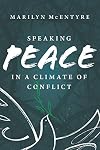
Summary: Engaging with the works of contemporary writers, discusses how our care for words that are clear, gracious, and truthful is vital to the pursuit of peace in a contentious world.
After the last two election cycles in the United States, there are very few who would not attest to the power of words to incite verbal and sometimes physical conflict. It raises the question of whether or not words may also have a similar power to lessen tensions and forge concords between people. This is show more the question that Marilyn McEntyre, who is known for her books on words and their power, explores in this work. As she proposes in her introduction, this is not a book about nice neutrality, but rather how we might speak with truth and clarity and grace even when we must say hard things or stand against an injustice.
She begins by warning against reliance on codified meanings of words because words are malleable and important ones must be defined when we use them–words like war, peace, health, freedom, and love. She observes that euphemisms nearly always conceal ugly realities, such as “collateral damage” and must be interrogated. Language also has the power to remind us of who we are, what story we inhabit, what the values and ways of our place are.
She reminds us of the enriching power of allusions while suggesting that we “mind our metaphors”–for example the combative metaphors used in treating cancer. Alluding to Emily Dickinson, she discusses the value of telling it “slant,” approaching truth obliquely rather than bluntly, with story and art rather than confrontation. We ought promote poetry, because it is a unique form of telling truth “slant.”
McEntyre believes there are times it is necessary to articulate our outrage, when silence betrays the suffering. Civility is concerned with the common good, and when this is in jeopardy, one may need to call out the ways peace and justice are being outraged. She offers seven questions well worth consider that I want to record to remember:
1. What am I hoping to protect?
2. What principle is at stake?
3. Am I the most appropriate person to step into this ring?
4. What am I risking?
5. What makes it worth the risk?
6. Is this the moment?
7. What would be the consequences of holding my peace?
One chapter I’ve found vital amid this is her chapter on checking facts. More than once, I’ve shared a compelling meme or statement, only to find it was false or taken out of context. Sources and attributions matter, and when the facts really do add up, one has strong impetus for moral action. Along with establishing facts, we need to resist the temptation for simplistic explanations. We need to recognize our discomfort with ambiguity and over-simplistic readings of texts.
Her concluding chapters are on the value of laughter and the folly of our insistence upon winning. Laughter doesn’t slight hard realities, but sets them in place–that there is a goodness and delight to life that remains reflecting the joy of the Creator as well as our own ridiculousness. Instead of “winning” McEntyre suggests “inviting, exploring, musing, modeling, reframing, reflecting, challenging.”
One of the delights of this work is that McEntyre commends examples of writers who do such things: Wendell Berry and Arundhati Roy remind us of what we know, Mary Oliver and Toni Morrison tell it “slant,” W. H. Auden and Marian Edelman articulate outrage, and Brian Doyle and Anne Lamott help us laugh.
I reflect on McEntyre’s words as I am in the midst of Ohio’s senatorial primary vote today. Candidates have stressed how they will “fight,” a couple have boasted of being Marines, and how negotiation, compromise, and working across the aisle are “weak.” We are far more practiced and accustomed to conflict, and yet I am struck that we are often fighting our own people. “A house divided cannot stand.”
I have often mused that there are times when children do not understand that playing with matches can burn the house down…until they burn the house down. Whether we are speaking of the house of our democratic republic or the collective house of our planet, we stand near a precipice where our words can propel us over or pull us back from the edge. McEntyre’s book is a kind of primer for the robust speech of freedom and peace that is not “nice” but forthright, has both clarity and imaginative richness, and both names wrongs and offers a path to set wrongs aright. What has the speech of discord gotten us but an angry, divided land? Might it be time and past time to lay aside the speech of discord and practice the speech of concord. Might it be time to seek and speak peace and pursue it? show less
After the last two election cycles in the United States, there are very few who would not attest to the power of words to incite verbal and sometimes physical conflict. It raises the question of whether or not words may also have a similar power to lessen tensions and forge concords between people. This is show more the question that Marilyn McEntyre, who is known for her books on words and their power, explores in this work. As she proposes in her introduction, this is not a book about nice neutrality, but rather how we might speak with truth and clarity and grace even when we must say hard things or stand against an injustice.
She begins by warning against reliance on codified meanings of words because words are malleable and important ones must be defined when we use them–words like war, peace, health, freedom, and love. She observes that euphemisms nearly always conceal ugly realities, such as “collateral damage” and must be interrogated. Language also has the power to remind us of who we are, what story we inhabit, what the values and ways of our place are.
She reminds us of the enriching power of allusions while suggesting that we “mind our metaphors”–for example the combative metaphors used in treating cancer. Alluding to Emily Dickinson, she discusses the value of telling it “slant,” approaching truth obliquely rather than bluntly, with story and art rather than confrontation. We ought promote poetry, because it is a unique form of telling truth “slant.”
McEntyre believes there are times it is necessary to articulate our outrage, when silence betrays the suffering. Civility is concerned with the common good, and when this is in jeopardy, one may need to call out the ways peace and justice are being outraged. She offers seven questions well worth consider that I want to record to remember:
1. What am I hoping to protect?
2. What principle is at stake?
3. Am I the most appropriate person to step into this ring?
4. What am I risking?
5. What makes it worth the risk?
6. Is this the moment?
7. What would be the consequences of holding my peace?
One chapter I’ve found vital amid this is her chapter on checking facts. More than once, I’ve shared a compelling meme or statement, only to find it was false or taken out of context. Sources and attributions matter, and when the facts really do add up, one has strong impetus for moral action. Along with establishing facts, we need to resist the temptation for simplistic explanations. We need to recognize our discomfort with ambiguity and over-simplistic readings of texts.
Her concluding chapters are on the value of laughter and the folly of our insistence upon winning. Laughter doesn’t slight hard realities, but sets them in place–that there is a goodness and delight to life that remains reflecting the joy of the Creator as well as our own ridiculousness. Instead of “winning” McEntyre suggests “inviting, exploring, musing, modeling, reframing, reflecting, challenging.”
One of the delights of this work is that McEntyre commends examples of writers who do such things: Wendell Berry and Arundhati Roy remind us of what we know, Mary Oliver and Toni Morrison tell it “slant,” W. H. Auden and Marian Edelman articulate outrage, and Brian Doyle and Anne Lamott help us laugh.
I reflect on McEntyre’s words as I am in the midst of Ohio’s senatorial primary vote today. Candidates have stressed how they will “fight,” a couple have boasted of being Marines, and how negotiation, compromise, and working across the aisle are “weak.” We are far more practiced and accustomed to conflict, and yet I am struck that we are often fighting our own people. “A house divided cannot stand.”
I have often mused that there are times when children do not understand that playing with matches can burn the house down…until they burn the house down. Whether we are speaking of the house of our democratic republic or the collective house of our planet, we stand near a precipice where our words can propel us over or pull us back from the edge. McEntyre’s book is a kind of primer for the robust speech of freedom and peace that is not “nice” but forthright, has both clarity and imaginative richness, and both names wrongs and offers a path to set wrongs aright. What has the speech of discord gotten us but an angry, divided land? Might it be time and past time to lay aside the speech of discord and practice the speech of concord. Might it be time to seek and speak peace and pursue it? show less
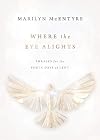
Summary: A collection of forty Lenten meditations drawn from words or phrases from scripture and poetry, inviting us to pause and attend.
“Lent is a time of permission. Many of us find it hard to give ourselves permission to pause, to sit still, to reflect or to meditate or pray in the midst of daily occupations–most of them very likely worthy in themselves–that fill our waking minds and propel us out of bed and on to the next thing. We need the explicit invitation the liturgical year show more provides to change pace, to curtail our busyness a bit, to make our times with self and God a little more spacious, a little more leisurely, and see what comes. The reflections I offer here come from a very simple practice of daily meditation on whatever has come to mind in the quiet of early morning.”
MARILYN MCENTYRE, P. V.
These opening words, in McEntyre’s Preface to the forty meditations in this book, gave me permission to pause and sit with her as she reflected upon the things on which her eyes alighted. For McEntyre, who loves words and their careful use, it is words and phrases upon which her eyes alight and which she invites us to join her in considering. Most come from scripture, some from poetry. Her reflections sometimes help us see the strange in the familiar. Isn’t it strange, for example that Isaiah 30:15 pairs “repentance and rest”? For most of us, repentance does not seem very restful. McEntyre observes:
“And repentance, to return to Isaiah, allows you to rest. I think of the many times I’ve heard–and said–some version of ‘I’m wrestling with…” “I’m struggling with…” “I’m working on…” changing a habit, coming to terms with self defeating patterns, releasing resentments or guilt or old confusions. Repentance allows us to rest in forgiveness, regroup, and rather than wrestling, float for a while, upheld while we learn to swim in the current, or walk unburdened, or do a dance of deliverance, day by day releasing the past and entering fully, with an open heart, into the present where an open heart is waiting to receive us.”
MARILYN MCENTYRE, P. 11.
Another reflection draws upon a Christian Wiman poem title “Every Riven Thing.” She reflects on the rivenness of our lives amid our own griefs and fraught politics: “We live among–and are–what is riven, cracked, and split, having to revise our understanding of ‘healing’ and ‘wholeness’ as we age into inevitable learning that those words don’t mean a fairy-tale ending, or closure, or even a denouement at the end of the last act.”
Thus she draws us into the reflections of Lent when we remember we are dust (another reflection). We consider what it means to be a people prepared, the loving listening of obedience, and the moments of epiphany that come as each of us wait and watch. She invites us to consider prayer as a place and in the movements of prayer open ourselves to the Spirit’s coming upon us. The reading for Good Friday guides us through the Stations of the Cross, providing guided prayers for each station and may be used at any time one prays the stations.
Each of the reflections are two to four pages long. Since the Sundays of Lent are not included in the forty days of Lent, there are no reflections for Sundays (although I’m sure some of us would use Sunday as a makeup day!). A marginal note indicates the week and day of each reflection. An attached ribbon is included in the book for marking one’s place.
I’ve come to love the combination of elegant attention to words and perceptive attention to life I find in each of McEntyre’s books. I recognize this review comes after Lent. While most appropriate for Lent, this book may be used for devotional reading at any time, or taken for reflection if you are accustomed to take personal retreats. If nothing else, if you purchase it now, you will not have to cast about wondering what you might read next year. Just keep it some place “where the eye alights.”
____________________________
Disclosure of Material Connection: I received a complimentary review copy of this book from the publisher in exchange for an honest review. The opinions I have expressed are my own. show less
“Lent is a time of permission. Many of us find it hard to give ourselves permission to pause, to sit still, to reflect or to meditate or pray in the midst of daily occupations–most of them very likely worthy in themselves–that fill our waking minds and propel us out of bed and on to the next thing. We need the explicit invitation the liturgical year show more provides to change pace, to curtail our busyness a bit, to make our times with self and God a little more spacious, a little more leisurely, and see what comes. The reflections I offer here come from a very simple practice of daily meditation on whatever has come to mind in the quiet of early morning.”
MARILYN MCENTYRE, P. V.
These opening words, in McEntyre’s Preface to the forty meditations in this book, gave me permission to pause and sit with her as she reflected upon the things on which her eyes alighted. For McEntyre, who loves words and their careful use, it is words and phrases upon which her eyes alight and which she invites us to join her in considering. Most come from scripture, some from poetry. Her reflections sometimes help us see the strange in the familiar. Isn’t it strange, for example that Isaiah 30:15 pairs “repentance and rest”? For most of us, repentance does not seem very restful. McEntyre observes:
“And repentance, to return to Isaiah, allows you to rest. I think of the many times I’ve heard–and said–some version of ‘I’m wrestling with…” “I’m struggling with…” “I’m working on…” changing a habit, coming to terms with self defeating patterns, releasing resentments or guilt or old confusions. Repentance allows us to rest in forgiveness, regroup, and rather than wrestling, float for a while, upheld while we learn to swim in the current, or walk unburdened, or do a dance of deliverance, day by day releasing the past and entering fully, with an open heart, into the present where an open heart is waiting to receive us.”
MARILYN MCENTYRE, P. 11.
Another reflection draws upon a Christian Wiman poem title “Every Riven Thing.” She reflects on the rivenness of our lives amid our own griefs and fraught politics: “We live among–and are–what is riven, cracked, and split, having to revise our understanding of ‘healing’ and ‘wholeness’ as we age into inevitable learning that those words don’t mean a fairy-tale ending, or closure, or even a denouement at the end of the last act.”
Thus she draws us into the reflections of Lent when we remember we are dust (another reflection). We consider what it means to be a people prepared, the loving listening of obedience, and the moments of epiphany that come as each of us wait and watch. She invites us to consider prayer as a place and in the movements of prayer open ourselves to the Spirit’s coming upon us. The reading for Good Friday guides us through the Stations of the Cross, providing guided prayers for each station and may be used at any time one prays the stations.
Each of the reflections are two to four pages long. Since the Sundays of Lent are not included in the forty days of Lent, there are no reflections for Sundays (although I’m sure some of us would use Sunday as a makeup day!). A marginal note indicates the week and day of each reflection. An attached ribbon is included in the book for marking one’s place.
I’ve come to love the combination of elegant attention to words and perceptive attention to life I find in each of McEntyre’s books. I recognize this review comes after Lent. While most appropriate for Lent, this book may be used for devotional reading at any time, or taken for reflection if you are accustomed to take personal retreats. If nothing else, if you purchase it now, you will not have to cast about wondering what you might read next year. Just keep it some place “where the eye alights.”
____________________________
Disclosure of Material Connection: I received a complimentary review copy of this book from the publisher in exchange for an honest review. The opinions I have expressed are my own. show less
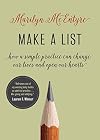
Summary: An exploration of the human phenomenon of why we make and like lists, how we can turn lists into a life-giving practice, and a plethora of ideas for lists wee might create.
Have you noticed how we like to make lists? From to-do lists to grocery lists to brainstorm lists to lists of favorites to guest lists–these are just some of the everyday lists we create. I know from blogging that we enjoy reading others’ lists. These posts always draw greater numbers of viewers. Perhaps it is show more the curiosity of how my list might compare to theirs.
Marilyn McEntyre, whose book Caring for Words in a Culture of Lies, would be on my top ten list of non-fiction works, is the author of this book that should be a delight to any list-maker. For one thing, each of her reflections on lists and their role in our lives includes a list of list ideas. Her first section, on Why Make a List? is a list of reasons for making lists. A few of these: to discover subtle layers of feeling, to name what we want, to clarify your concerns, to decide what to let go of, to get at the questions behind the questions, and to play with possibilities (there are more).
You may be getting the idea that McEntyre sees far more in lists than a practical function of getting things done. She writes:
When you make a list, if you stay with it and take it slowly, take it seriously but playfully, give yourself plenty of permission to put down whatever comes up, you begin to clarify your values, your concerns, the direction your life is taking, your relationship to your inner voice, your humor, your secrets. You discover the larger things that lists can reveal.
She believes lists are mirrors into our interior lives, ways we may learn, ways to listen, perhaps even to the Spirit, ways of loving, letting go, and even praying (after all, as she later observes, what is a litany but a list, usually a long one!). Lists can be a reflective and formative practice leading to greater self-understanding, and when we gift them to others, as she will talk about, a way of expressing love.
The second part of her work is on The Way of the List-maker. She explores how we might refine the kinds of lists we make, particularly along the lines of greater specificity and depth, from the basic to do list, to lists that clarify our values, to lists of words and phrases that have evocative power in our life, to a list of laments. She observes that some of our lists may even turn into a kind of poem. She talks about love lists where we enumerate what we love about another.
The third part is titled “Play Lists” which might be a play on words. She begins with a master list of lists that very well could be a playlist for list-makers. But I also think the aim of this section, as she has mentioned elsewhere is to make list-making playful, a kind of mental play that might take us into undiscovered country. She suggests “why” lists beginning with one of my favorites, why read. An interesting one, autobiographical in character is “What tennis teaches.” Another one is “What’s fun after fifty.” To give you an idea of lists she suggests after each reflection, here are some that follow “What’s fun after fifty”:
Fun I never thought I’d have
Slightly guilty pleasures
Why it’s fun to spend time alone
“Fun” I don’t have to pretend to have anymore
Deepening pleasures.
As you can see, this is both fun and serious, in the sense that these lists take us into what matters in our lives.
Finally, an appendix offers a grab-bag of additional lists. One that I think very appropriate for those who speak of “adulting” is a list of “What every adult should be able to do.” “What’s worth waiting for” is worth reading and meditating upon. Some are amusing, especially for those of us who have been there. One of the items on “Times to practice trust” is “When the DMV licenses your daughter.”
What makes this book so good is not only the great list ideas, perfect for a retreat day or other reflection time, but also the insights from McEntyre’s own life of making and reflecting upon lists. She often gives words to realities in our own lives we haven’t yet named. Yet she also gives plenty of space in her list suggestions to name our own realities, to listen for the unique ways we may hear both our own inner voice, our true self, and the invitations of the Spirit. Here’s a book to put at the top of your “to be read” list! show less
Have you noticed how we like to make lists? From to-do lists to grocery lists to brainstorm lists to lists of favorites to guest lists–these are just some of the everyday lists we create. I know from blogging that we enjoy reading others’ lists. These posts always draw greater numbers of viewers. Perhaps it is show more the curiosity of how my list might compare to theirs.
Marilyn McEntyre, whose book Caring for Words in a Culture of Lies, would be on my top ten list of non-fiction works, is the author of this book that should be a delight to any list-maker. For one thing, each of her reflections on lists and their role in our lives includes a list of list ideas. Her first section, on Why Make a List? is a list of reasons for making lists. A few of these: to discover subtle layers of feeling, to name what we want, to clarify your concerns, to decide what to let go of, to get at the questions behind the questions, and to play with possibilities (there are more).
You may be getting the idea that McEntyre sees far more in lists than a practical function of getting things done. She writes:
When you make a list, if you stay with it and take it slowly, take it seriously but playfully, give yourself plenty of permission to put down whatever comes up, you begin to clarify your values, your concerns, the direction your life is taking, your relationship to your inner voice, your humor, your secrets. You discover the larger things that lists can reveal.
She believes lists are mirrors into our interior lives, ways we may learn, ways to listen, perhaps even to the Spirit, ways of loving, letting go, and even praying (after all, as she later observes, what is a litany but a list, usually a long one!). Lists can be a reflective and formative practice leading to greater self-understanding, and when we gift them to others, as she will talk about, a way of expressing love.
The second part of her work is on The Way of the List-maker. She explores how we might refine the kinds of lists we make, particularly along the lines of greater specificity and depth, from the basic to do list, to lists that clarify our values, to lists of words and phrases that have evocative power in our life, to a list of laments. She observes that some of our lists may even turn into a kind of poem. She talks about love lists where we enumerate what we love about another.
The third part is titled “Play Lists” which might be a play on words. She begins with a master list of lists that very well could be a playlist for list-makers. But I also think the aim of this section, as she has mentioned elsewhere is to make list-making playful, a kind of mental play that might take us into undiscovered country. She suggests “why” lists beginning with one of my favorites, why read. An interesting one, autobiographical in character is “What tennis teaches.” Another one is “What’s fun after fifty.” To give you an idea of lists she suggests after each reflection, here are some that follow “What’s fun after fifty”:
Fun I never thought I’d have
Slightly guilty pleasures
Why it’s fun to spend time alone
“Fun” I don’t have to pretend to have anymore
Deepening pleasures.
As you can see, this is both fun and serious, in the sense that these lists take us into what matters in our lives.
Finally, an appendix offers a grab-bag of additional lists. One that I think very appropriate for those who speak of “adulting” is a list of “What every adult should be able to do.” “What’s worth waiting for” is worth reading and meditating upon. Some are amusing, especially for those of us who have been there. One of the items on “Times to practice trust” is “When the DMV licenses your daughter.”
What makes this book so good is not only the great list ideas, perfect for a retreat day or other reflection time, but also the insights from McEntyre’s own life of making and reflecting upon lists. She often gives words to realities in our own lives we haven’t yet named. Yet she also gives plenty of space in her list suggestions to name our own realities, to listen for the unique ways we may hear both our own inner voice, our true self, and the invitations of the Spirit. Here’s a book to put at the top of your “to be read” list! show less
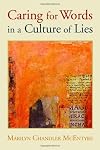
Summary: Explores, in a culture of "spin" and poisoned discourse, practices for caring for our use of words, that they may be used well and true.
If you have been following this blog recently, you know how highly I think of this book. Written prior to the latest spate of "alternative facts," agenda journalism, and the publication of "fake news," McEntyre's book explores the abuses of our language, the deadly consequences to which this may lead, and the responsibility of all who preach, teach, show more and write to care for the language. She summarizes with elegance the theological case for such care:
"Peter's admonition to 'be sober, be watchful' applies to this enterprise. Noticing how things are put, noticing what is being left out or subverted, takes an active habit of mind. But what is our task as a logocentric people if not to cherish the word? God, who became, as Eliot so beautifully put it, the 'word within a word, unable to speak a word,' has put a measure of God's own power into our hands and on our tongues. May we use it to good purpose."
What follows in this book are twelve "stewardship strategies" by which we might care for the words entrusted to us and the wider use of words in our culture. McEntyre, who is a retreat leader as well as English professor, gives us, as it were, formational practices that usher us into the careful use of words. She begins with the simple truth that we must start with loving words. Whether they be single words in themselves or the elegant and arresting expression of words in literature, it makes sense that the care of words begins with loving and delighting in their felicitous expression. She then leans into the challenge of truth-telling, giving the example of asking her students to define terms in common parlance: liberal, conservative, patriotic, terrorist, and Christian. Imprecision and hyperbole make it possible to lie with words, or at least to be obscure in our meaning. This chapter is paired with one on not tolerating lies, in which she shares the questions she teaches her students to ask.
The next chapters ("stewardship strategies") might come under the heading of cultivating our skillful use of words. She urges us to read well, including the incorporation of the practice of lectio divina into our reading. She writes about the importance and delights of good conversation, cultivating the skills of asking good questions and attentive listening. She explores the richness of story, not only those we read but the life stories of those in our families and communities, that give perspective and offer challenge as they are told.
Two of my favorite chapters followed. One was on loving the long sentence, contrary to what you hear from most writing teachers and editors. She contends that "long sentences ask us to dwell in a thought rather than come to a point." The other chapter is on practicing poetry, something missing from my life. After reading this, I picked up a collection of Seamus Heaney poetry, having thoroughly delighted in his rendering of Beowulf. She then wrote about a practice I hadn't given much thought, that of translation. She observes that all of us who use words are translators, conveying a thought (whether our own or another) to a particular audience. Those who have to learn more than one language and translate between languages uniquely appreciate this challenge.
The final three chapters seemed to me to be overarching stewardship strategies to be used in conjunction with the others. One was simply to play with words and ideas and see where they will take you, which is sometimes to unexpected places. I like this because often I discover what I think about something as I write. The second is to pray, both in our own words and those of others and to listen. And this leads to the third, which is to cherish silence where words of clarity and grace and power may come.
What made this work so rich was that one has the sense that McEntyre has lived into the strategies she commends to others. More than this, to read this book is to read words that have been cared for, and chosen for their ability to teach us to love them, and others like them. McEntyre does what she advocates. I found myself wanting to love words more attentively, read better, converse more thoughtfully and write with greater clarity. I found myself wanting to discern with greater acuity the coarse and cavalier ways words are used to poison discourse and spin webs of deceit, and to resist these ways of twisting God's good gift of words to humanity.
"A book for our times" almost seems too cliché, and yet it is accurate to describe how important this work is for all of us who care for words, care for culture, and long for better conversations about the common good. It is not enough to aspire to such things. McEntyre's "stewardship strategies" show us how to translate aspiration into action in our care for words.
Previous posts on this book:
Word Care as Culture Care
A Poet in Your Pocket show less
If you have been following this blog recently, you know how highly I think of this book. Written prior to the latest spate of "alternative facts," agenda journalism, and the publication of "fake news," McEntyre's book explores the abuses of our language, the deadly consequences to which this may lead, and the responsibility of all who preach, teach, show more and write to care for the language. She summarizes with elegance the theological case for such care:
"Peter's admonition to 'be sober, be watchful' applies to this enterprise. Noticing how things are put, noticing what is being left out or subverted, takes an active habit of mind. But what is our task as a logocentric people if not to cherish the word? God, who became, as Eliot so beautifully put it, the 'word within a word, unable to speak a word,' has put a measure of God's own power into our hands and on our tongues. May we use it to good purpose."
What follows in this book are twelve "stewardship strategies" by which we might care for the words entrusted to us and the wider use of words in our culture. McEntyre, who is a retreat leader as well as English professor, gives us, as it were, formational practices that usher us into the careful use of words. She begins with the simple truth that we must start with loving words. Whether they be single words in themselves or the elegant and arresting expression of words in literature, it makes sense that the care of words begins with loving and delighting in their felicitous expression. She then leans into the challenge of truth-telling, giving the example of asking her students to define terms in common parlance: liberal, conservative, patriotic, terrorist, and Christian. Imprecision and hyperbole make it possible to lie with words, or at least to be obscure in our meaning. This chapter is paired with one on not tolerating lies, in which she shares the questions she teaches her students to ask.
The next chapters ("stewardship strategies") might come under the heading of cultivating our skillful use of words. She urges us to read well, including the incorporation of the practice of lectio divina into our reading. She writes about the importance and delights of good conversation, cultivating the skills of asking good questions and attentive listening. She explores the richness of story, not only those we read but the life stories of those in our families and communities, that give perspective and offer challenge as they are told.
Two of my favorite chapters followed. One was on loving the long sentence, contrary to what you hear from most writing teachers and editors. She contends that "long sentences ask us to dwell in a thought rather than come to a point." The other chapter is on practicing poetry, something missing from my life. After reading this, I picked up a collection of Seamus Heaney poetry, having thoroughly delighted in his rendering of Beowulf. She then wrote about a practice I hadn't given much thought, that of translation. She observes that all of us who use words are translators, conveying a thought (whether our own or another) to a particular audience. Those who have to learn more than one language and translate between languages uniquely appreciate this challenge.
The final three chapters seemed to me to be overarching stewardship strategies to be used in conjunction with the others. One was simply to play with words and ideas and see where they will take you, which is sometimes to unexpected places. I like this because often I discover what I think about something as I write. The second is to pray, both in our own words and those of others and to listen. And this leads to the third, which is to cherish silence where words of clarity and grace and power may come.
What made this work so rich was that one has the sense that McEntyre has lived into the strategies she commends to others. More than this, to read this book is to read words that have been cared for, and chosen for their ability to teach us to love them, and others like them. McEntyre does what she advocates. I found myself wanting to love words more attentively, read better, converse more thoughtfully and write with greater clarity. I found myself wanting to discern with greater acuity the coarse and cavalier ways words are used to poison discourse and spin webs of deceit, and to resist these ways of twisting God's good gift of words to humanity.
"A book for our times" almost seems too cliché, and yet it is accurate to describe how important this work is for all of us who care for words, care for culture, and long for better conversations about the common good. It is not enough to aspire to such things. McEntyre's "stewardship strategies" show us how to translate aspiration into action in our care for words.
Previous posts on this book:
Word Care as Culture Care
A Poet in Your Pocket show less
Lists
You May Also Like


Statistics
- Works
- 20
- Members
- 537
- Popularity
- #46,379
- Rating
- 4.0
- Reviews
- 21
- ISBNs
- 39
