

Eva Etzioni-Halevy
Author of The Song of Hannah
About the Author
Eva Etzioni-Halevy is professor of political sociology, at Bar-Ilan University, Israel.
Works by Eva Etzioni-Halevy
Classes and Elites in Democracy and Democratization: A Collection of Readings (Sociology/Psychology/Reference) (1997) 6 copies
National broadcasting under siege : a comparative study of Australia, Britain, Israel, and West Germany (1987) 2 copies
Tagged
Common Knowledge
- Birthdate
- 1939
- Gender
- female
- Education
- Hebrew University of Jerusalem
Tel Aviv University (PhD) - Occupations
- professor
political sociologist
novelist - Organizations
- Bar-Ilan University
- Short biography
- Eva Etzioni-Halevy was born in Vienna, Austria and hid from the invading Germans as a baby. The family managed to escape to Italy, where they spent most of the years of World War II, partly in an Italian concentration camp and partly in hiding. They emigrated to the British Mandate of Palestine in 1945. She attended a religious boarding school, and then studied sociology at the Hebrew University in Jerusalem and at Tel Aviv University, where she was awarded a PhD degree. Eva spent time in the USA and Australia
before returning to Israel and joining the faculty of Bar-Ilan University in Tel Aviv as a professor of political sociology. She published 14 academic books and numerous scholarly articles in both Hebrew and English before turning to fiction writing. Her first novel was The Song of Hannah, which drew inspiration from the Bible and the unusual family described in the First Book of Samuel. She is married and has three grown children. - Nationality
- Austria (birth)
Israel - Birthplace
- Vienna, Austria
- Places of residence
- Tel Aviv, Israel
- Associated Place (for map)
- Vienna, Austria
Members
Reviews
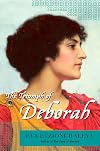
The twelve tribes of ancient Israel have been in the promised land for nearly a hundred years, but theirs is not a peaceful existence. The Canaanites have never ceased to harass the tribes, attacking small villages, stealing livestock and killing any Israelite they come across. The only safety is in numbers and the Israelites have retreated behind the walls of their towns.
The prophetess Deborah, a mother in her thirties, has been a powerful voice for the Israelites for years. She is known show more far and wide for her fair judgement and is a respected leader. She has received a vision that she must bring peace with the Canaanites. When her diplomatic efforts fail, she is forced to call the tribes together under a warrior who will lead them to victory. If the Canaanites will not agree to a truce, Israel must subdue them by force.
Barak is a young warrior who has been very successful in retaliatory raids against the Canaanites. He has built up quite a bit of wealth, is strong and a natural leader of men. He is Deborah's choice to lead the Israelites. Unfortunately Barak has a reputation that precedes him. He is a lover of women, many women. This does not sit well with Lapidoth, Deborah's husband. He does not trust Barak and does not want Deborah anywhere near him. They have a huge fight and Lapidoth's anger and jealousy get the better of him, he divorces Deborah on the spot, after sixteen years of marriage.
Despite the problems in her personal life, Deborah agrees to accompany the army to the battle against the Canaanites. While the war is a resounding success, it creates further problems for Deborah, who has developed a bit of a crush on Barak. He demands sexual favors of her in return for his participation in the war and she surprises herself by enjoying their encounter. Then he manages to capture two of the Canaanite king's daughters, Asherah and Nogah. Thus a love triangle (rectangle?) is born. Untangling the motivations and emotions of everyone involved will have a great impact on future events.
What a great premise for a novel, to take biblical women who have little known background information and breathe life into their stories. The author does it beautifully, creating the landscape of ancient Israel so that the reader can experience it. She then brings her characters to life with human needs and emotions so that they shake off the dust of history and can be related to as people, just as if they were living today. It's the best kind of historical fiction and I recommend it! show less
The prophetess Deborah, a mother in her thirties, has been a powerful voice for the Israelites for years. She is known show more far and wide for her fair judgement and is a respected leader. She has received a vision that she must bring peace with the Canaanites. When her diplomatic efforts fail, she is forced to call the tribes together under a warrior who will lead them to victory. If the Canaanites will not agree to a truce, Israel must subdue them by force.
Barak is a young warrior who has been very successful in retaliatory raids against the Canaanites. He has built up quite a bit of wealth, is strong and a natural leader of men. He is Deborah's choice to lead the Israelites. Unfortunately Barak has a reputation that precedes him. He is a lover of women, many women. This does not sit well with Lapidoth, Deborah's husband. He does not trust Barak and does not want Deborah anywhere near him. They have a huge fight and Lapidoth's anger and jealousy get the better of him, he divorces Deborah on the spot, after sixteen years of marriage.
Despite the problems in her personal life, Deborah agrees to accompany the army to the battle against the Canaanites. While the war is a resounding success, it creates further problems for Deborah, who has developed a bit of a crush on Barak. He demands sexual favors of her in return for his participation in the war and she surprises herself by enjoying their encounter. Then he manages to capture two of the Canaanite king's daughters, Asherah and Nogah. Thus a love triangle (rectangle?) is born. Untangling the motivations and emotions of everyone involved will have a great impact on future events.
What a great premise for a novel, to take biblical women who have little known background information and breathe life into their stories. The author does it beautifully, creating the landscape of ancient Israel so that the reader can experience it. She then brings her characters to life with human needs and emotions so that they shake off the dust of history and can be related to as people, just as if they were living today. It's the best kind of historical fiction and I recommend it! show less

3.5 stars
Osnath has come to Bethlehem at 15-years old and falls for two brothers, Eliab and David. While there, she is intrigued by the mystery surrounding Eliab and David’s ancestor (and I think, also in some way, her own ancestor), Ruth. It takes her a while to uncover Ruth’s story, while she is torn between the two men.
So, this is about the Biblical Ruth, and how her story may have come to be written. Actually, the first half of the book mostly focuses on Osnath, and the second half show more on Ruth. I don’t know the Bible – even less the Old Testament – but I did recognize a few names: Ruth; Samuel, a prophet; David (though I didn’t recognize him until Goliath was mentioned!). There were probably a few others. I didn’t remember it, but Osnath’s grandmother, Pninah, is one of the main characters in The Song of Hannah, also written by Etzioni-Halevy.
Anyway, I thought this was good, both women’s stories. A lot of jumping in between men’s beds (for both Osnath and Ruth!), though not in detail, but the story was still interesting. As always, I appreciate the historical note that was added in at the end. show less
Osnath has come to Bethlehem at 15-years old and falls for two brothers, Eliab and David. While there, she is intrigued by the mystery surrounding Eliab and David’s ancestor (and I think, also in some way, her own ancestor), Ruth. It takes her a while to uncover Ruth’s story, while she is torn between the two men.
So, this is about the Biblical Ruth, and how her story may have come to be written. Actually, the first half of the book mostly focuses on Osnath, and the second half show more on Ruth. I don’t know the Bible – even less the Old Testament – but I did recognize a few names: Ruth; Samuel, a prophet; David (though I didn’t recognize him until Goliath was mentioned!). There were probably a few others. I didn’t remember it, but Osnath’s grandmother, Pninah, is one of the main characters in The Song of Hannah, also written by Etzioni-Halevy.
Anyway, I thought this was good, both women’s stories. A lot of jumping in between men’s beds (for both Osnath and Ruth!), though not in detail, but the story was still interesting. As always, I appreciate the historical note that was added in at the end. show less
I was hoping it would turn out to be really good, since I enjoy a good biblical fiction and the author has written several. However, I ended up very disappointed. I did end up finishing it, but by the end I was mostly skimming.
There was an ongoing theme of "men can't be expected to abstain from sex, so women can't get annoyed at them for it," which I found highly disturbing.
I understand that this story is set in a very different place and time, and that the cultural norms surrounding both show more Osnath and Ruth are very different than those in my life. However, I think that there is a way to address those different standards while still acknowledging problematic elements in them throughout the narrative, and the author failed to do so.
In particular, I was very uncomfortable with how she dealt with rape. Major characters are raped at multiple points through the story, and the way it's dealt with and excused disturbed me.
The writing was fine, though the dialogue was a bit rushed at points. However, the overarching themes just made me too uncomfortable for me to actually enjoy this. show less
There was an ongoing theme of "men can't be expected to abstain from sex, so women can't get annoyed at them for it," which I found highly disturbing.
I understand that this story is set in a very different place and time, and that the cultural norms surrounding both show more Osnath and Ruth are very different than those in my life. However, I think that there is a way to address those different standards while still acknowledging problematic elements in them throughout the narrative, and the author failed to do so.
In particular, I was very uncomfortable with how she dealt with rape. Major characters are raped at multiple points through the story, and the way it's dealt with and excused disturbed me.
The writing was fine, though the dialogue was a bit rushed at points. However, the overarching themes just made me too uncomfortable for me to actually enjoy this. show less
Deborah was an amazing woman. She is a beloved and honored Hebrew prophet, judge, and leader. She loves God and His people and wants to live in peace with those living around them. Unfortunately, the Hebrew people were seen as intruders. After a shaming encounter with Sisra, the military leader of the Canaanites, where she was attempting to obtain a peace treaty, she determines that not all people are as open to having women participate in politics. It is then that she decides to send the show more Hebrew army to war with Barak, a young soldier with new ideas. She made the right decision for her people, but at the cost of her marriage. Deborah had to learn to live and lead on her own with only her God as her guide.
I really loved the way in which this novel opened. Deborah, anxiously awaiting the outcome of the war she sanctioned, was juxtaposed against, Asherah, the young wife of Sisra. Both women wanted their commanders to be successful, but only one would get what she wanted. It set the tone of the novel and got me interested immediately. Given the title, the outcome of the war was not shocking to me, but that war wasn’t the end. Asherah and Deborah continue to be linked through Barak and both of their lives are impacted by Nogah, a Hebrew slave who was freed from King Jabin after the Hebrew defeat of the Canaanites.
The Triumph of Deborah is not what I would consider a typical of biblical fiction. In this novel, all of the characters were portrayed as true human beings, not superhuman beings powered by God. It is not tame and it does not show always show the biblical characters in the most positive, read moral light. The characters in this novel are sensual beings who find ways to rationalize their sexual behavior. The writing is as uninhibited as the characters, making this a novel that I could not recommend to my mother who would otherwise be interested in fiction with a biblical twist. In that way, however, it may open up the world of the Bible to others.
I was very pleased with my first experience in Eva Etzioni-Halevy’s rich early Hebrew world. If I had one complaint about the novel, it was that there wasn’t enough of Deborah in it. I loved her character and would have liked to have gotten to know her even more. The action within the story most definitely followed Barak, but I missed Deborah when she wasn’t front and center. I would have liked to have been with Deborah more as she planned her victory dance with Barak and felt her regret with her afterwards. That being said, I enjoyed Nogah and her story as well. I would highly recommend The Triumph of Deborah and look forward to reading more of Etzioni-Halevy’s fiction.
http://literatehousewife.com/2009/02/142-the-truimph-of-deborah/ show less
I really loved the way in which this novel opened. Deborah, anxiously awaiting the outcome of the war she sanctioned, was juxtaposed against, Asherah, the young wife of Sisra. Both women wanted their commanders to be successful, but only one would get what she wanted. It set the tone of the novel and got me interested immediately. Given the title, the outcome of the war was not shocking to me, but that war wasn’t the end. Asherah and Deborah continue to be linked through Barak and both of their lives are impacted by Nogah, a Hebrew slave who was freed from King Jabin after the Hebrew defeat of the Canaanites.
The Triumph of Deborah is not what I would consider a typical of biblical fiction. In this novel, all of the characters were portrayed as true human beings, not superhuman beings powered by God. It is not tame and it does not show always show the biblical characters in the most positive, read moral light. The characters in this novel are sensual beings who find ways to rationalize their sexual behavior. The writing is as uninhibited as the characters, making this a novel that I could not recommend to my mother who would otherwise be interested in fiction with a biblical twist. In that way, however, it may open up the world of the Bible to others.
I was very pleased with my first experience in Eva Etzioni-Halevy’s rich early Hebrew world. If I had one complaint about the novel, it was that there wasn’t enough of Deborah in it. I loved her character and would have liked to have gotten to know her even more. The action within the story most definitely followed Barak, but I missed Deborah when she wasn’t front and center. I would have liked to have been with Deborah more as she planned her victory dance with Barak and felt her regret with her afterwards. That being said, I enjoyed Nogah and her story as well. I would highly recommend The Triumph of Deborah and look forward to reading more of Etzioni-Halevy’s fiction.
http://literatehousewife.com/2009/02/142-the-truimph-of-deborah/ show less
Lists
You May Also Like


Statistics
- Works
- 12
- Members
- 509
- Popularity
- #48,720
- Rating
- 3.5
- Reviews
- 34
- ISBNs
- 34