

Marek Halter
Author of Sarah
About the Author
Marek Halter has served as president of the European Foundation for Science, Arts and Culture.
Series
Works by Marek Halter
Stories of Deliverance: Speaking with Men and Women Who Rescured Jews from the Holocaust` (1998) 22 copies
Auf der Suche nach den 36 Gerechten. Gespräche mit den wahren Helden unseres Jahrhunderts (1997) 2 copies
La Bible au féminin Coffret en 3 volumes : Tome 1, Sarah ; Tome 2, Tsippora ; Tome 3, Lilah (2004) 2 copies
O Messias 2 copies
Pražský kabalista 1 copy
Il folle e i re 1 copy
Argentina Argentina 1 copy
Le journal de Rutka 1 copy
Le fou et les rois 1 copy
Tzedek: les Justes 1 copy
Tagged
Common Knowledge
- Canonical name
- Halter, Marek
- Legal name
- Halter, Marek
- Birthdate
- 1936-01-27
- Gender
- male
- Education
- École des Beaux-Arts
- Occupations
- painter
novelist
human rights activist - Organizations
- Élements
- Nationality
- Poland (birth)
France (emigrated, 1950) - Places of residence
- Warsaw Ghetto, Poland
Kokand, Uzbekistan, USSR
Paris, France
Buenos Aires, Argentina
Members
Reviews
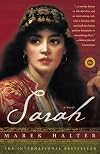
Surprisingly feminist, surprisingly human, surprisingly graceful reiteration of the Biblical story of Sarah & Abraham. I say 'surprisingly' because it's easy enough to reimagine historical women as embodying a "you go, grrl!" spirit, but much harder to do so convincingly, and within the context of Old Testament life. Halter says: the choices this woman Sarah made are the choices of any modern woman. When & if to have chilren; when & whom to marry; questions about the validity of god, the show more faithfulness of oneself & ones husband; jealousy, pain, hatred, all bearing the name of love.
Orson Scott Card's version (also titled Sarah) is the inevitable comparison - but it's placid & passionless next to this. Card's Abraham never falters in his belief; the love between Sarah and himself is never put under real trial; and his sex scenes are lacking humanity. It's like sex between saints.
Halter has 'penis' and 'cock' and 'vulva' (see? feminist!) down, but his characters have earthly desires. And earthly failings.
All in all, a very enjoyable read. Halter has taken some liberties with the story (eg, magic spells!), which - to my great surprise - made the old story far more believable.
The Q&A afterward was a little irritating, written as it was to a male audience ("Sarah could be your wife, your mother, your sister"), but on the whole illuminated the novel & his hopes for it beautifully.
Being atheist, I have no religious use for the Bible. So it was a pleasant surprise to read a balanced, respectful book, written by someone who truly believes the Bible can address our modern-day problems - and doesn't resort to beating the Patriarchy drum. show less
Orson Scott Card's version (also titled Sarah) is the inevitable comparison - but it's placid & passionless next to this. Card's Abraham never falters in his belief; the love between Sarah and himself is never put under real trial; and his sex scenes are lacking humanity. It's like sex between saints.
Halter has 'penis' and 'cock' and 'vulva' (see? feminist!) down, but his characters have earthly desires. And earthly failings.
All in all, a very enjoyable read. Halter has taken some liberties with the story (eg, magic spells!), which - to my great surprise - made the old story far more believable.
The Q&A afterward was a little irritating, written as it was to a male audience ("Sarah could be your wife, your mother, your sister"), but on the whole illuminated the novel & his hopes for it beautifully.
Being atheist, I have no religious use for the Bible. So it was a pleasant surprise to read a balanced, respectful book, written by someone who truly believes the Bible can address our modern-day problems - and doesn't resort to beating the Patriarchy drum. show less
For more reviews and bookish posts visit: https://www.ManOfLaBook.com
Why the Jews?: The Need to Scapegoat by Marek Halter (translated by Grace McQuillan) is a collection of short essays examining the titled question. Mr. Halter is a French citizen born in Poland, he is the founder of the International Committee for a Negotiated Peace Agreement in the Near East and played a crucial role in the organization of the first official meetings between Palestinians and Israelis.
This book is short, show more but thought provoking. The question of “why the Jews?” has been asked for centuries without a good answer other than racism, probably because there isn’t one. As is tradition in the Jewish religion the book asks a lot of poignant, hard hitting questions but gives very few answers.
Why the Jews?: The Need to Scapegoat by Marek Halter, might not have many answers, but it does make you think.
Anti-Semitism is on the rise, again, in Europe and the United States (not a surprise for many, including the author I’m sure), and in these essays Mr. Halter tries to deconstruct several preconceived prejudices about the Jews and all the perceived evils they are responsible for. Many of these notions, of course, do not pass the “laugh test” for any person with a drop of critical thinking skills. Throughout his lifelong journey, the author recounts of meetings he had with many famous thinkers including David Ben Gurion and Jean-Paul Sartre, who both had some insight, but – again – no answers.
Mr. Halter tries to understand and investigate where the hatred towards Jews comes from. He goes back very far to do so, even trying to get an explanation by examining the behavior of Moses and the Ten Commandments, an interesting exercise, but a futile one. I, for one, think that trying to explain hatred and anti-Semitism by delving into, or blaming, religious texts is, frankly, a bit lazy. For generations the haters used religious nonsense to justify their pre-existing, or learned, notions. Deep down, however, even they knew its ridiculous drivel, at best, speaking only to weak minded losers trying to blame their own incompetence and bad decisions on others.
I appreciated the tone of the book, more investigative than preachy, which servers it well. Great job by translator Grace McQuillan who managed to keep the tone throughout on this difficult subject . I thought the author’s conclusion was on point, and probably the best one could hope for.
Ironically it comes from Pope John Paull II: “Do not be afraid!” show less
Why the Jews?: The Need to Scapegoat by Marek Halter (translated by Grace McQuillan) is a collection of short essays examining the titled question. Mr. Halter is a French citizen born in Poland, he is the founder of the International Committee for a Negotiated Peace Agreement in the Near East and played a crucial role in the organization of the first official meetings between Palestinians and Israelis.
This book is short, show more but thought provoking. The question of “why the Jews?” has been asked for centuries without a good answer other than racism, probably because there isn’t one. As is tradition in the Jewish religion the book asks a lot of poignant, hard hitting questions but gives very few answers.
Why the Jews?: The Need to Scapegoat by Marek Halter, might not have many answers, but it does make you think.
Anti-Semitism is on the rise, again, in Europe and the United States (not a surprise for many, including the author I’m sure), and in these essays Mr. Halter tries to deconstruct several preconceived prejudices about the Jews and all the perceived evils they are responsible for. Many of these notions, of course, do not pass the “laugh test” for any person with a drop of critical thinking skills. Throughout his lifelong journey, the author recounts of meetings he had with many famous thinkers including David Ben Gurion and Jean-Paul Sartre, who both had some insight, but – again – no answers.
Mr. Halter tries to understand and investigate where the hatred towards Jews comes from. He goes back very far to do so, even trying to get an explanation by examining the behavior of Moses and the Ten Commandments, an interesting exercise, but a futile one. I, for one, think that trying to explain hatred and anti-Semitism by delving into, or blaming, religious texts is, frankly, a bit lazy. For generations the haters used religious nonsense to justify their pre-existing, or learned, notions. Deep down, however, even they knew its ridiculous drivel, at best, speaking only to weak minded losers trying to blame their own incompetence and bad decisions on others.
I appreciated the tone of the book, more investigative than preachy, which servers it well. Great job by translator Grace McQuillan who managed to keep the tone throughout on this difficult subject . I thought the author’s conclusion was on point, and probably the best one could hope for.
Ironically it comes from Pope John Paull II: “Do not be afraid!” show less
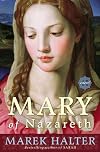
Making a departure from my non-fiction reading, I picked up a historical novel about the most famous mother of all time.
The story starts out with Miriam and her family struggling to survive the yoke of the tyrannical Roman rule under King Herod. By a freak accident, Miriam's father is set to be crucified. The precocious Miriam boldly sets out to rescue him with the help of a dangerous friend, Barrabas.
It's a crisp book that doesn't weight the soul down with diatribes of heavy handed show more preaching. OK, there are a couple of them but most of the story focused on Miriam and how she became the Virgin Mary.
At the end, the author tacked on the Gospel of Mary which will never find its way to the Bible that you know because according to her, Jesus faked his death like Juliet. You would think that one of the two people who first found Jesus alive might be the authority on the matter.
Now, the book probably took a lot of liberties to tell the story. But who is to say history has not taken their own liberties? show less
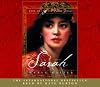
The first in his "Canaan Trilogy" about Biblical women, author Marek Halter takes the wife of Abraham and primarily weaves a backstory for her. He ignores the possibility that Sarah was actually Abraham's half-sister, and instead makes her the daughter of a lord of Ur. He comes up with an interesting premise for her infertility and her lasting beauty.
I very much enjoyed this novel. It is fiction, so it does not bother me at all that Halter took "liberties" with Sarah's story. Her show more story (as well as that of Abraham, his father Terah, and so on) is slightly different in the Biblical book of Genesis, in rabbinic tradition, and in Islam, and there is no other historical source material, so she is a perfect character for fiction.
I was surprised to learn Halter is a man, as the book has a somewhat feminist tone, and the female voice rings true. I felt he depicted life at that time - especially for women - quite well.
The audiobook was an abridgment; nevertheless, there was still plenty of description of the settings of the story. Kate Burton (daughter of Richard Burton) was the narrator. Her deeper voice was fitting, but I felt the book was read too quickly - or sped up to make it fit in just four discs.
© Amanda Pape - 2016
[This audiobook was borrowed from and returned to my university library.] show less
I very much enjoyed this novel. It is fiction, so it does not bother me at all that Halter took "liberties" with Sarah's story. Her show more story (as well as that of Abraham, his father Terah, and so on) is slightly different in the Biblical book of Genesis, in rabbinic tradition, and in Islam, and there is no other historical source material, so she is a perfect character for fiction.
I was surprised to learn Halter is a man, as the book has a somewhat feminist tone, and the female voice rings true. I felt he depicted life at that time - especially for women - quite well.
The audiobook was an abridgment; nevertheless, there was still plenty of description of the settings of the story. Kate Burton (daughter of Richard Burton) was the narrator. Her deeper voice was fitting, but I felt the book was read too quickly - or sped up to make it fit in just four discs.
© Amanda Pape - 2016
[This audiobook was borrowed from and returned to my university library.] show less
Lists
Awards


You May Also Like


Associated Authors
Statistics
- Works
- 83
- Members
- 3,321
- Popularity
- #7,702
- Rating
- 3.5
- Reviews
- 73
- ISBNs
- 231
- Languages
- 15
- Favorited
- 4
