
Paul A. W. Wallace (1891–1967)
Author of Indians in Pennsylvania
About the Author
Works by Paul A. W. Wallace
The Story of Deganawidah: How He Planted the Tree of the Great Peace and Founded the Iroquois Confederacy (1950) 2 copies
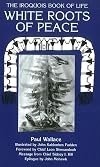
The White Roots of Peace 1 copy
"People Of The Long House," 1 copy
The John Heckewelder Papers 1 copy
Pennsylvania History: Quarterly Journal of the Pennsylvania Historical Association: Volume LXXIX, No. 1: January, 1955 (1955) 1 copy
Tagged
Common Knowledge
- Canonical name
- Wallace, Paul A. W.
- Birthdate
- 1891
- Date of death
- 1967
- Gender
- male
- Relationships
- Wallace, Anthony F. C. (son)
- Nationality
- Canada
- Associated Place (for map)
- Canada
Members
Reviews

Originally published in 1946 by the historian/anthropologist Paul A.W. Wallace, this slim book offers a beautiful retelling of the traditional Iroquois epic concerning the prophet Deganawidah (the Peacemaker), and his quest to unite the warring peoples of the Earth under the Great Tree of Peace - a quest that resulted in the formation of the mighty Iroquois Confederacy.
A Huron by birth, Deganawidah set out to the land of the Iroquois during a time of terrible strife. His "Good News of Peace show more and Power," and the new mindset that it represented eventually transformed the five nations of the Iroquois (the Tuscarora were not to join the League until much later), and after the evil Onondaga chief Atotarho was converted, Deganawidah and Hiawatha instituted the rituals, policies, and customs that make up the "Great Law" upon which the Confederacy is based.
This is a story whose political and religious components are inseparable - Deganawidah is clearly a prophet in the metaphysical sense, the miracles that accompany his progress and his assurances that he carries the "Mind of the Master of Life" attest to this. Parts of the story were reminiscent of things in the Christian tradition - like Jesus, the Peacemaker was born of a virgin mother; while Christ walked on water, Deganawidah sailed across it on a white stone canoe; both brought messages of peace. But unlike Christ, Deganawidah was interested in setting up earthly institutions, his message of peace not aimed towards after-life salvation, but the harmony of inter-human relations. His vision was both spiritual and political...
Well worth reading, on many different levels. Full of valuable information for both the historian and folklorist, this is also a beautiful story and an important spiritual document. This edition, released in 1993, includes a foreword by Leon Shenandoah (Chief of the Onondaga and Tadodaho from 1967-1996), and a historical epilogue by the scholar John Mohawk, which provides a very brief synopsis of the history of the Six Nations from the American Revolution to the present day. The black and white illustrations are done by John Kahionhes Fadden. show less
A Huron by birth, Deganawidah set out to the land of the Iroquois during a time of terrible strife. His "Good News of Peace show more and Power," and the new mindset that it represented eventually transformed the five nations of the Iroquois (the Tuscarora were not to join the League until much later), and after the evil Onondaga chief Atotarho was converted, Deganawidah and Hiawatha instituted the rituals, policies, and customs that make up the "Great Law" upon which the Confederacy is based.
This is a story whose political and religious components are inseparable - Deganawidah is clearly a prophet in the metaphysical sense, the miracles that accompany his progress and his assurances that he carries the "Mind of the Master of Life" attest to this. Parts of the story were reminiscent of things in the Christian tradition - like Jesus, the Peacemaker was born of a virgin mother; while Christ walked on water, Deganawidah sailed across it on a white stone canoe; both brought messages of peace. But unlike Christ, Deganawidah was interested in setting up earthly institutions, his message of peace not aimed towards after-life salvation, but the harmony of inter-human relations. His vision was both spiritual and political...
Well worth reading, on many different levels. Full of valuable information for both the historian and folklorist, this is also a beautiful story and an important spiritual document. This edition, released in 1993, includes a foreword by Leon Shenandoah (Chief of the Onondaga and Tadodaho from 1967-1996), and a historical epilogue by the scholar John Mohawk, which provides a very brief synopsis of the history of the Six Nations from the American Revolution to the present day. The black and white illustrations are done by John Kahionhes Fadden. show less

Lists
You May Also Like


Associated Authors
Statistics
- Works
- 29
- Members
- 367
- Popularity
- #65,578
- Rating
- 3.5
- Reviews
- 3
- ISBNs
- 24