
Groff Conklin (1904–1968)
Author of Fifty Short Science Fiction Tales
About the Author
Image credit: Groff Conklin
Series
Works by Groff Conklin
The Golden Age of Science Fiction (1946) — Editor; Introduction, some editions — 158 copies, 3 reviews
Omnibus of Science Fiction 4 copies
Best of Science Fiction 1 copy
Servant Problem; Rite of 1 copy
4 Visiones Extraterrestres — Editor — 1 copy
Science Fiction Galaxy 1 copy
6 Fingers of Time 1 copy
Associated Works
Tagged
Common Knowledge
- Legal name
- Conklin, Edward Groff
- Birthdate
- 1904-09-06
- Date of death
- 1968-07-19
- Gender
- male
- Education
- Dartmouth College
Harvard University
Columbia University (BA|1927) - Occupations
- editor
book critic
freelance writer (science subjects)
public relations - Awards and honors
- Hugo Nominee (Professional Editor, Retro-Hugo, [1951], 2001)
- Nationality
- USA
- Birthplace
- Glen Ridge, New Jersey, USA
- Places of residence
- New York, New York, USA
- Place of death
- Pawling, New York, USA
- Burial location
- Pawling, New York, USA
- Map Location
- New Jersey, USA
Members
Reviews
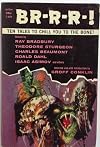
Conklin had pretty good taste and this anthology reflects that. Theodore Sturgeon's classic "It" needs no introduction, of course, but BR-R-R! also contains "The Worm" by David H. Keller: a story at least the equal of "It" in terms of teeth-gnashing horror, and which arguably surpasses it. Pulpy and loaded with fast action, "The Worm" also achieves a mood of terror and doom that is nearly cinematic in effect (meaning that the story, when it's finished, will stick with you as only the show more greatest horror films do). I can't recommend it highly enough. On the lighter side of the spectrum there's Roald Dahl's "The Sound Machine," which certainly qualifies as an intriguing tale of the fantastic if not an actual horror story (there probably weren't many hardcore horror fans among Dahl's readership, but I've always thought highly of his work), and Algernon Blackwood's neat little ethical fable "An Egyptian Hornet."
Three and a half stars. show less
Three and a half stars. show less

It’s a rare occasion when I enjoy every story in an anthology almost equally. This is one of those times. All 13 tales in this collection are, as the title boasts, great. I suppose this shouldn’t be a surprise given the talent involved including Arthur C. Clarke, Ted Sturgeon, Poul Anderson, Damon Knight, and others. However, were I forced to choose favorites, those would be…
“The War is Over” by Algis Budrys - Years after an Earth ship carrying an urgent message crash lands on an show more alien world, the inhabitants construct a vessel to return the message to Earth, though they’re not entirely certain why or even how they learned to build such a craft…
In “Allegory,” William T. Powers offers an entertaining yet frightening glimpse into a humanity controlled by computers and where independent thinking is considered a mental aberration.
In John Wyndham’s “Compassion Circuit,” Janet Shand, a fragile and fretful housewife, is forced to come to terms with Hester, an android servant programmed with emotions. It isn’t long before Janet begins to rely on Hester for her daily care—until she becomes convinced that there is a better way to live through robotics.
Arthur C. Clarke delivers a brilliant send up of corporate guile in “Silence, Please!” To get even with unscrupulous businessman Sir Roderick Fenton, a professor invents a portable sound-cancelling device and sells the patent to Fenton. The professor’s associates are mystified by his decision, until they observe how the devices are used when sold to the public, putting Fenton in the government’s crosshairs.
In Wyman Guin’s “Volpla,” a scientist creates a new, highly intelligent biological species with the ability to fly, speak, adapt, and reproduce. He fabricates a backstory that they had originated on another world and only recently came to Earth. Surely, this gag will spark the intended panic in the zoological community once the creatures are released into the wild. Unfortunately, the biologist’s plan backfires when the Volpla’s take a drastic course of action to preserve their race…
Alan Nelson’s lighthearted “Soap Opera” delivers the hysterical tale of a hapless young member of a soap manufacturer’s advertising team who experiments with skywriting as a marketing tool. “The words vanish too quickly!” cries the company’s owner, sending Everett Mordecai on a quest to find a more permanent solution—one that covers the entire city of San Francisco…
What happens when the government implants a second personality into its citizens, one that forces them to be docile, to be behave contrary to their natural tendencies? In “Analogues,” Damon Knight deftly presents us with this disturbing possibility…
When a homeless man named Ollie swallows what he think is a nut, he suddenly finds his appetite insatiable, no matter how much he eats. After winning an egg-eating competition by consuming over 100 eggs, Ollie is taken to the hospital to be examined. Shortly after, strange foreign objects materialize in Ollie’s stomach, causing intense pain and swelling. At the same time, two aliens arrive after realizing that their matter transfer device is inside poor Ollie. The question is… now what? We find out in William Morrison’s “Shipping Clerk.”
G.C. Edmondon’s “Technological Retreat” brings us the story of extraterrestrial technology run amuck when humans trade simple Earth goods for a device that can instantly repair damage to any surface by making it malleable enough to reshape. It isn’t long before the aliens begin disseminating the device across the planet, with devastating effects on human evolution.
In Ted Sturgeon’s “The Skills of Xanadu,” a haughty scout sent by an advanced alien race lands on the bucolic world of Xanadu. While reluctantly spending time among the primitive “barbarians” of this world, Bril marks them as ripe for conquest. Yet, he finds their manufacturing abilities beyond comprehension. When Bril finally discovers the source of their power in the form of polished stones worn as part of their clothing, he takes one back to his homeworld—where the true conquest begins. show less
“The War is Over” by Algis Budrys - Years after an Earth ship carrying an urgent message crash lands on an show more alien world, the inhabitants construct a vessel to return the message to Earth, though they’re not entirely certain why or even how they learned to build such a craft…
In “Allegory,” William T. Powers offers an entertaining yet frightening glimpse into a humanity controlled by computers and where independent thinking is considered a mental aberration.
In John Wyndham’s “Compassion Circuit,” Janet Shand, a fragile and fretful housewife, is forced to come to terms with Hester, an android servant programmed with emotions. It isn’t long before Janet begins to rely on Hester for her daily care—until she becomes convinced that there is a better way to live through robotics.
Arthur C. Clarke delivers a brilliant send up of corporate guile in “Silence, Please!” To get even with unscrupulous businessman Sir Roderick Fenton, a professor invents a portable sound-cancelling device and sells the patent to Fenton. The professor’s associates are mystified by his decision, until they observe how the devices are used when sold to the public, putting Fenton in the government’s crosshairs.
In Wyman Guin’s “Volpla,” a scientist creates a new, highly intelligent biological species with the ability to fly, speak, adapt, and reproduce. He fabricates a backstory that they had originated on another world and only recently came to Earth. Surely, this gag will spark the intended panic in the zoological community once the creatures are released into the wild. Unfortunately, the biologist’s plan backfires when the Volpla’s take a drastic course of action to preserve their race…
Alan Nelson’s lighthearted “Soap Opera” delivers the hysterical tale of a hapless young member of a soap manufacturer’s advertising team who experiments with skywriting as a marketing tool. “The words vanish too quickly!” cries the company’s owner, sending Everett Mordecai on a quest to find a more permanent solution—one that covers the entire city of San Francisco…
What happens when the government implants a second personality into its citizens, one that forces them to be docile, to be behave contrary to their natural tendencies? In “Analogues,” Damon Knight deftly presents us with this disturbing possibility…
When a homeless man named Ollie swallows what he think is a nut, he suddenly finds his appetite insatiable, no matter how much he eats. After winning an egg-eating competition by consuming over 100 eggs, Ollie is taken to the hospital to be examined. Shortly after, strange foreign objects materialize in Ollie’s stomach, causing intense pain and swelling. At the same time, two aliens arrive after realizing that their matter transfer device is inside poor Ollie. The question is… now what? We find out in William Morrison’s “Shipping Clerk.”
G.C. Edmondon’s “Technological Retreat” brings us the story of extraterrestrial technology run amuck when humans trade simple Earth goods for a device that can instantly repair damage to any surface by making it malleable enough to reshape. It isn’t long before the aliens begin disseminating the device across the planet, with devastating effects on human evolution.
In Ted Sturgeon’s “The Skills of Xanadu,” a haughty scout sent by an advanced alien race lands on the bucolic world of Xanadu. While reluctantly spending time among the primitive “barbarians” of this world, Bril marks them as ripe for conquest. Yet, he finds their manufacturing abilities beyond comprehension. When Bril finally discovers the source of their power in the form of polished stones worn as part of their clothing, he takes one back to his homeworld—where the true conquest begins. show less

This is a little gem of a book. I love the Dell paperbacks of the 60s...they are true "pocket books" that you can actually fit in a pocket. You need never be without a book!
Of course that does make this particular book almost 50 years old, so stuffing it into a convenient pocket tends to be detrimental to the cover. I had to tape and retape it to make it last. I'm glad I did, as this one is a keeper. I'd never heard of Groff Conklin, but the man apparently was quite well respected as an show more editor, and he did a LOT of books like this one, which my wife picked up for fifty cents at our favorite used book store. The first store was so weirdly intriguing that I had to postpone the balance of my Christmas books to read this. It was worth it!
Not a single story I had read before. And a few of the authors too. They're all good, and some of them are pretty amazing. Dated, yes, and some of them border on sexist (J F Bone's "Founding Father" being chief among them) but they're also wildly entertaining. Eric Frank Russell's "Now Inhale" is probably the most gripping of the lot, but Frank Herbert's "Mating Call" easily sweeps the board in terms of humor. A wonderful concept superbly done. "Button Button" by the inimitable Dr. Asimov is also wickedly funny.
The lesson in this book is that you shouldn't ignore the creaky, crumbly old paperbacks, because they often contain rare treasures. And fifty cents for a pocketful of wonders...well, that's just priceless. Keep your eyes open for Conklin's collections. You won't be sorry. show less
Of course that does make this particular book almost 50 years old, so stuffing it into a convenient pocket tends to be detrimental to the cover. I had to tape and retape it to make it last. I'm glad I did, as this one is a keeper. I'd never heard of Groff Conklin, but the man apparently was quite well respected as an show more editor, and he did a LOT of books like this one, which my wife picked up for fifty cents at our favorite used book store. The first store was so weirdly intriguing that I had to postpone the balance of my Christmas books to read this. It was worth it!
Not a single story I had read before. And a few of the authors too. They're all good, and some of them are pretty amazing. Dated, yes, and some of them border on sexist (J F Bone's "Founding Father" being chief among them) but they're also wildly entertaining. Eric Frank Russell's "Now Inhale" is probably the most gripping of the lot, but Frank Herbert's "Mating Call" easily sweeps the board in terms of humor. A wonderful concept superbly done. "Button Button" by the inimitable Dr. Asimov is also wickedly funny.
The lesson in this book is that you shouldn't ignore the creaky, crumbly old paperbacks, because they often contain rare treasures. And fifty cents for a pocketful of wonders...well, that's just priceless. Keep your eyes open for Conklin's collections. You won't be sorry. show less

This collection of 11 reprinted tales edited by Groff Conklin features some of the most skilled storytellers in vintage SF including Arthur C. Clarke, Isaac Asimov, H.P. Lovecraft, Lester Del Rey, Ray Bradbury, Frederic Brown, and more. There were at least three entries that I recalled reading in other collections as recently as a few months ago, but they were absolutely worth a second pass.
In A.J. Deutsch’s “A Subway Named Mobius,” an entire passenger train is lost for months in a show more closed rail system. When transportation officials and a local mathematician with a theory attempt to locate the train, they discover that they can hear it—in multiple locations—but cannot see it since it has passed into another dimension. Will the train ever reemerge and if so, how can this be prevented from happening again?
In one of H.P. Lovecraft’s most popular stories, a meteorite crashes into a field of crops where it begins to poison both soil and water, driving the farmer and his family insane. It’s soon discovered that the vile, luminous substance that infected the area might be intelligent. How will the locals rid themselves of “The Colour Out of Space”?
When alien psychologists learn that Earth has finally achieved interstellar travel, the decision is made to invite them into the Federation of Planets, an honor which no race has ever turned down... until now. Discover why in Isaac Asimov's "Homo Sol."
Anthony Boucher brings us hapless ventriloquist Paul Peters who encounters a benevolent extraterrestrial creature at a local zoo. The alien, relieved to finally find someone with whom he can communicate, enlists Paul’s help in finding his long lost love. At first, the pair is undecided on a strategy until Paul comes up with a new routine known as “The Star Dummy.”
A spaceship explodes ejecting its helpless crew into space. Fortunately, they’d had just enough time to don their spacesuits—but not their personal propulsion systems. As a result, each man is hurled on an uncontrollable trajectory with just enough time to settle their differences and make peace with their collective fate in Ray Bradbury’s “Kaleidoscope.”
When an Earth naval vessel lands on the alien world Shaksembender, the crew of three is greeted by a party of wary copper-skinned humanoids who had been expecting their arrival based on the prophesy of Fraser, the first human space explorer to visit their planet 300 years ago. Using a hidden mind-reading device against the alien emissary, the pilot of the Earth ship discovers that Fraser warned the aliens to be circumspect if the next human explorers utter two specific words… but will we ever learn those words in Eric Frank Russell’s “Test Piece”?
The incompetence of bureaucracy at a Galactic level is showcased in Murray Leinster's "Plague." When all the women of the planet Pharona are consumed and killed by a bizarre luminescent organism, the planet is placed in quarantine and Space Navy reservist Ben Sholto is dispatched in his private vessel to ensure no one escapes. When a ship, piloted by Ben's lost love Sally, emerges from Pharona, he takes her aboard in an attempt to cure her, making them both fugitives.
In John D. MacDonald's "Spectator Sport," a scientist travels into the future only to find society under control of a government that does not take kindly to independent thinking and prefers its citizens to be docile zombies.
In Arthur C. Clarke's much reprinted "History Lesson," five thousand years after an ice age has claimed all human life on Earth, Venusians arrive and uncover relics left in a vault—one of which is a roll of 35mm film that they believe depicts typical human behavior... or not.
A concerned citizen confronts physicist John Graham about the doomsday weapon Graham is developing and leaves him with a frightening metaphor that strikes close to the heart in Fredric Brown's "The Weapon."
Long after mankind has gone extinct, a race of heuristic automatons have taken over the Earth. A group of robotic biologists undertake experiments to reboot the human race in order to learn more about the concept of "Instinct," which is also the name of this classic tale by Lester Del Rey. show less
In A.J. Deutsch’s “A Subway Named Mobius,” an entire passenger train is lost for months in a show more closed rail system. When transportation officials and a local mathematician with a theory attempt to locate the train, they discover that they can hear it—in multiple locations—but cannot see it since it has passed into another dimension. Will the train ever reemerge and if so, how can this be prevented from happening again?
In one of H.P. Lovecraft’s most popular stories, a meteorite crashes into a field of crops where it begins to poison both soil and water, driving the farmer and his family insane. It’s soon discovered that the vile, luminous substance that infected the area might be intelligent. How will the locals rid themselves of “The Colour Out of Space”?
When alien psychologists learn that Earth has finally achieved interstellar travel, the decision is made to invite them into the Federation of Planets, an honor which no race has ever turned down... until now. Discover why in Isaac Asimov's "Homo Sol."
Anthony Boucher brings us hapless ventriloquist Paul Peters who encounters a benevolent extraterrestrial creature at a local zoo. The alien, relieved to finally find someone with whom he can communicate, enlists Paul’s help in finding his long lost love. At first, the pair is undecided on a strategy until Paul comes up with a new routine known as “The Star Dummy.”
A spaceship explodes ejecting its helpless crew into space. Fortunately, they’d had just enough time to don their spacesuits—but not their personal propulsion systems. As a result, each man is hurled on an uncontrollable trajectory with just enough time to settle their differences and make peace with their collective fate in Ray Bradbury’s “Kaleidoscope.”
When an Earth naval vessel lands on the alien world Shaksembender, the crew of three is greeted by a party of wary copper-skinned humanoids who had been expecting their arrival based on the prophesy of Fraser, the first human space explorer to visit their planet 300 years ago. Using a hidden mind-reading device against the alien emissary, the pilot of the Earth ship discovers that Fraser warned the aliens to be circumspect if the next human explorers utter two specific words… but will we ever learn those words in Eric Frank Russell’s “Test Piece”?
The incompetence of bureaucracy at a Galactic level is showcased in Murray Leinster's "Plague." When all the women of the planet Pharona are consumed and killed by a bizarre luminescent organism, the planet is placed in quarantine and Space Navy reservist Ben Sholto is dispatched in his private vessel to ensure no one escapes. When a ship, piloted by Ben's lost love Sally, emerges from Pharona, he takes her aboard in an attempt to cure her, making them both fugitives.
In John D. MacDonald's "Spectator Sport," a scientist travels into the future only to find society under control of a government that does not take kindly to independent thinking and prefers its citizens to be docile zombies.
In Arthur C. Clarke's much reprinted "History Lesson," five thousand years after an ice age has claimed all human life on Earth, Venusians arrive and uncover relics left in a vault—one of which is a roll of 35mm film that they believe depicts typical human behavior... or not.
A concerned citizen confronts physicist John Graham about the doomsday weapon Graham is developing and leaves him with a frightening metaphor that strikes close to the heart in Fredric Brown's "The Weapon."
Long after mankind has gone extinct, a race of heuristic automatons have taken over the Earth. A group of robotic biologists undertake experiments to reboot the human race in order to learn more about the concept of "Instinct," which is also the name of this classic tale by Lester Del Rey. show less
Lists
Awards


You May Also Like


Associated Authors
Statistics
- Works
- 65
- Also by
- 6
- Members
- 4,262
- Popularity
- #5,893
- Rating
- 3.8
- Reviews
- 81
- ISBNs
- 55
- Languages
- 4
- Favorited
- 1
