
Jennifer Roy
Author of Yellow Star
About the Author
Series
Works by Jennifer Roy
Jars of Hope: How One Woman Helped Save 2,500 Children During the Holocaust (2015) 196 copies, 12 reviews
Associated Works
Tagged
Common Knowledge
- Birthdate
- 1967
- Gender
- female
- Occupations
- teacher
public speaker - Agent
- Alyssa Eisner Henkin
- Nationality
- USA
- Places of residence
- New York, USA
- Associated Place (for map)
- New York, USA
Members
Reviews
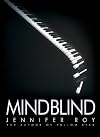
Originally posted on Read Handed .
I read this YA book last year and absolutely loved it. Mindblind is about a teenage boy, Nathaniel, with Asperger's syndrome (a form of high-functioning autism) and his struggles with his friends, his parents, his fledgling band, and of course, the girl he likes. Sounds like typical teenage stuff, right? Exactly. Roy does an excellent job showing how Nathaniel is a typical teenage boy (for those who doubted it) with a few special circumstances.
First, show more Nathaniel, at fourteen, has already graduated college and is looking into graduate schools. The problem? He's not sure what to study. Mathematics? Science? Either way, he's convinced he'll have to make some sort of significant contribution to the world before he can consider himself a bona fide genius.
Second, Nathaniel is "mindblind" - it's difficult for him to pick up on social cues and body language, so he often has no clue what others are thinking. His best friend Cooper doesn't mind. Neither does Jessa, Nathaniel's crush. Cooper and Jessa are not only his friends, they're his band mates too. Nathaniel plays keyboard and teams up with Jessa to write a few songs they can perform at their first gig - a friend's bar mitzvah.
In the midst of all this, Nathaniel feels pressure from his dad to be a "normal" teenager with a love for parties and sports instead of formulas and The Amazing Race.
The book is an amazing glimpse into the workings of an "Aspie" mind. Here are a few quotes to give you an idea:
"I grab my laptop the second Cooper returns with it and escape, without even saying good-bye. I mentally rip up the Be Polite memory card and run back to my house, leaving a trail of imaginary social skills behind me" (pg. 152).
"In order to be labeled a genius, I must make a contribution to the world. I can do that. I will start, right after I wash the chocolate off my face. If I want to be seen as a genius, I should not look like an idiot" (pg. 14).
"But fourteen has not been an auspicious age in the life of Nathaniel Clark. For example, have you heard of me? No? Exactly. Because I have not yet become a genius. Yet. Horrifyingly, at age fourteen the equation remains: N ≠ G: Nathaniel does not equal genius" (pg. 16).
Mindblind is filled with lovable and generous characters who love Nathaniel just the way he is (obvious exception: Nathaniel's father). Nathaniel has an understanding, yet firm, mother and several good friends who support him and take his social awkwardness in stride.
I highly recommend this book. It's written for a YA audience, but it's applicable to adults as well. show less
I read this YA book last year and absolutely loved it. Mindblind is about a teenage boy, Nathaniel, with Asperger's syndrome (a form of high-functioning autism) and his struggles with his friends, his parents, his fledgling band, and of course, the girl he likes. Sounds like typical teenage stuff, right? Exactly. Roy does an excellent job showing how Nathaniel is a typical teenage boy (for those who doubted it) with a few special circumstances.
First, show more Nathaniel, at fourteen, has already graduated college and is looking into graduate schools. The problem? He's not sure what to study. Mathematics? Science? Either way, he's convinced he'll have to make some sort of significant contribution to the world before he can consider himself a bona fide genius.
Second, Nathaniel is "mindblind" - it's difficult for him to pick up on social cues and body language, so he often has no clue what others are thinking. His best friend Cooper doesn't mind. Neither does Jessa, Nathaniel's crush. Cooper and Jessa are not only his friends, they're his band mates too. Nathaniel plays keyboard and teams up with Jessa to write a few songs they can perform at their first gig - a friend's bar mitzvah.
In the midst of all this, Nathaniel feels pressure from his dad to be a "normal" teenager with a love for parties and sports instead of formulas and The Amazing Race.
The book is an amazing glimpse into the workings of an "Aspie" mind. Here are a few quotes to give you an idea:
"I grab my laptop the second Cooper returns with it and escape, without even saying good-bye. I mentally rip up the Be Polite memory card and run back to my house, leaving a trail of imaginary social skills behind me" (pg. 152).
"In order to be labeled a genius, I must make a contribution to the world. I can do that. I will start, right after I wash the chocolate off my face. If I want to be seen as a genius, I should not look like an idiot" (pg. 14).
"But fourteen has not been an auspicious age in the life of Nathaniel Clark. For example, have you heard of me? No? Exactly. Because I have not yet become a genius. Yet. Horrifyingly, at age fourteen the equation remains: N ≠ G: Nathaniel does not equal genius" (pg. 16).
Mindblind is filled with lovable and generous characters who love Nathaniel just the way he is (obvious exception: Nathaniel's father). Nathaniel has an understanding, yet firm, mother and several good friends who support him and take his social awkwardness in stride.
I highly recommend this book. It's written for a YA audience, but it's applicable to adults as well. show less
Nathaniel Clark is fourteen and a college graduate taking a year off before graduate school. He has an off the charts IQ, taught himself Mandarin Chinese when he was four, and is on the ‘autistic end of Asperger’s’. He spends a lot of time happily alone – he was home schooled – but has in the flesh friends. He’s in a band. And he’s trying to become a genius, because, despite his high IQ, he can’t be a genius until he contributes something to society.
This book takes him show more through some regular teenage things- first crush, a party he really shouldn’t (and didn’t want to be) be at, misunderstandings. There is no great plot, but he grows emotionally.
I enjoyed the novel, but it has its flaws. The characters, except for his lout of a father (who doesn’t believe in the existence of Asperger’s syndrome) – who he thankfully only sees on weekends- are pretty perfect. They are totally supportive and accepting of Nathaniel’s quirks. They seem to have no real lives or problems of their own, no development, but just exist as props in Nathaniel’s life. His mother, who seems to have no emotions except for love for her son, is always there, never frustrated, never upset (except with her ex), and seems to exist for her son. She, like the friends, is perfect. I’m a little suspicious that the mother is a Mary Sue, the author having a son with Asperger’s. I’m sure she hopes to be the good mother than Nathaniel’s mother is; I’m also sure she hopes that her son’s life is navigated as smoothly (for the most part) that Nathaniel’s is; I hope so, too. Or perhaps this isn’t a flaw; perhaps these people are so flat because Nathaniel, mindblind to others thoughts and emotions, sees them that way.
There are some brilliant bits. Showing Nathaniel organizing his mind in the form of computer files is great, both in the idea and in the delivery. The part where he has an episode of mania is so well done that you feel manic yourself reading it; you don’t really catch your breath until it winds down into hypomania and then finally normalcy. This is a book, I think, that would work well for tweens, but doesn’t really hold up for adults (not that it’s meant to). show less
This book takes him show more through some regular teenage things- first crush, a party he really shouldn’t (and didn’t want to be) be at, misunderstandings. There is no great plot, but he grows emotionally.
I enjoyed the novel, but it has its flaws. The characters, except for his lout of a father (who doesn’t believe in the existence of Asperger’s syndrome) – who he thankfully only sees on weekends- are pretty perfect. They are totally supportive and accepting of Nathaniel’s quirks. They seem to have no real lives or problems of their own, no development, but just exist as props in Nathaniel’s life. His mother, who seems to have no emotions except for love for her son, is always there, never frustrated, never upset (except with her ex), and seems to exist for her son. She, like the friends, is perfect. I’m a little suspicious that the mother is a Mary Sue, the author having a son with Asperger’s. I’m sure she hopes to be the good mother than Nathaniel’s mother is; I’m also sure she hopes that her son’s life is navigated as smoothly (for the most part) that Nathaniel’s is; I hope so, too. Or perhaps this isn’t a flaw; perhaps these people are so flat because Nathaniel, mindblind to others thoughts and emotions, sees them that way.
There are some brilliant bits. Showing Nathaniel organizing his mind in the form of computer files is great, both in the idea and in the delivery. The part where he has an episode of mania is so well done that you feel manic yourself reading it; you don’t really catch your breath until it winds down into hypomania and then finally normalcy. This is a book, I think, that would work well for tweens, but doesn’t really hold up for adults (not that it’s meant to). show less
Jars of Hope: How One Woman Helped Save 2,500 Children During the Holocaust (Encounter: Narrative Nonfiction Picture Books) by Jennifer Rozines Roy
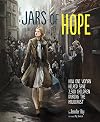
In 1940 Irena Sendler lived in Warsaw, Poland. As a daughter of a medical doctor, she noted the way in which people who were Jewish were treated differently. She became a social worker, and became much more. She avidly worked to help the poor Jewish people.
When Jews were taken to live in poor ghettos, she saved babies by hiding them in suitcases. She had assistance from a truck driver who took his truck in and out of the ghetto. He helped take the babies out of the ghetto to homes where they show more were fed and loved.
This is the story of a brave young woman who consistently lived to help the poor. Placing her own life in jeopardy, she was taken to camps and beaten. Refusing to divulge her mission, she withstood many tortures.
Not only did she save children, but kept records of each child that was saved so that they might be able to be reunited with their parents when possible.
In order to hide records from the Nazi's, she buried the data in jars in the ground.
In the end, the lists were given to an organization that helped connect the survivors with families. The few whose parents were still alive were able to reconnect with their parents.
Irena lived to the age of 98. She was honored by Yad Vashem, the Jewish people's living memorial to the Holocaust. He medal was inscribed with the words:
"Whoever saves a single life, saves an entire universe."
She saved more than 2,500 children. show less
When Jews were taken to live in poor ghettos, she saved babies by hiding them in suitcases. She had assistance from a truck driver who took his truck in and out of the ghetto. He helped take the babies out of the ghetto to homes where they show more were fed and loved.
This is the story of a brave young woman who consistently lived to help the poor. Placing her own life in jeopardy, she was taken to camps and beaten. Refusing to divulge her mission, she withstood many tortures.
Not only did she save children, but kept records of each child that was saved so that they might be able to be reunited with their parents when possible.
In order to hide records from the Nazi's, she buried the data in jars in the ground.
In the end, the lists were given to an organization that helped connect the survivors with families. The few whose parents were still alive were able to reconnect with their parents.
Irena lived to the age of 98. She was honored by Yad Vashem, the Jewish people's living memorial to the Holocaust. He medal was inscribed with the words:
"Whoever saves a single life, saves an entire universe."
She saved more than 2,500 children. show less

Yellow Star-by Jennifer Roy is a novel told in free verse based on the true story of Sylvia Perimutter who was one of 12 Jewish children (out of 250,000) that survived the Lodz Ghetto in Poland after WWII. The Nazis invaded Lodz Poland in 1939, when Sylvia was 4 ½ years old and her family tried to escape to Warsaw, but had to return for lack of work to Lodz. The Jewish families were segregated and walled off in what would become known as the Lodz Ghetto. The Nazis ordered all children to be show more sent away on the trains to the “work” camps, but Sylvia’s father knew how to pay attention, watch and observe every move the soldiers made so he could outsmart them, and find ways to keep his family safe. Over the years Sylvia’s parents smuggled the children from cellar to cellar, hiding not only Sylvia, but her sister Dora and their cousin Isaac, until 1945 when the Lodz Ghetto was liberated, just one day short of Sylvia’s 10th birthday. In 2006, after 50 years of keeping the story to herself, Sylvia recounts the events to her niece Jennifer Roy, who tells the story from a young Sylvia’s perspective, using a voice that matures with the years and is both realistic and relatable to young readers. The little girl braves hunger and faces with courage the hardships of hiding for years, losing friends, a favorite doll, and practically everything else, but persists by using her imagination to help her withstand the moment and all it entails. show less
Lists
Holocaust (1)
Awards


You May Also Like


Associated Authors
Statistics
- Works
- 53
- Also by
- 1
- Members
- 2,153
- Popularity
- #11,941
- Rating
- 4.1
- Reviews
- 87
- ISBNs
- 168
- Languages
- 6
- Favorited
- 1