
Timothy Schaffert
Author of The Swan Gondola
Works by Timothy Schaffert
The Lovers of Vertigo 1 copy
Associated Works
My Mother She Killed Me, My Father He Ate Me: Forty New Fairy Tales (2010) — Contributor — 1,099 copies, 26 reviews
When I Was a Loser: True Stories of (Barely) Surviving High School (2007) — Contributor — 38 copies, 2 reviews
Tagged
Common Knowledge
Members
Reviews
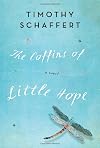
What do an 80+ year old obituary writer, the top secret printing of the last book in a wildly popular kids' book series, and the disappearance of a young girl who may or may not have ever really existed have in common? They are all integral parts of this entertaining and quirky book. And as disparate as these things might seem, in Schaffert's skilled hands, they come together seamlessly forming a whole much more than its eccentric parts.
Essie Myles has written obituaries for the local paper show more since she was in her early teens. Now in her eighties, she prides herself on finding the kernel of truth about the deceased person rather than repeating the usual platitudes. In a small town where everyone is tightly connected, unearthing anything new is a challenge. But all of a sudden, there's a flurry of newsworthy activity in this out of the way Nebraska town. Essie has been asked to write the obituary of Lenore, a young girl who has gone missing. Daisy, Lenore's mother, wants the obituary so that Lenore stays in the forefront of the nation's consciousness. We are, after all, a nation obsessed with loss, wallowing in schadenfreude. But as time has gone on and Lenore's disappearance has become less current, less newsworthy and captivating, questions start to emerge about just whether Lenore ever existed or if she is simply the creation of a lonely woman looking for attention.
While Essie is following the story of the girl who might or might not have been, her own family is facing major changes and upheavals. Her grandson Doc is thinking about closing the long-time, family-owned newspaper. The only thing having kept it solvent in the last years is his contract to be amongst the small, remote printing presses chosen to print the last few books of the very popular, catastrophe-driven, YA series of Miranda and Desiree books. As the drama surrounding Lenore's disappearance grips the town and nation, the last book of the series is rolling off the presses, adding to the mystique of the little dying town. And Essie's granddaughter rolls back into town to stay, coming back to resume raising daughter Tiffany, who has been happily living with Doc for many years. Change in life is inevitable, for the Myles family, for the newspaper, and for the town.
There is a dark, macabre thread running underneath the surface of this novel but it is so winsomely presented that it is completely appealing and addictive reading, much in the way that the Lemony Snicket books (which must be a source of inspiration for the Miranda and Desiree books in the novel) are. The characters are well-developed and eccentric but charming in their eccentricities. They are people trying to hold on, to find the right course, and to face reality, even if it is one they have to construct for themselves. The economic viability of unknown small towns, the complicated ties of family, the ways in which jobs become or define a person, voice and imagination, a skewering of the American taste for the sensational, and the surprises that life hold are all touched on as the multiple and intricate plot threads twist and weave together. Short, punchy chapters, pithy characters, and a plot unlike any other I've read make this a quick, entertaining, and completely worthwhile read. show less
Essie Myles has written obituaries for the local paper show more since she was in her early teens. Now in her eighties, she prides herself on finding the kernel of truth about the deceased person rather than repeating the usual platitudes. In a small town where everyone is tightly connected, unearthing anything new is a challenge. But all of a sudden, there's a flurry of newsworthy activity in this out of the way Nebraska town. Essie has been asked to write the obituary of Lenore, a young girl who has gone missing. Daisy, Lenore's mother, wants the obituary so that Lenore stays in the forefront of the nation's consciousness. We are, after all, a nation obsessed with loss, wallowing in schadenfreude. But as time has gone on and Lenore's disappearance has become less current, less newsworthy and captivating, questions start to emerge about just whether Lenore ever existed or if she is simply the creation of a lonely woman looking for attention.
While Essie is following the story of the girl who might or might not have been, her own family is facing major changes and upheavals. Her grandson Doc is thinking about closing the long-time, family-owned newspaper. The only thing having kept it solvent in the last years is his contract to be amongst the small, remote printing presses chosen to print the last few books of the very popular, catastrophe-driven, YA series of Miranda and Desiree books. As the drama surrounding Lenore's disappearance grips the town and nation, the last book of the series is rolling off the presses, adding to the mystique of the little dying town. And Essie's granddaughter rolls back into town to stay, coming back to resume raising daughter Tiffany, who has been happily living with Doc for many years. Change in life is inevitable, for the Myles family, for the newspaper, and for the town.
There is a dark, macabre thread running underneath the surface of this novel but it is so winsomely presented that it is completely appealing and addictive reading, much in the way that the Lemony Snicket books (which must be a source of inspiration for the Miranda and Desiree books in the novel) are. The characters are well-developed and eccentric but charming in their eccentricities. They are people trying to hold on, to find the right course, and to face reality, even if it is one they have to construct for themselves. The economic viability of unknown small towns, the complicated ties of family, the ways in which jobs become or define a person, voice and imagination, a skewering of the American taste for the sensational, and the surprises that life hold are all touched on as the multiple and intricate plot threads twist and weave together. Short, punchy chapters, pithy characters, and a plot unlike any other I've read make this a quick, entertaining, and completely worthwhile read. show less
Real Rating: 3.8* of five
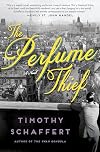
The Publisher Says: A Gentleman in Moscow meets Moulin Rouge in this stylish, sexy page-turner about Clementine, a queer American expat and notorious thief of rare scents, who has retired to Paris, only to return to her old tricks in hopes of protecting the city she loves when the Nazis invade in 1941.
Clementine is a seventy-two year-old reformed con artist with a penchant for impeccably tailored suits. Her life of crime has led her from the uber-wealthy perfume show more junkies of belle epoque Manhattan, to the scented butterflies of Costa Rica, to the spice markets of Marrakech, and finally the bordellos of Paris, where she settles down and opens a legitimate shop bottling her favorite extracts for the ladies of the cabarets.
In 1941, as the German's stranglehold on the city tightens, Clem's perfume-making attracts the notice of Oskar Voss, a Francophile Nazi bureaucrat, who comes to demand Clem's expertise and loyalty in his mysterious play for Hitler's favor. Clem has no choice but to surrender fully to the con, but while she knew playing the part of collaborator would be dangerous, she never imagined it would be so painfully intimate. At Oskar's behest, and in an effort to win his trust, Clem recounts the full story of her life and loves, this time without the cover of the lies she came to Paris to escape.
Complete with romance, espionage, champagne towers, and haute couture, this full-tilt sensory experience is a dazzling portrait of the underground resistance of twentieth-century Paris and a passionate love letter to the power of beauty and community in the face of insidious hate.
I RECEIVED A DRC FROM THE PUBLISHER VIA NETGALLEY. THANK YOU.
My Review: Lush, lovely prose telling a story that made me squirm so hard I wore a hole in my upholstery.
Stories about coercion of trans folks using their identity as trans are not comfortable reads. I do not think this was intended to be a comfy-cozy kind of a read but it was clear in its empathy for its trans main character. So, blessedly, I was not left with the rather unclean film of exploitive appropriative use of trans identity as a negative signifier on my lens into the story.
Still, this story causes me horripilation. As things that have Nazis as the antagonist should.
The felt-like-he-was-factual Oskar Voss, nasty boss Nazi spymaster, based like the rest of the story—as per the author—on real people who were in Paris to escape the judgments of Society in the safety of the big city. Then, the worst-possible worst result happens to them all when the vileness of the Nazis come barging in with their giant, outsized hatreds, and their very overblown sense of purpose. Oskar is typical of the cynical bandwagon-hoppers that puritanical movements attract like horse apples attract dung beetles. He is very much not interested in the ideology of his paymasters. He wants power over others. His means of getting more of his drug is to use whoever and whatever he can to buy himself a seat at a higher-placed table.
Enter Clem(entine). And a lot of Clem's fellow misfits. They need to survive, and their Otherness has equipped them to do this any and every way they possibly can including stealing and blackmailing any and everyone they need to. Oskar wants to ensorcel Hitler with some super-special scent, which TBH just fell flat for me as a motivation...but it led to butch lesbian/transman Clem recounting, for honestly flimsy reasons, her lifetime's-worth of stories to the rapt Oskar. Whatever excuse made that happen is good enough for me.
Clem, a very old person for that era at seventy-two, has Lived A Life, maybe three or even four, in those years. A born tale-teller, as anyone making a living as a con artist and thief operating among the very rich must be, Clem completely wraps Oskar up in the memory palace of the past. How much of it would pass the fact-checking of the internet age, well...who cares. I do not really buy into the motivations of Oskar for any of his actions, but that left me no less delighted to spend time with Clem.
The horrors of Nazi-occupied Paris, the horrors that were to come, all seemed to Clem to be clear because these puritanical control freaks are just like the others from the past. None of it is downplayed, and there are terrible passages in this story, but the way it is presented feels...convenient. Oskar is easily led by his greed for power, Clem is easily swayed by a murky sense of responsibility that all just jelled a bit too patly for this reader.
I will not, though, say anything to discourage anyone who longs for ancestral representation for their own kind to get stuck in right away. I think the transmasculine Clem, while imperfect, is perfectly delightful to spend page time with. The hurts and betrayals of lives long over make for great stories, even knowing they were painful and hard to live. You will come away edified for knowing the honorable, sensible, deeply relatable hero that is Clem. show less
The Publisher Says: A Gentleman in Moscow meets Moulin Rouge in this stylish, sexy page-turner about Clementine, a queer American expat and notorious thief of rare scents, who has retired to Paris, only to return to her old tricks in hopes of protecting the city she loves when the Nazis invade in 1941.
Clementine is a seventy-two year-old reformed con artist with a penchant for impeccably tailored suits. Her life of crime has led her from the uber-wealthy perfume show more junkies of belle epoque Manhattan, to the scented butterflies of Costa Rica, to the spice markets of Marrakech, and finally the bordellos of Paris, where she settles down and opens a legitimate shop bottling her favorite extracts for the ladies of the cabarets.
In 1941, as the German's stranglehold on the city tightens, Clem's perfume-making attracts the notice of Oskar Voss, a Francophile Nazi bureaucrat, who comes to demand Clem's expertise and loyalty in his mysterious play for Hitler's favor. Clem has no choice but to surrender fully to the con, but while she knew playing the part of collaborator would be dangerous, she never imagined it would be so painfully intimate. At Oskar's behest, and in an effort to win his trust, Clem recounts the full story of her life and loves, this time without the cover of the lies she came to Paris to escape.
Complete with romance, espionage, champagne towers, and haute couture, this full-tilt sensory experience is a dazzling portrait of the underground resistance of twentieth-century Paris and a passionate love letter to the power of beauty and community in the face of insidious hate.
I RECEIVED A DRC FROM THE PUBLISHER VIA NETGALLEY. THANK YOU.
My Review: Lush, lovely prose telling a story that made me squirm so hard I wore a hole in my upholstery.
Stories about coercion of trans folks using their identity as trans are not comfortable reads. I do not think this was intended to be a comfy-cozy kind of a read but it was clear in its empathy for its trans main character. So, blessedly, I was not left with the rather unclean film of exploitive appropriative use of trans identity as a negative signifier on my lens into the story.
Still, this story causes me horripilation. As things that have Nazis as the antagonist should.
The felt-like-he-was-factual Oskar Voss, nasty boss Nazi spymaster, based like the rest of the story—as per the author—on real people who were in Paris to escape the judgments of Society in the safety of the big city. Then, the worst-possible worst result happens to them all when the vileness of the Nazis come barging in with their giant, outsized hatreds, and their very overblown sense of purpose. Oskar is typical of the cynical bandwagon-hoppers that puritanical movements attract like horse apples attract dung beetles. He is very much not interested in the ideology of his paymasters. He wants power over others. His means of getting more of his drug is to use whoever and whatever he can to buy himself a seat at a higher-placed table.
Enter Clem(entine). And a lot of Clem's fellow misfits. They need to survive, and their Otherness has equipped them to do this any and every way they possibly can including stealing and blackmailing any and everyone they need to. Oskar wants to ensorcel Hitler with some super-special scent, which TBH just fell flat for me as a motivation...but it led to butch lesbian/transman Clem recounting, for honestly flimsy reasons, her lifetime's-worth of stories to the rapt Oskar. Whatever excuse made that happen is good enough for me.
Clem, a very old person for that era at seventy-two, has Lived A Life, maybe three or even four, in those years. A born tale-teller, as anyone making a living as a con artist and thief operating among the very rich must be, Clem completely wraps Oskar up in the memory palace of the past. How much of it would pass the fact-checking of the internet age, well...who cares. I do not really buy into the motivations of Oskar for any of his actions, but that left me no less delighted to spend time with Clem.
The horrors of Nazi-occupied Paris, the horrors that were to come, all seemed to Clem to be clear because these puritanical control freaks are just like the others from the past. None of it is downplayed, and there are terrible passages in this story, but the way it is presented feels...convenient. Oskar is easily led by his greed for power, Clem is easily swayed by a murky sense of responsibility that all just jelled a bit too patly for this reader.
I will not, though, say anything to discourage anyone who longs for ancestral representation for their own kind to get stuck in right away. I think the transmasculine Clem, while imperfect, is perfectly delightful to spend page time with. The hurts and betrayals of lives long over make for great stories, even knowing they were painful and hard to live. You will come away edified for knowing the honorable, sensible, deeply relatable hero that is Clem. show less
Who is Timothy Schaffert? Does he even exist? Maybe he's just a figment of his parents' imagination and is fraudulently appearing here and there, (like Kilroy on tour) and collecting accolades and kudos under the guise of a mild-mannered, be-spectacled, slightly balding man of a certain age. Maybe he was kidnapped by aliens. Maybe he wasn't. Maybe he's still on the mother ship ... ah, yes, that's it. He's travelling, still ... and not on this plane of existence.
The Coffins of Little Hope show more seemed to offer every element that I look for in a good book: a fascinating, intriguing mystery, a plot line that pulls you in inexorably and excellent writing. If I give this author nothing else, I concede that he is an accomplished, talented and inventive writer.
But ... BUT ... really, what a waste of paper. Like Vanessa, Muscatine's daughter in the novel, I beg Schaffert to stop writing. After all, "eight million trees! ... have been sacrificed." And for what?
The reader is duped into beginning a tale about an octogenarian obituary-writer who promises to reveal some interesting facts about her life, growing up in small town Nebraska. Quite rapidly, we are pulled into a mystery of a young girl who has disappeared, but find out even more quickly that she may not even have existed, except as a figment of her mother's imagination. The novel is actually full of "peep show" qualities, wherein people enter and disappear, at will. Characters enter, mysteriously, and disappear into a fog, lickety-split. We follow, cautiously, into the fog and are left wandering in a miasma, the thickness of pea soup.
I am angry with myself, the way I haven't been in a very, very long time that I fell for the book, and read it through to the end. (I only kept hoping there was "more" that would eventually redeem it. More fool me!) I knew, about a third of the way through reading this book that this was not going to deliver anything worthwhile. I knew it. And still, I kept reading, subconsciously pulled forward most probably by the niggling thoughts that said, "But he's such a good writer, that surely he will give me something.
I like to be challenged, shaken up, moved, angered, stimulated, confronted, provoked, enlightened by literature, by art. Any one of those things, among many others, and I am in! But I never like to feel that it was all a waste of time.
Pointless. The reading of this was so pointless that it's pointless to discuss it further. It actually re-invents the meaning for pointlessness. show less
The Coffins of Little Hope show more seemed to offer every element that I look for in a good book: a fascinating, intriguing mystery, a plot line that pulls you in inexorably and excellent writing. If I give this author nothing else, I concede that he is an accomplished, talented and inventive writer.
But ... BUT ... really, what a waste of paper. Like Vanessa, Muscatine's daughter in the novel, I beg Schaffert to stop writing. After all, "eight million trees! ... have been sacrificed." And for what?
The reader is duped into beginning a tale about an octogenarian obituary-writer who promises to reveal some interesting facts about her life, growing up in small town Nebraska. Quite rapidly, we are pulled into a mystery of a young girl who has disappeared, but find out even more quickly that she may not even have existed, except as a figment of her mother's imagination. The novel is actually full of "peep show" qualities, wherein people enter and disappear, at will. Characters enter, mysteriously, and disappear into a fog, lickety-split. We follow, cautiously, into the fog and are left wandering in a miasma, the thickness of pea soup.
I am angry with myself, the way I haven't been in a very, very long time that I fell for the book, and read it through to the end. (I only kept hoping there was "more" that would eventually redeem it. More fool me!) I knew, about a third of the way through reading this book that this was not going to deliver anything worthwhile. I knew it. And still, I kept reading, subconsciously pulled forward most probably by the niggling thoughts that said, "But he's such a good writer, that surely he will give me something.
I like to be challenged, shaken up, moved, angered, stimulated, confronted, provoked, enlightened by literature, by art. Any one of those things, among many others, and I am in! But I never like to feel that it was all a waste of time.
Pointless. The reading of this was so pointless that it's pointless to discuss it further. It actually re-invents the meaning for pointlessness. show less
In a small Nebraska town, news is being made. The whole town is alight with excitement over being the chosen location to print and publish the last in the series of one of the most popular and premiere children’s books of the century, with everyone atwitter over just how it will all turn out. As the resident obituary writer in the town, Essie Myles is no stranger to strange and unusual circumstances, but when a young girl named Lenore goes missing, the situation gets more and more odd. It show more seems the town is not entirely convinced that little Lenore even existed, let alone has gone missing, and when her mother Daisy can’t produce the evidence that the town so desperately needs in order to begin searching for the young girl, Essie takes it upon herself to get to the bottom of things. Meanwhile, Essie’s thirteen year old great-granddaughter, Tiff, is going through a difficult time due to the reappearance of her mother after several years of abandonment, and Essie’s grandson Doc is strangling under the weight of his job as the editor of the local paper. Is Lenore really only a figment in the imagination of a woman seeking attention, or is there more to the story? And what will become of Essie and her brood as the foundations of their family are realigned and resituated? These are the questions that underpin the strangely melodious tale of The Coffins of Little Hope, the witty and intriguing new novel from Timothy Schaffert.
This was a story that had many different levels and components, all working in harmony together very nicely. Schaffert gives us the tale of a town that is alight with all sorts of excitement and fervor, and hones in on one family and their reaction to it all. Aside from the children’s book being published and the mania it brings to the little town, there is the Lenore contingency that threatens to overrun its borders and has in fact become national news. As Essie ponders her family’s troubles, she also decides that she will be the one to get Daisy to admit that Lenore is nothing but a ghost from inside her own mind. But Daisy is having none of this and continues to assert Lenore’s existence ardently. At first I thought it strange that no one in the town was searching for the young girl, but then I came to understand the logistics of the problem. Too many people surrounding Daisy had reason to believe that the little girl was only a lonely woman’s way to get the attention that had been denied her for so long, and as such, they never took Lenore’s plight very seriously at all.
Of course, the town was not above keeping the spotlight turned on the Lenore case for the notoriety that it won them, and as the paper ran feature after feature on the case, I began to see that the town was milking the Lenore situation for all it was worth. Doc and Essie could especially be blamed for this, and as more and more strange people and circumstances began to surround Daisy, the town grew more and more embedded in her story. The mystery of whether or not Lenore even existed was constantly turned over and over in the narrative, the townsfolk choosing to remain sceptical and non-committal, even to its final conclusion. As Lenore’s absence lengthens, her strange circumstance draws people towards Daisy in a sort of religious fanaticism and Daisy becomes the acolyte of a new kind of church that lives to pay homage to her missing daughter.
The other half of the book focuses on the series of children’s books that are being printed in the town and how these books have a particular importance in the life of Essie and her family. When Essie begins to secretly correspond with the author of the books, she discovers that all is not what it seems with him. As the books go to print, there is some anxiety that parts of the story will be leaked; a situation that causes Doc to become very nervous, as he is also the owner of the press that prints the books. The possibility of the particulars of the book being leaked is not Doc’s only concern, for as the sole guardian of Tiff, he must now step aside when her mother comes back into the picture, a fact that disheartens and weighs on him. Meanwhile, Essie is struggling with not only her family troubles, but with the realities of her work as an obituary writer, feeling that her time in this particular career is almost over. Schaffert delivers these intertwined stories with a stylistically lush yet somehow sparse narrative, deliciously serving it all up with a quirky style and smooth dialogue.
Though I wasn’t sure what to make of this book when I first picked it up, I did end up loving it. It has all the classic hallmarks of a great and invigorating read, and I grew to be particularly fond of the quirky stories and characters that populated the pages. It’s the kind of book that’s easy to relax into and let the story wash over you, and though things are not neatly tied up in the end, there’s room for a great deal of speculation when it comes to how thing turn out for Daisy, Essie, and her family. A gem of read that will please even the most picky readers. Recommended. show less
This was a story that had many different levels and components, all working in harmony together very nicely. Schaffert gives us the tale of a town that is alight with all sorts of excitement and fervor, and hones in on one family and their reaction to it all. Aside from the children’s book being published and the mania it brings to the little town, there is the Lenore contingency that threatens to overrun its borders and has in fact become national news. As Essie ponders her family’s troubles, she also decides that she will be the one to get Daisy to admit that Lenore is nothing but a ghost from inside her own mind. But Daisy is having none of this and continues to assert Lenore’s existence ardently. At first I thought it strange that no one in the town was searching for the young girl, but then I came to understand the logistics of the problem. Too many people surrounding Daisy had reason to believe that the little girl was only a lonely woman’s way to get the attention that had been denied her for so long, and as such, they never took Lenore’s plight very seriously at all.
Of course, the town was not above keeping the spotlight turned on the Lenore case for the notoriety that it won them, and as the paper ran feature after feature on the case, I began to see that the town was milking the Lenore situation for all it was worth. Doc and Essie could especially be blamed for this, and as more and more strange people and circumstances began to surround Daisy, the town grew more and more embedded in her story. The mystery of whether or not Lenore even existed was constantly turned over and over in the narrative, the townsfolk choosing to remain sceptical and non-committal, even to its final conclusion. As Lenore’s absence lengthens, her strange circumstance draws people towards Daisy in a sort of religious fanaticism and Daisy becomes the acolyte of a new kind of church that lives to pay homage to her missing daughter.
The other half of the book focuses on the series of children’s books that are being printed in the town and how these books have a particular importance in the life of Essie and her family. When Essie begins to secretly correspond with the author of the books, she discovers that all is not what it seems with him. As the books go to print, there is some anxiety that parts of the story will be leaked; a situation that causes Doc to become very nervous, as he is also the owner of the press that prints the books. The possibility of the particulars of the book being leaked is not Doc’s only concern, for as the sole guardian of Tiff, he must now step aside when her mother comes back into the picture, a fact that disheartens and weighs on him. Meanwhile, Essie is struggling with not only her family troubles, but with the realities of her work as an obituary writer, feeling that her time in this particular career is almost over. Schaffert delivers these intertwined stories with a stylistically lush yet somehow sparse narrative, deliciously serving it all up with a quirky style and smooth dialogue.
Though I wasn’t sure what to make of this book when I first picked it up, I did end up loving it. It has all the classic hallmarks of a great and invigorating read, and I grew to be particularly fond of the quirky stories and characters that populated the pages. It’s the kind of book that’s easy to relax into and let the story wash over you, and though things are not neatly tied up in the end, there’s room for a great deal of speculation when it comes to how thing turn out for Daisy, Essie, and her family. A gem of read that will please even the most picky readers. Recommended. show less
Lists
Awards


You May Also Like


Associated Authors
Statistics
- Works
- 12
- Also by
- 7
- Members
- 1,040
- Popularity
- #24,754
- Rating
- 3.4
- Reviews
- 61
- ISBNs
- 36
- Languages
- 2
