
Mieko Kawakami
Author of Breasts and Eggs
About the Author
Works by Mieko Kawakami
Marie’s Proof of Love 3 copies
Mieko Kawakami 3 Books Collection Set (Heaven, All The Lovers In The Night, Breasts and Eggs) (2024) 2 copies
Le sorelle in giallo 2 copies
Associated Works
早稲田文学 2017年初夏号 (単行本) — Contributor — 1 copy
平成の名小説 (新潮2019年08月号増刊) — Contributor — 1 copy
文学界 2008年 03月号 [雑誌] — Contributor — 1 copy
新潮 2018年 03月号 — Contributor — 1 copy
S-Fマガジン 2007年 09月号 [雑誌] — Contributor — 1 copy
早稲田文学 2015年春号 — Contributor — 1 copy
文學界2018年5月号 — Contributor — 1 copy
新潮 2017年 11 月号 — Contributor — 1 copy
文藝 2008年 05月号 [雑誌] — Contributor — 1 copy
Waseda Bungaku Free Paper WB vol.022_2011_spring — Contributor — 1 copy
Waseda Bungaku Free Paper WB vol.023_2011_summer — Contributor — 1 copy
ちくま 2017年11月号 No.560 — Contributor — 1 copy
文學界 2021年05月号 — Contributor — 1 copy
文學界2019年5月号 — Contributor — 1 copy
文學界2020年5月号 — Contributor — 1 copy
新潮 2010年 03月号 [雑誌] — Contributor — 1 copy
星の文学館 銀河も彗星も — Contributor — 1 copy
Tagged
Common Knowledge
- Canonical name
- Kawakami, Mieko
- Birthdate
- 1976-08-29
- Gender
- female
- Occupations
- novelist
singer - Relationships
- Abe, Kazushige (spouse)
- Nationality
- Japan
- Birthplace
- Osaka, Japan
- Places of residence
- Tokyo, Japan
- Associated Place (for map)
- Japan
Members
Reviews
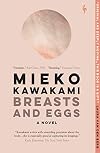
I can't claim to be any kind of expert on Japanese literature, "Breasts and Eggs" struck me as something new. It's a novel far removed both from Japanese tradition and from the high-tech miracle economy that the country experienced in the eighties. It's set not in Tokyo but in the downtrodden sections of Osaka, a grimy port city. Many of its characters had upbringings that were economically impoverished psychologically painful. Most of all, I was struck by this novel's language. While many show more works translated from Japanese seem to aim for austere, beautifully composed minimalism, "Breasts and Eggs" is full of slang and improper usage, a reflection, perhaps, of the Osakan dialect that its characters sometimes converse in. If Haruki Murakami's scenes sometimes seem like antiseptic miniatures and his characters sometimes exude little but an intriguing blankness, this novel's main characters might as well exist in another universe from his. A good portion of the narrator's memories come straight from the karaoke bars that she, her mother, and her sister once worked in. I wondered more than once if the author was in conscious conflict with standard images of Japanese society as universally prosperous and orderly while writing this one.
"Breasts and Eggs" is also -- perhaps unsurprisingly, given its not-for-high-school-libraries-in-Florida cover -- a novel that's largely about female experience, decisions, and concerns. There are few men around the plot, but men are notable mostly by their absence here: it's the narrator's mother and grandmother that worked their whole lives to keep their family afloat. As the narrative progresses, the narrator enters another sort of female space -- literature and the publishing industry -- while her sister, still amusing men for cash as a bar hostess, considers the costs and benefits of breast implants. But it's after our narrator experiences a bit of success and starts to wonder if she should have a child of her own that things get really philosophically interesting. She becomes interested -- perhaps obsessed -- with the concept of sperm donation, attending both informatinal seminars and meetings for people who don't know the identity of their fathers. There are some anti-natalist arguments in this part of the book that -- although they're beautifully rendered -- some readers may find depressing, but there's also something else here that the author can't quite bring herself to spell out: once you get some hands on some sperm for reproductive purposes, just how necessary is a male figure in any Japanese woman's life? The question isn't just an abstraction to our narrator: she has had little love life to speak of, her father -- most fathers in this book, really -- mostly meted out punishments and misery, and her everyday experiences with men are frequently far from pleasant. Kawakami seems to be asking whether the human race go on and how much of a role men should play in it. While play little enough in "Breasts and Eggs," I found the book sad, thoughtful, and often surprising. It's a heavy read, sometimes, but I'd certainly recommend it. show less
"Breasts and Eggs" is also -- perhaps unsurprisingly, given its not-for-high-school-libraries-in-Florida cover -- a novel that's largely about female experience, decisions, and concerns. There are few men around the plot, but men are notable mostly by their absence here: it's the narrator's mother and grandmother that worked their whole lives to keep their family afloat. As the narrative progresses, the narrator enters another sort of female space -- literature and the publishing industry -- while her sister, still amusing men for cash as a bar hostess, considers the costs and benefits of breast implants. But it's after our narrator experiences a bit of success and starts to wonder if she should have a child of her own that things get really philosophically interesting. She becomes interested -- perhaps obsessed -- with the concept of sperm donation, attending both informatinal seminars and meetings for people who don't know the identity of their fathers. There are some anti-natalist arguments in this part of the book that -- although they're beautifully rendered -- some readers may find depressing, but there's also something else here that the author can't quite bring herself to spell out: once you get some hands on some sperm for reproductive purposes, just how necessary is a male figure in any Japanese woman's life? The question isn't just an abstraction to our narrator: she has had little love life to speak of, her father -- most fathers in this book, really -- mostly meted out punishments and misery, and her everyday experiences with men are frequently far from pleasant. Kawakami seems to be asking whether the human race go on and how much of a role men should play in it. While play little enough in "Breasts and Eggs," I found the book sad, thoughtful, and often surprising. It's a heavy read, sometimes, but I'd certainly recommend it. show less

An unfortunate judicial ruling forces one to consider the challenges confronting women today. How is it possible that so few, mostly men and devout members of one Christian religion, can dictate how all women manage their own bodies? Mieko Kawakami’s latest novel is particularly apt for these times because she examines how women chose to live and the choices society forces on them.
She subtly mocks the “Madonna-Whore dichotomy” that paternalistic societies frequently inflict on women. show more On the one hand, women should be helpmates, marrying young and nurturing a family while, on the other, they need to evince almost impossible standards of beauty and allure. Kawakami’s protagonist, Fuyuko Irie, is a plain, introverted woman living a bland solitary existence. She comes to realize a genuine urge to connect with others while simultaneously embracing her need for seclusion—all while balancing a successful career, multiple friendships and a budding romance.
Fuyoko is a freelance proofreader in her mid-30s who has a stable income and independence. She loves her work, finding things to proof almost everywhere she goes. This is a powerful metaphor for Fuyoko’s solitary lifestyle. Proofreaders, she reveals, are taught to “never connect with the content.” The key word here is “connect,” because Fuyoko has real issues with connection. Clearly, her situation resonates with the claustrophobia we all felt during the pandemic.
As an introverted, naïve, and overly compliant person with a suppressed libido—probably the result of a previous sexual assault—Fuyoko relishes her time alone. Indeed, she looks forward to wandering Tokyo’s shopping district at night when she can be alone to embrace the darkness and light. “Why is the night so beautiful?” she wonders, “Why does it shine the way it does?” After seeing her reflection in a store window on one of these jaunts, Fuyoko realizes that she is “the dictionary definition of a miserable person.” She resolves to fix it, yet she needs to fortify herself with copious helpings of beer and sake to face venturing into social situations— “…to let go of my usual self.”
At a local culture center, Fuyoko meets Mitsutsuka. He is an older man who claims to be a high school physics teacher. Following rescuing her from an embarrassing drunken incident, they begin to bond at a cafe. He mentors her with discussions ranging from the physics of light to the music of Chopin. This appealing centerpiece to the plot offers Kawakami the opportunity to demonstrate that meaningful relationships are indeed key to finding happiness. Yet the risks they carry are real, most notably a requirement to let down one’s guard. As Fuyoko discovers, this can be quite painful for extreme introverts.
Kawakami uses Fuyoko’s female acquaintances to explore the roles other women can play in these dynamics. Hijiri Ishikawa is Fuyoko’s only friend, but this relationship is decidedly one-sided. Hijiri is her polar opposite. She is outspoken, stylish, and calculating. She uses the compliant Fuyoko as a sounding board for her catty gossip and to validate her decidedly modern world view.
Kyoko is to be admired as a successful editor for the publishing house that Fuyoko leaves in the first few pages of the book due to mocking from co-workers. Kyoko has a more traditional worldview than Hijiri and does not hide her contempt for her free-wheeling sexual lifestyle.
Noriko seems to be Fuyoko’s only acquaintance with what Japanese society views as a fulfilling life (i.e., home, successful husband, and happy children). However, as is so often the case, this turns out to be an illusion.
Kawakami’s use of a first-person narrative lends an intimate, introspective and confessional style to the book, which I greatly admire, especially her use of Fuyoko’s memories to deftly flesh out her backstory. However, the lack of a conventional plot structure can be unsettling while nonetheless being quite effective. Kawakami avoids the kind of melodrama that would tempt less skilled writers. She never prescribes, just shows without comment. A happy ending may not be in the cards for Fuyoko, yet Kawakami, by the novel’s end, does hint at a possible satisfying career option for her. show less
She subtly mocks the “Madonna-Whore dichotomy” that paternalistic societies frequently inflict on women. show more On the one hand, women should be helpmates, marrying young and nurturing a family while, on the other, they need to evince almost impossible standards of beauty and allure. Kawakami’s protagonist, Fuyuko Irie, is a plain, introverted woman living a bland solitary existence. She comes to realize a genuine urge to connect with others while simultaneously embracing her need for seclusion—all while balancing a successful career, multiple friendships and a budding romance.
Fuyoko is a freelance proofreader in her mid-30s who has a stable income and independence. She loves her work, finding things to proof almost everywhere she goes. This is a powerful metaphor for Fuyoko’s solitary lifestyle. Proofreaders, she reveals, are taught to “never connect with the content.” The key word here is “connect,” because Fuyoko has real issues with connection. Clearly, her situation resonates with the claustrophobia we all felt during the pandemic.
As an introverted, naïve, and overly compliant person with a suppressed libido—probably the result of a previous sexual assault—Fuyoko relishes her time alone. Indeed, she looks forward to wandering Tokyo’s shopping district at night when she can be alone to embrace the darkness and light. “Why is the night so beautiful?” she wonders, “Why does it shine the way it does?” After seeing her reflection in a store window on one of these jaunts, Fuyoko realizes that she is “the dictionary definition of a miserable person.” She resolves to fix it, yet she needs to fortify herself with copious helpings of beer and sake to face venturing into social situations— “…to let go of my usual self.”
At a local culture center, Fuyoko meets Mitsutsuka. He is an older man who claims to be a high school physics teacher. Following rescuing her from an embarrassing drunken incident, they begin to bond at a cafe. He mentors her with discussions ranging from the physics of light to the music of Chopin. This appealing centerpiece to the plot offers Kawakami the opportunity to demonstrate that meaningful relationships are indeed key to finding happiness. Yet the risks they carry are real, most notably a requirement to let down one’s guard. As Fuyoko discovers, this can be quite painful for extreme introverts.
Kawakami uses Fuyoko’s female acquaintances to explore the roles other women can play in these dynamics. Hijiri Ishikawa is Fuyoko’s only friend, but this relationship is decidedly one-sided. Hijiri is her polar opposite. She is outspoken, stylish, and calculating. She uses the compliant Fuyoko as a sounding board for her catty gossip and to validate her decidedly modern world view.
Kyoko is to be admired as a successful editor for the publishing house that Fuyoko leaves in the first few pages of the book due to mocking from co-workers. Kyoko has a more traditional worldview than Hijiri and does not hide her contempt for her free-wheeling sexual lifestyle.
Noriko seems to be Fuyoko’s only acquaintance with what Japanese society views as a fulfilling life (i.e., home, successful husband, and happy children). However, as is so often the case, this turns out to be an illusion.
Kawakami’s use of a first-person narrative lends an intimate, introspective and confessional style to the book, which I greatly admire, especially her use of Fuyoko’s memories to deftly flesh out her backstory. However, the lack of a conventional plot structure can be unsettling while nonetheless being quite effective. Kawakami avoids the kind of melodrama that would tempt less skilled writers. She never prescribes, just shows without comment. A happy ending may not be in the cards for Fuyoko, yet Kawakami, by the novel’s end, does hint at a possible satisfying career option for her. show less
Breasts and Eggs is really two novels in one.
Part one follows our main character as she hosts her sister, who wants a boob job she can't afford, and her niece. who is going through puberty and the angst surrounding it all. It's the highlight of the novel, and as a standalone novella, is one of the most visceral explorations of the female body and women's beauty expectations I've ever read. It's a heartbreaking and all-too-common story of single-parenthood, unease in growing into a body you show more don't want, and frankly, poverty.
Part two is much longer: it follows the same main character, this time debating if she should go through a sperm donation to have a child by herself, while navigating her writing career and feelings for others as someone unable and unwilling to have sexual intercourse. It covers about 2/3 of the novel and like the former, is written as a string of dialogues about parenthood had with the main character. It's a really interesting and invigorating construction; a bit film like, a bit dreamlike.
As I noted though, the book felt more like two novels: part one and two are definitely linked by character and theme, but the time shift, the length, and the focus were almost too different to fit together with ease. The second part also... dragged. I felt its length at times, and not in a good way. I wish the class themes would have continued in the second part as well, but oh well. The ending was similarly quite ambivalent to me: I thought the buildup of this novel would lead to acceptance and joy of childlessness, or at least something akin to it, but... I don't know. I can tell how important a work like this would be to women in contemporary Japan, and I'm glad it exists.
In all, the prose was captivating and the translation awesome, and I'd love to read more of her work. But. The plot got kind of lost halfway and I can't say it's perfect. show less
Part one follows our main character as she hosts her sister, who wants a boob job she can't afford, and her niece. who is going through puberty and the angst surrounding it all. It's the highlight of the novel, and as a standalone novella, is one of the most visceral explorations of the female body and women's beauty expectations I've ever read. It's a heartbreaking and all-too-common story of single-parenthood, unease in growing into a body you show more don't want, and frankly, poverty.
Part two is much longer: it follows the same main character, this time debating if she should go through a sperm donation to have a child by herself, while navigating her writing career and feelings for others as someone unable and unwilling to have sexual intercourse. It covers about 2/3 of the novel and like the former, is written as a string of dialogues about parenthood had with the main character. It's a really interesting and invigorating construction; a bit film like, a bit dreamlike.
As I noted though, the book felt more like two novels: part one and two are definitely linked by character and theme, but the time shift, the length, and the focus were almost too different to fit together with ease. The second part also... dragged. I felt its length at times, and not in a good way. I wish the class themes would have continued in the second part as well, but oh well. The ending was similarly quite ambivalent to me: I thought the buildup of this novel would lead to acceptance and joy of childlessness, or at least something akin to it, but... I don't know. I can tell how important a work like this would be to women in contemporary Japan, and I'm glad it exists.
In all, the prose was captivating and the translation awesome, and I'd love to read more of her work. But. The plot got kind of lost halfway and I can't say it's perfect. show less
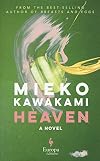
Mieko Kawakami’s 2009 novel Heaven has now been translated from the Japanese by Sam Bett and David Boyd and has been published in a Europa edition. It follows the success Kawakami enjoyed last year when her novel Breasts and Eggs became the first of her books to be published in English.
Because of its heartbreaking plot, Heaven is not an easy novel to read. It tells the story of two middle school students, one male and one female, who are so tormented and abused by their classmates that show more their lives are no longer their own. Everything that happens to the two of them is recounted by the unnamed boy who is being so badly bullied. He is the target of a small group of boys led by class favorite Ninomiya, a handsome, charismatic, but extremely cruel young man. Another gang member, a boy called Momose, is always around when our narrator is being bullied, but never gets his own hands dirty, preferring simply to stare from the outskirts of the action with a blank look on his face and his arms crossed.
“Without school, I could get by without seeing anyone or being seen by anyone. It was like being a piece of furniture in a room that nobody uses. I can’t express how safe it felt never being seen. I knew the peace could never last, but it was immensely comforting to know that, if I never left my room, no one in the world could lay a finger on me. The flip side was I had no way of engaging with the world, but that was how it had to be.” - Narrator
Kojima, a girl who comes to school everyday unwashed and having taken no care at all to her personal appearance, suffers a similar fate from a gang of girls who delight in tormenting her both emotionally and physically. She and the boy, despite their common suffering, have never acknowledged each other in the classroom, much less spoken about what is happening to them. Then one day, Kojima leaves an unsigned note hidden in the boy’s pencil case saying, “We should be friends.” The boy is almost certain that this is just another trick and that he is being set up for a new embarrassment at the hands of his bullies, but the notes keep coming and his curiosity keeps growing. Finally, more desperate for a friend than he knows, the boy agrees to meet the note-writer in the stairwell after school. And he and Kojima become each other’s only friend.
For the rest of the school year, through the summer, and into the new school year, the boy with the lazy eye and the “dirty” girl exchange letters and notes, and even meet occasionally to share their lives. They are still mercilessly bullied by their peers, but their lives are a little better for the friendship they share. But, of course, that will not be tolerated by either set of bullies when they finally figure out that Kojima and the boy have become friends behind their backs.
Bottom Line: Heaven is a disturbing novel that shines a spotlight on bullies and their victims. Kojima and the boy justify to themselves their own passiveness to everything they suffer, but the bullies sense their unwillingness to defend themselves and continue to escalate their cruelty. That is hard to watch, and I kept wondering where the adults were while all this was happening — realizing of course, that this kind of silent suffering at the hands of peers often goes unnoticed by parents and teachers until it is too late to do anything about it. This is a coming-of-age novel from Hell, and Hell would have, perhaps, been a more suitable title for this one than Heaven (the title has a specific meaning to the boy and the girl). show less
Because of its heartbreaking plot, Heaven is not an easy novel to read. It tells the story of two middle school students, one male and one female, who are so tormented and abused by their classmates that show more their lives are no longer their own. Everything that happens to the two of them is recounted by the unnamed boy who is being so badly bullied. He is the target of a small group of boys led by class favorite Ninomiya, a handsome, charismatic, but extremely cruel young man. Another gang member, a boy called Momose, is always around when our narrator is being bullied, but never gets his own hands dirty, preferring simply to stare from the outskirts of the action with a blank look on his face and his arms crossed.
“Without school, I could get by without seeing anyone or being seen by anyone. It was like being a piece of furniture in a room that nobody uses. I can’t express how safe it felt never being seen. I knew the peace could never last, but it was immensely comforting to know that, if I never left my room, no one in the world could lay a finger on me. The flip side was I had no way of engaging with the world, but that was how it had to be.” - Narrator
Kojima, a girl who comes to school everyday unwashed and having taken no care at all to her personal appearance, suffers a similar fate from a gang of girls who delight in tormenting her both emotionally and physically. She and the boy, despite their common suffering, have never acknowledged each other in the classroom, much less spoken about what is happening to them. Then one day, Kojima leaves an unsigned note hidden in the boy’s pencil case saying, “We should be friends.” The boy is almost certain that this is just another trick and that he is being set up for a new embarrassment at the hands of his bullies, but the notes keep coming and his curiosity keeps growing. Finally, more desperate for a friend than he knows, the boy agrees to meet the note-writer in the stairwell after school. And he and Kojima become each other’s only friend.
For the rest of the school year, through the summer, and into the new school year, the boy with the lazy eye and the “dirty” girl exchange letters and notes, and even meet occasionally to share their lives. They are still mercilessly bullied by their peers, but their lives are a little better for the friendship they share. But, of course, that will not be tolerated by either set of bullies when they finally figure out that Kojima and the boy have become friends behind their backs.
Bottom Line: Heaven is a disturbing novel that shines a spotlight on bullies and their victims. Kojima and the boy justify to themselves their own passiveness to everything they suffer, but the bullies sense their unwillingness to defend themselves and continue to escalate their cruelty. That is hard to watch, and I kept wondering where the adults were while all this was happening — realizing of course, that this kind of silent suffering at the hands of peers often goes unnoticed by parents and teachers until it is too late to do anything about it. This is a coming-of-age novel from Hell, and Hell would have, perhaps, been a more suitable title for this one than Heaven (the title has a specific meaning to the boy and the girl). show less
Lists
Awards


You May Also Like


Associated Authors
Statistics
- Works
- 25
- Also by
- 43
- Members
- 3,892
- Popularity
- #6,510
- Rating
- 3.7
- Reviews
- 117
- ISBNs
- 139
- Languages
- 19
- Favorited
- 4