
Shelley Fisher Fishkin
Author of The Mark Twain Anthology: Great Writers on His Life and Work
About the Author
Shelley Fisher Fishkin received her B.A. from Yale College. She earned her M.A. and Ph.D. at Yale University. She taught American Studies and English at the University of Texas from 1985 to 2003, and was Chair of the Department of American Studies. Since 2003 she has been a professor at the English show more Department of Stanford University. She has been awarded an American Council of Learned Societies Fellowship, was a Fulbright Distinguished Lecturer in Japan and was the winner of a Harry H. Ransom Teaching Excellence Award at the University of Texas. Much of her work is focused on Mark Twain but she has also published works on writers such as Frederick Douglass and Theodore Dreiser. Her research interests have lead her to focus on the influence of African American voices on American literature. Dr. Fishkin is the author, editor or co-editor of over forty books and has published over eighty articles and reviews. Her book Was Huck Black? Mark Twain and African-American Voices was selected as an "Outstanding Academic Book" by Choice in 1993. (Bowker Author Biography) show less
Image credit: Stanford University
Works by Shelley Fisher Fishkin
Lighting Out For the Territory: Reflections on Mark Twain and American Culture (1996) 52 copies, 1 review
Silences 1 copy
Mark Twain's Book of Animals 1 copy
Associated Works
The Innocents Abroad; or, The New Pilgrim's Progress (1869) — Foreword, some editions — 4,378 copies, 61 reviews
Adventures of Huckleberry Finn [Norton Critical Edition, 1st ed.] (1884) — Contributor — 2,201 copies, 10 reviews
The £1,000,000 Bank Note and Other New Stories (1893) — Editor, some editions — 241 copies, 7 reviews
Extract from Captain Stormfield's Visit to Heaven (1909) — Series Editor, some editions — 152 copies, 8 reviews
In Search of Hannah Crafts: Critical Essays on the Bondwoman's Narrative (2003) — Contributor — 59 copies
Mark Twain's Book of Animals (Jumping Frogs: Undiscovered, Rediscovered, and Celebrated Writings of Mark Twain) (2009) — Editor, some editions — 50 copies
Tagged
Common Knowledge
- Canonical name
- Fishkin, Shelley Fisher
- Birthdate
- 1950-05-09
- Gender
- female
- Education
- Yale University (BA|1971|MA|1974|M.Phil|1974|Ph.D|1977)
- Occupations
- professor
literature scholar - Organizations
- Stanford University
University of Texas
American Studies Association - Awards and honors
- Olivia Langdon Clemens Award (2022)
Mark Tuckey Award (2017)
Mark Twain Circle's Certificate of Merit (2009)
Harry H. Ransom Teaching Excellence Award (2000)
Fulbright Distinguished Lecturer in Japan (1999)
Life Member, Clare Hall, University of Cambridge (1993) (show all 7)
American Council of Learned Societies Fellowship (1987) - Nationality
- USA
- Places of residence
- Stanford, California, USA
- Associated Place (for map)
- California, USA
Members
Reviews
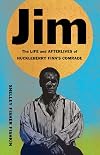
Thank you to NetGalley and the publisher, Yale University Press, for this DRC in exchange for a fair and honest review. The thoughts and opinions expressed below are my own.
Jim is arguably one of the most famous Black American fictional characters in American literature, one whose identity and motivations are under constantly analysis. In the time since readers first met Jim, he's gone through many lives as a symbol, with both positive and negative connotations; an avatar on which readers show more project their own emotions and an enigma. In this book, one of the leading authorities on Mark Twain and his writing reaffirms Jim's role as a subversive, powerful force in the novel, one who is hyper-aware of his surroundings and navigates them with the skills that he's obtained by necessity as well as by his own intelligence. Fishkin deftly integrates all the racial, social, economic and literary trends of the time with Mark Twain’s own personal experience to show the factors that went into creating Jim’s character. She also shows how Jim’s relationship with Huckleberry Finn reflects Twain’s own emotional development and changing attitudes towards race, causing him to imbue Jim with a humanity that resonates in the one hundred and forty years since the character’s introduction.
There has been a recent renewed interest in material about Twain iconic character, including Percival Everett’s excellent “James” and David F. Walker’s “Big Jim and the White Boy.” Both works were released last year, and both retell the events of “Huckleberry Finn” from Jim’s perspective, with powerful and insightful results. Fishkin covers all her bases in establishing the circumstances which led Twain to create the novel. The information about both the enslaved and freeborn Black communities in Missouri at the time were insightful, as these were people whom the character of Jim might have interacted with. The notes about the ways that enslaved people could be “rented” or hired out by white families of lesser means was also informative as well as horrific in its exercise of degradation, albeit not surprising. This latter fact also helped to reinforce ideas about racial superiority over Black Americans among those who were excluded socially from the upper echelons of white society.
The book chapters are organized by separate themes relating to Jim’s development and character impact. Some of these work better than others. I enjoyed the chapter about Jim’s representation on stage and screen (which could constitute a book in itself) as well as the chapter about Jim in comparison to the literary depiction of other Black characters written by some of Twain’s contemporaries. Chapters that didn’t work as well include the reinterpretation of one of the book’s passages from Jim’s perspective, by the author, in Twain-esque dialect, which admittedly made me uncomfortable. And while the recommendations about ways to introduce teaching the novel to students offer some good advice, the overall chapter about how various teachers have used the novel and Jim’s character in their classrooms left more to be desired. I would have liked more information about how Black American educators have handled the novel while teaching majority-Black students, who have a deeper investment in the background of this story, and who are more likely to be harmed by the misinterpretations and negative projections of Jim’s character.
Fishkin makes a compelling point about how people projecting themselves onto Jim diminishes his agency and complexity, especially without context, because doing so can lead to misunderstandings. However, as I alluded to above, there is a marked distinction between people projecting their own opinions on Jim in a negative way, and those who have ambivalent or even negative perceptions of his character based off of their experiences. The latter is particularly true for Black readers, whose encounters with overt and covert racist portrayals of Black characters in literature has had a tangible emotional and cultural impact, one that still provokes a visceral reaction when they encounter those portrayals to this day. I may understand the nuances and complexities behind Jim, but other Black folks who do not, or who do but still have a complicated relationship with his character, are just as valid. To her credit, Fishkin does acknowledge Black audiences’ diversity of thought (as well as the reasons why,) and doesn’t overtly say that they should think a certain way about Jim just because. I’d also argue that it is that complex relationship that has caused Black readers to reinterpret Jim’s character over the years into something that we can make sense of, and which comes from our own perspective.
There are also times where Fishkin’s clear admiration and love for Twain does seep into her analysis, particularly when she responds to criticisms of the original novel and Jim’s characterization overall. For all of his efforts, the fact remains that Mark Twain was still a white man writing a Black character. And as multilayered as Jim is, there are some things about him and the implied Black experience that Twain would never understand, simply because it was not his story. And even though Jim’s portrayal is overall not a negative one, and much better than other period works’ representation of Black characters (many of the latter which I have unfortunately read), there are still some serious flaws and problematic components of Jim’s characterization. Do I think that Twain exhibited a change throughout his life in his views of Black people, and that he sought to unlearn much of the negative messages that he absorbed in his youth? Yes. Do I think he ever completely shed all of those views? Not quite.
Jim contains multitudes. And the truth is that he always has. I look forward to reading and listening to others’ feelings about this remarkable character, and the fact that these conversations continue speak to the special way in which he reaches out for us to engage with him. He’s an integral part not only of the novel, but of the American story itself. show less
Jim is arguably one of the most famous Black American fictional characters in American literature, one whose identity and motivations are under constantly analysis. In the time since readers first met Jim, he's gone through many lives as a symbol, with both positive and negative connotations; an avatar on which readers show more project their own emotions and an enigma. In this book, one of the leading authorities on Mark Twain and his writing reaffirms Jim's role as a subversive, powerful force in the novel, one who is hyper-aware of his surroundings and navigates them with the skills that he's obtained by necessity as well as by his own intelligence. Fishkin deftly integrates all the racial, social, economic and literary trends of the time with Mark Twain’s own personal experience to show the factors that went into creating Jim’s character. She also shows how Jim’s relationship with Huckleberry Finn reflects Twain’s own emotional development and changing attitudes towards race, causing him to imbue Jim with a humanity that resonates in the one hundred and forty years since the character’s introduction.
There has been a recent renewed interest in material about Twain iconic character, including Percival Everett’s excellent “James” and David F. Walker’s “Big Jim and the White Boy.” Both works were released last year, and both retell the events of “Huckleberry Finn” from Jim’s perspective, with powerful and insightful results. Fishkin covers all her bases in establishing the circumstances which led Twain to create the novel. The information about both the enslaved and freeborn Black communities in Missouri at the time were insightful, as these were people whom the character of Jim might have interacted with. The notes about the ways that enslaved people could be “rented” or hired out by white families of lesser means was also informative as well as horrific in its exercise of degradation, albeit not surprising. This latter fact also helped to reinforce ideas about racial superiority over Black Americans among those who were excluded socially from the upper echelons of white society.
The book chapters are organized by separate themes relating to Jim’s development and character impact. Some of these work better than others. I enjoyed the chapter about Jim’s representation on stage and screen (which could constitute a book in itself) as well as the chapter about Jim in comparison to the literary depiction of other Black characters written by some of Twain’s contemporaries. Chapters that didn’t work as well include the reinterpretation of one of the book’s passages from Jim’s perspective, by the author, in Twain-esque dialect, which admittedly made me uncomfortable. And while the recommendations about ways to introduce teaching the novel to students offer some good advice, the overall chapter about how various teachers have used the novel and Jim’s character in their classrooms left more to be desired. I would have liked more information about how Black American educators have handled the novel while teaching majority-Black students, who have a deeper investment in the background of this story, and who are more likely to be harmed by the misinterpretations and negative projections of Jim’s character.
Fishkin makes a compelling point about how people projecting themselves onto Jim diminishes his agency and complexity, especially without context, because doing so can lead to misunderstandings. However, as I alluded to above, there is a marked distinction between people projecting their own opinions on Jim in a negative way, and those who have ambivalent or even negative perceptions of his character based off of their experiences. The latter is particularly true for Black readers, whose encounters with overt and covert racist portrayals of Black characters in literature has had a tangible emotional and cultural impact, one that still provokes a visceral reaction when they encounter those portrayals to this day. I may understand the nuances and complexities behind Jim, but other Black folks who do not, or who do but still have a complicated relationship with his character, are just as valid. To her credit, Fishkin does acknowledge Black audiences’ diversity of thought (as well as the reasons why,) and doesn’t overtly say that they should think a certain way about Jim just because. I’d also argue that it is that complex relationship that has caused Black readers to reinterpret Jim’s character over the years into something that we can make sense of, and which comes from our own perspective.
There are also times where Fishkin’s clear admiration and love for Twain does seep into her analysis, particularly when she responds to criticisms of the original novel and Jim’s characterization overall. For all of his efforts, the fact remains that Mark Twain was still a white man writing a Black character. And as multilayered as Jim is, there are some things about him and the implied Black experience that Twain would never understand, simply because it was not his story. And even though Jim’s portrayal is overall not a negative one, and much better than other period works’ representation of Black characters (many of the latter which I have unfortunately read), there are still some serious flaws and problematic components of Jim’s characterization. Do I think that Twain exhibited a change throughout his life in his views of Black people, and that he sought to unlearn much of the negative messages that he absorbed in his youth? Yes. Do I think he ever completely shed all of those views? Not quite.
Jim contains multitudes. And the truth is that he always has. I look forward to reading and listening to others’ feelings about this remarkable character, and the fact that these conversations continue speak to the special way in which he reaches out for us to engage with him. He’s an integral part not only of the novel, but of the American story itself. show less
The Mark Twain Anthology: Great Writers on His Life and Work (Library of America) by Shelley Fisher Fishkin

I didn't expect much from this collection of writing about Twain, so I was pleasantly surprised by almost every piece. I particularly enjoyed a feature article by 25-year-old journalist Rudyard Kipling, who tracked Twain down at a relative's house in Elmira, New York, and got an impromptu two-hour interview; Helen Keller's vivid description of being a houseguest of Twain's when she was 14; an excerpt from David Carkeet's "I Been There Before," in which Mark Twain (catching a ride on Halley's show more Comet) returns to earth in 1985; David Bradley's moving memoir of how reading Twain helped him navigate the currents of racial politics to become a writer; and essays by E. L. Doctorow, Hal Holbrook, Erica Jong, Ursula K. Le Guin, Toni Morrison, and Gore Vidal. These last six, among others, were written as introductions to books in the anthology editor Shelley Fisher Fishkin's The Oxford Mark Twain, which included facsimile editions of all of Twain's books that were printed in his lifetime. (I used to own this 29-book collection, and do I miss it!) I'd go so far as to call "The Mark Twain Anthology" indispensable to anyone who's read several books of Twain's and considers himself or herself a fan or even an amateur scholar, and maybe even for those who have only read Huckleberry Finn and have always wondered what else is remarkable about Twain. show less

You May Also Like


Associated Authors
Statistics
- Works
- 13
- Also by
- 14
- Members
- 389
- Popularity
- #62,203
- Rating
- 3.9
- Reviews
- 3
- ISBNs
- 29