
Sesshu Foster
Author of Atomik Aztex
Works by Sesshu Foster
ELADATL: A History of the East Los Angeles Dirigible Air Transport Lines (2021) 29 copies, 2 reviews
Praying Mantis 1 copy
Associated Works
Premonitions: The Kaya Anthology of New Asian North American Poetry (1995) — Contributor — 27 copies
The Gate of Memory: Poems by Descendants of Nikkei Wartime Incarceration (2025) — Contributor — 16 copies
Two Worlds Walking: Short Stories, Essays, and Poetry by Writers of Mixed Heritages (1996) — Contributor — 9 copies
Tagged
Common Knowledge
- Birthdate
- 1957-05-05
- Gender
- male
Members
Reviews
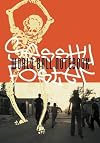
Sesshu Foster is a Chicano poet, novelist and teacher from East L.A., who has also taught at UC Santa Cruz and the University of Iowa. World Ball Notebook is an eclectic collection of prose and more traditional poems, brief essays, and even shopping and check lists, describing real and imagined lives in and around L.A., Central America and the Midwest. The entries are divided into soccer games, starting with a tribute to his daughter's soccer coach. Although most of the other entries are not show more about soccer, one gets the feel of a soccer match, with long runs punctuated by crisp passes and brief, intense, and sometimes violent bursts of action.
"Game 14" describes a girls' soccer game:
The forwards pass off to each other and take shots on goal, but there's only one of them getting through–no recoveries and no goals. A couple shots go wide, a couple hit the bars and bounce off. You watch the keeper trot after the ball out of bounds, thinking, "That's probably the game, right there." That bounce. Both teams are tiring, the faces of girls flushed and drawn in the lights. The night is cool but not cold enough to see anyone's breath. Beyond the ragged eucalyptus trees the mountains a ragged silhouette against the deep blue of nightfall. The other team sinks a penalty shot, and afterwards most of the play happens on the wrong end of the field. Our girl played midfield hard the whole game, defense. She doesn't like to lose, this girl, but you figure she'll be okay with it. This team has lost more than they're likely to win.
"Game 67" describes an interaction between an adult and a troubled Vietnamese teenager:
"Don't ever do anything like that again," I said. I noted the cast on one foot, otherwise not a single visible scar; she smiled pretty as ever, the girl who'd thrown herself drunk off the overpass onto the 605 freeway, Vietnamita with black hair she tucked behind her ear with a nervous chuckle. ("My father didn't want me to have a boyfriend." "How are you getting along with your father now?" "Better.") ("That girl's getting a reputation," somebody a lot like her would later say.) show less
"Game 14" describes a girls' soccer game:
The forwards pass off to each other and take shots on goal, but there's only one of them getting through–no recoveries and no goals. A couple shots go wide, a couple hit the bars and bounce off. You watch the keeper trot after the ball out of bounds, thinking, "That's probably the game, right there." That bounce. Both teams are tiring, the faces of girls flushed and drawn in the lights. The night is cool but not cold enough to see anyone's breath. Beyond the ragged eucalyptus trees the mountains a ragged silhouette against the deep blue of nightfall. The other team sinks a penalty shot, and afterwards most of the play happens on the wrong end of the field. Our girl played midfield hard the whole game, defense. She doesn't like to lose, this girl, but you figure she'll be okay with it. This team has lost more than they're likely to win.
"Game 67" describes an interaction between an adult and a troubled Vietnamese teenager:
"Don't ever do anything like that again," I said. I noted the cast on one foot, otherwise not a single visible scar; she smiled pretty as ever, the girl who'd thrown herself drunk off the overpass onto the 605 freeway, Vietnamita with black hair she tucked behind her ear with a nervous chuckle. ("My father didn't want me to have a boyfriend." "How are you getting along with your father now?" "Better.") ("That girl's getting a reputation," somebody a lot like her would later say.) show less
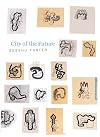
Orgasms are Cries for Help, a review of Sesshu Foster’s City of the Future
"The ticket of the cockroaches and the ticket of the rats
----
The avant-garde poets, those academic experimentalist poets, most of them white, would
Rather you not use the word motherfucker…
Sadly, this use of repetition shall not be construed as poetic by those well-fed motherfuckers
---
The reddened subjunctive is a ball-peen hammer on the tin of peppercorns unnoticed by the sheriff’s dept. SWAT team.
---
Accessorize show more your Buddha
1.beach umbrella & cooler
2.cell phone
3.shotgun
4.cap
5.porcelain commode ashtray
6.Marlboros & pistol lighter
7.motorcycle jacket
8.tats (yakuza)
9. Ray Bans
10.iPhone
---
In the movie version, the cold beer was played by country music nasal twang, and Jeffrey Hunter was played by slight nausea and nostril flare. His headache was played by the 20th century."
Sesshu Foster’s new book of poetry, City of the Future, is dada returning in giant crab fitted out Humvee come to flatten you out, you and your vegetables and sauna, your socket wrenches and Terrain Hauteur, your indifference and your feigned difference, your acceptance and your diddler, your frank and your explank, and believe me, you don’t read this kind of book in a day—it’s the kind of book you put next to your bed and dip into like a chip into brains of guacamole. I should know, because I got mine around noon today and between this and that finished it around 7 tonight. Don’t do as I do, and definitely not what I say, which is doo doo. And thank Sesshu for dada.
Which is not to say the book is a mess of fernacular sintaxing jackanapes, bounding cross the deserts of L.A., for that is just a part of this montage, this aged man’s mount of his own bones—he kills himself many times in the book, at many different ages—arroyos fill with bones, of Mexicans, manifold arroyos and many festas, even two stark plain manifests, for dada does not shrink from the direct:
"ghost prayer
shoot Dick Cheney through the eye if I am tortured to death in a corner of bagram air force base, in abu ghraib, in a black site tonight
so says the ghost flickering off an on like a midnight street lamp over a Mexicali school yard
shoot Henry Kissinger through the right eye if I am to die with my children in a field, with my children in the desert, with my children in a ditch
so says the ghost flickering off and on like a parking lot light at a midnight sunset boulevard motel
shoot Donald Rumsfeld and donald trump through the teeth of i am to die in the worst possible way, bones dissolved in a barrel of acid, ashes swirling away at the dump
so says the ghost flickering off and on like the little lights in the heels of the toddler’s sneakers skipping down the sidewalk"
Nor the fun of it all, like the fun of seeing folk, as he sees them in the hearty "Another Portrait of Dad", in which he sees his dad and his brother (both now dead), Harry Gamboa, Mario Ybarra, Lawrence Felinghetti, Ernesto Cardenal, Karen Yamashita, Carlo Pedace, a blue whale, Willie Herron and:
"I saw Rick Harsch sitting on my balcony, smoking and drinking a beer. He emitted anxious smoke like my brother." (He means Paul, the one who was around my age and died a couple years back.)
Foster’s poems don’t flinch from the intrusion of beauty, "like the branch bending in the wind", nor does he fear to exclaim Whitmanly that he is happy "like a little bird in a high wind you may find dead on the ground like the stone among the stones in the gravel wash"—no, he does not shrink aback from the happiness emitted as "a stench of carbon monoxide particulate fumes and engine coolant."
And he asks pertinent questions, as in Walking East Manifesto:
"4.Brain damage hurt your feelings?"
If so, burn ahead a few dozen pages and "hair sheen taken in hand or ends flicked back, call it thudding of the earth or several short pencils", but that’s just my homeopathology of his book of wonders, post cards, book reviews of neverbeforeskinned precision: YOU’LL THINK YOU READ THE WHOLE BOOK!, more post cards, advice to the writer, and diagnostic after diagnostic:
"…The city cooked the night. The ocean breathed. Little fish died like eyelids. They swam through your dreams, fishes and eyelids, desiccated, hanging in salty bags all the way from the South Pacific to Ranch 99 Market…"
And the sausage factory security guard on his tricycle.
You’ll never read another book like this, but you ought to try, like Foster’s World Ball Notebook. And for you baseball fans out there, guess what? Dodger dogs are made from pigs! As Sesshu Foster would say: "I’ve awoken in gentrified white hipster America and I can’t find my pants" show less
"The ticket of the cockroaches and the ticket of the rats
----
The avant-garde poets, those academic experimentalist poets, most of them white, would
Rather you not use the word motherfucker…
Sadly, this use of repetition shall not be construed as poetic by those well-fed motherfuckers
---
The reddened subjunctive is a ball-peen hammer on the tin of peppercorns unnoticed by the sheriff’s dept. SWAT team.
---
Accessorize show more your Buddha
1.beach umbrella & cooler
2.cell phone
3.shotgun
4.cap
5.porcelain commode ashtray
6.Marlboros & pistol lighter
7.motorcycle jacket
8.tats (yakuza)
9. Ray Bans
10.iPhone
---
In the movie version, the cold beer was played by country music nasal twang, and Jeffrey Hunter was played by slight nausea and nostril flare. His headache was played by the 20th century."
Sesshu Foster’s new book of poetry, City of the Future, is dada returning in giant crab fitted out Humvee come to flatten you out, you and your vegetables and sauna, your socket wrenches and Terrain Hauteur, your indifference and your feigned difference, your acceptance and your diddler, your frank and your explank, and believe me, you don’t read this kind of book in a day—it’s the kind of book you put next to your bed and dip into like a chip into brains of guacamole. I should know, because I got mine around noon today and between this and that finished it around 7 tonight. Don’t do as I do, and definitely not what I say, which is doo doo. And thank Sesshu for dada.
Which is not to say the book is a mess of fernacular sintaxing jackanapes, bounding cross the deserts of L.A., for that is just a part of this montage, this aged man’s mount of his own bones—he kills himself many times in the book, at many different ages—arroyos fill with bones, of Mexicans, manifold arroyos and many festas, even two stark plain manifests, for dada does not shrink from the direct:
"ghost prayer
shoot Dick Cheney through the eye if I am tortured to death in a corner of bagram air force base, in abu ghraib, in a black site tonight
so says the ghost flickering off an on like a midnight street lamp over a Mexicali school yard
shoot Henry Kissinger through the right eye if I am to die with my children in a field, with my children in the desert, with my children in a ditch
so says the ghost flickering off and on like a parking lot light at a midnight sunset boulevard motel
shoot Donald Rumsfeld and donald trump through the teeth of i am to die in the worst possible way, bones dissolved in a barrel of acid, ashes swirling away at the dump
so says the ghost flickering off and on like the little lights in the heels of the toddler’s sneakers skipping down the sidewalk"
Nor the fun of it all, like the fun of seeing folk, as he sees them in the hearty "Another Portrait of Dad", in which he sees his dad and his brother (both now dead), Harry Gamboa, Mario Ybarra, Lawrence Felinghetti, Ernesto Cardenal, Karen Yamashita, Carlo Pedace, a blue whale, Willie Herron and:
"I saw Rick Harsch sitting on my balcony, smoking and drinking a beer. He emitted anxious smoke like my brother." (He means Paul, the one who was around my age and died a couple years back.)
Foster’s poems don’t flinch from the intrusion of beauty, "like the branch bending in the wind", nor does he fear to exclaim Whitmanly that he is happy "like a little bird in a high wind you may find dead on the ground like the stone among the stones in the gravel wash"—no, he does not shrink aback from the happiness emitted as "a stench of carbon monoxide particulate fumes and engine coolant."
And he asks pertinent questions, as in Walking East Manifesto:
"4.Brain damage hurt your feelings?"
If so, burn ahead a few dozen pages and "hair sheen taken in hand or ends flicked back, call it thudding of the earth or several short pencils", but that’s just my homeopathology of his book of wonders, post cards, book reviews of neverbeforeskinned precision: YOU’LL THINK YOU READ THE WHOLE BOOK!, more post cards, advice to the writer, and diagnostic after diagnostic:
"…The city cooked the night. The ocean breathed. Little fish died like eyelids. They swam through your dreams, fishes and eyelids, desiccated, hanging in salty bags all the way from the South Pacific to Ranch 99 Market…"
And the sausage factory security guard on his tricycle.
You’ll never read another book like this, but you ought to try, like Foster’s World Ball Notebook. And for you baseball fans out there, guess what? Dodger dogs are made from pigs! As Sesshu Foster would say: "I’ve awoken in gentrified white hipster America and I can’t find my pants" show less
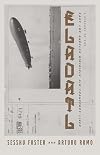
A few short passages from Eladatl:
*
The United States was at war when we were growing up, as we came of age, during our young adulthood, throughout our lifetimes, and after we died. The wars would never stop, it was too late for that now. People didn’t mention it. It wasn’t worth thinking about. United States equals WAR. So? They got Mexicans to fight in the wars and deported then afterward. Some wars, if you blinked you missed them. Grenada. Panama. Of course, the industrial-military show more complex conducted full-blown wars in Iraq and Syria and Afghanistan – and those soldiers, privatized mercenaries and civilian contractors, didn’t want to work in KFC and Popeye’s frying chickens like Mexicanos, though they did eat mountains of chicken.
*
In spite of a world half-destroyed, a nation sunk in ruins of once proud ideologies, surrendering its will to fashion, self-delusion, self-absorption, self-defeat, and bad writing, I’m always happiest riding my bike.
*
Because there were a million reasons not to do anything and only like four or five reasons to actually do anything, and people avoided that. show less
*
The United States was at war when we were growing up, as we came of age, during our young adulthood, throughout our lifetimes, and after we died. The wars would never stop, it was too late for that now. People didn’t mention it. It wasn’t worth thinking about. United States equals WAR. So? They got Mexicans to fight in the wars and deported then afterward. Some wars, if you blinked you missed them. Grenada. Panama. Of course, the industrial-military show more complex conducted full-blown wars in Iraq and Syria and Afghanistan – and those soldiers, privatized mercenaries and civilian contractors, didn’t want to work in KFC and Popeye’s frying chickens like Mexicanos, though they did eat mountains of chicken.
*
In spite of a world half-destroyed, a nation sunk in ruins of once proud ideologies, surrendering its will to fashion, self-delusion, self-absorption, self-defeat, and bad writing, I’m always happiest riding my bike.
*
Because there were a million reasons not to do anything and only like four or five reasons to actually do anything, and people avoided that. show less
Th
The East Los Angeles Dirigible Air Transport Lines (ELADATL) is the fictional history of a Transport Line that never existed but in its telling feels like it did exist, must exist, and may one day exist again.
ELADATL is a like Murakami's IQ84 but it's a fictional history. A cast of Latin/Latino/Latinx characters in a parallel Los Angeles that intersects and then separates from the real.
Its a serious fictional-history but also a tale of high-level absurdity and written with real humor. The show more book shifts from history to scenes back to history and then to illustrations and back again to history book style interviews and evidence from this real-fictional history novel.
ELADTL is like nothing you have ever read. It is a glorious mess of a history. Like the city of Los Angeles itself ELADTL is absurd, real, fictional, messy, and all at once earnest. show less
The East Los Angeles Dirigible Air Transport Lines (ELADATL) is the fictional history of a Transport Line that never existed but in its telling feels like it did exist, must exist, and may one day exist again.
ELADATL is a like Murakami's IQ84 but it's a fictional history. A cast of Latin/Latino/Latinx characters in a parallel Los Angeles that intersects and then separates from the real.
Its a serious fictional-history but also a tale of high-level absurdity and written with real humor. The show more book shifts from history to scenes back to history and then to illustrations and back again to history book style interviews and evidence from this real-fictional history novel.
ELADTL is like nothing you have ever read. It is a glorious mess of a history. Like the city of Los Angeles itself ELADTL is absurd, real, fictional, messy, and all at once earnest. show less
Awards


You May Also Like


Associated Authors
Statistics
- Works
- 9
- Also by
- 5
- Members
- 276
- Popularity
- #84,077
- Rating
- 4.0
- Reviews
- 14
- ISBNs
- 11
- Languages
- 1
- Favorited
- 3