
Hāfez
Author of The Gift
About the Author
Works by Hāfez
The Subject Tonight Is Love: 60 Wild and Sweet Poems of Hafiz (Compass) (1996) 269 copies, 3 reviews
The Green Sea of Heaven: Fifty Ghazals from the Diwan of Hafiz (Library of Persian : Text and Contexts in Persian Religions and Spirituality) (1995) 43 copies
Delphi Collected Poetical Works of Hafez (Illustrated) (Delphi Poets Series Book 68) (2017) 5 copies
The Complete Divan of Hafez: Including Ghazals Inspired by the Ghazals of Hafez by the Translator Paul Smith (2017) 3 copies
Les Ghazels 3 copies
The Gift - Poems by Hafiz the Great Sufi Master by Hafiz, Daniel Ladinsky Gift Edition (1999) 2 copies
Сто семнадцать газелей 2 copies
Hafiz in Quatrains 2 copies
Hafis 2 copies
Two poems from the Persian of Hafiz — Author — 1 copy
Yüzünle Işır İki Cihan 1 copy
Le Livre d'or du Divân 1 copy
The Garden of Heaven 1 copy
دیوان حافظ 1 copy
The Collected Ghazals of Hafiz - Volume 3: With the Original Farsi Poems, English Translation, Transliteration and Notes (2017) 1 copy
Divanul - antologie 1 copy
Dar 1 copy
Selected Poems of Hafiz 1 copy
Stories of the Prophets 1 copy
A Selection of Love Poems 1 copy
The Ruba'iyat of Hafiz 1 copy
Hafız Divanı 1 copy
Divaan-e-Hafez 1 copy
Divan-e Hafez 1 copy
Hafis (Bethge) 1 copy
Deewan-E-Hafiz 1 copy
Poemas esenciales 1 copy
Translations from Hafiz 1 copy
Gift, The 1 copy
Associated Works
Love Poems from God: Twelve Sacred Voices from the East and West (Compass) (2002) — Contributor — 528 copies, 9 reviews
World Poetry: An Anthology of Verse from Antiquity to Our Time (1998) — Contributor — 496 copies, 2 reviews
The Poetry Pharmacy: Tried-and-True Prescriptions for the Heart, Mind, and Soul (2017) 196 copies, 5 reviews
Leading from Within: Poetry That Sustains the Courage to Lead (2007) — Contributor — 114 copies, 3 reviews
Music of a Distant Drum: Classical Arabic, Persian, Turkish, and Hebrew Poems. (2001) — Contributor — 75 copies, 3 reviews
Oogst Der Tijden. keur uit de werken van schrijvers en dichters aller volken en eeuwen (1940) — Contributor — 12 copies
Ode to Boy: An Anthology of Same-Sex Attraction in Literature, Volume One: From Antiquity Through the Eighteenth Century (2014) — Contributor — 3 copies
New World Writing 21 — Contributor — 1 copy
Tagged
Common Knowledge
- Canonical name
- Hāfez
- Legal name
- خواجه شمس دین محمد حافظ شیرازی
- Other names
- Hafez
Khwāja Shamsu d-Dīn Muhammad Hāfez-e Shīrāzī
Ḥāfeẓ
Ḥāfiz
Moḥammad Shams al-Dīn Ḥāfeẓ
Hafiz (show all 7)
Khāwje Shams-od-Dīn Moḥammad Ḥāfeẓ-e Shīrāzī - Birthdate
- 1310-1337
- Date of death
- 1379-1406
- Gender
- male
- Occupations
- poet
- Nationality
- Persia
- Birthplace
- Shiraz, Persia
- Places of residence
- Shiraz, Persia
- Place of death
- Shiraz, Persia
- Burial location
- Shiraz, Iran
- Map Location
- Iran
Members
Reviews

There are books you read, and there are books that read you. The Divan of Hafez belongs firmly to the second category.
Written in 14th-century Shiraz, these ghazals move effortlessly between earthly love and metaphysical longing. Wine, taverns, roses, nightingales, the beloved’s curl—Hafez uses familiar images only to subvert them. What appears sensual becomes spiritual; what sounds devotional may conceal satire. His language is layered, ironic, and deliberately elusive. Each poem feels show more like a polished mirror reflecting different meanings depending on the reader’s state of mind.
What distinguishes Hafez from many mystical poets is his fearless ambiguity. He resists rigid piety and challenges hypocrisy, often cloaking sharp social critique in lyrical beauty. The tension between orthodoxy and ecstasy, restraint and intoxication, form and rebellion gives the Divan its enduring vitality.
The musicality of the ghazal form is central to the experience. Even in translation, one senses the rhythm and internal rhyme that made these poems unforgettable in Persian. In the original language, the effect is even more profound: the verses feel incanted rather than written.
This is not a book to rush. It rewards slow reading—one or two ghazals at a time—allowing their paradoxes to unfold. The Divan does not offer systematic theology or linear narrative. Instead, it offers flashes of insight: moments where irony dissolves into clarity.
For readers interested in Persian literature, Sufi symbolism, or poetry that walks the line between devotion and defiance, the Divan of Hafez is indispensable. It is not merely a collection of poems; it is a living conversation across centuries. show less
Written in 14th-century Shiraz, these ghazals move effortlessly between earthly love and metaphysical longing. Wine, taverns, roses, nightingales, the beloved’s curl—Hafez uses familiar images only to subvert them. What appears sensual becomes spiritual; what sounds devotional may conceal satire. His language is layered, ironic, and deliberately elusive. Each poem feels show more like a polished mirror reflecting different meanings depending on the reader’s state of mind.
What distinguishes Hafez from many mystical poets is his fearless ambiguity. He resists rigid piety and challenges hypocrisy, often cloaking sharp social critique in lyrical beauty. The tension between orthodoxy and ecstasy, restraint and intoxication, form and rebellion gives the Divan its enduring vitality.
The musicality of the ghazal form is central to the experience. Even in translation, one senses the rhythm and internal rhyme that made these poems unforgettable in Persian. In the original language, the effect is even more profound: the verses feel incanted rather than written.
This is not a book to rush. It rewards slow reading—one or two ghazals at a time—allowing their paradoxes to unfold. The Divan does not offer systematic theology or linear narrative. Instead, it offers flashes of insight: moments where irony dissolves into clarity.
For readers interested in Persian literature, Sufi symbolism, or poetry that walks the line between devotion and defiance, the Divan of Hafez is indispensable. It is not merely a collection of poems; it is a living conversation across centuries. show less
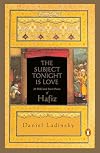
Being honest, I was poised to hate the book, Daniel Ladinsky has managed a dubious reputation as translator, blamed by quite a few as a shill larding self-help affirmations with traces of ancient poetry.
That sounds like a case for Arno Schmidt—but he’s dead.
I don’t know about the degree of license taken but I did appreciate the images. There’s a drunken ecstasy at play. There are poetic love bruises. Sure, there are anachronisms, I have doubts Hafiz was preoccupied with being cool show more or ever waxed on “getting stoned.” This volume did encourage me to pursue other translations. show less
That sounds like a case for Arno Schmidt—but he’s dead.
I don’t know about the degree of license taken but I did appreciate the images. There’s a drunken ecstasy at play. There are poetic love bruises. Sure, there are anachronisms, I have doubts Hafiz was preoccupied with being cool show more or ever waxed on “getting stoned.” This volume did encourage me to pursue other translations. show less
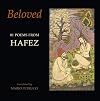
Yes, Hafez poetry is elegant and evocative of a Lover's dream,
yet only a few resonated:
Reader; if you desire flight on diaphanous wings into brightest clearest Worth,
be attentive to sky. And once you spy your target, kick forever away from earth.
Oh, night-sung bird, draw the canopy of thorns to shield your bones -
spring arrives before too long. The rose prince shall claim his green throne.
What firmly hides, hard in winter's bud, you may never see. Yet
keep hope fresh. Within that stilled sap, show more toward life, stir subtle chemistries.
In the shadow of night, a breeze journeys to whisper YOU to me.
I yield this heart, too, to go as that wind - whatever must be, Be.
Ah - not every beauty erodes its beholder beautifully.
A boulder unfurled in moss can be Master of its place.
In the same way that morning stirs the air, I must tell my story
of longing. Evening brings my reply. Rely on the glorious Wind.
For every walker who must roam this world, I send holy words, up, towards
the heavens. On their behalf, I'm firm in prayer. show less
yet only a few resonated:
Reader; if you desire flight on diaphanous wings into brightest clearest Worth,
be attentive to sky. And once you spy your target, kick forever away from earth.
Oh, night-sung bird, draw the canopy of thorns to shield your bones -
spring arrives before too long. The rose prince shall claim his green throne.
What firmly hides, hard in winter's bud, you may never see. Yet
keep hope fresh. Within that stilled sap, show more toward life, stir subtle chemistries.
In the shadow of night, a breeze journeys to whisper YOU to me.
I yield this heart, too, to go as that wind - whatever must be, Be.
Ah - not every beauty erodes its beholder beautifully.
A boulder unfurled in moss can be Master of its place.
In the same way that morning stirs the air, I must tell my story
of longing. Evening brings my reply. Rely on the glorious Wind.
For every walker who must roam this world, I send holy words, up, towards
the heavens. On their behalf, I'm firm in prayer. show less
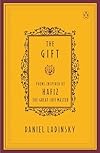
“I am
A hole in a flute
That the Christ’s breath moves through—
Listen to this
Music.”
These few lines made me buy this book. Hafiz is a loving and cherished spiritual guide for humanity. In various cultures for centuries, he has been referred to as the “Tongue of the Invisible,” because he still sings passionate, wild love songs to God. He asks us to join him in praising the many wonderful things in life. With every flag, chapel sound, tomb, masjid, and politician's brain being show more served, I vote for inscribing these words of Hafiz on every one: Dear ones, let's depose this earth with dance! show less
A hole in a flute
That the Christ’s breath moves through—
Listen to this
Music.”
These few lines made me buy this book. Hafiz is a loving and cherished spiritual guide for humanity. In various cultures for centuries, he has been referred to as the “Tongue of the Invisible,” because he still sings passionate, wild love songs to God. He asks us to join him in praising the many wonderful things in life. With every flag, chapel sound, tomb, masjid, and politician's brain being show more served, I vote for inscribing these words of Hafiz on every one: Dear ones, let's depose this earth with dance! show less
Lists
Awards


You May Also Like


Associated Authors
Statistics
- Works
- 118
- Also by
- 10
- Members
- 3,274
- Popularity
- #7,815
- Rating
- 4.3
- Reviews
- 40
- ISBNs
- 155
- Languages
- 14
- Favorited
- 17
