
Don Hagist
Author of British Soldiers, American War: Voices of the American Revolution
About the Author
Don N. Hagist is managing editor of Journal of the American Revolution (http://allthingsliberty.com), and studies the lives and service of individual British soldiers in the 1770s and 1780s, relying almost exclusively on primary sources. His books include Noble Volunteers: the British Soldiers who show more Fought the American Revolution (2020) and British Soldiers, American War: Voices of the American Revolution (2012), and he has published numerous journal articles. He is an engineer for a major medical device manufacturer, and lives in Providence, Rhode Island. show less
Works by Don Hagist
Noble Volunteers: The British Soldiers Who Fought the American Revolution (2020) 37 copies, 1 review
Wives, Slaves, and Servant Girls: Advertisements for Female Runaways in American Newspapers, 1770–1783 (2016) 21 copies
Wenches, Wives and Servant Girls: A Selection of Advertisements for Female Runaways in American Newspapers, 1770-1783 (2008) 17 copies
These Distinguished Corps: British Grenadier and Light Infantry Battalions in the American Revolution (From Reason to Revolution) (2021) 12 copies
Associated Works
Reporting the Revolutionary War: Before It Was History, It Was News (2012) — Contributor — 158 copies, 4 reviews
Tagged
Common Knowledge
- Gender
- male
Members
Reviews
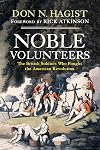
Though Don Hagist flirts with winding up in the weeds, you will get a very different take on the nature of the British army that confronted the political upheaval in London's North American possessions.
The basic point that Hagist wants to make is that because this was a volunteer force for most of the time period in question covered, and that most of those who served left no account of their self-justifications, so you really can't point to any one motivation. At one point impressment for show more the army was tried by the British government, and was almost immediately recognized as a huge mistake that was not repeated.
So if Hagist is not really attempting a group portrait of the typical British ranker, and he's not giving you a blow-by-blow of the course of the war (you should know that before reading this book), what are you really left with? Call this an account of the personnel-management side of the British Army, as Hagist takes you through the recruitment, training, the day-to-day of a soldier's life, how soldiers made bank, and so on and so forth. Hagist also devotes a whole chapter to the matter of looting and pillaging, which he sees as a major cause for alienation of folks who would have otherwise been Loyalists, or at least neutral.
In the end, I found this study well-worth my time. show less
The basic point that Hagist wants to make is that because this was a volunteer force for most of the time period in question covered, and that most of those who served left no account of their self-justifications, so you really can't point to any one motivation. At one point impressment for show more the army was tried by the British government, and was almost immediately recognized as a huge mistake that was not repeated.
So if Hagist is not really attempting a group portrait of the typical British ranker, and he's not giving you a blow-by-blow of the course of the war (you should know that before reading this book), what are you really left with? Call this an account of the personnel-management side of the British Army, as Hagist takes you through the recruitment, training, the day-to-day of a soldier's life, how soldiers made bank, and so on and so forth. Hagist also devotes a whole chapter to the matter of looting and pillaging, which he sees as a major cause for alienation of folks who would have otherwise been Loyalists, or at least neutral.
In the end, I found this study well-worth my time. show less
You May Also Like


Associated Authors
Statistics
- Works
- 17
- Also by
- 1
- Members
- 224
- Popularity
- #100,171
- Rating
- 3.9
- Reviews
- 1
- ISBNs
- 30