
David Helvarg
Author of Rescue Warriors: The U.S. Coast Guard, America's Forgotten Heroes
About the Author
David Helvarg lives in Washington, D.C.
Image credit: From the author
Works by David Helvarg
The War Against the Greens: The "Wise-Use" Movement, the New Right, and Anti-Environmental Violence (1994) 56 copies, 1 review
Associated Works
Tagged
Common Knowledge
Members
Reviews
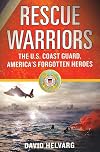
I've long been an admirer of the Search and Rescue work of the US Coast Guard, but I have to admit I knew very little about this smallest branch of our US military. David Helvarg's book [Rescue Warriors] has changed that. This is not a dry academic lesson about Coast Guard history. Helvarg takes us out on ships and up on helicopters with their crews, into Coast Guard boot camp and the Coast Guard Academy to witness their training.
9/11 changed the world, and it changed the Coast Guard, too. show more Helvarg explains the role of the USCG on that fateful day and in its aftermath, as it was moved to the newly-formed Dept. of Homeland Security and assumed a new array of security assignments.
My least favorite chapter was "Gunners." This was partly due to the sensation of drowning in an alphabet soup of acronyms (for various squads, task forces, and the like). I may have also felt discomfort with some of the new roles the Coast Guard has assumed in the concurrent wars on drugs and terror. I love the image of the Coast Guard coming to the rescue of those in distress on the ocean or in disasters like Katrina; stories of battles with drug runners and terrorists lack the same appeal. It's a view that seems to be shared by many of the "Coasties," who express concern that Search and Rescue (SAR) training may be suffering as the Coast Guard assumes more and more homeland secuity duties.
But the book contains plenty of images of the wonderful SAR work for which the Coast Guard s famous. It opens with the Coast Guard's role as "New Orleans Saints," when the USCG appeared to be the only government agency that knew what it was doing early on, rescuing 33,000 people before FEMA seemed to know there was an emergency. Along the way, we meet the "surfmen" who bring out the rescue boats; and the Coast Guard aviators, including the "aviation survival technicians" (rescue swimmers) who drop from helicopters to save those in dire distress.
Helvarg is unabashedly pro-Coast Guard in that he makes a clear case for the importance and value of the Coast Guard, and expresses clear concern at the lack of funding and equipment with which it is forced to work. Example: helicopters experienceing 1 in-flight engine power loss in 100,000 flying hours are deemed unsafe and unreliable by the FAA; the Coast Guard rate of such mishaps is 329 per 100,000, due to the age of the equipment. "Still, no one suggested the Coast Guard reduce its search and rescue missions to protect its own people," Helvarg notes. Indeed, more and more demands have been placed upon the Coast Guard as our country faces new security threats, without any corresponding increase in funding.
But he does not shy away from dealing with situations where the USCG has made mistakes, either. He spends an entire chapter on the Deepwater fiasco, which resulted in (among other things) eight ships being built which had to be decomissioned because they literally fell apart when they went to sea. He does put these errors into a context which the reader can understand.
Helvarg, a conservationist, does occasionally let his views be known on other issues of relevance to the Coast Guard (global warming being a primary one, as melting ice caps are creating more open water over which the Coast Guard must assume responsibility). I've found his comments not so strident as to overshadow the overall narrative.
This book left me with a tremendous appreciation for the varied and demanding roles which the US Coast Guard fills, and the challenges which this under-appreciated branch of our military faces as it continues to try to do more and more with inadequate resources. show less
9/11 changed the world, and it changed the Coast Guard, too. show more Helvarg explains the role of the USCG on that fateful day and in its aftermath, as it was moved to the newly-formed Dept. of Homeland Security and assumed a new array of security assignments.
My least favorite chapter was "Gunners." This was partly due to the sensation of drowning in an alphabet soup of acronyms (for various squads, task forces, and the like). I may have also felt discomfort with some of the new roles the Coast Guard has assumed in the concurrent wars on drugs and terror. I love the image of the Coast Guard coming to the rescue of those in distress on the ocean or in disasters like Katrina; stories of battles with drug runners and terrorists lack the same appeal. It's a view that seems to be shared by many of the "Coasties," who express concern that Search and Rescue (SAR) training may be suffering as the Coast Guard assumes more and more homeland secuity duties.
But the book contains plenty of images of the wonderful SAR work for which the Coast Guard s famous. It opens with the Coast Guard's role as "New Orleans Saints," when the USCG appeared to be the only government agency that knew what it was doing early on, rescuing 33,000 people before FEMA seemed to know there was an emergency. Along the way, we meet the "surfmen" who bring out the rescue boats; and the Coast Guard aviators, including the "aviation survival technicians" (rescue swimmers) who drop from helicopters to save those in dire distress.
Helvarg is unabashedly pro-Coast Guard in that he makes a clear case for the importance and value of the Coast Guard, and expresses clear concern at the lack of funding and equipment with which it is forced to work. Example: helicopters experienceing 1 in-flight engine power loss in 100,000 flying hours are deemed unsafe and unreliable by the FAA; the Coast Guard rate of such mishaps is 329 per 100,000, due to the age of the equipment. "Still, no one suggested the Coast Guard reduce its search and rescue missions to protect its own people," Helvarg notes. Indeed, more and more demands have been placed upon the Coast Guard as our country faces new security threats, without any corresponding increase in funding.
But he does not shy away from dealing with situations where the USCG has made mistakes, either. He spends an entire chapter on the Deepwater fiasco, which resulted in (among other things) eight ships being built which had to be decomissioned because they literally fell apart when they went to sea. He does put these errors into a context which the reader can understand.
Helvarg, a conservationist, does occasionally let his views be known on other issues of relevance to the Coast Guard (global warming being a primary one, as melting ice caps are creating more open water over which the Coast Guard must assume responsibility). I've found his comments not so strident as to overshadow the overall narrative.
This book left me with a tremendous appreciation for the varied and demanding roles which the US Coast Guard fills, and the challenges which this under-appreciated branch of our military faces as it continues to try to do more and more with inadequate resources. show less

Since its inception more than 200 years ago, the United States Coast Guard has rescued over 1.1 million people. Yet, despite having more than fifty thousand active and reserve members, most of us know very little
Filled with altruism and adrenaline, Rescue Warriors brings us into the daily lives of "Coasties" as well as dozens of death-defying rescues at sea and on hurricane-ravaged shores. A masterpiece of adventure reporting, Rescue Warriors is the definitive book on America's Coast Guard.
Filled with altruism and adrenaline, Rescue Warriors brings us into the daily lives of "Coasties" as well as dozens of death-defying rescues at sea and on hurricane-ravaged shores. A masterpiece of adventure reporting, Rescue Warriors is the definitive book on America's Coast Guard.
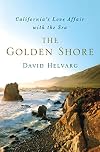
The Golden Shore by David Helvarg
This book has so much to offer: the history of parts of the west coast, mainly CA and so many parts I was aware of and have been to and so many more I wasn't really aware existed there and the reason why they are there.
Love hearing how they rebuilt many parts from major disasters using their own resources.
To me this book is like a National Geographic encyclopedia of the area from earlier than the Ice Age and everything that shaped the coast and had any show more influence.
There is SO much knowledge you can gain from reading this.
Have watched and visited over the years various measures taken to bring back some fish to the area: dam near a power plant near Hurricane Ridge in the state of WA. Also very interesting to see the west coast with same issues as east coast had with fishing for whale and it's byproducts.
And most recently the overfishing til a species is just about deplete.
Love the references to John Muir and John Steinbeck, didn't know he played such a major role in things.
Chapters on the Navy and oil industry and how each of them has taken a part of the gold coast.
Parts of this are also better than a guided tour as details and names of other places to visit, where a tourist would never know about, are spoken about on the journey.
Besides the oceanographic and surfing there are throughout talks of saving the land, plastic bags and other garbage to preserve the land for the future. show less
This book has so much to offer: the history of parts of the west coast, mainly CA and so many parts I was aware of and have been to and so many more I wasn't really aware existed there and the reason why they are there.
Love hearing how they rebuilt many parts from major disasters using their own resources.
To me this book is like a National Geographic encyclopedia of the area from earlier than the Ice Age and everything that shaped the coast and had any show more influence.
There is SO much knowledge you can gain from reading this.
Have watched and visited over the years various measures taken to bring back some fish to the area: dam near a power plant near Hurricane Ridge in the state of WA. Also very interesting to see the west coast with same issues as east coast had with fishing for whale and it's byproducts.
And most recently the overfishing til a species is just about deplete.
Love the references to John Muir and John Steinbeck, didn't know he played such a major role in things.
Chapters on the Navy and oil industry and how each of them has taken a part of the gold coast.
Parts of this are also better than a guided tour as details and names of other places to visit, where a tourist would never know about, are spoken about on the journey.
Besides the oceanographic and surfing there are throughout talks of saving the land, plastic bags and other garbage to preserve the land for the future. show less
I love reading about California history and reading about naturalists. Love learning about the environment. It is informationally dense, relatively speaking, for a non-fiction book which I really like. So this is a good book! Got to see Mr Helvarg speak at A Cabrillo Marine Aquarium/Altasea Discovery Lecture which I very much enjoyed.
https://youtu.be/6pMEtt1fvNA
https://youtu.be/6pMEtt1fvNA
You May Also Like


Statistics
- Works
- 11
- Also by
- 1
- Members
- 273
- Popularity
- #84,853
- Rating
- 3.9
- Reviews
- 7
- ISBNs
- 22